The 2026 ADU Boom: Permits and Costs Revealed
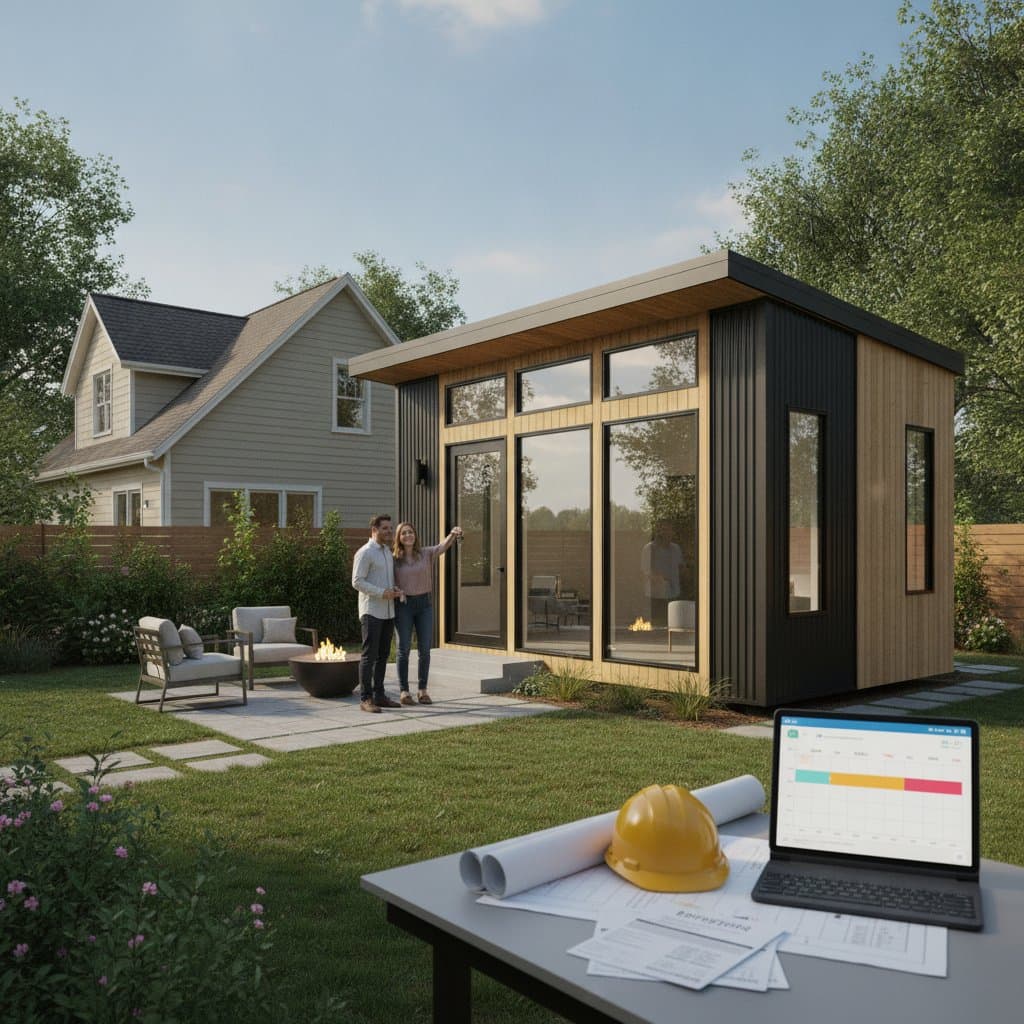
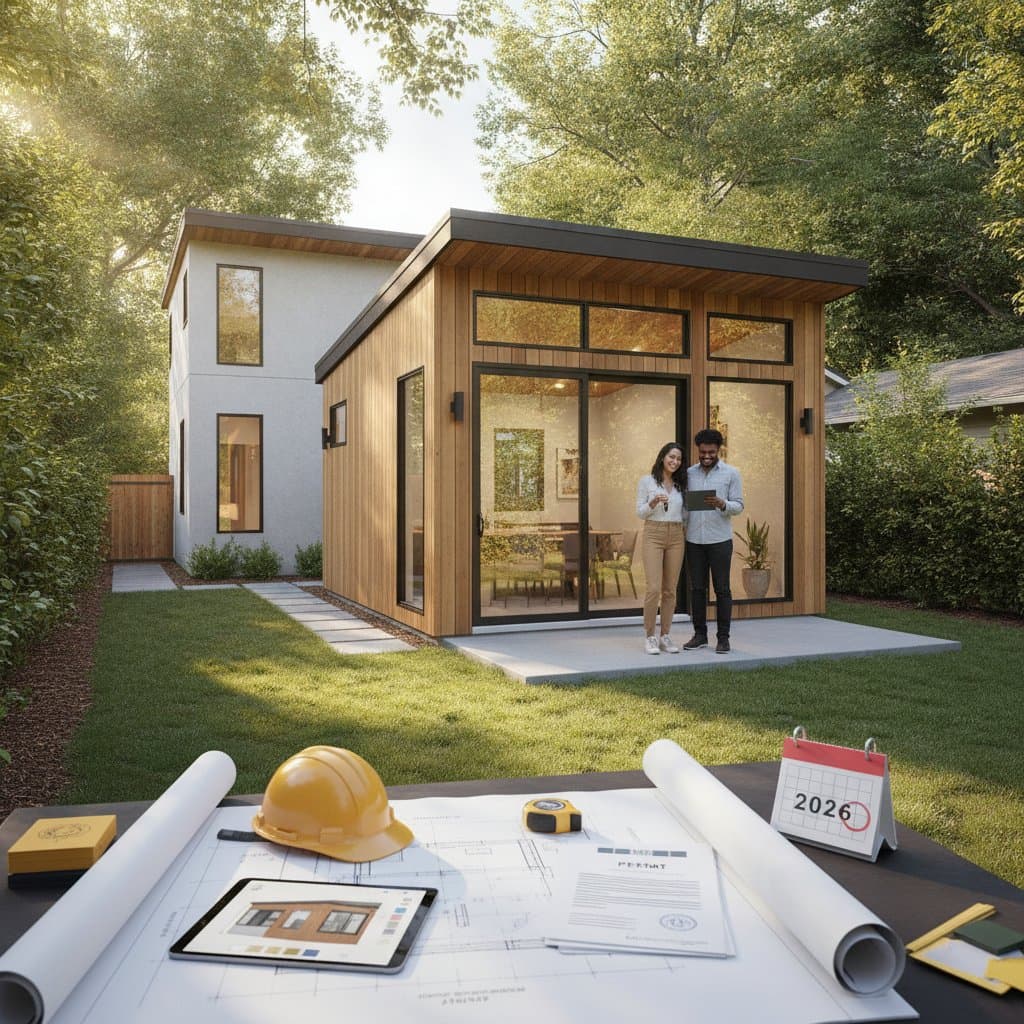
Accessory Dwelling Units, known as ADUs, backyard cottages, granny flats, or secondary suites, rank among the most sought-after residential additions in numerous communities. Homeowners value these structures for their versatility, capacity to generate rental income, and provision of housing for family members without the need to enlarge the primary residence. Regulations grow more permissive as municipalities promote diverse housing solutions, fueling rapid expansion in the ADU sector. Homeowners must grasp the associated costs, permitting requirements, and construction phases prior to launching a project.
Quick Cost Summary
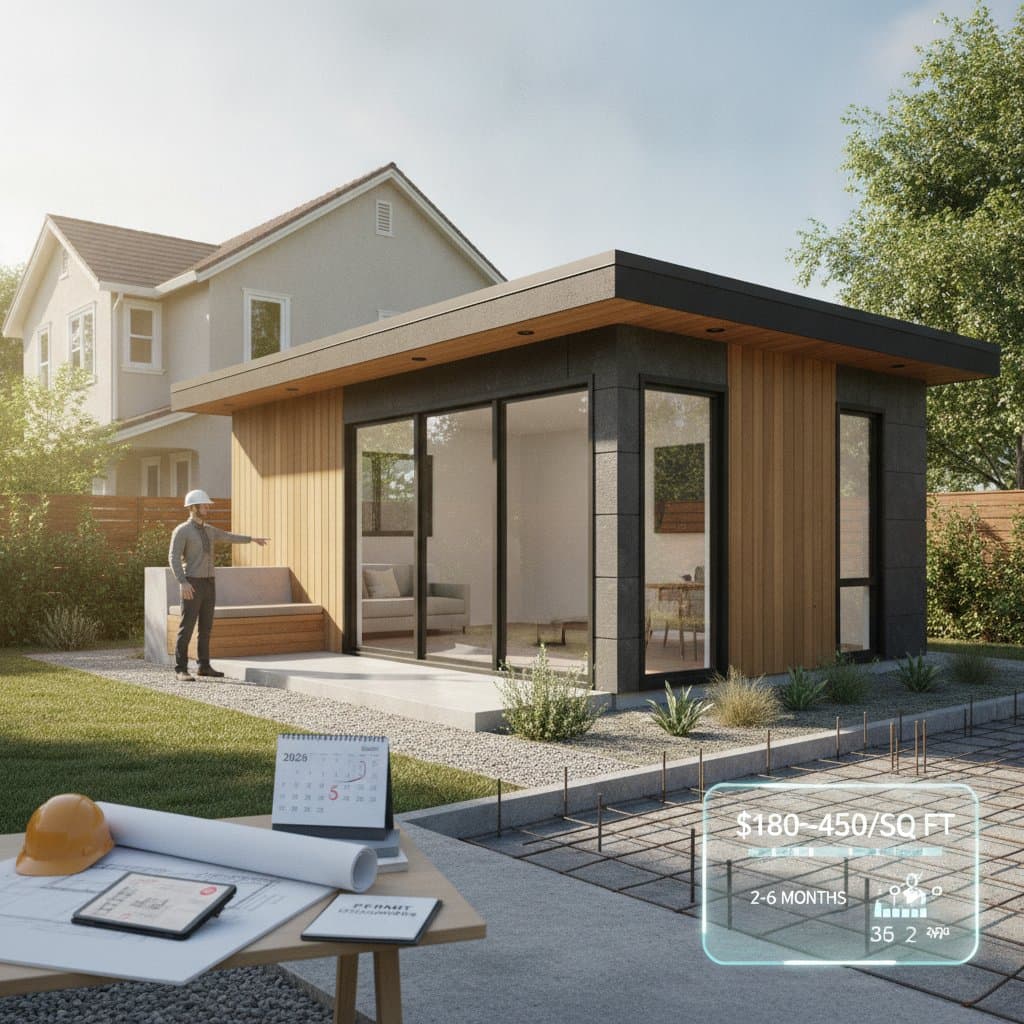
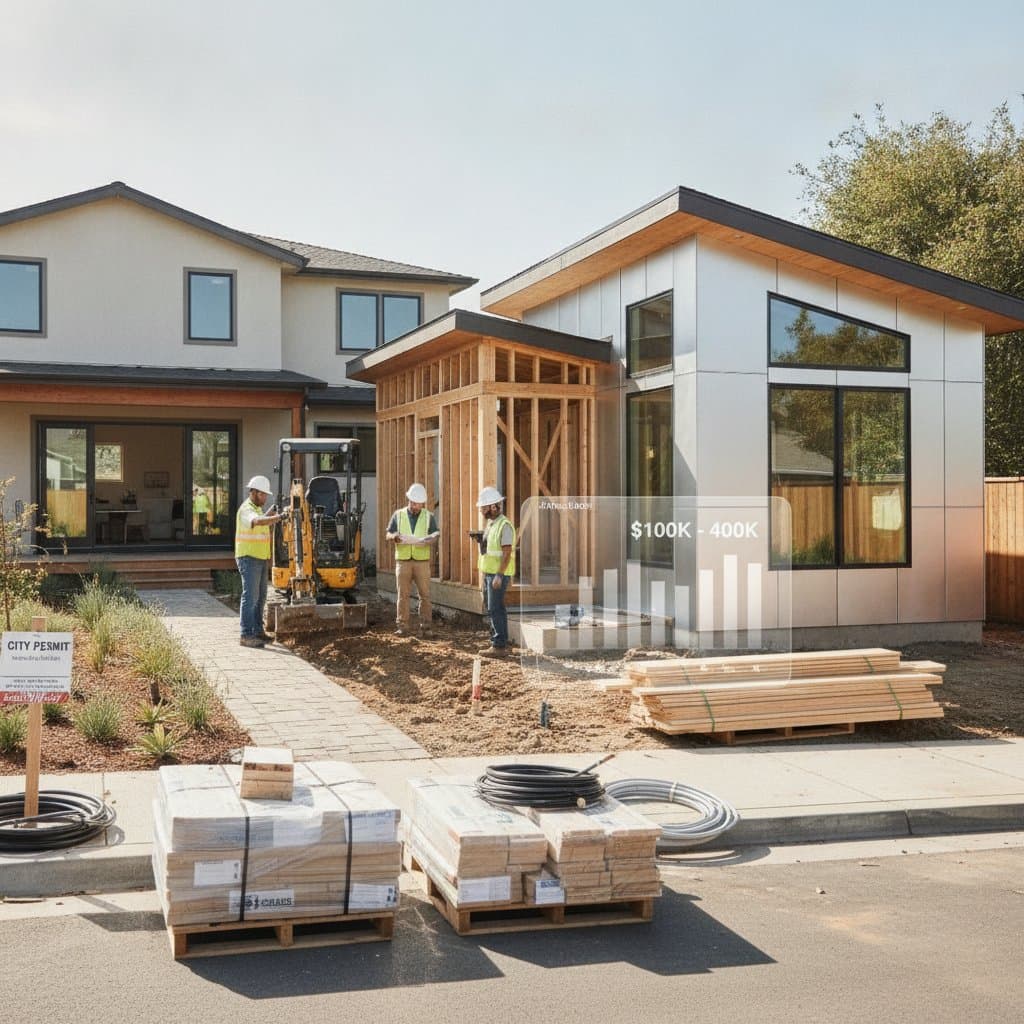
The majority of homeowners allocate between $150,000 and $350,000 for a detached ADU. The typical expense for a fully finished, ready-to-occupy unit stands at approximately $250,000. Garage conversions or attached units begin nearer to $100,000, whereas upscale backyard cottages featuring luxury finishes surpass $400,000.
Primary factors influencing costs include:
- Unit dimensions and configuration
- Property terrain and equipment access
- Foundation style and utility integrations
- Material standards and finishing quality
- Regional labor rates and permitting charges
Highlights and Key Insights
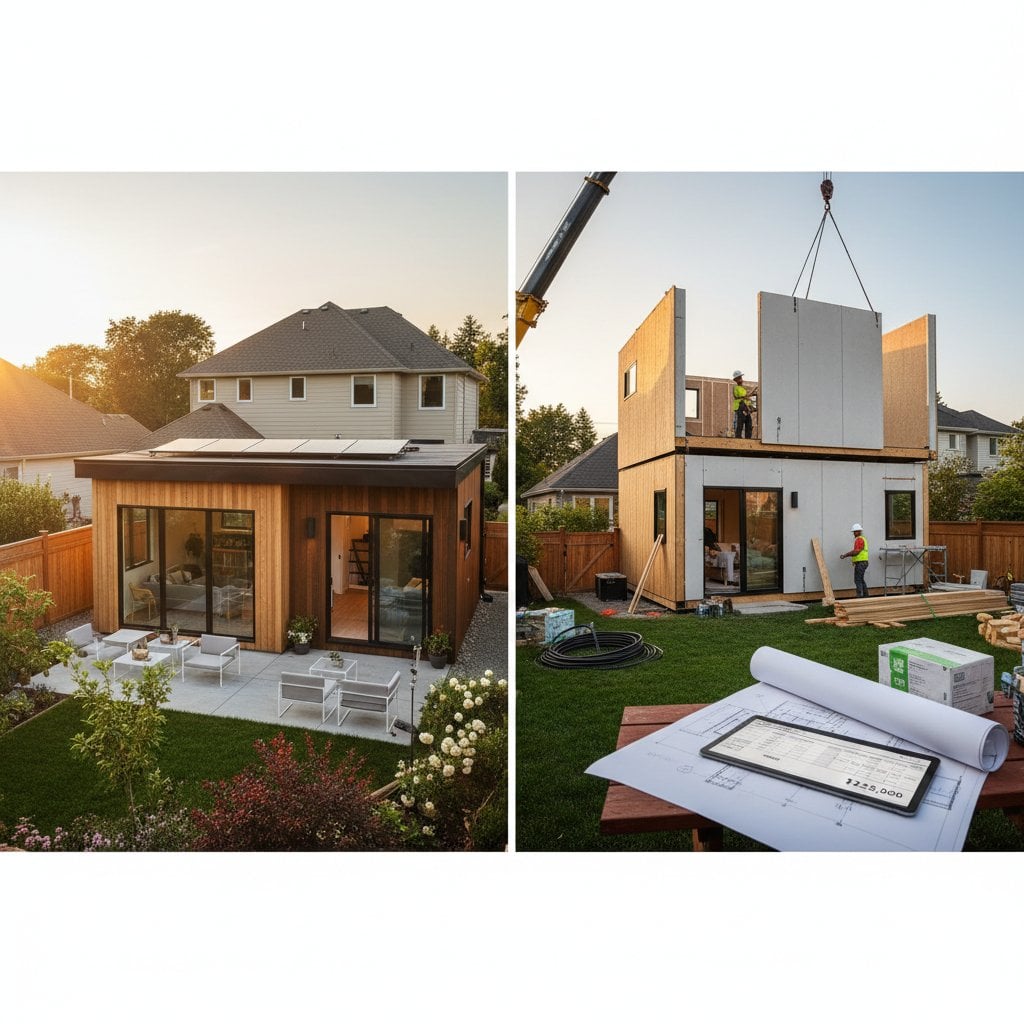
Detached ADUs incur higher expenses than attached or converted variants owing to extra foundation and roofing demands. Permitting charges fluctuate significantly, spanning $5,000 to $25,000 based on local authority. Prefabricated or modular ADUs diminish overall project expenses by 10 to 20 percent. Utility linkages, land grading, and site readiness contribute an additional $10,000 to $50,000. Construction duration averages four to seven months following permit approval.
Cost by Size or Type
ADU dimensions directly impact total expenditure. Numerous municipalities cap detached ADUs at roughly 1,000 square feet, although conversions or expansions permit marginally greater sizes. This outline illustrates pricing variations by scale:
- Small ADU (300 to 500 sq. ft.): $100,000 to $175,000
- Medium ADU (500 to 800 sq. ft.): $175,000 to $275,000
- Large ADU (800 to 1,000+ sq. ft.): $275,000 to $400,000 or higher
Examples by construction type:
- Garage conversion: $90,000 to $160,000
- Attached ADU: $150,000 to $250,000
- Detached new-construction ADU: $200,000 to $400,000
- Basement conversion: $120,000 to $220,000
Labor and materials constitute roughly two-thirds of the budget, with design, engineering, and permitting covering the balance.
Contractor Costs and Labor
Engaging a licensed contractor represents the standard method. Labor expenses differ by locale but generally fall between $200 and $400 per square foot for comprehensive construction, encompassing framing, electrical installations, plumbing, heating, ventilation, air conditioning, and surface treatments. Specialized firms for excavation, concrete pouring, or roofing often bill as distinct items.
Contractor proposals typically incorporate project oversight, timelines, and compliance checks. Managing subcontractors independently shifts coordination duties to the homeowner, potentially escalating expenses through delays. Homeowners should insist on a comprehensive work outline, material inventory, and payment timeline prior to agreement.
Additional Cost Factors
Permits and Fees
Local building offices determine permit charges, which cover plan evaluations, impact assessments, utility linkage fees, and inspection services. Certain municipalities exempt impact fees for compact ADUs to foster development, whereas others compute charges per square foot. Anticipate totals from $5,000 to $25,000.
Utility Connections
Linking water, sewage, and power supplies incurs notable costs. Upgrades to service lines, including trenching or meter exchanges, may elevate expenses beyond $20,000. Properties equipped with pre-existing secondary lines or straightforward access to primary systems experience reduced charges.
Site Conditions
Inclined terrain, substandard soil, or restricted machinery entry amplify construction outlays. Excavation efforts, retaining structures, and leveling operations add $10,000 to $40,000. Level sites requiring limited groundwork minimize this budget segment.
Materials and Finishes
Selections in materials affect both expenditure and timeline. Standard vinyl windows, laminate surfaces, and basic cabinetry maintain costs at the lower end. High-end windows, solid wood flooring, bespoke cabinetry, and granite surfaces accelerate expenses. Align finishes with objectives, such as optimizing rental yields or enhancing guest accommodations.
Design Complexity
Basic rectangular designs prove less costly than configurations with varied roof structures or bespoke elements. Each additional angle or height variation heightens framing and roofing efforts. Opt for streamlined floor plans to conserve funds while preserving livability.
Ways to Save and Money-Saving Tips
- Streamline the design. Compact layouts and simple roof forms cut structural and material demands.
- Repurpose existing features. Transforming garages or basements avoids substantial foundation and framing investments, saving tens of thousands.
- Select balanced finishes. Resilient, economical options harmonize attractiveness and fiscal restraint.
- Integrate services. Design-build teams diminish administrative expenses and enhance synchronization.
- Explore local rebates. Various authorities provide fee waivers or favorable loans for ADUs aligned with affordability criteria.
- Assess utilities upfront. Pinpointing service positions early prevents expensive alterations or excavations.
- Oversee schedules diligently. Prompt communication with contractors curbs labor and funding escalations from postponements.
DIY vs Hiring a Pro
ADU development demands specialized expertise, certified trades, and regulatory adherence, rendering full DIY feasible solely for those with extensive building acumen and availability. Local ordinances frequently mandate professionals for electrical, plumbing, and foundational tasks.
DIY Pros and Cons
Pros:
- Labor cost reductions
- Schedule autonomy
- Direct oversight of selections
Cons:
- Exposure to regulatory breaches or inspection failures
- Extended durations from workforce constraints
- Hazards to safety or integrity
A blended DIY strategy suits many. Homeowners might undertake painting, yard work, or trim installation, delegating framing, systems, and utilities to experts. This approach trims 5 to 10 percent from totals without risking standards.
Professional Builder Advantages
Established builders leverage vendor networks, regulatory familiarity, and teams versed in inspections. They anticipate issues proactively, averting expensive corrections. Design-build entities often bundle schematics and calculations, easing homeowner involvement.
Return on Investment (ROI)
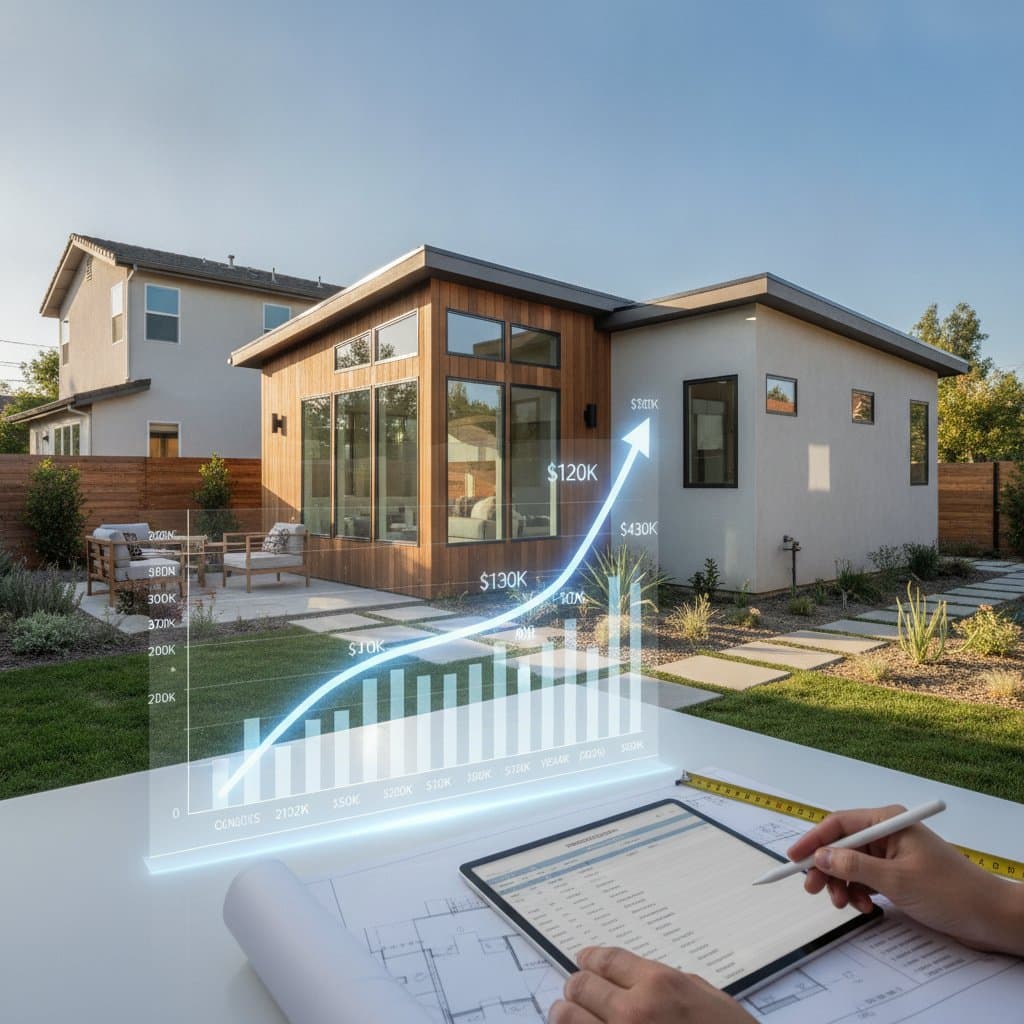
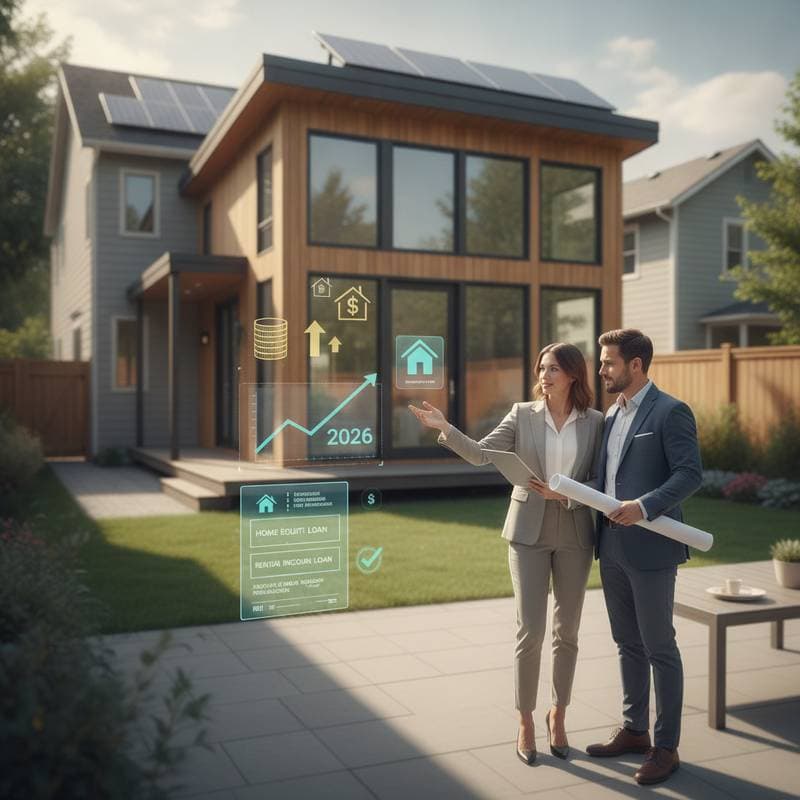
ADUs deliver robust financial benefits via rentals, value enhancement, or adaptive use. Typical ROI spans 60 to 100 percent, influenced by locale, demand, and expense management.
Rental Income
A thoughtfully crafted one-bedroom ADU yields $1,500 to $3,000 monthly in diverse markets. Such revenue recoups build costs over time and sustains profits. Stable long-term occupants offer reliability, while transient rentals fetch premiums yet demand oversight.
Property Value
Valuations derive from sales of comparable properties. Legal secondary units elevate resale by 20 to 35 percent, particularly in supply-scarce regions. Purchasers regard ADUs as functional enhancements.
Family Flexibility
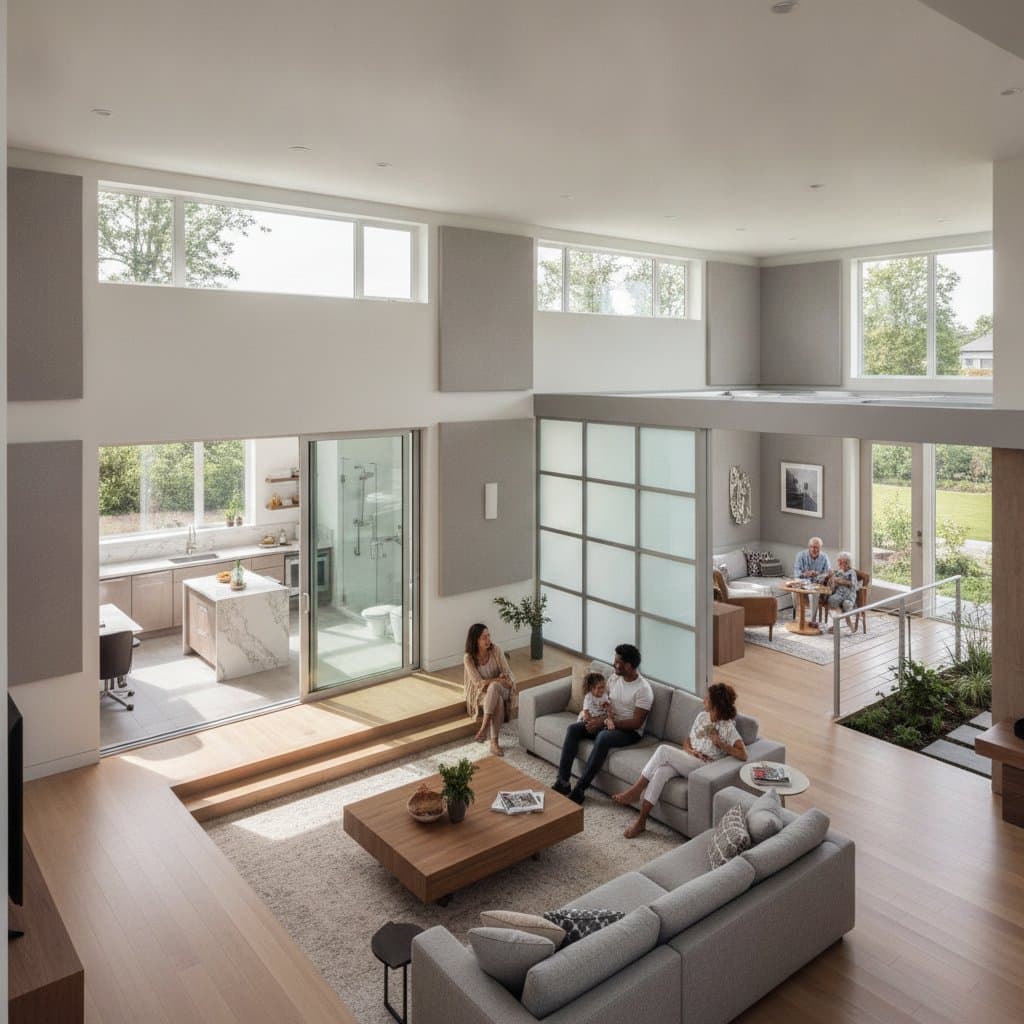
Beyond economics, ADUs support multigenerational living for elders, grown offspring, or visitors. This adaptability fortifies property utility and eases future transitions.
Cost Methodology
Presented figures draw from contractor quotations, owner feedback, and area pricing records. Estimates encompass materials, workforce, permits, and conventional finishes for home-grade builds. Variables like soil quality, entry, and utility adjacency may adjust figures; secure regional bids for accuracy.
Permit Process Overview
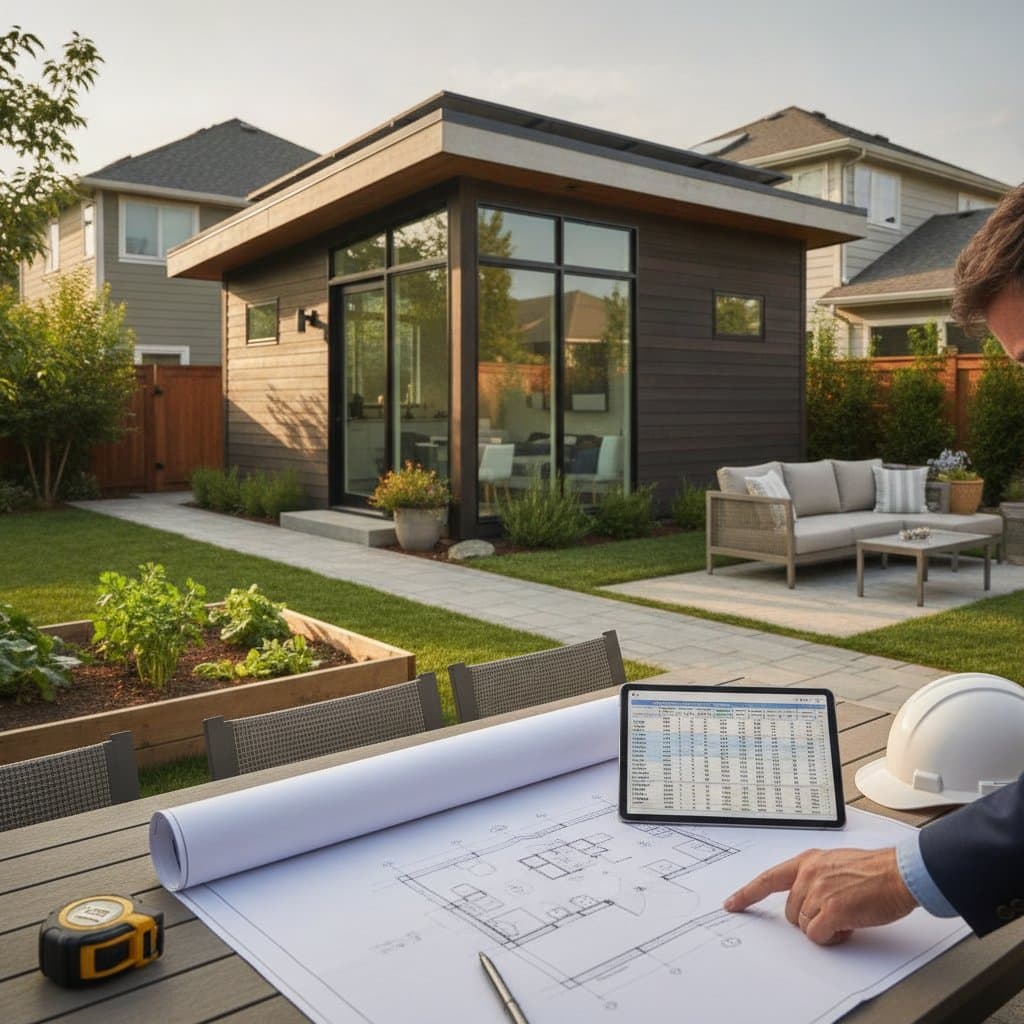
ADU approvals adhere to consistent procedures across locales, with minor variances. Essential phases comprise:
- Feasibility Assessment: Confirm zoning adherence and parcel dimensions. Constraints may apply to offsets or unit caps.
- Design and Planning: Develop blueprints compliant with structural and efficiency standards.
- Plan Review: Forward submissions to authorities for validation, addressing feedback.
- Permit Issuance: Settle fees and secure construction clearance.
- Inspections: Officials examine framing, wiring, piping, and completions progressively.
- Final Approval: Obtain occupancy certification verifying full compliance.
Efficiency hinges on precise documentation and contractor responsiveness. Lags in submissions prolong timelines and inflate costs.
Common Challenges
- Utility capacity limitations: Aging infrastructures require panel enlargements or pipe expansions.
- Lot access: Confined paths hinder supply transport.
- Neighborhood restrictions: Associations enforce aesthetic or spacing rules.
- Budget creep: Incremental modifications surge expenses post-start.
Proactive strategizing and builder dialogue mitigate unforeseen issues, preserving fiscal limits.
FAQs
How much does it cost to build an ADU?
Homeowners typically invest $150,000 to $350,000, varying by scale, style, and quality.
Do I need a permit for an ADU?
Yes. Permits and checks ensure regulatory conformity.
Can I convert my garage into an ADU?
Yes. Such adaptations prove economical versus new builds, provided they satisfy durability and efficiency norms.
Is a prefab ADU cheaper?
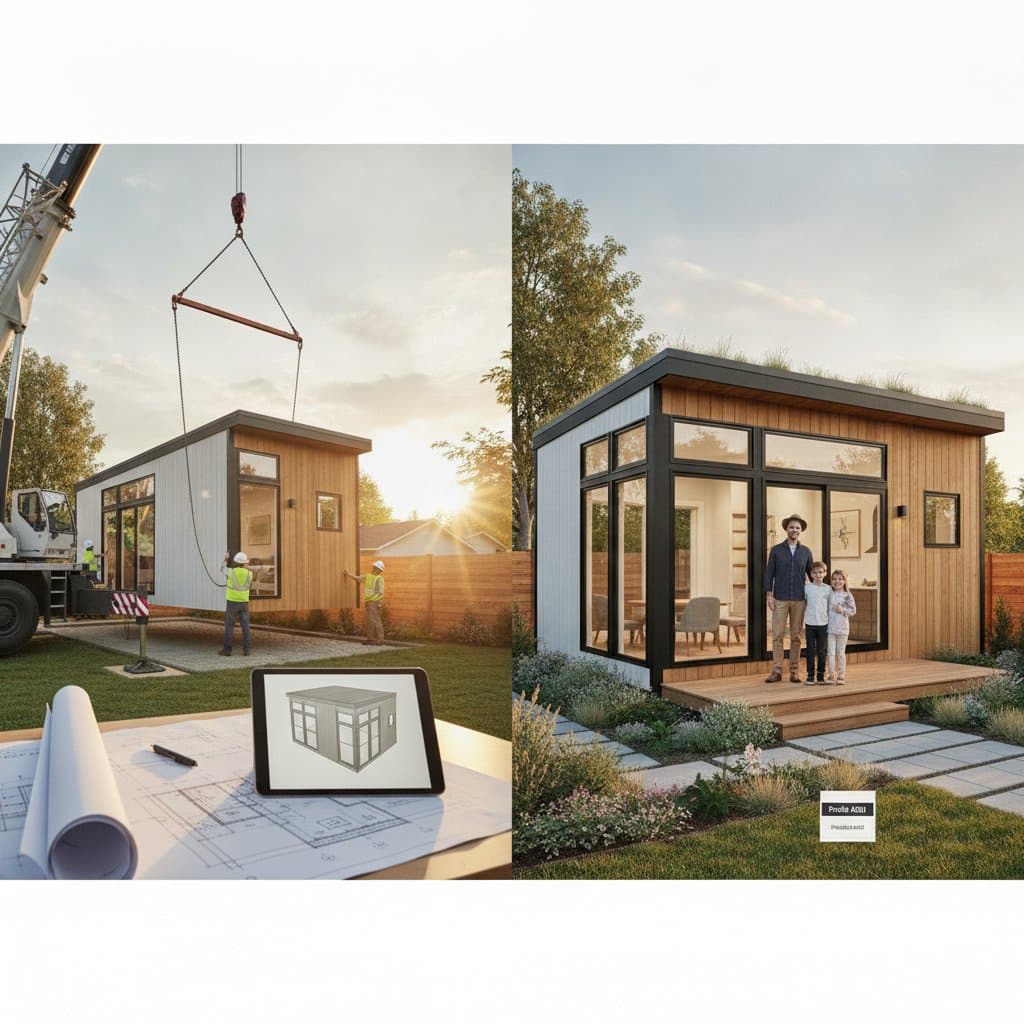
Frequently. Modular formats reduce outlays by 10 to 20 percent and accelerate completion.
Will an ADU increase my property taxes?
Yes. Assessments rise, with tax hikes governed by local policies and appraisals.
Can I build an ADU myself?
Possible with permit management and code adherence, though professionals handle critical elements.
Does an ADU add resale value?
Yes. Legal additions often lift values by 20 to 35 percent.
Sustaining ADU Value
Post-build, regular care preserves safety, comfort, and revenue potential. Conduct yearly checks on pipes, wiring, gutters, and roofing. Preserve grounds and runoff to safeguard foundations.
Diligent oversight yields steady earnings and appreciation. ADUs, executed with foresight and expertise, furnish enduring fiscal and lifestyle gains.