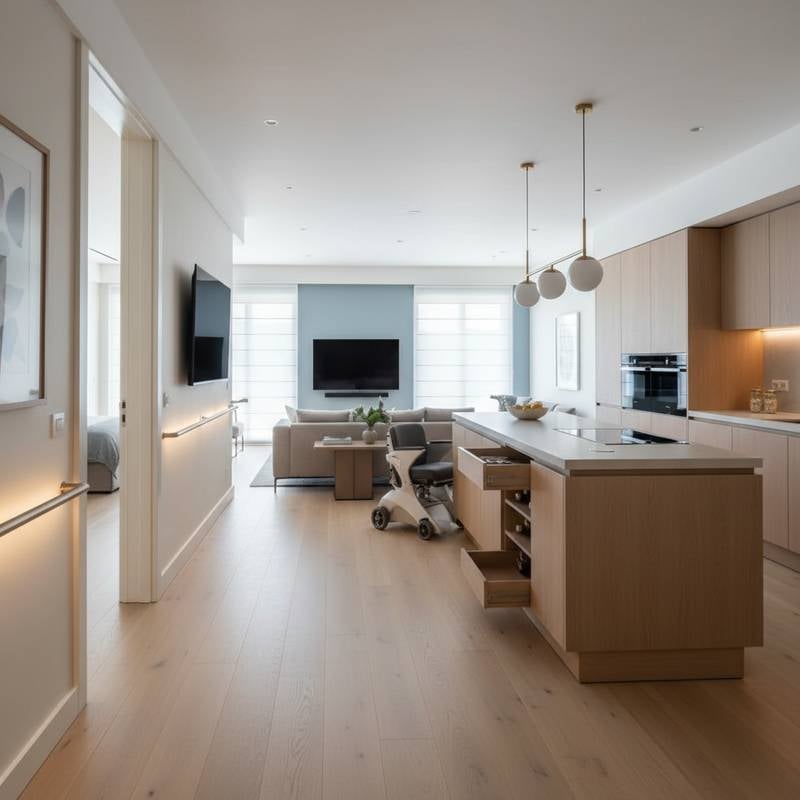
2026 Costs for Aging-in-Place Universal Design Remodels
Aging-in-place remodeling adapts your home to support safety and independence as needs evolve. Universal design principles create spaces usable by everyone, regardless of ability, without altering aesthetics. This guide details expected costs for 2026, key upgrades, and budgeting approaches to build a resilient, valuable property.
Understanding Universal Design
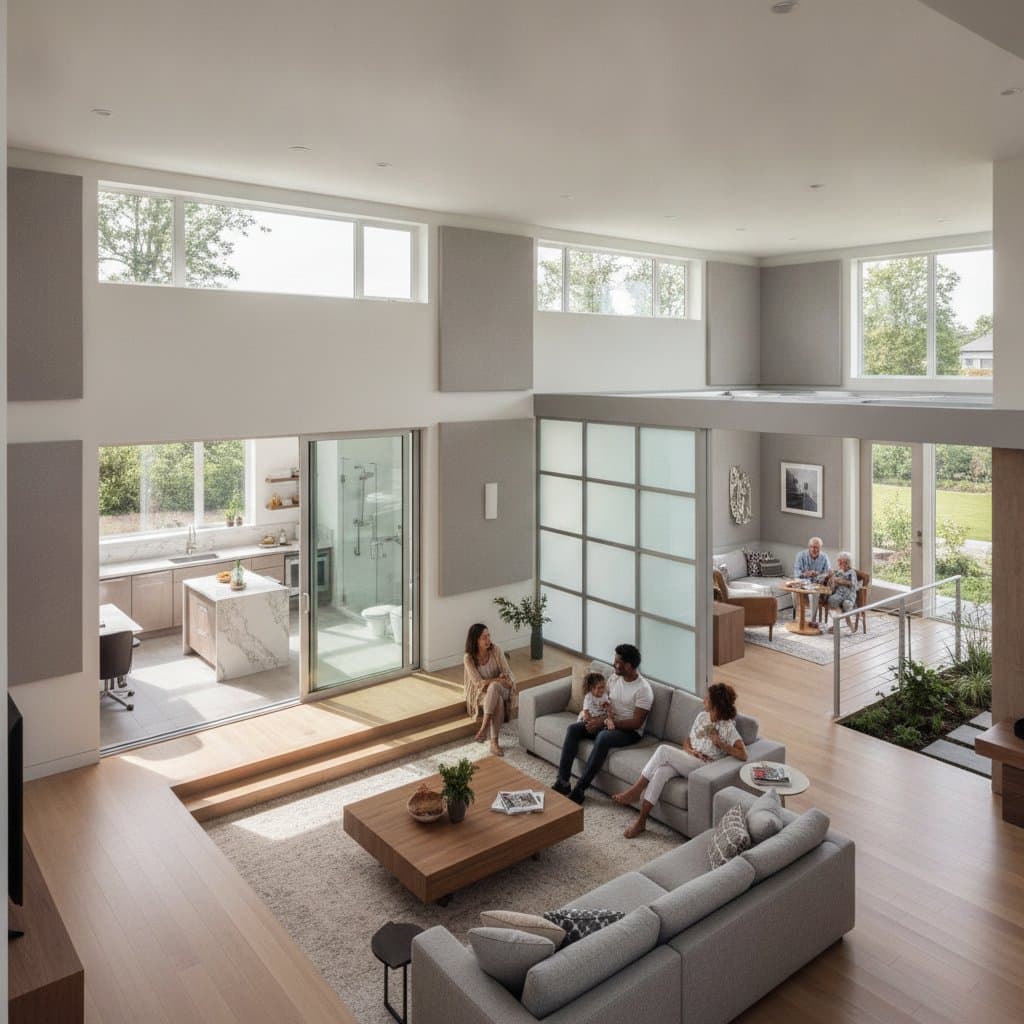
Universal design prioritizes intuitive, adaptable environments. Features like lever handles, threshold-free entries, and adjustable-height counters promote ease of use. These elements integrate into existing architecture, often increasing market appeal by up to 10 percent in resale value.
Costs depend on home size, renovation extent, and regional factors. Early planning minimizes disruptions and future expenses.
Key Cost Factors
Several elements drive project expenses. Consider these when estimating budgets.
- Scope of Work: Targeted changes, such as widening one doorway, cost less than full-home overhauls involving structural shifts.
- Material Quality: Opt for low-maintenance options like vinyl composites over premium stone; the former saves 20-30 percent on initial outlay.
- Accessibility Features: Installations like platform lifts require certified technicians, adding 15-25 percent to labor fees.
- Professional Labor: Expect rates of $75-$150 per hour for specialists in code-compliant accessibility work.
Average Cost Ranges
Regional variations apply, but these benchmarks aid initial planning.
- Basic Modifications: Grab bars, lever handles, and LED upgrades total $500-$5,000.
- Moderate Remodels: Bathroom or kitchen tweaks range $10,000-$50,000.
- Comprehensive Renovations: Multi-room projects hit $100,000+ for 2,000-square-foot homes.
Consult local contractors for precise quotes based on site assessments.
Room-by-Room Remodeling Costs and Ideas
Focus on high-impact areas to maximize functionality. Each section highlights modifications, costs, and implementation tips.
1. Entryways and Exterior Access
Smooth entries prevent accidents and facilitate mobility aids. Aim for 36-inch-wide doors and gradual inclines.
Common Upgrades:
- Sloped ramps using composite materials.
- Automatic door operators with keyless entry.
- Sensor lights activating at dusk.
Estimated Costs: Ramps start at $2,000-$6,000; door widening adds $1,500-$4,000. Full exterior access packages reach $10,000.
Design Tip: Install 4-foot-wide paths with 1:12 slope ratios for code compliance and ease.
2. Kitchens
Adapt kitchens for seated or standing use to simplify meal preparation. Lower select counters to 34 inches for wheelchair access.
Potential Modifications:
- Pull-out cabinets at 15-48 inch heights.
- Front-load appliances with side-hinged doors.
- Touchless faucets and anti-scald valves.
Estimated Costs: Partial updates cost $15,000-$40,000; complete redesigns exceed $50,000 with custom cabinetry.
Design Tip: Position outlets at 18-48 inches high; use matte finishes to minimize slips.
3. Bathrooms
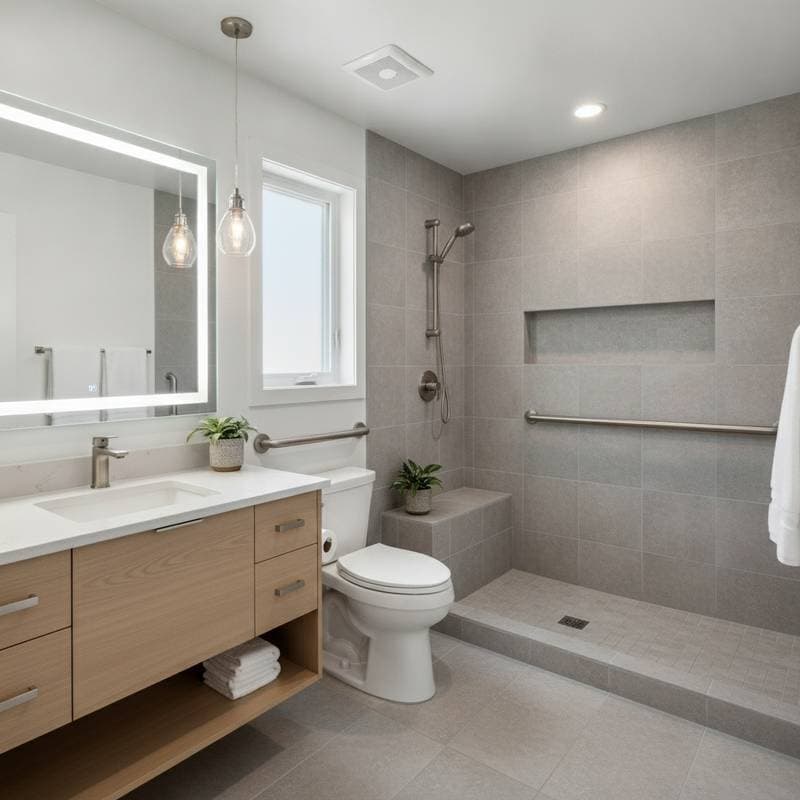
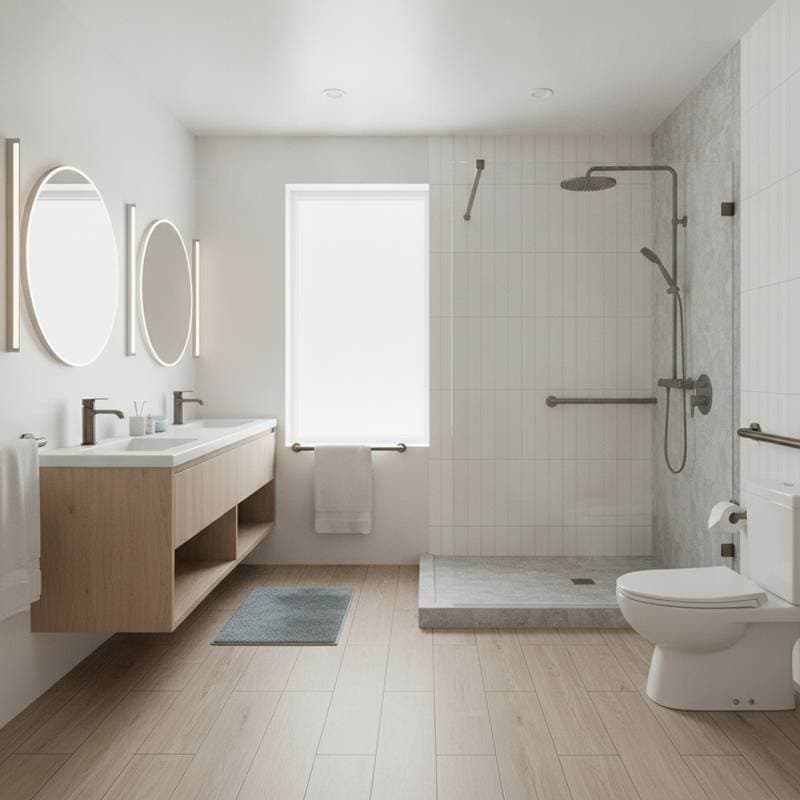
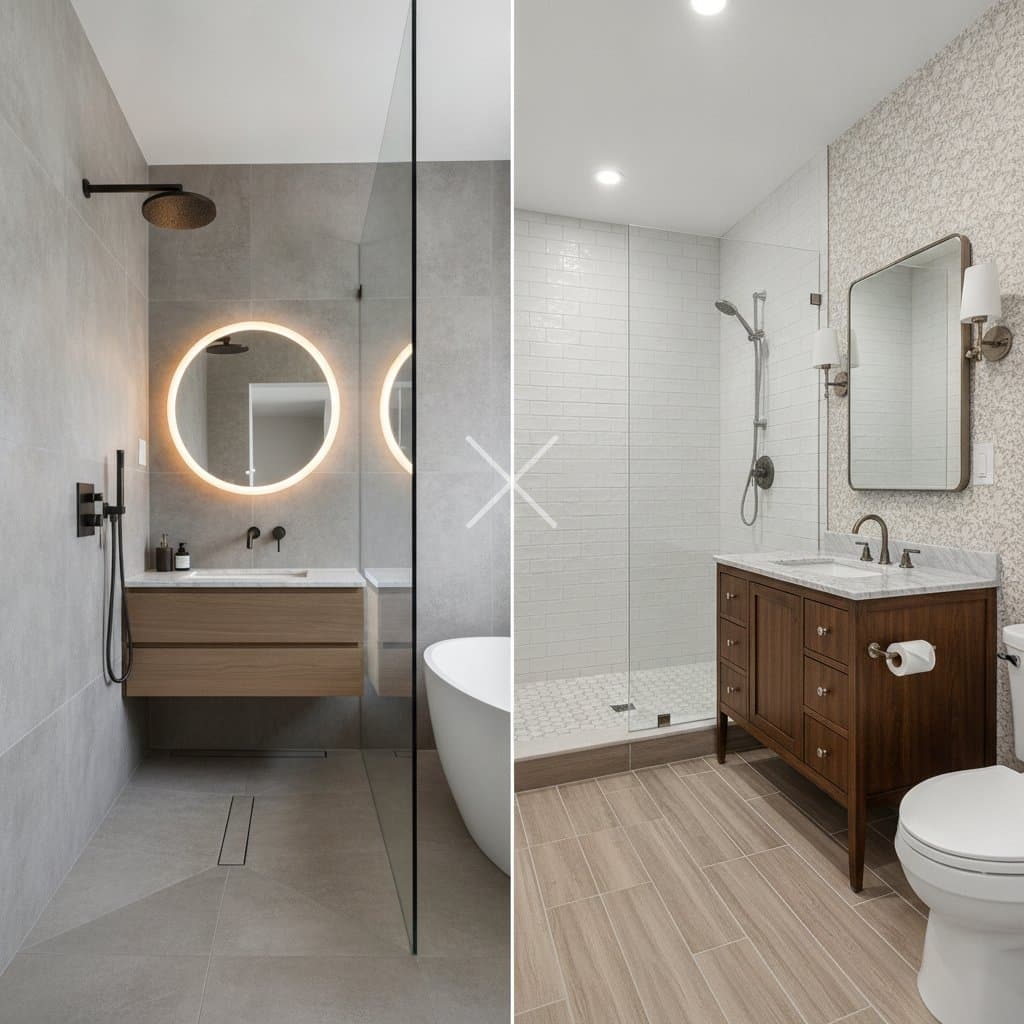
Prioritize slip prevention and reach in wet zones. Curbless showers with fold-down seats enhance usability.
Common Improvements:
- 60x36-inch roll-in showers.
- Reinforced walls for 1.5-inch diameter grab bars.
- Elongated comfort-height toilets at 17-19 inches.
Estimated Costs: Standard upgrades range $20,000-$40,000; luxury waterproofing pushes totals higher.
Design Tip: Slope floors 1/4 inch per foot toward drains; add anti-fog mirrors for clear visibility.
4. Bedrooms
Ensure restful spaces with unobstructed paths at least 36 inches wide.
Possible Updates:
- Adjustable bed-height platforms.
- Closet systems with sliders at 24-54 inches.
- Nightlights integrated into baseboards.
Estimated Costs: Basic changes cost $5,000-$10,000; layout shifts add $15,000+.
Design Tip: Place controls within 48 inches of beds; select hypoallergenic flooring for health.
5. Living Areas and Hallways
Foster open flow by eliminating barriers and adding supports.
Improvements to Consider:
- 42-inch hallways with 34-inch clear widths.
- Wall-mounted handrails at 34-38 inches.
- Lever switches at 48 inches maximum.
Estimated Costs: Threshold removals cost $1,000-$3,000; hallway expansions reach $8,000-$20,000.
Design Tip: Maintain 5-foot turning radii in open areas for maneuverability.
6. Laundry and Utility Areas
Elevate tasks to waist height to avoid bending.
Possible Improvements:
- Pedestal-mounted front-loaders at 36 inches.
- Fold-down ironing boards.
- Task lighting over sinks.
Estimated Costs: Updates range $5,000-$15,000, including venting adjustments.
Design Tip: Store detergents in pull-out bins at 30-42 inches for easy access.
7. Lighting and Electrical Systems
Strategic illumination cuts fall risks by 50 percent.
Effective Upgrades:
- Dimmable LEDs with 2700K warm tones.
- Voice-activated controls via hubs.
- Outlets at 15-48 inch heights.
Estimated Costs: Per-room retrofits cost $500-$2,000; system-wide smart setups total $5,000+.
Design Tip: Space fixtures 4-6 feet apart to eliminate shadows in transitions.
8. Flooring
Select materials with 0.5 coefficient of friction for traction.
Material Options:
- Vinyl planks mimicking wood at $4-$8 per square foot.
- Rubber underlay for joint cushioning.
- Low-loop carpet under 1/2 inch pile.
Estimated Costs: Installation averages $8-$15 per square foot; subfloor prep adds 20 percent.
Design Tip: Test samples for wheelchair roll resistance; seal edges to prevent curling.
Integrating Upgrades for Whole-Home Impact
Cohesive planning unifies features across spaces. Start with a professional audit to identify priorities like stair assessments or HVAC adaptations.
Project Stages:
- Site evaluation for barriers.
- Custom blueprints aligning with lifestyles.
- Phased budgeting, allocating 40 percent to labor.
- Sequential construction to preserve access.
- Testing for usability post-install.
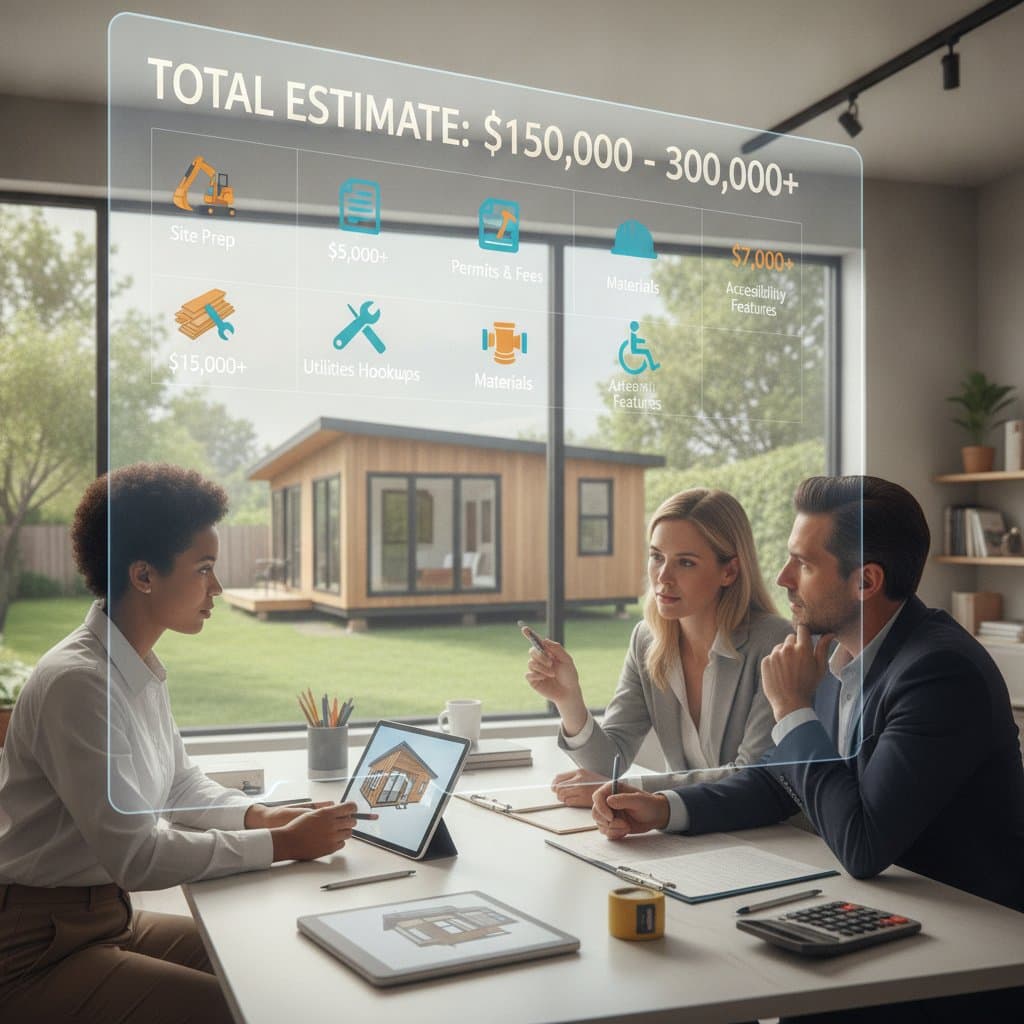
Full remodels for 1,500-square-foot homes average $100,000-$200,000, yielding 7-12 percent ROI through extended livability.
Engaging Experts for Optimal Results
Professionals navigate codes like ADA guidelines and integrate therapist input for personalized ergonomics. They handle permits, ensuring warranties cover 5-10 years.
For DIY, limit to surface tasks; complex work demands certified teams to avoid $10,000+ in fixes.
Strategies to Control Expenses
Target efficiencies without sacrificing safety.
- Sequence high-traffic zones like entries first.
- Reuse salvageable elements, cutting material costs by 15 percent.
- Select modular fixtures for scalability.
- Combine trades for 10-20 percent savings.
- Apply for AARP or HUD grants up to $5,000.
These steps focus investments on enduring benefits.
Sustaining Accessibility and Value
Routine maintenance, such as annual lighting checks, preserves functionality. Universal design not only safeguards health but elevates daily joy, securing your home as a lifelong asset.