
Overcoming 2025 Construction Labor Shortages
Labor shortages continue to transform the construction industry, influencing project timelines, subcontractor costs, and overall operational efficiency. Skilled workers remain scarce, creating significant challenges for general contractors, builders, and developers. To maintain competitiveness and safeguard profitability, construction companies must implement intelligent staffing strategies, innovative training programs, and robust subcontractor partnerships.
This guide provides practical, data-backed recommendations to help your firm address workforce demands. These steps ensure projects remain on schedule while controlling expenses in a constrained labor environment.
The Scope of the Construction Labor Shortage
The labor shortage in construction extends beyond temporary fluctuations. Many experienced tradespeople retire each year, yet the influx of young entrants fails to match this exodus. This disparity restricts available talent and elevates wage demands across the sector.
Surveys from industry associations indicate that a majority of contractors face difficulties in hiring for roles such as carpenters, concrete finishers, framers, and electricians. Larger organizations with established recruitment channels still encounter shortages during high-demand seasons. The impact reaches beyond fieldwork to include critical positions in project management, cost estimation, and site supervision.
Consequently, projects experience compressed timelines, escalated subcontractor fees, and intensified rivalry for reliable teams. Addressing this requires proactive measures that anticipate future needs rather than merely responding to immediate gaps.
Strategies for Recruiting and Retaining Skilled Talent
Securing and holding onto dependable workers demands more than attractive compensation. Firms must cultivate an environment that prioritizes safety, professional development, and appreciation for skilled work.
Key Recruitment Tactics
- Promote job security and advancement opportunities: Position construction careers as reliable paths with clear progression, such as from apprentice to lead supervisor, to appeal to potential hires seeking long-term stability.
- Implement referral incentives: Encourage current employees to recommend qualified contacts by offering bonuses, like $500 for each successful hire who completes a probationary period, leveraging the tight-knit nature of trade communities.
- Collaborate with vocational institutions: Establish formal ties with community colleges and trade schools through sponsored apprenticeships that guarantee interviews for top performers, directly feeding qualified candidates into your pipeline.
Proven Retention Methods
- Outline structured development programs: Offer certifications in specialized skills, such as welding or blueprint reading, with timelines for completion and promotion, demonstrating commitment to employee growth.
- Foster ongoing dialogue: Schedule bi-weekly one-on-one meetings to gather feedback on working conditions and project challenges, building trust and reducing turnover.
- Acknowledge achievements visibly: Introduce monthly awards for safety milestones or efficiency gains, paired with tangible rewards like extra paid time off, to elevate team spirit.
Building a reputation for safe practices and equitable treatment circulates rapidly through professional networks. In a competitive market, such attributes draw top talent organically, minimizing recruitment costs over time.
Leveraging Technology to Enhance Productivity
While technology does not supplant human expertise, it significantly lessens reliance on labor-intensive methods and amplifies output. Even modest operations can adopt accessible digital solutions to optimize daily operations.
Essential Technological Tools
- Integrated project management platforms: Tools like Procore or Autodesk BIM 360 consolidate task assignments, financial tracking, and team updates in one interface, reducing administrative time by up to 30 percent.
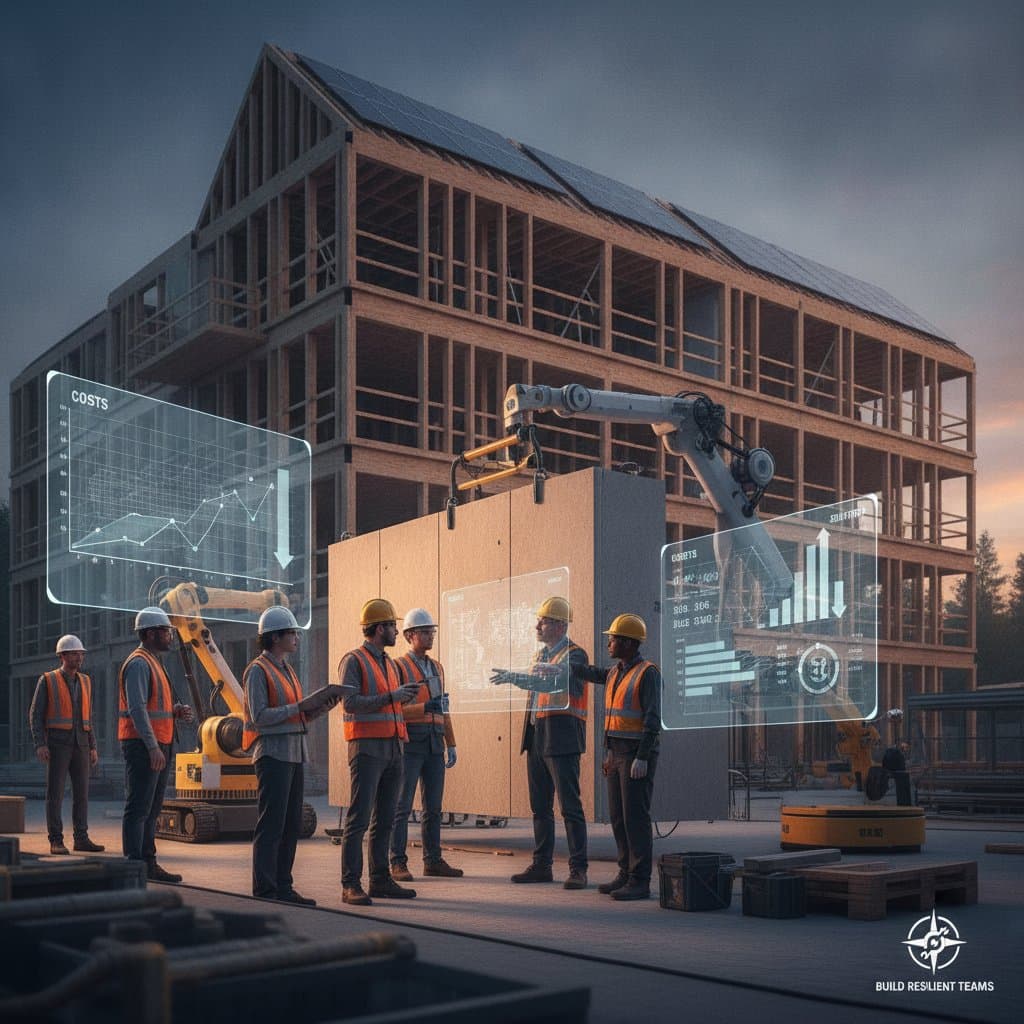
- Prefabrication and modular construction techniques: Shift assembly of walls, plumbing systems, or HVAC units to controlled factory settings, cutting on-site labor needs by 20 to 50 percent depending on project scale.
- Automation in fieldwork: Deploy drones for site surveys to capture progress data in minutes rather than hours, or use robotic arms for precise bricklaying, which accelerates tasks while minimizing errors.
Firms that incorporate these innovations typically finish projects ahead of schedule with reduced crew sizes. This approach not only mitigates labor limitations but also preserves profit margins amid rising costs.
Optimizing Subcontractor Relationships and Costs
Persistent labor scarcity leads to fluctuating subcontractor rates and availability. Companies that nurture these partnerships strategically can mitigate price surges and avoid delays.
Effective Cost and Availability Management
- Secure volume-based agreements: Negotiate fixed rates for multiple upcoming projects, such as a 12-month contract capping hourly fees at current levels plus a modest escalation clause, to buffer against market volatility.
- Consolidate task assignments: Group complementary trades, like electrical and plumbing, under single bids to lower setup expenses and streamline coordination on site.
- Conduct thorough prequalification: Assess potential partners on criteria including insurance coverage, equipment inventory, and past safety incidents using standardized checklists before finalizing deals.
- Monitor key performance indicators: Regularly compare bid estimates against completed hours and quality outcomes to refine vendor selections and negotiate better terms with consistent performers.
Open discussions regarding project volumes and timelines benefit all involved. Subcontractors prioritize clients who provide predictable work and timely payments, ensuring your initiatives receive attention during busy periods.
Frequently Asked Questions
What factors contribute to the current difficulty in finding construction labor?
Retirements among seasoned professionals outpace new graduates entering the field. This creates a talent deficit as project demands expand due to infrastructure investments and housing needs.
How can smaller contractors vie for experienced workers?
Emphasize organizational culture and dependability. Prospective employees prioritize consistent compensation, respectful leadership, and hazard-free environments alongside competitive wages.
In what ways does technology alter workforce requirements?
It streamlines repetitive or time-consuming activities, thereby decreasing total labor hours per task. Skilled professionals remain essential to oversee and refine these processes.
How should firms predict future labor demands?
Analyze data from previous projects alongside planned bids. Specialized software enables modeling of staffing needs, flagging potential shortfalls months in advance.
Is increasing subcontractor compensation the optimal retention tactic?
Elevated rates support loyalty, yet consistent communication and prompt invoicing hold greater influence. Subcontractors favor partners who deliver reliable business and fair dealings.
Building Resilient Workforce Foundations
Navigating labor shortages demands an integrated strategy combining foresight, technological adoption, and interpersonal investment. Organizations that proactively fortify their teams and operations outpace reactive competitors during disruptions.
Enduring Approaches for Long-Term Success
-
Forge alliances with educational institutions: Fund scholarships for trade certifications or host workshops at high schools to cultivate interest and secure a steady supply of entry-level talent.
-
Establish succession planning internally: Identify high-potential staff early and provide mentorship programs to prepare them for supervisory roles, preserving expertise within the company.
-
Introduce adaptable work arrangements: Experiment with compressed schedules, such as 10-hour days over four shifts, to enhance work-life balance and curb burnout without sacrificing output.
-
Analyze workforce analytics regularly: Review metrics on retention rates, skill gaps, and engagement surveys quarterly to pinpoint and address vulnerabilities systematically.
These initiatives create a robust framework for enduring challenges. A firm recognized for integrity and forward-thinking practices attracts committed workers and fosters lasting subcontractor alliances.
Ongoing labor dynamics will challenge the construction sector, yet prepared companies thrive by prioritizing relationships, efficiency gains, and skill enhancement. Through these efforts, you secure not only project success but also sustained business growth in a demanding landscape.