Prefab ADU Costs in 2026: Permits, Pricing, and Savings Strategies
Prefab accessory dwelling units represent a practical solution for expanding living space, enhancing property value, and generating potential income. Evolving housing regulations and advancements in prefabrication technology enable homeowners to avoid extended construction timelines and elevated expenses associated with traditional additions. This guide details anticipated costs, permitting requirements, and cost-saving approaches for prefab ADUs, equipping you to plan your project effectively.
Guide Overview
- Average costs for prefab ADUs and key influencing factors
- Impact of permit requirements on budgets and timelines
- Opportunities for savings in design, materials, and site preparation
- Guidelines for engaging professional builders
- Frequently asked questions on prefab ADU projects
Key Factors in Prefab ADU Pricing
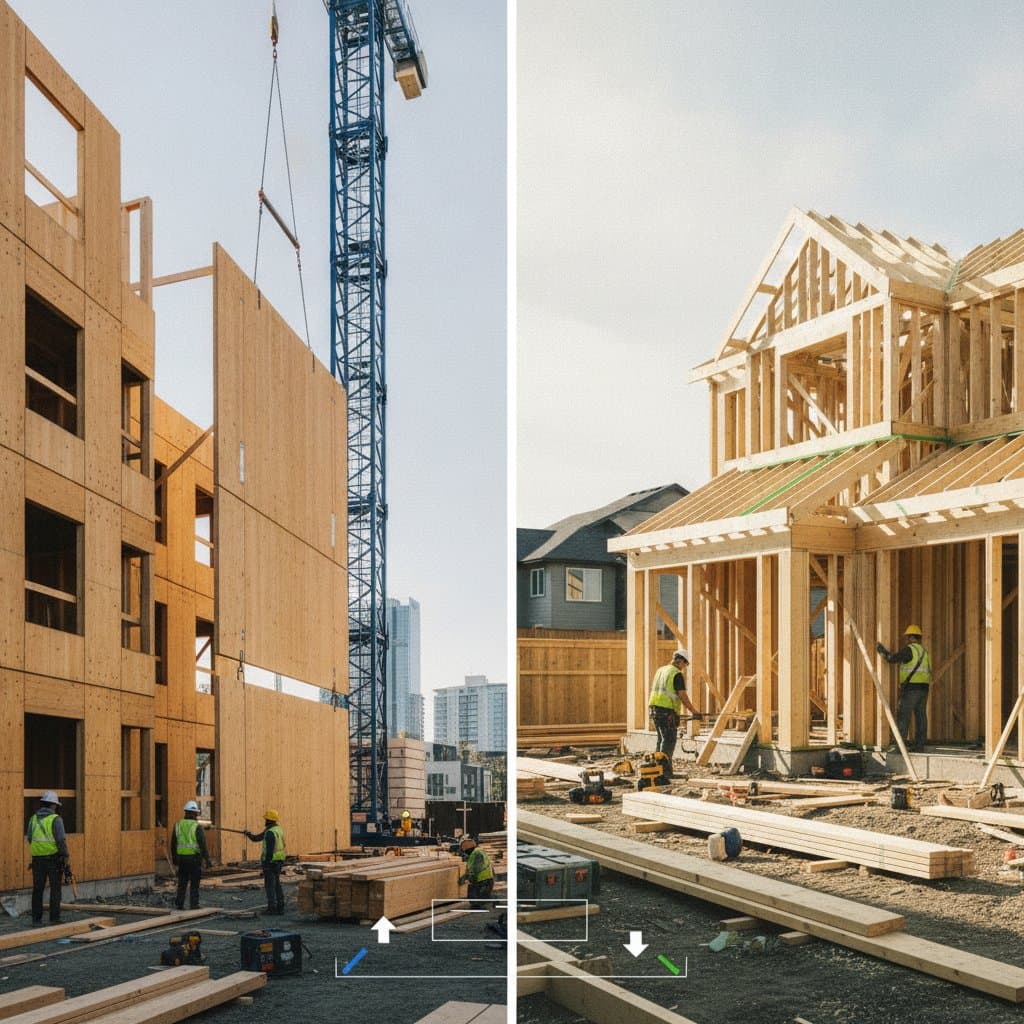
Prefab ADUs encompass various configurations, such as completely factory-assembled units, modular components assembled on-site, and hybrid models blending both methods. Pricing fluctuates according to unit size, interior finishes, transportation, and on-site assembly.
Standard Pricing Ranges
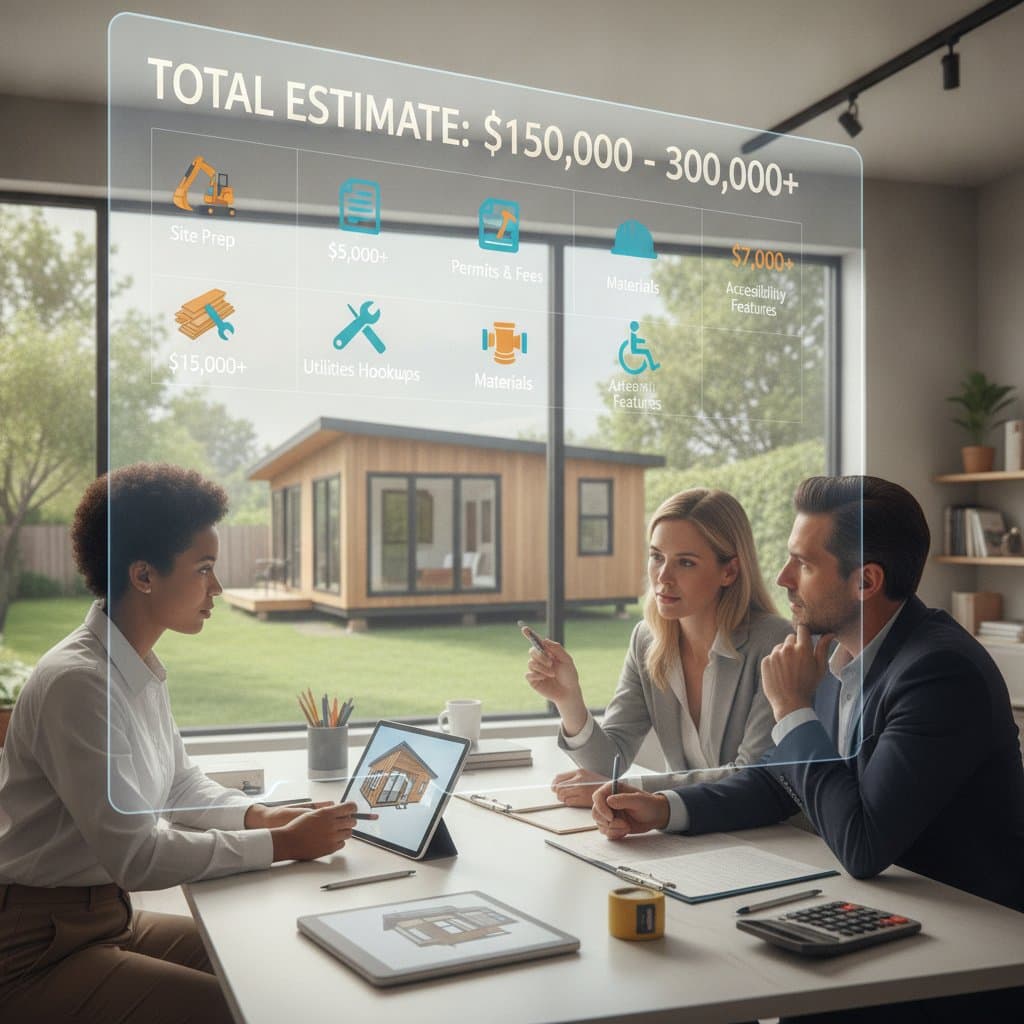
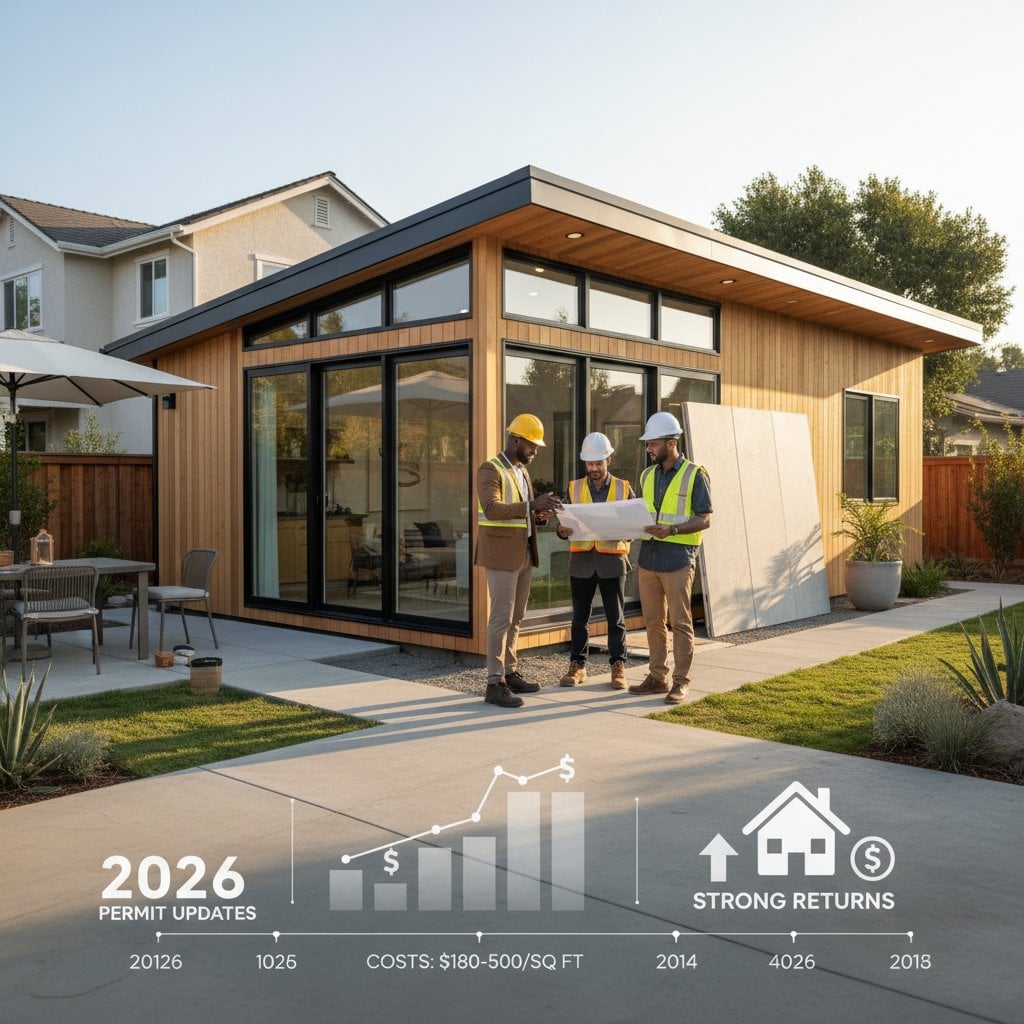
Homeowners typically allocate between $180 and $500 per square foot for a prefab ADU. This figure covers design, fabrication, delivery, and basic installation, yet excludes site groundwork and permitting expenses. For a 400-square-foot structure, the overall expenditure falls between $90,000 and $200,000, influenced by finish selections and site challenges.
Units measuring 800 to 1,000 square feet generally cost from $150,000 to $350,000. Premium options with bespoke designs or advanced energy-efficient elements may exceed these estimates.
Elements Influencing Total Costs
- Foundation Choices – Slab foundations prove more economical than elevated or pier-based alternatives, though suitability depends on site conditions.
- Utility Extensions – Connecting water, sewer, and electrical services incurs $10,000 to $30,000, varying with line distances and ground composition.
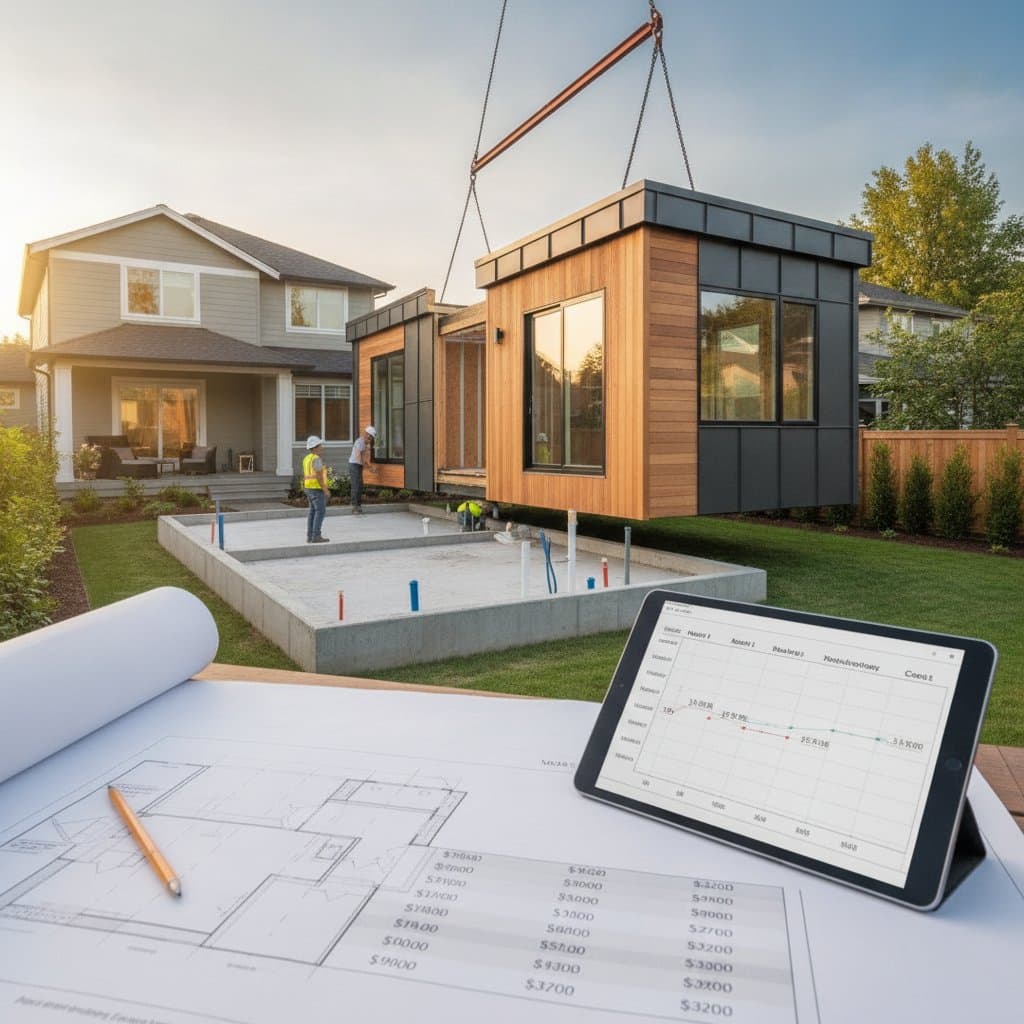
- Transportation and Placement – Fully prefabricated units necessitate cranes for positioning, contributing thousands to delivery and setup charges.
- Interior and Exterior Upgrades – Basic packages maintain affordability, whereas enhanced cabinetry, flooring, and appliances elevate expenses by 15 to 25 percent.
Navigating Permits and Regulations
Permitting processes directly affect both financial outlays and project durations. Jurisdictions impose distinct stipulations on ADU positioning, dimensions, parking provisions, and boundary offsets. Recent reforms in numerous regions streamline approvals, yet budgeting for fees and evaluation periods remains essential.
Expected Permitting Expenses
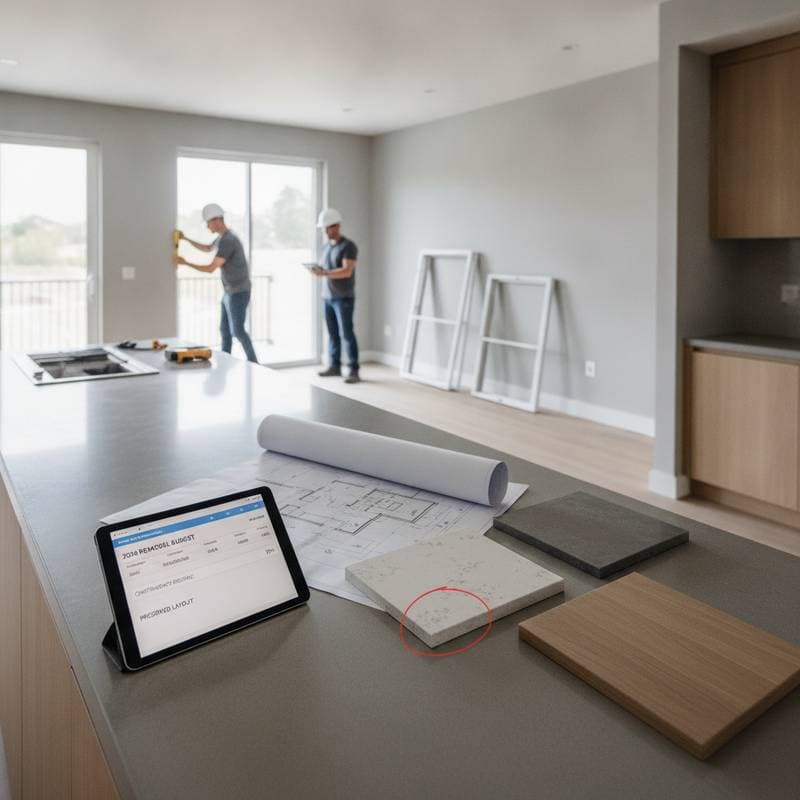
Fees for permits span $2,000 to $12,000 across municipalities, encompassing structural, electrical, plumbing, and mechanical approvals. Certain locales offer standardized ADU permitting bundles to facilitate cost forecasting.
Essential Site Compliance
Regulations often mandate minimum parcel dimensions, prescribed separations from boundaries, or elevation restrictions. These parameters dictate feasible placement locations and potential needs for grading or support walls. Verify zoning classifications prior to committing to a unit purchase.
Verification Processes
Prefab structures adhere to identical standards as conventionally built residences. Manufacturer-conducted assessments typically address structural integrity and energy performance, while on-site evaluations by local authorities confirm foundation stability, utility integrations, and safety measures post-assembly. Allocate sufficient duration for both prefabrication approvals and municipal inspections.
Strategies for Cost Reduction
Prefabrication inherently provides avenues to manage expenditures without compromising durability or appeal.
Streamline Architectural Choices
Opting for predefined models with limited customizations reduces design charges by 30 percent or greater. Suppliers frequently supply code-compliant blueprints, minimizing engineering timelines and associated fees.
Optimize Site Readiness
Activities like clearing vegetation, leveling terrain, and excavating trenches significantly impact budgets. Prioritize flat zones proximate to current utilities to minimize complications. Postpone non-essential features, such as retaining structures or elaborate grounds, until after unit placement.
Evaluate Foundation Alternatives
A concrete slab foundation offers the lowest cost where soil stability permits. Elevated foundations suit uneven or water-vulnerable terrains but demand higher investments in materials and labor.
Consolidate Contractor Services
Partnering with a firm specializing in design-build prefab projects curtails logistical hurdles. Such providers commonly propose comprehensive packages integrating permitting, groundwork, and assembly, fostering budget stability.
Incorporate Sustainable Features
Investing in superior insulation, energy-conserving windows, and efficient heating systems incurs modest initial premiums yet yields substantial savings on ongoing energy consumption. These enhancements recoup costs through diminished utility payments over time.
Assessing DIY and Expert Involvement
While prefabrication eases building processes, certain phases demand specialized expertise.
Suitable DIY Tasks
- Landscaping elements including walkways, barriers, and basic earthwork
- Internal enhancements such as applying paint or mounting lighting
- Non-structural additions like decks or patios
Essential Professional Services
- Foundation work demands accurate specifications for depth, runoff, and securing mechanisms.
- Utility integrations require adherence to regulatory and safety protocols.
- Heavy machinery operations for unit positioning coordinate with inspection schedules.
Engaging certified experts guarantees regulatory conformity and preserves manufacturer guarantees. Most producers stipulate professional oversight for validation purposes.
Investment Returns and Enduring Benefits
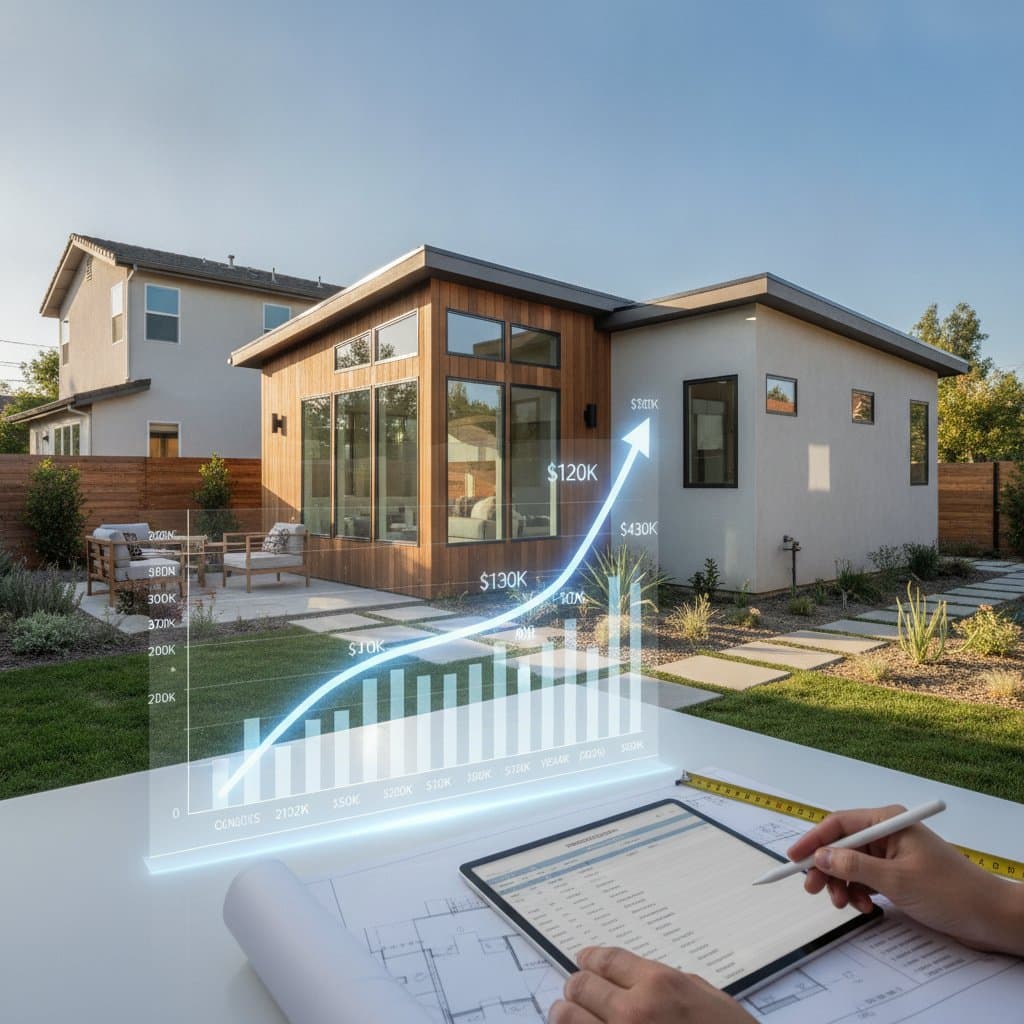
Prefab ADUs yield robust financial gains relative to other property upgrades. Real estate analyses indicate that homes featuring standalone ADUs appreciate by 20 to 35 percent at sale, contingent on regional markets and execution quality.
Prospects for Revenue Generation
Compact rear-yard units facilitate reliable leasing opportunities. Rental proceeds can service financing obligations, with recovery timelines influenced by community demand and permitting constraints. Numerous owners recoup investments within a few years.
Versatile Applications
ADUs extend beyond monetization to support varied needs, including accommodations for visitors, dedicated workspaces, or extended family arrangements. This adaptability enhances everyday utility irrespective of rental utilization.
Selecting a Qualified Builder
Coordination among trades remains critical in prefab endeavors. A builder versed in ADU executions streamlines operations.
Selection Criteria
- Proven track record with prefabricated methods and regional codes
- Clear, detailed quotations delineating site, transport, and assembly expenses
- Verifiable portfolios of prior installations for on-site examination
- Comprehensive assurances covering construction and labor quality
Secure a contract specifying project phases from approvals to completion inspections. This framework mitigates surprises in costs or schedules.
Addressing Common Inquiries
How do prefab and modular ADUs differ?
Prefabricated ADUs assemble predominantly off-site, whereas modular variants ship in segments for property-based joining. Each complies with prevailing standards and delivers comparable performance.
Are independent addressing or metering necessary?
Certain districts mandate distinct meters for leasable spaces, while others permit shared infrastructure. Consult utility authorities prior to linkages.
What timelines apply to prefab ADU completion?
Manufacturing phases span weeks, with site setup and integration adding further intervals. Overall durations substantially shorten versus site-built alternatives.
What financing avenues exist for prefab ADUs?
Home equity loans and dedicated ADU programs abound among lenders. Evaluate rates and verify acceptance of prefabricated builds.
Advancing Your Prefab ADU Project
Establishing a prefab ADU efficiently augments habitable areas and elevates asset worth. Initiate with precise financial planning, thorough property evaluations, and prompt dialogues with permitting offices to propel your vision forward.