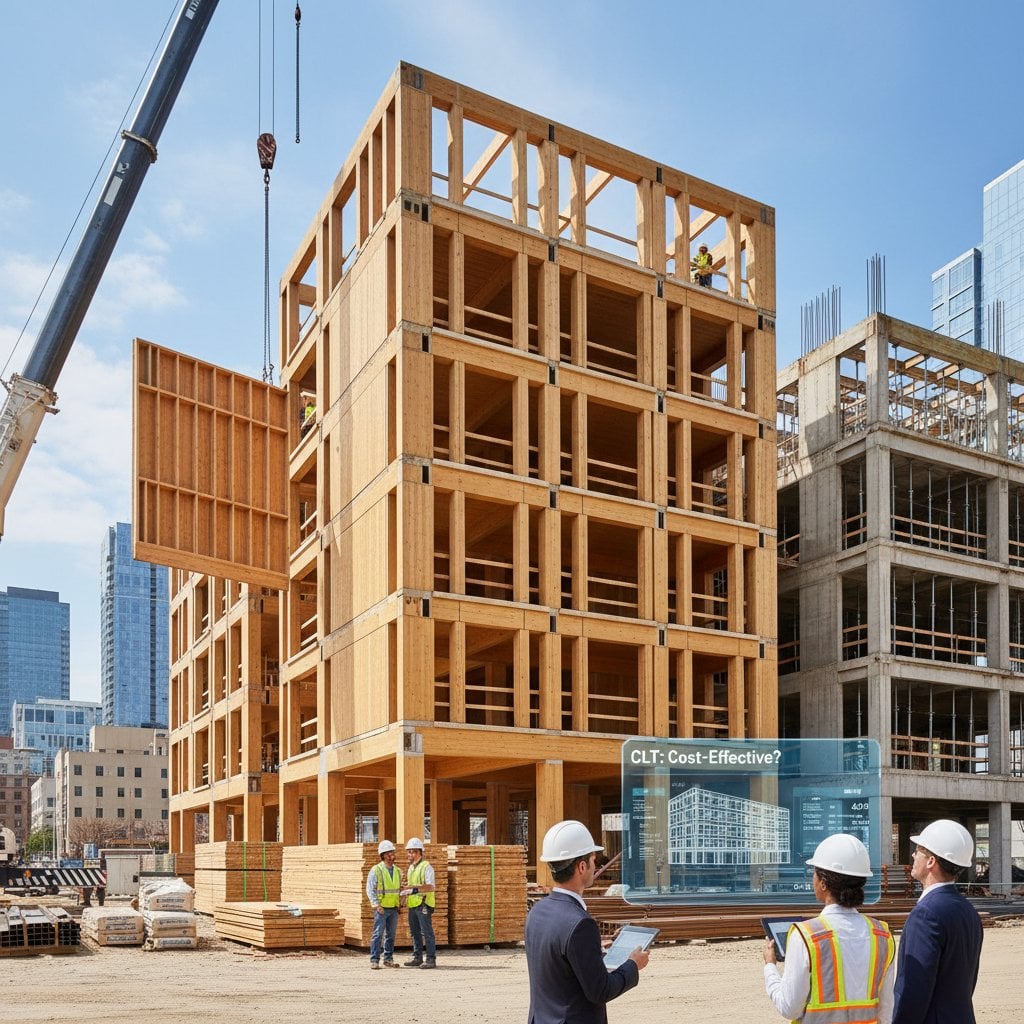
Mass Timber's Rise: CLT vs Traditional Costs
Mass timber construction has transitioned from experimental projects to widespread use in urban developments. Developers and builders increasingly select cross laminated timber (CLT) for its balance of structural integrity, rapid assembly, and reduced environmental impact. This article compares CLT costs to those of concrete and steel, focusing on projections for 2026, while highlighting performance metrics and long-term financial benefits.
Professionals must evaluate initial expenses alongside operational savings to determine the best material for specific sites. As building codes evolve to support taller wood structures, CLT emerges as a viable option for mid-rise commercial and residential projects. The following sections break down key factors influencing cost decisions.
Understanding CLT and Mass Timber
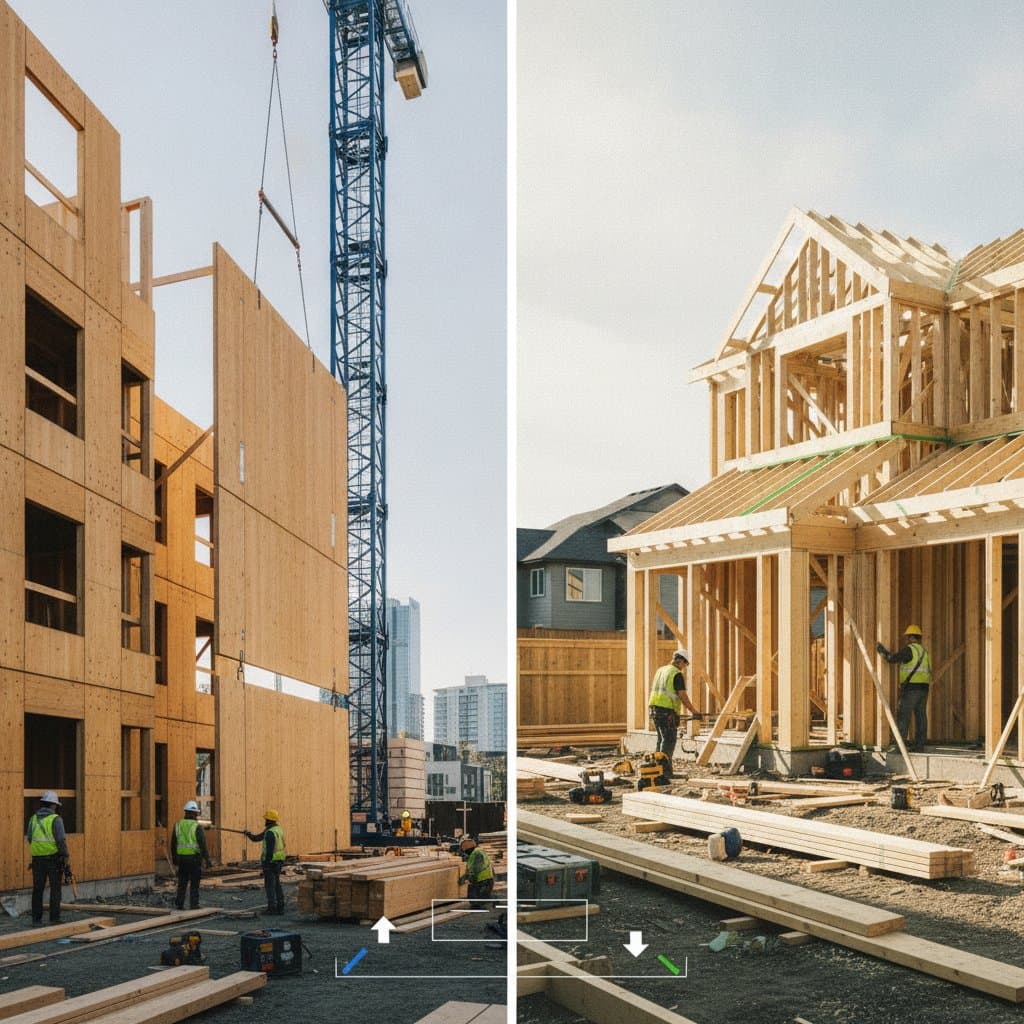
Cross laminated timber consists of lumber layers bonded perpendicularly with adhesives, creating panels that rival steel in rigidity. These panels serve as walls, floors, and roofs in modular systems, enabling precise on-site assembly. Unlike concrete, which demands extensive formwork and curing time, CLT arrives ready for installation.
Steel production involves high-energy processes that release significant carbon emissions, whereas CLT sequesters carbon during tree growth. Builders source CLT from managed forests to minimize ecological footprints. This material shift supports global goals for net-zero construction by 2050.
Why Builders Choose CLT
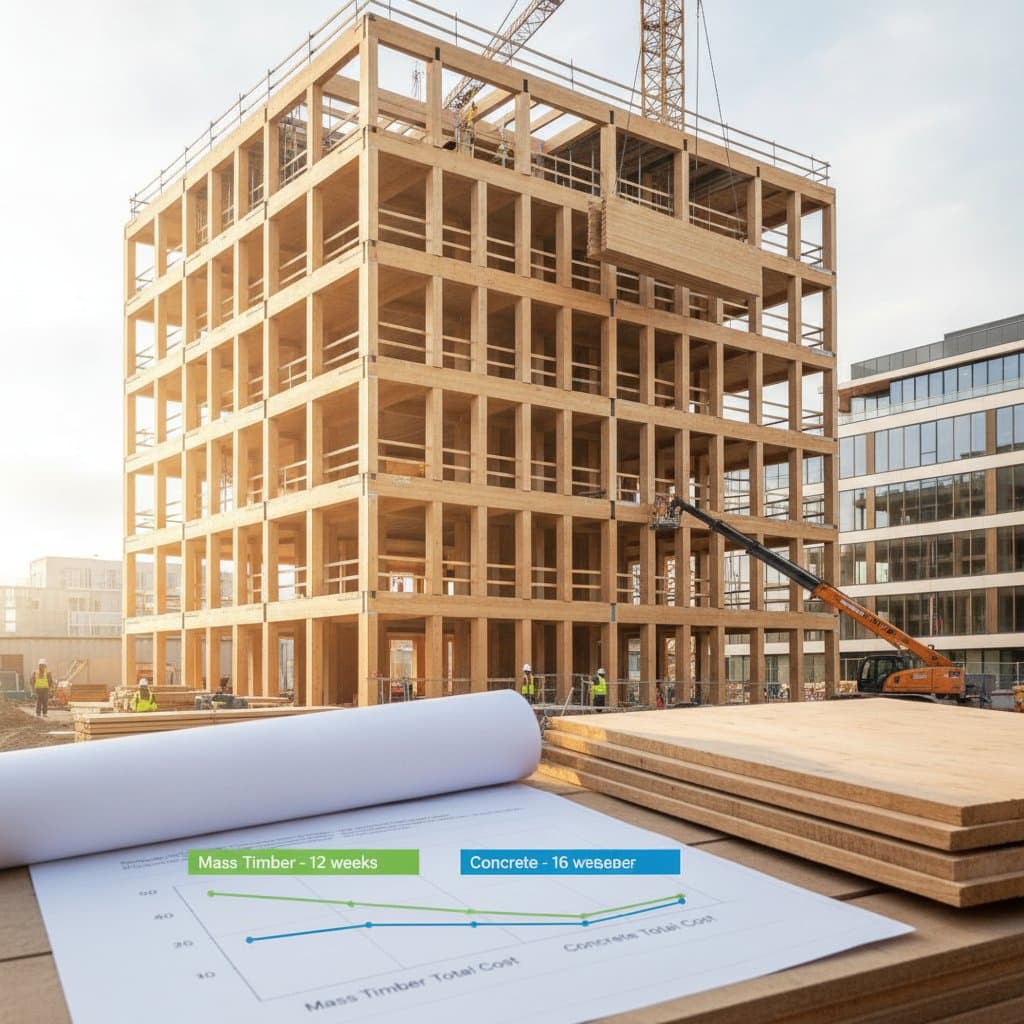
- Speed: Factory prefabrication allows erection in weeks rather than months, slashing labor hours by 30 percent on average.
- Weight: At one-fifth the density of concrete, CLT reduces structural loads and simplifies transportation logistics.
- Aesthetics: Natural grain patterns enhance interior spaces, often eliminating the need for additional cladding.
- Sustainability: CLT qualifies for LEED credits through low embodied energy and recyclable components.
Design and Performance Advantages
Structural Strength
CLT achieves compressive strengths up to 40 megapascals, comparable to reinforced concrete, while flexing under dynamic loads like earthquakes. Engineers design connections with metal brackets to ensure ductility. Testing confirms CLT's reliability in regions prone to high winds or seismic activity.
Thermal Efficiency
CLT panels provide an R-value of 1.4 per inch, outperforming bare steel frames. This inherent insulation complies with stringent energy standards, such as those in California's Title 24. Building owners realize measurable reductions in HVAC system sizes and operational expenses.
Acoustic Comfort
CLT's mass dampens sound transmission, achieving sound transmission class ratings above 50 decibels. In multifamily dwellings, this feature minimizes noise complaints and supports occupant satisfaction surveys. Acoustic modeling guides panel thickness selections for optimal performance.
Fire Resistance
During exposure to flames, CLT forms a char layer at 0.6 millimeters per minute, insulating inner layers. Assemblies tested to ASTM E119 standards endure two-hour fire exposures without collapse. Code-compliant treatments further enhance safety in public buildings.
Regional and Material Considerations
Climate
In humid areas, builders apply vapor-permeable membranes to CLT surfaces, preventing condensation within panels. Coastal installations incorporate corrosion-resistant fasteners to withstand salt exposure. These adaptations ensure durability over decades.
Cold regions benefit from CLT's ability to retain heat, stabilizing indoor climates without supplemental insulation. Site-specific assessments determine the need for additional weatherproofing layers.
Material Sourcing
Primary species include Douglas fir and hemlock, processed in North American or European mills. Certifications from the Forest Stewardship Council verify chain-of-custody practices. Procurement strategies focus on local suppliers to cut shipping emissions and costs.
Building Codes and Permits
The 2021 International Building Code permits mass timber up to 18 stories in certain configurations. Jurisdictions like British Columbia lead with approvals for hybrid designs. Early engagement with authorities streamlines permitting for CLT projects.
Maximizing Return on Investment
CLT delivers value through accelerated timelines and operational efficiencies. Investors calculate net present value by factoring in reduced downtime and utility bills. Hybrid applications, such as CLT floors over concrete bases, optimize budgets for complex sites.
Energy Savings
Projects using CLT report 12 percent lower annual energy use, translating to $0.50 per square foot in savings. Lifecycle analyses project payback periods under five years for insulation benefits alone.
Reduced Foundation Costs
Lighter loads enable pile foundations 15 to 25 percent smaller in diameter, particularly on expansive clays. Geotechnical reports guide these economies, avoiding overdesign common with heavier materials.
Lower Waste
Prefabrication generates less than 5 percent waste by volume, compared to 20 percent for cast-in-place concrete. Recycled scraps feed into particleboard production, closing material loops.
Market Appeal
CLT buildings command 5 to 10 percent premiums in resale markets due to wellness certifications. Tenants in tech sectors prioritize biophilic elements, accelerating occupancy rates by 20 percent.
Maintenance and Longevity
CLT demands minimal intervention to preserve performance. Focus inspections on sealant integrity around penetrations and edges. Professional assessments every five years detect early wear.
Recommended maintenance schedule:
- Annually review roof and wall junctions for sealant degradation.
- Biannually test interior humidity levels to stay below 60 percent.
- Decennially engage structural engineers for load verification.
Proper protocols extend service life beyond 100 years, matching concrete benchmarks.
Expert Insight and Industry Trends
Industry reports forecast CLT market growth at 15 percent annually through 2026, driven by cost parity with steel. Hybrid systems integrate CLT envelopes with concrete elevators, yielding 8 percent savings in total project budgets. Architects emphasize timber's role in passive house designs for energy-neutral outcomes.
Wellness trends favor exposed CLT ceilings, which studies link to 15 percent productivity gains. As supply chains mature, material prices stabilize at $8 to $12 per square foot.
Frequently Asked Questions
Is CLT more expensive than concrete? Initial costs align closely at $150 to $200 per square foot installed, but CLT trims 20 percent from labor budgets.
Can CLT handle moisture and humidity? Engineered sealants and drainage planes protect against ingress, with warranties up to 50 years.
Does CLT require special maintenance? Standard cleaning suffices; avoid abrasive methods on finishes.
How tall can a CLT building be? Codes support up to 12 stories pure CLT, or 25 stories in hybrids.
Can CLT be used in home additions? Modular panels bolt to existing foundations, enabling seamless expansions.
Implementing CLT for Cost-Effective Builds
Adopting CLT requires upfront planning with material specialists to model expenses accurately. Collaborate on value engineering to blend CLT with traditional elements where advantages align. This approach unlocks savings in time, resources, and environmental impact.
Developers who prioritize CLT gain competitive edges in sustainable markets. Projections for 2026 indicate broader availability and refined techniques, solidifying CLT's role in efficient, resilient construction.