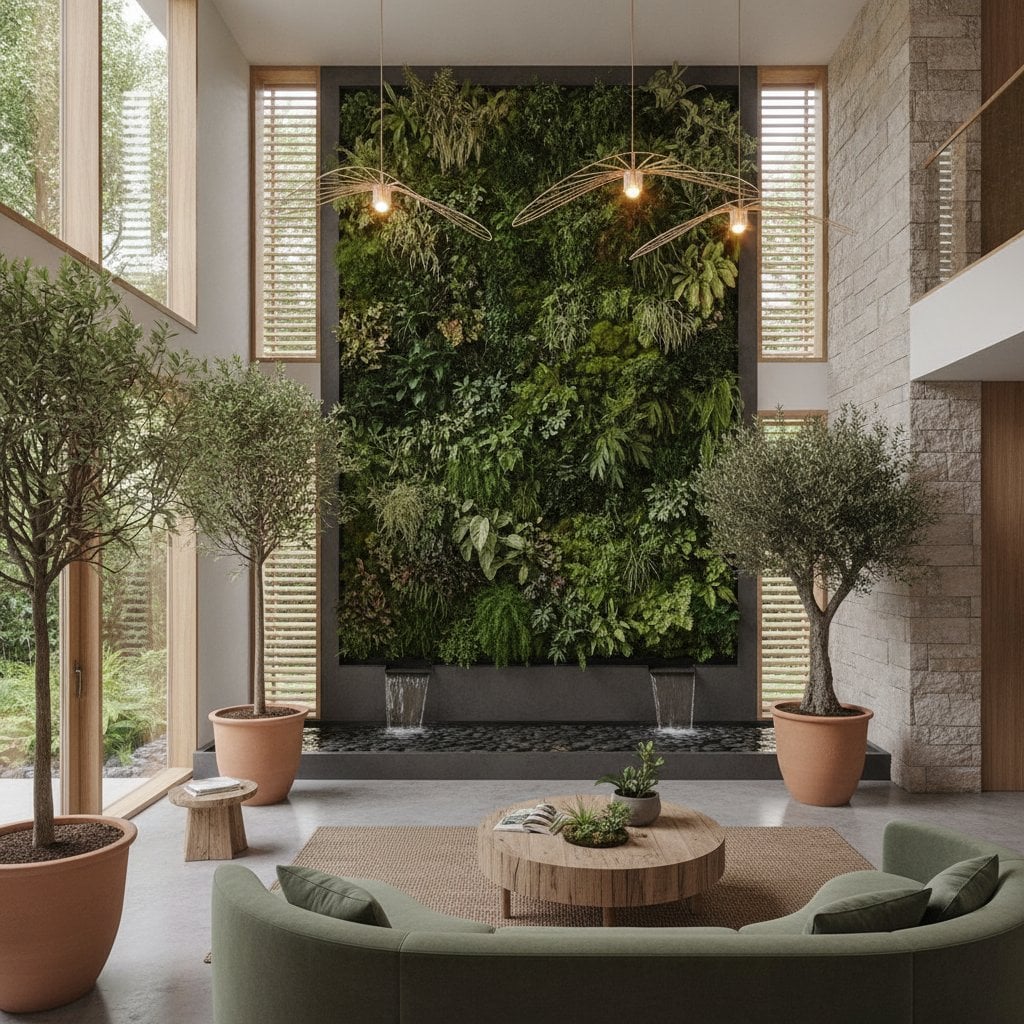
Biophilic Remodel Costs: Nature Integration Budget Guide
Bringing nature into your home through biophilic design creates a calming and visually rich environment. This guide outlines realistic costs for key elements so you can plan a remodel that aligns with both your budget and design goals.
Understanding Biophilic Design
Biophilic design incorporates natural light, organic materials, plants, and patterns that echo outdoor environments. The approach improves well-being and comfort while influencing material choices, layout decisions, and lighting plans during a remodel.
Key Cost Factors in Biophilic Remodeling
Project costs vary with scale, material selection, and any required structural work. The categories below represent the most common expenses homeowners encounter.
- Natural Materials and Finishes
Natural wood, stone, clay, and bamboo introduce warmth and texture. These options typically exceed the price of synthetics yet deliver greater durability.
- Select reclaimed wood or locally sourced stone to manage expenses.
- Pair wood paneling with limewash walls or place stone thresholds beneath natural fiber rugs.
- Indoor Plant Integration
Potted plants offer an immediate connection to nature. Larger installations such as built-in planters require additional investment for soil depth and watering systems.
- Position tall specimens in bright corners and layer smaller varieties on wooden shelves.
- Living Walls
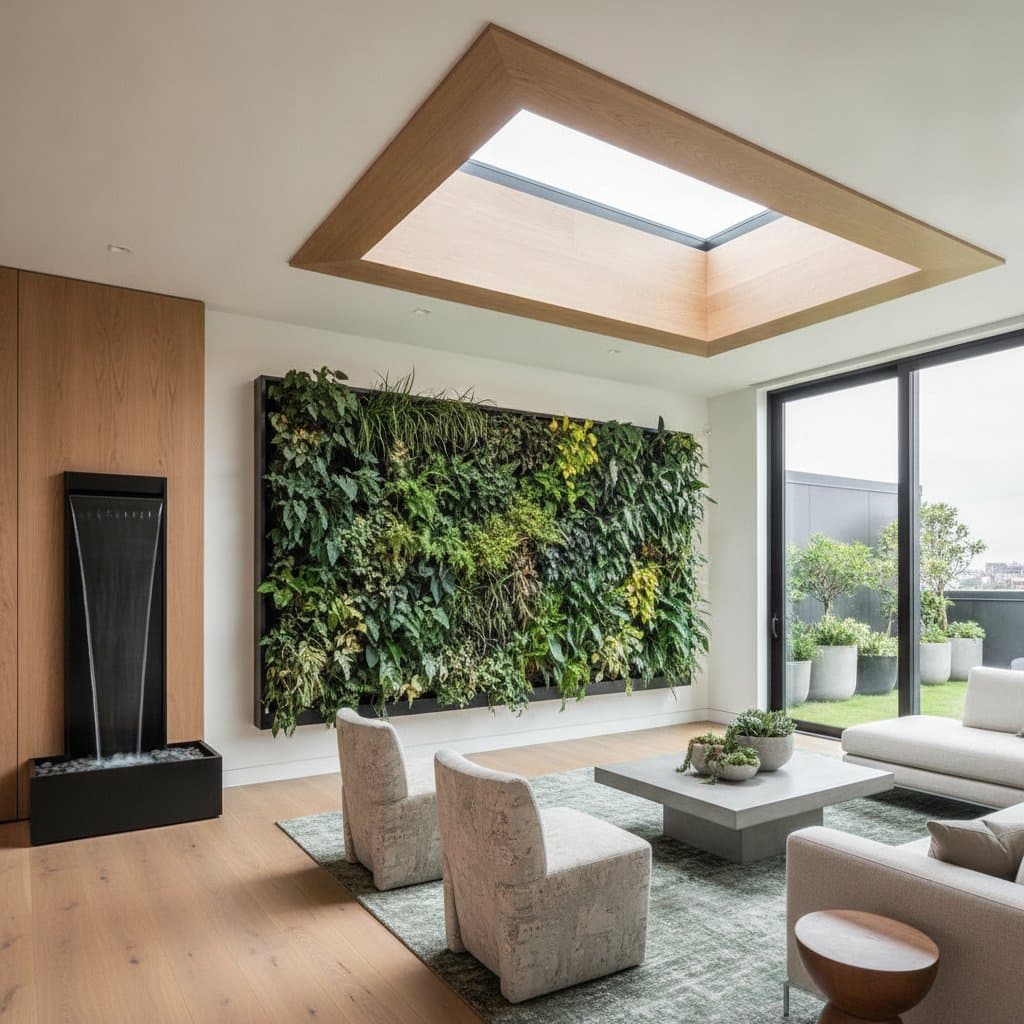
A living wall covers a vertical surface with plants and includes an integrated irrigation system. Structural reinforcement and plumbing add to the overall cost.
- Combine the wall with stone flooring and glass partitions to improve light distribution.
- Natural Light and Window Design
Larger windows and skylights increase natural light levels throughout the day. Frame material and any necessary roof modifications affect pricing.
- Choose oak frames paired with linen curtains for a balanced look.
- Water Features
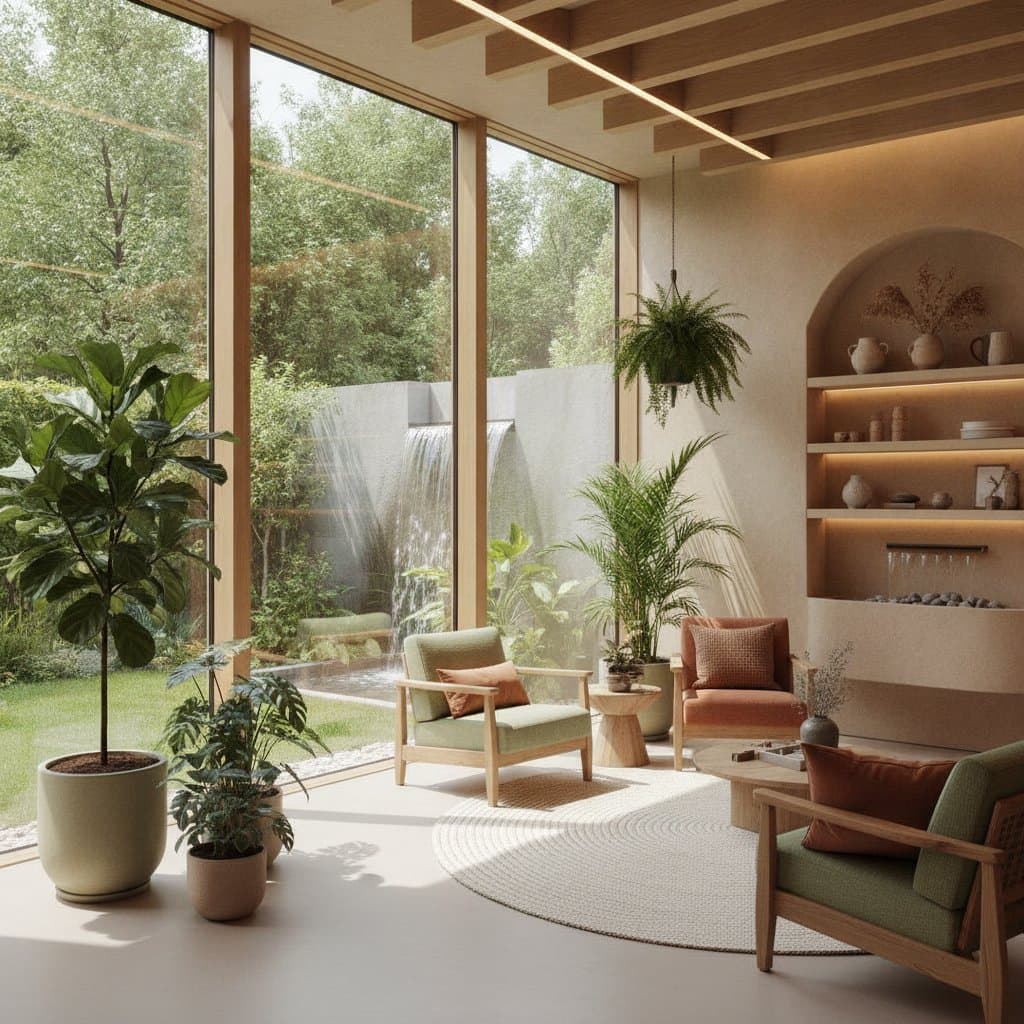
Indoor fountains or small ponds introduce sound and reflective surfaces. Filtration equipment raises costs for larger outdoor versions.
- Site water elements near stone paths and low-growing moss for cohesive styling.
- Natural Color Palettes
Earth tones and soft greens replicate outdoor hues without structural changes. Quality paint and surface preparation determine the final expense.
- Apply muted green on main walls and reserve darker wood tones for flooring accents.
- Sustainable Lighting Systems
LED fixtures that adjust color temperature support biophilic goals after sunset. Smart controls increase the initial outlay but improve daily usability.
- Mount indirect ceiling sources alongside rattan sconces to highlight textures.
- Texture and Pattern
Visible wood grain, stone veining, and woven textiles add visual interest. Custom applications in high-traffic areas require careful budgeting.
- Blend ceramic tiles with woven upholstery to maintain both durability and softness.
Practical Budget Planning
Small updates focused on paint, plants, and lighting stay modest in cost. Larger projects that involve structural changes reach higher price points. Consider these steps when allocating funds.
- Rank desired features by impact. Plants and daylight improvements often deliver noticeable results at lower cost.
- Source wood and stone from regional suppliers to reduce shipping fees.
- Include routine maintenance such as irrigation checks and sealant renewal in long-term projections.
- Handle cosmetic work yourself while engaging licensed trades for plumbing and electrical tasks.
- Weigh initial material costs against replacement intervals to gauge true value.
How Materials and Climate Affect Costs
Local climate guides material performance and upkeep needs. Humid areas require moisture-resistant finishes, while arid zones benefit from drought-tolerant plants.
Wood needs periodic sealing in damp conditions. Stone withstands heavy use yet demands proper subfloor support. Plant species should match indoor light levels and humidity. Water systems require winter protection in regions with freezing temperatures.
Cost Examples by Feature Type
- Accent plant wall with irrigation: medium budget range.
- Full living wall with engineering support: high budget range.
- Natural wood cladding: medium to high budget range.
- Skylight installation: medium budget range.
- Indoor water feature with pump: medium to high budget range.
- Natural stone flooring: high budget range.
Maintenance and Long-Term Care
Regular inspections keep irrigation lines and lighting controls functioning properly. Reapply protective oils to wood surfaces as finishes wear. Rotate plants to ensure even light exposure and clean natural materials with nonabrasive methods to preserve surface texture.
Daily Experience After Completion
Completed spaces reward occupants with shifting light, varied textures, and living greenery. These elements continue to influence mood and comfort long after installation ends.