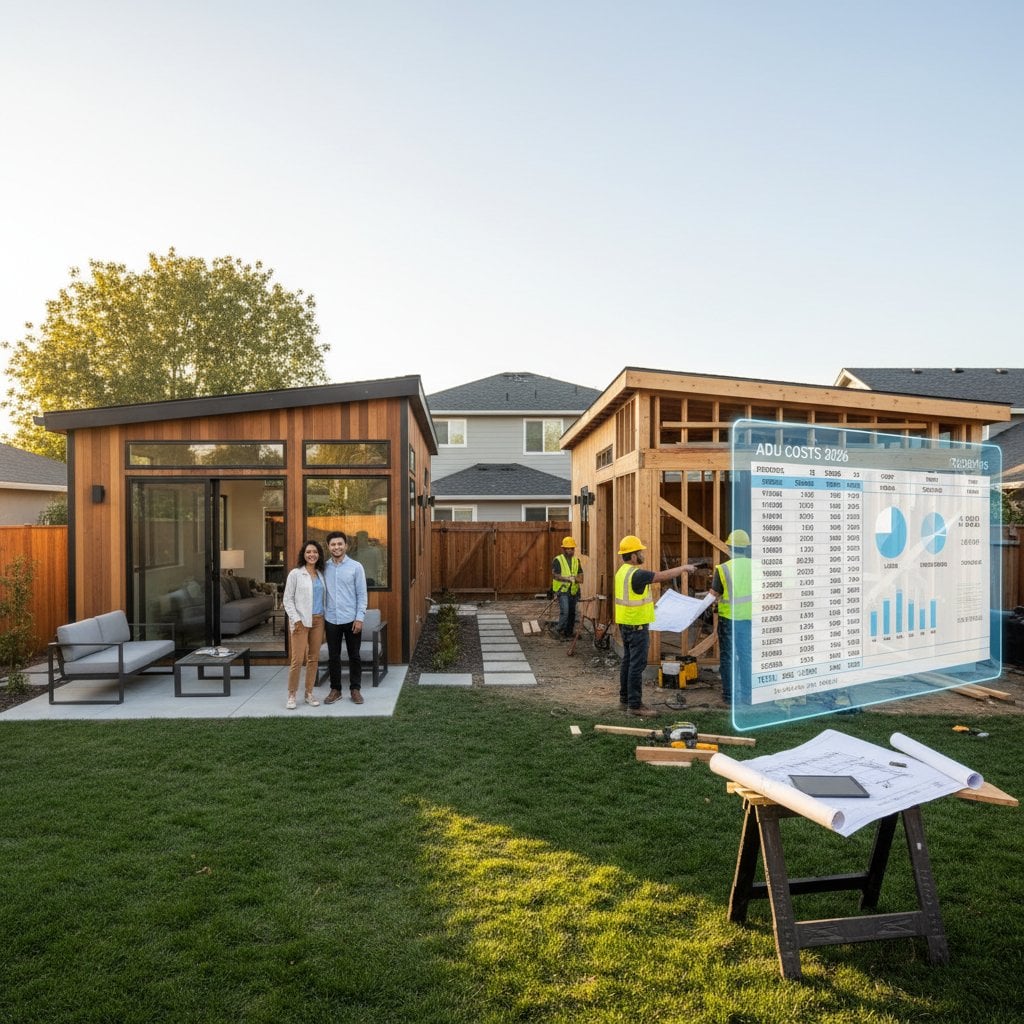
2026 ADU Costs Breakdown: From Granny Flats to Backyard Cottages
Accessory dwelling units, commonly known as ADUs, offer additional living space and enhance property values. These compact structures function as rental properties, guest accommodations, or family residences. A thorough grasp of cost estimates and influencing factors proves essential before initiating construction.
Quick Cost Overview
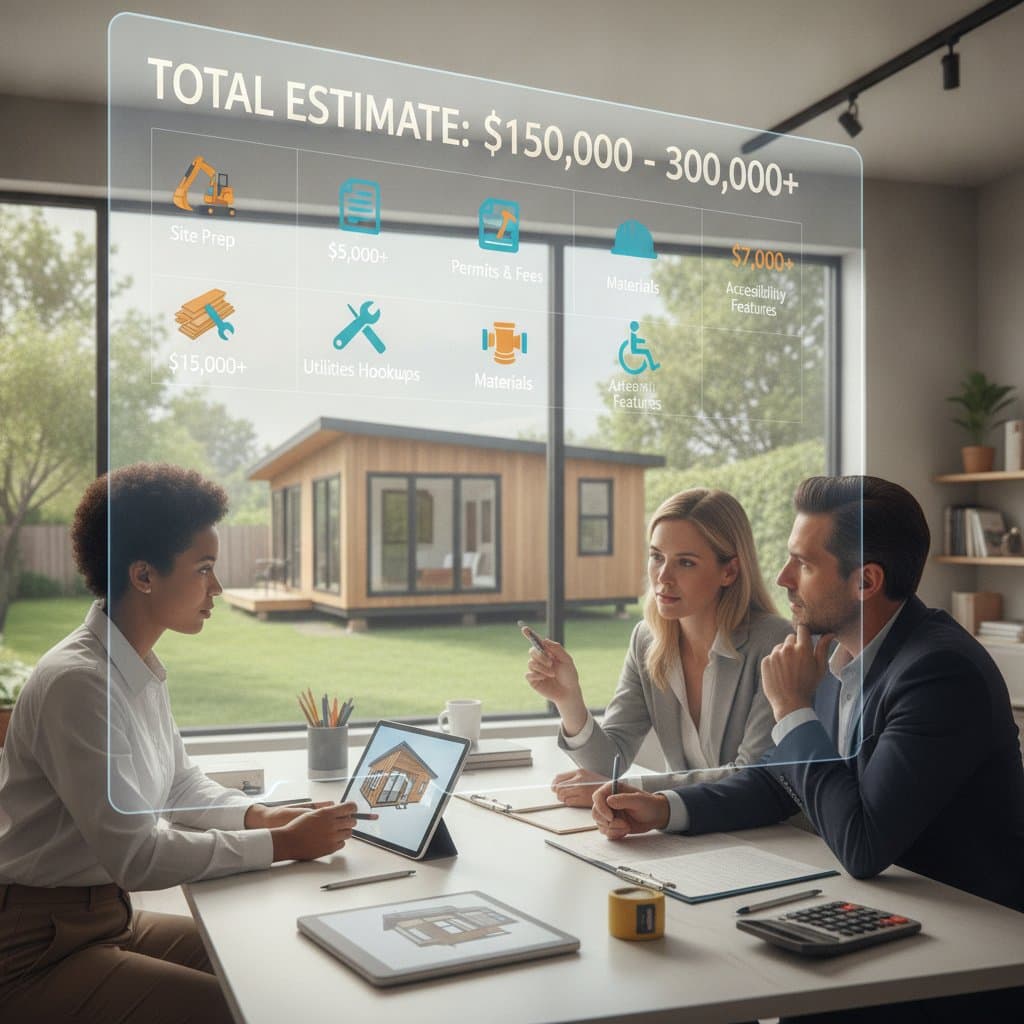
The typical expense for constructing an ADU falls between $150,000 and $350,000, with many owners allocating approximately $225,000 for a fully equipped unit. Variations arise from unit size, design intricacy, geographic location, and the choice between prefabricated or site-built options. Labor and materials constitute the primary expenditures, succeeded by permitting, site groundwork, and utility integrations.
Key elements driving costs encompass:
- Construction style: Detached structures, attached additions, or garage transformations
- Dimensions: Compact studios compared to complete one- or two-bedroom configurations
- Utility integrations: Connections for sewer, electricity, and water systems
- Interior finishes: Basic selections versus premium customizations
- Workforce expenses: Regional labor rates and contractor expertise levels
Essential Insights
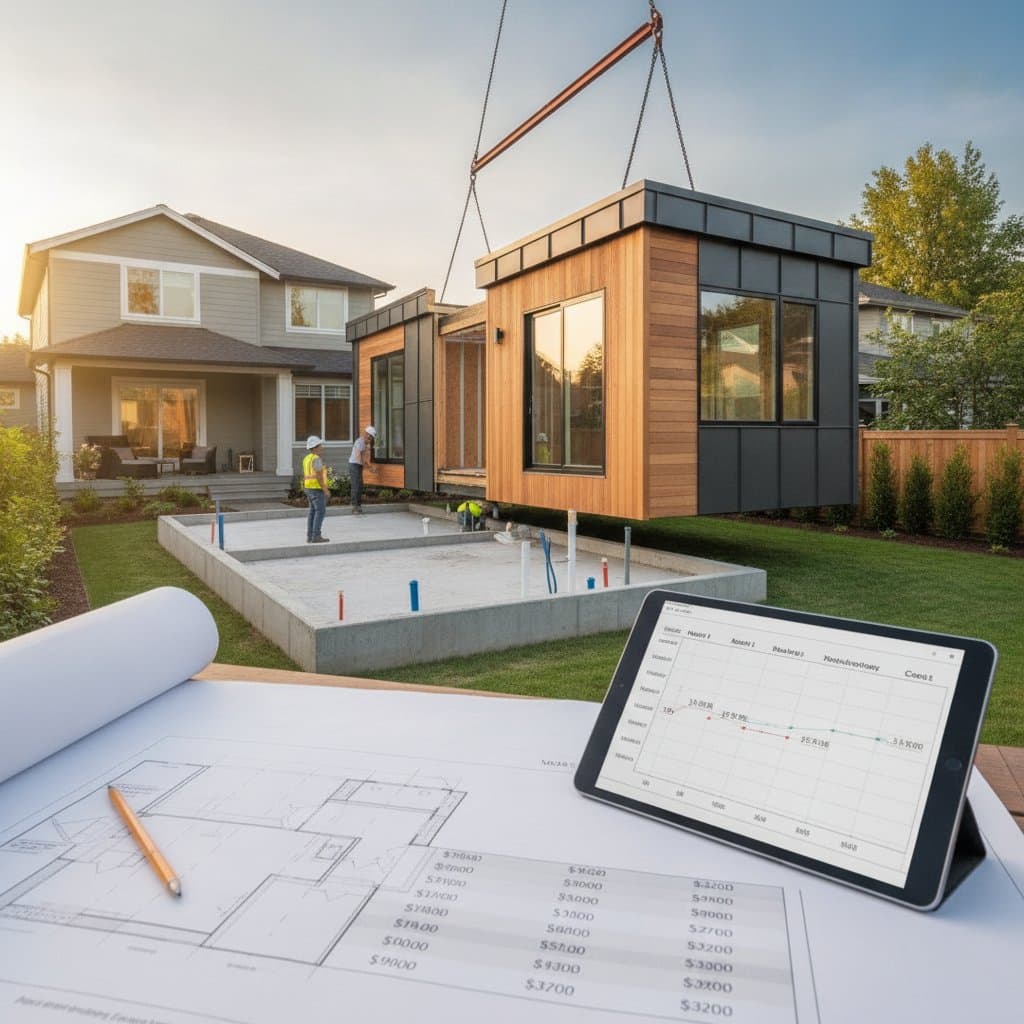
Detached ADUs generally incur higher expenses than attached variants or conversions. Utility linkages may contribute $10,000 to $40,000, contingent on terrain specifics. Opting for prefabricated units can diminish costs by as much as 20 percent relative to custom constructions. Municipal permitting and design evaluations might total $10,000 or higher. Engaging experts for design and oversight minimizes the risk of budget exceedances.
Expenses by Size and Configuration
Studio ADU (250 to 400 square feet)
Anticipate expenditures from $120,000 to $200,000. Such units demand comprehensive plumbing, electrical systems, and foundational elements despite their modest scale. Prefabricated studios typically align with the lower spectrum of this range.
One-Bedroom ADU (400 to 800 square feet)
Owners commonly invest $200,000 to $275,000. Expanded areas necessitate greater quantities of materials, broader foundations, and installations for complete kitchens and bathrooms.
Two-Bedroom ADU (800 to 1,200 square feet)
Expansive cottage-style units may escalate to $300,000 to $400,000 or beyond. These frequently feature enhanced finishes, additional bathrooms, and independent access points.
Garage Conversion ADU
Transforming an existing garage into habitable space generally costs $100,000 to $180,000, influenced by the structure's existing integrity and necessary modifications to satisfy code standards.
Professional Services, Contractor Expenses, and DIY Considerations
Engaging a licensed contractor comprises 40 to 60 percent of the overall ADU budget. Such professionals oversee design phases, permitting processes, subcontractor coordination, and inspection adherence. The assurance of compliance and efficiency they deliver surpasses potential savings from self-managed efforts in most scenarios.
A comprehensive DIY approach remains impractical for individuals lacking construction background and sufficient availability. Homeowners may undertake non-structural tasks such as interior painting, flooring installation, or landscaping, potentially conserving $5,000 to $10,000. Critical elements like structural framing, electrical wiring, plumbing installations, and foundational work require professional intervention to ensure safety and regulatory conformity.
Scenarios for DIY Involvement
Basic interior tasks, including painting, trim placement, or simple flooring, suit skilled homeowners. These efforts lower expenses without compromising code requirements.
Instances Necessitating Professionals
Licensed specialists handle foundations, framing, roofing, electrical, and plumbing components. Mistakes here invite structural failures, inspection rejections, or safety risks. A general contractor facilitates permitting, timelines, and subcontractor management.
Expense Analysis
Professional oversight elevates initial outlays yet mitigates uncertainties and guarantees adherence. Selective DIY contributions could trim 10 to 15 percent from totals, provided timelines hold and inspections proceed without remedial expenses.
Supplementary Expense Influences
Permitting and Administrative Fees
Local regulations dictate substantial differences. Allocate $5,000 to $15,000 for building permits, design assessments, and infrastructure impact charges.
Site Development and Utility Extensions
Requirements for land grading, vegetation clearance, or novel utility provisions add $10,000 to $50,000.
Design and Technical Planning
Fees for architectural drafting and engineering analyses span $5,000 to $20,000, scaled to project sophistication.
Selection of Materials
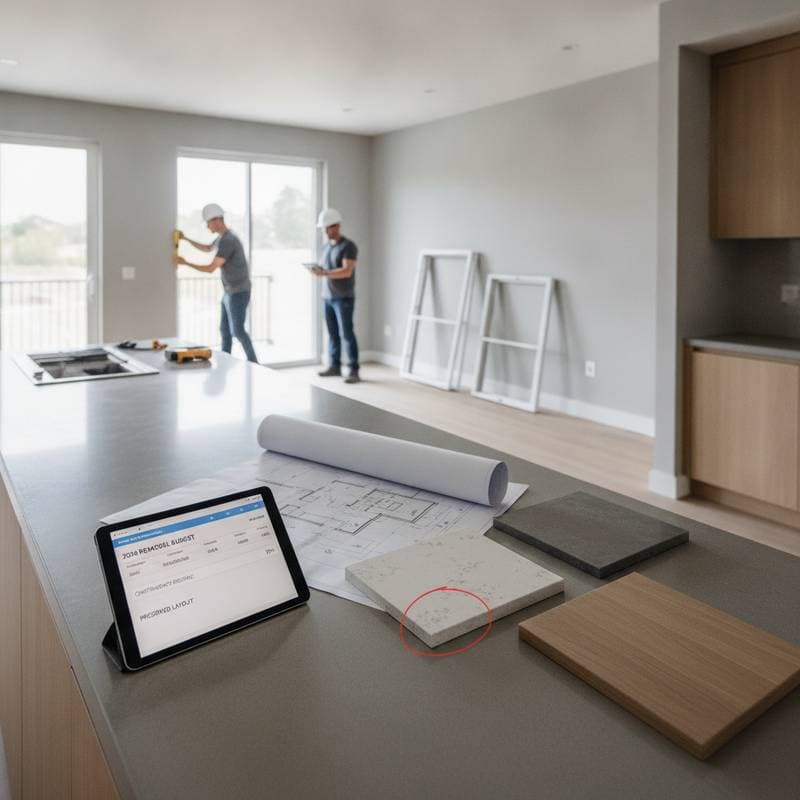
Economical options like laminate surfaces and standard cabinetry maintain affordability. Premium elements such as bespoke cabinetry, stone surfaces, and advanced glazing elevate costs by thousands.
These estimates derive from nationwide averages, informed by contractor quotations, project records, and owner feedback. They incorporate labor, materials, permits, and utilities for both new builds and adaptations. Regional variables affect final figures; securing bids from multiple sources provides the most accurate projections.
Strategies to Minimize ADU Construction Expenses
- Select straightforward designs. Simplified geometries reduce framing and roofing demands.
- Incorporate prefabricated elements. Pre-assembled walls or modular sections shorten on-site labor.
- Leverage proximate utilities. Tying into primary residence systems avoids extensive excavation and linkage fees.
- Constrain overall area. Reduced dimensions lessen material and workforce requirements.
- Source materials regionally. Nearby vendors frequently provide competitive rates on conventional supplies and surfaces.
Investment Returns
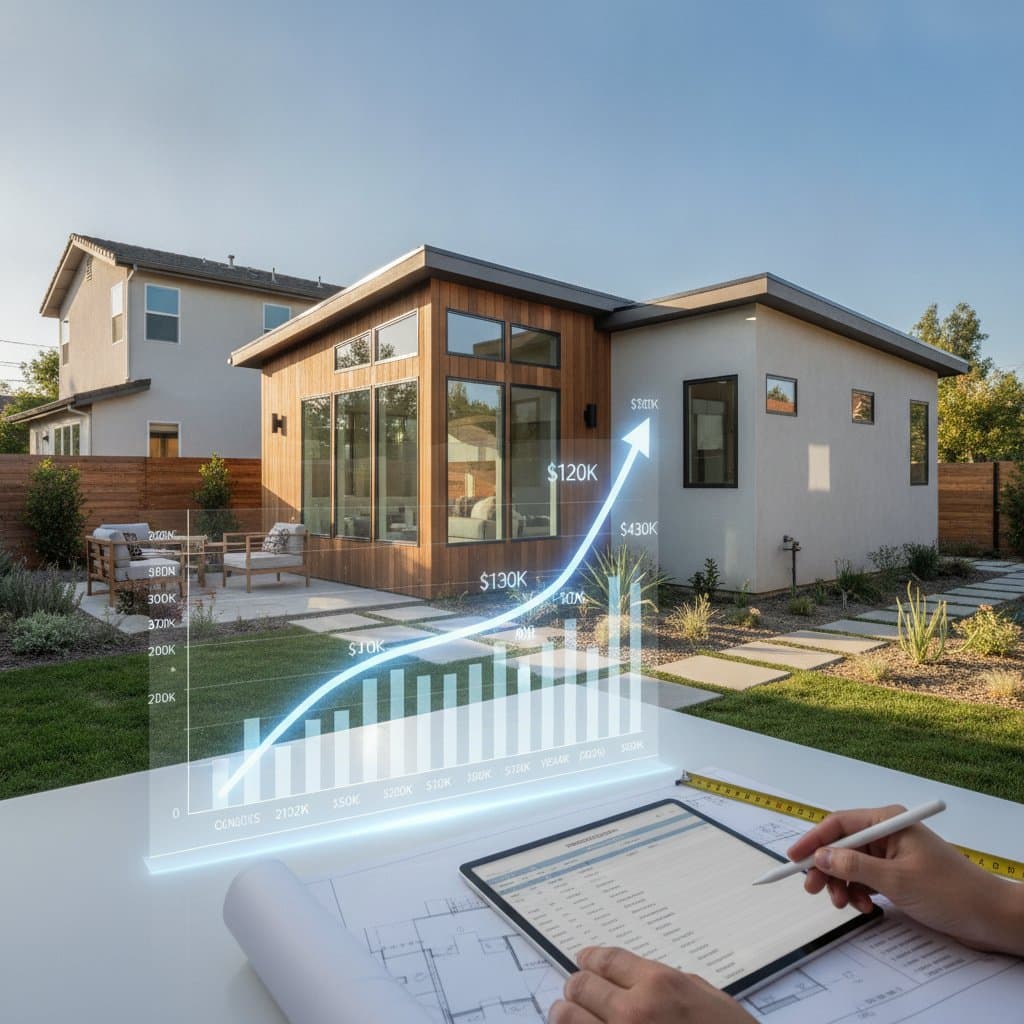
An ADU elevates property worth by 25 to 35 percent and supports steady rental revenue. For rental applications, annual yields span 5 to 10 percent, varying with locale and market conditions. As family quarters, the enduring appreciation frequently recoups significant portions of initial investments.
Frequently Asked Questions
What is the cost per square foot for an ADU?
Standard rates lie between $300 and $500 per square foot, modulated by design and quality specifications.
Is financing available for ADU projects?
Affirmative. Options include home equity loans, refinance cash-outs, or dedicated construction financing.
What duration does ADU construction require?
Completion occurs over several months following permit approvals.
Are independent utilities mandatory?
Regulations differ; some permit shared systems, others mandate distinct metering. Consult local codes during initial planning.
Which permits apply?
Typical requirements cover building, electrical, plumbing, and zoning approvals. Contractors or architects assist in navigating these.
Steps to Launch Your ADU Project
Constructing an ADU demands meticulous preparation and precise financial planning. Define objectives clearly, such as generating rental income, accommodating relatives, or amplifying asset value. Solicit at least three proposals from certified contractors, evaluating project scopes and cost structures diligently. Favor uncomplicated designs to rein in expenditures, and confirm permitting obligations promptly to prevent setbacks. Through informed decisions and expert support, your granny flat or cottage emerges as a worthwhile home addition and enduring financial asset.