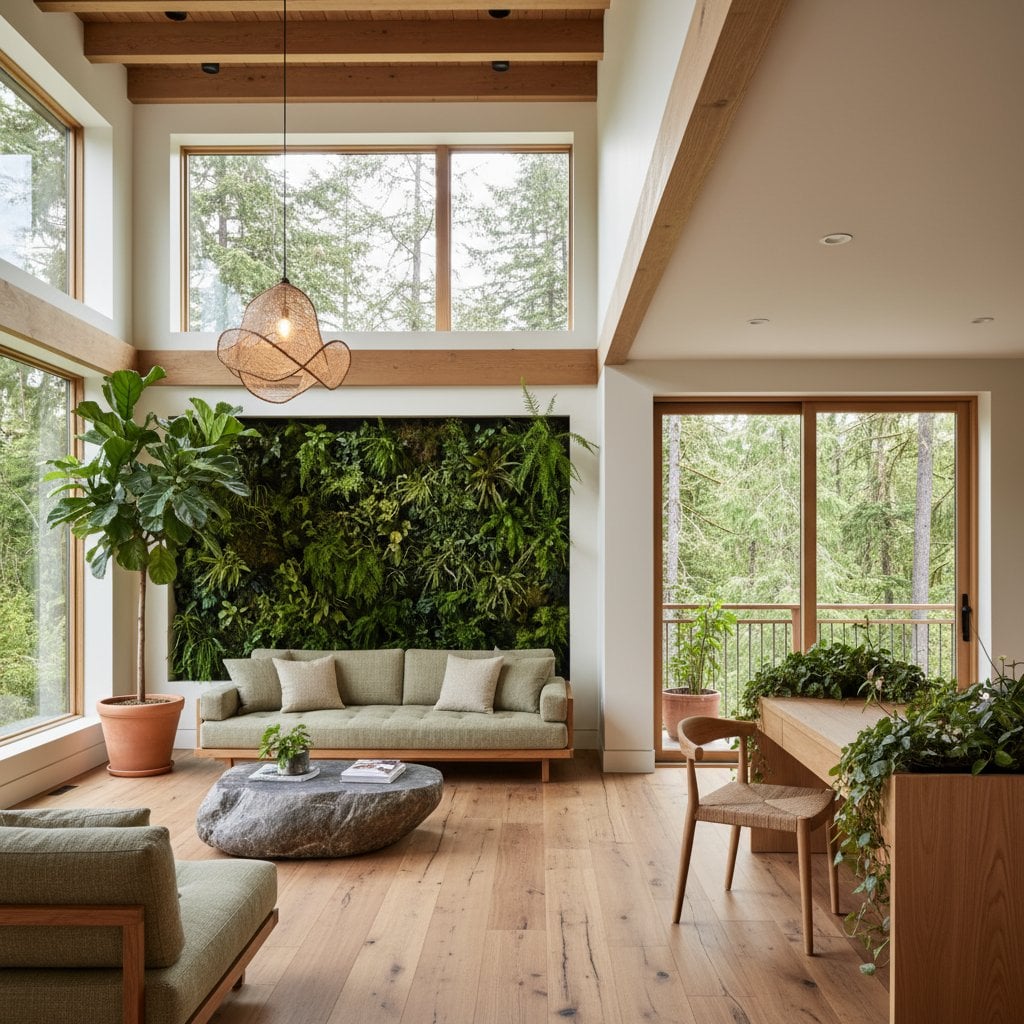
Comprehensive Cost Analysis
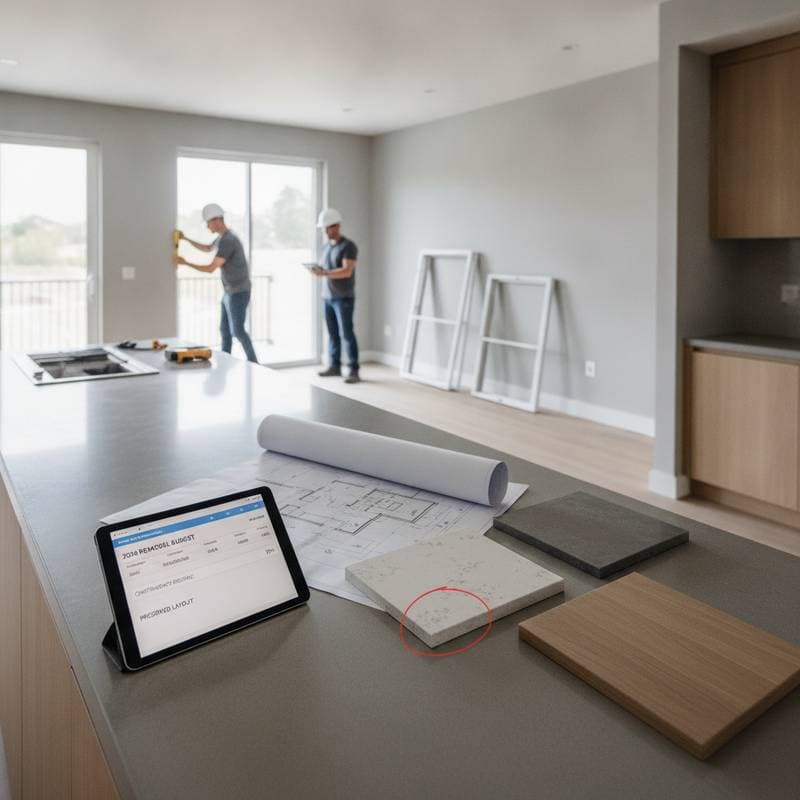
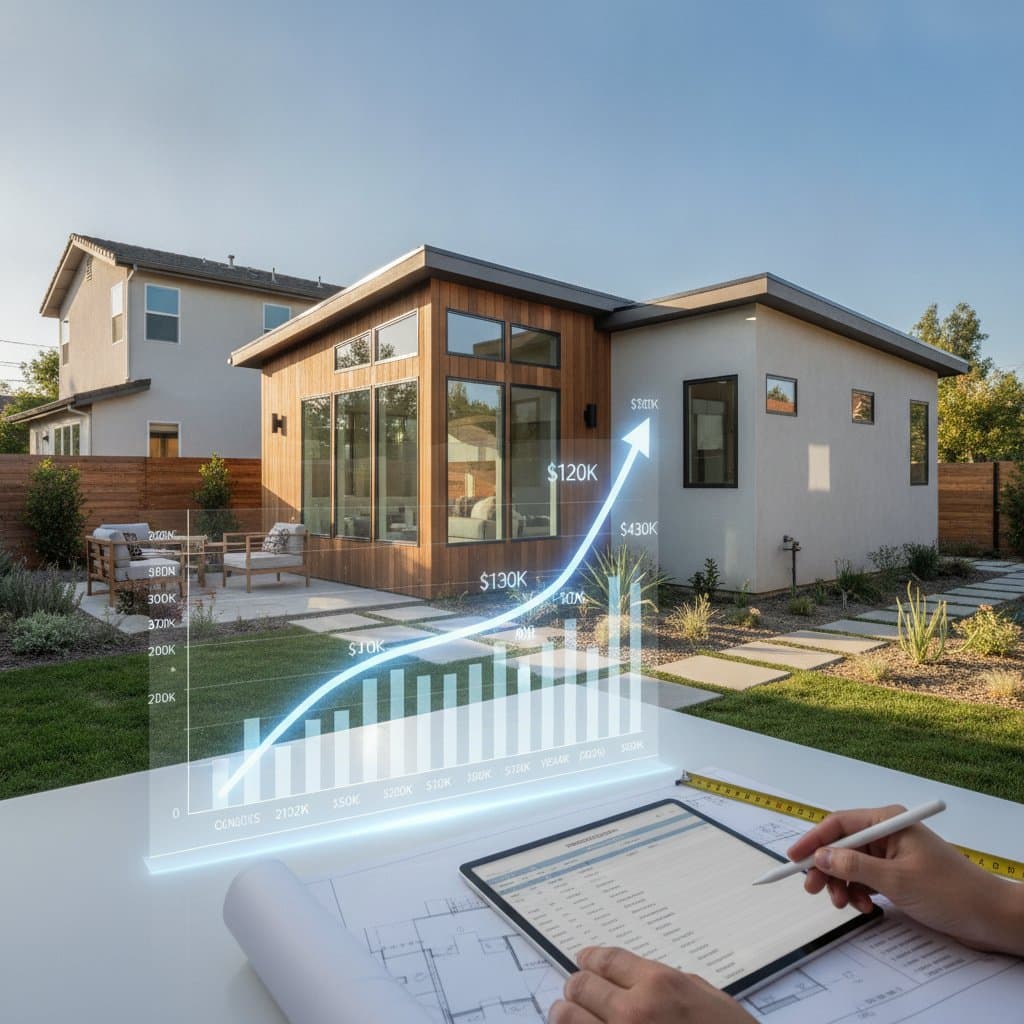
Expenses for biophilic design vary by project scale and material selections. Budgeting requires evaluation of both initial outlays and ongoing needs.
- Basic Enhancements: Introducing potted flora, eco-friendly coatings, or veneer overlays typically spans $500 to $3,000, ideal for quick refreshes in existing structures.
- Moderate Transformations: Projects such as clerestory additions, authentic timber facades, or modest fountains range from $12,000 to $25,000, factoring in regional labor rates and fixture dimensions.
- Premium Overhauls: Comprehensive setups with hydroponic facades, expansive glazing arrays, or symbiotic landscaping exceed $50,000, particularly with foundational modifications.
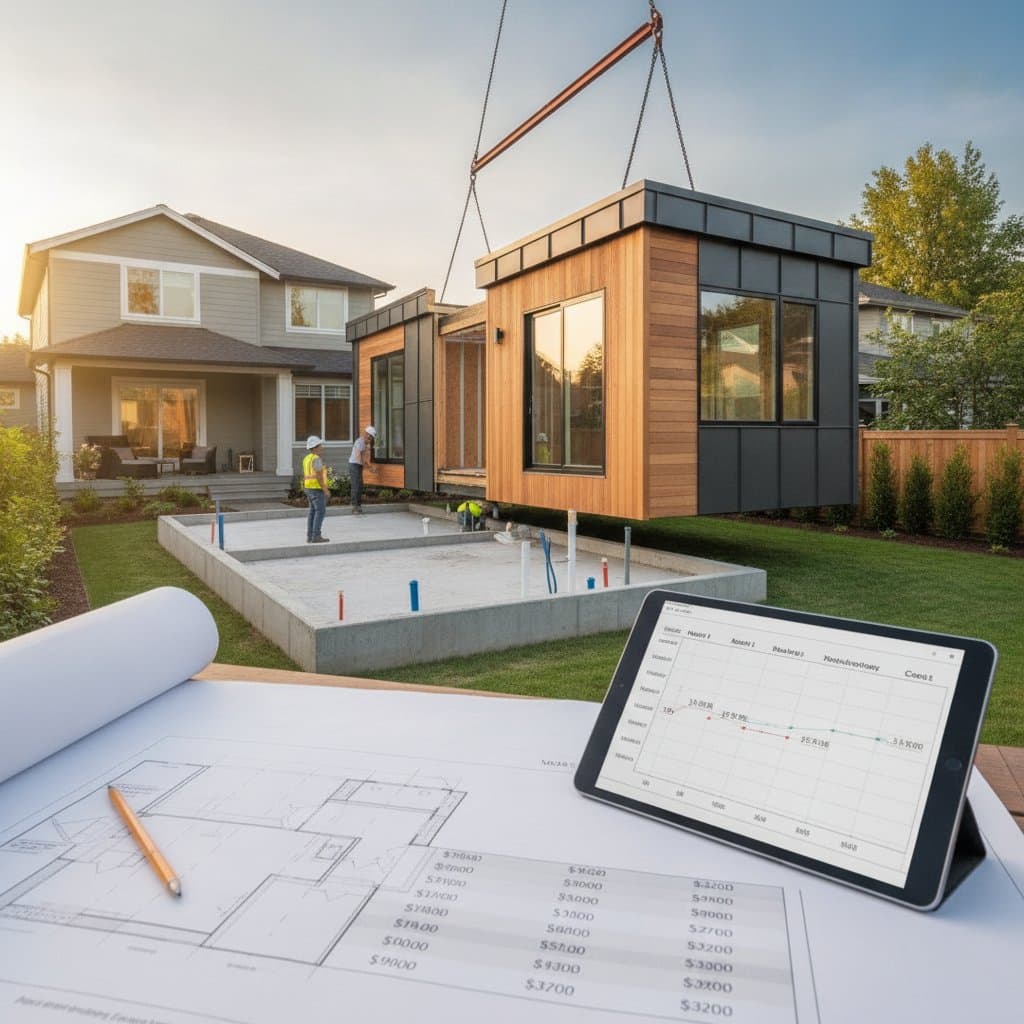
Professional involvement amplifies costs due to specialized labor. Artisanal tasks like quarried stone applications or bespoke joinery demand expertise to ensure durability. For instance, integrating reclaimed lumber requires acclimation periods to prevent warping, adding preparatory expenses.
DIY Versus Expert Execution
Certain biophilic facets lend themselves to self-directed efforts, empowering cost control. Tasks like arranging botanicals, applying wood stains, or selecting palettes suit novice skills. However, ventures with plumbing, wiring, or load-bearing alterations necessitate certified specialists.
Scenarios for Professional Engagement:
- Mounting overhead glazing or multi-pane assemblies.
- Constructing irrigated vertical ecosystems.
- Incorporating automated illumination or hydraulic systems.
- Restoring heritage timber or masonry exteriors.
Collaborating with seasoned contractors guarantees resilience against elemental stresses. Organic substances respond to thermal fluctuations, thus demanding accurate jointing and protective treatments.
Strategic Planning Considerations
Effective biophilic integration hinges on premeditated decisions. Address these factors prior to execution.
- Regional Adaptation: Select flora and substrates aligned with prevailing weather patterns. Arid-zone natives like agave thrive where exotics falter, and pressure-treated teak endures humid exposures.
- Upkeep Protocols: Organic selections require periodic interventions. Annual varnishing preserves lumber integrity, while mild detergents maintain lithic cleanliness.
- Illumination Equilibrium: Supplement daylight with amber-toned LEDs for nocturnal ambiance. Multi-tiered sources, from pendants to sconces, sustain uniform radiance.
- Chromatic Cohesion: Blend temperate foliage greens with ochre bases for equilibrium. Subtle gradients prevent visual disruption.
- Sustainability Measures: Harness solar gain, vegetative roofing, and cross-breezes to minimize utility demands. Insulated glazing and permeable pavements further optimize performance.
Real-World Implementation Examples
- City Dwellings: Floor-to-ceiling glazing frames pocket gardens in compact lots. Exterior ivy lattices provide seclusion and verdant backdrops.
- Seaside Residences: Bleached pine cladding, seashell aggregates, and dune-adapted perennials harmonize with marine panoramas.
- Alpine Retreats: Granite bases with spruce framing evoke rugged terrains, enhanced by wildflower meadows.
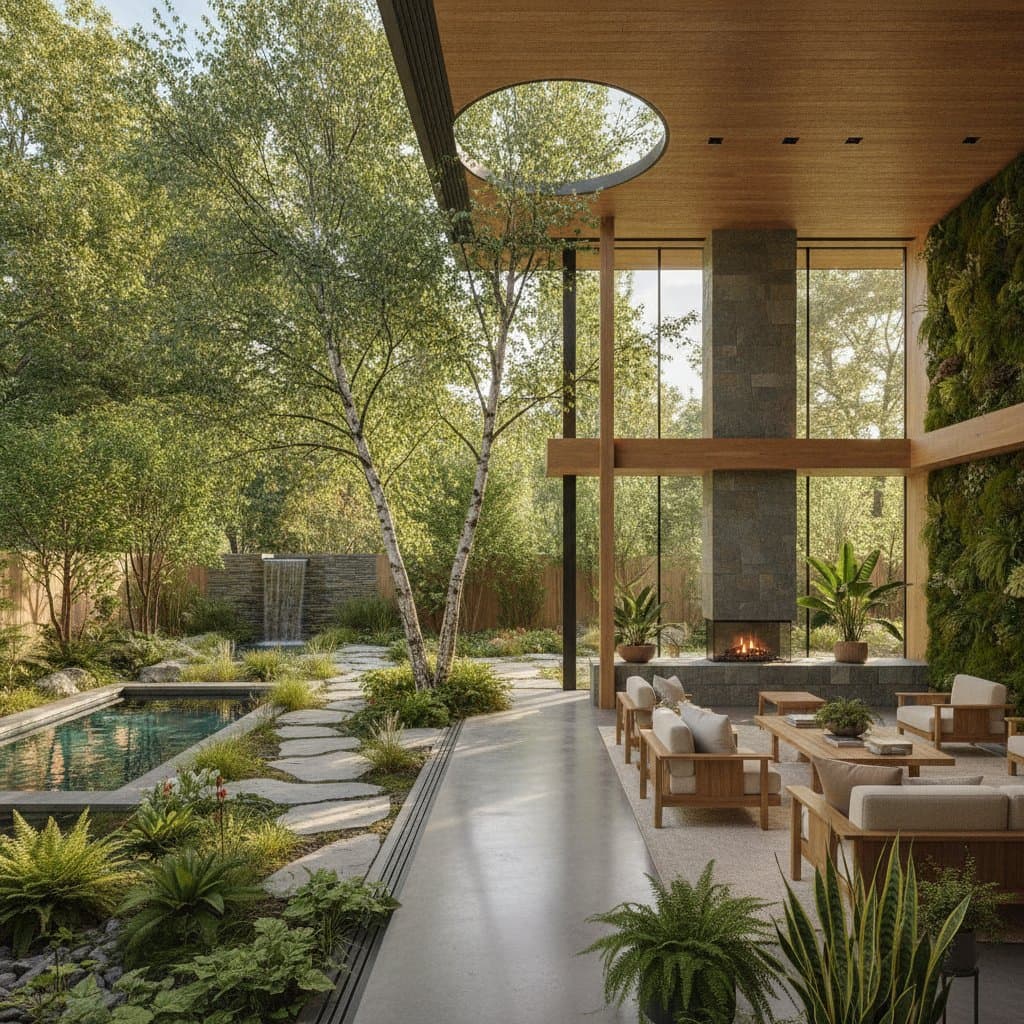
- Contemporary Structures: Polished cement paired with rattan screens and atrium linkages fluidly unite pavilions via verdant atria.
These illustrations demonstrate biophilic versatility across styles. Authenticity arises from contextual alignment of natural motifs.
Enduring Benefits and Property Enhancement
Biophilic design transcends aesthetics to deliver tangible wellness gains, including heightened concentration and diminished anxiety. Structures employing genuine materials mature attractively, accruing patina that enriches character. Enhanced ventilation and luminance profiles further mitigate health strains.
Economically, such investments elevate market appeal. Prospective owners favor luminous, ecologically attuned properties. Diligent preservation sustains these advantages across generations, yielding compounded returns on initial expenditures.
Steps to Integrate Biophilic Elements
Begin biophilic adoption by auditing existing natural affinities, like panoramic apertures or adjacent greenery. Prioritize augmentations that amplify these assets, from veneer swaps to threshold plantings. Incremental changes cultivate tranquility without overwhelming logistics.
For ambitious undertakings, partner with sustainable specialists versed in biogenic resources. Through meticulous foresight and proficient execution, craft environments that nurture vitality, endure aesthetically, and maintain vital outdoor linkages.