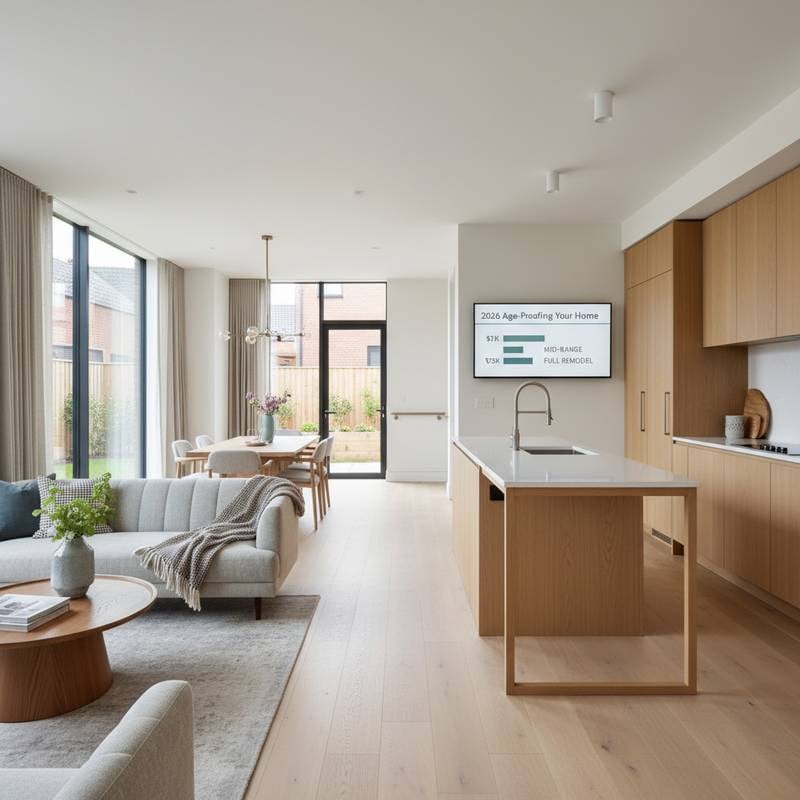
Costs for Age-Proofing Your Home in 2026
Adapting your home for safety and ease as mobility needs evolve represents a wise long-term investment. This guide outlines practical ways to age-proof your living space within a realistic budget. Readers gain insights into effective upgrades, associated expenses, and choices between self-directed efforts and professional services.
Overview of Age-Proofing
Age-proofing, or aging-in-place remodeling, involves modifications that support comfortable and secure living amid changes in mobility or vision. Projects range from installing grab bars to redesigning bathrooms for wheelchair maneuverability.
Cost and Timeline Estimates
Standard cost ranges:
- Basic enhancements: $1,000 to $5,000
- Intermediate modifications: $5,000 to $25,000
- Comprehensive accessibility overhaul: $25,000 to $75,000 or higher
Influencing factors:
- Size and configuration of the home
- Selections for materials and finishes
- Regional labor costs
- Fees for permits and inspections
- Custom elements like cabinetry or fixtures
Self-directed timelines:
- Minor tasks, such as adding grab bars or lever handles: 1 to 2 weekends
- Larger efforts, like ramps or lighting improvements: 1 to 3 weeks
Professional timelines:
- Bathroom or kitchen renovations: 2 to 6 weeks
- Full-home adaptations: 6 to 12 weeks
Project difficulty:
- Basic installations: Straightforward
- Alterations to structure or systems: Complex
Deciding Between DIY and Professional Work
Suitable DIY Projects
Individuals with foundational tools and repair knowledge can manage modest upgrades. Consider these options:
- Securing grab bars with appropriate wall anchors
- Swapping doorknobs for lever-style handles
- Incorporating brighter LED lights
- Repositioning cabinets to accessible heights
Each initiative typically costs $50 to $500 in materials. Adhere to installation guidelines and confirm that safety features bear necessary weight.
Necessity of Professional Expertise
Engage certified contractors for tasks involving plumbing, electrical systems, or structural elements. Key examples include:
- Expanding doorways
- Transforming tubs into barrier-free showers
- Constructing ramps or installing stair lifts
- Reducing countertop and sink elevations
- Relocating outlets
Hourly rates for professionals fall between $75 and $150, guaranteeing adherence to building codes and enduring reliability. Experts handle required permits and oversight for extensive projects.
Detailed Upgrade Process
1. Evaluate Safety and Access Needs
Tour each room to identify risks like tripping points, distant controls, or poorly lit zones. Measure door openings; aim for a minimum of 32 inches to accommodate wheelchairs.
Verification: Navigation occurs without excessive bending, high reaching, or obstacle negotiation.
2. Enhance Entryway Access
Incorporate a step-free entrance or ramp. Illuminate pathways with exterior lights. Swap irregular surfaces for slip-resistant alternatives.
Alert: Fall Prevention. Confirm ramp incline and grip prior to reliance.
Verification: Entry areas remain steady, non-skid, and gradually sloped.
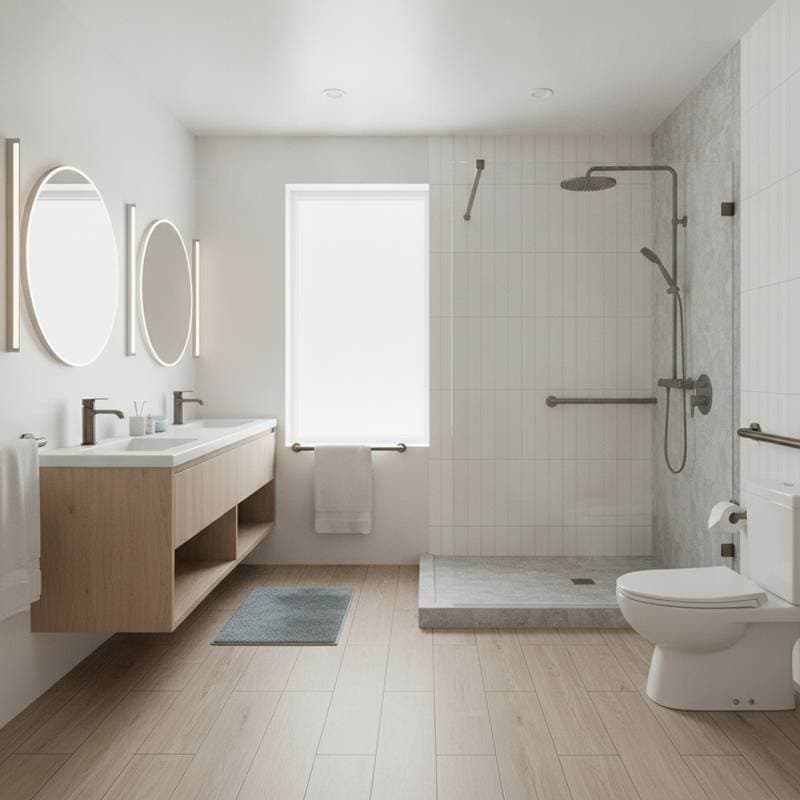
3. Modify Bathroom for Accessibility
Position grab bars adjacent to toilets and showers. Substitute tubs with seated, curbless showers featuring handheld sprayers. Apply anti-slip flooring.
Alert: Water and Electricity Risks. Disconnect power sources before proximity to fixtures.
Verification: Bars sustain at least 250 pounds; drainage prevents water accumulation.
4. Optimize Kitchen Design
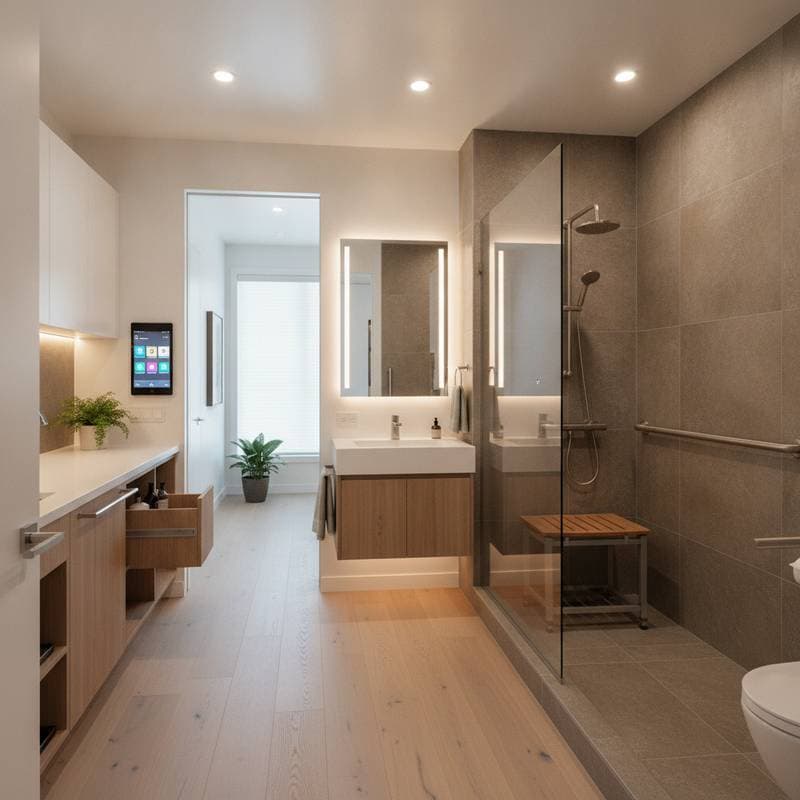
Install lower or adjustable-height counters. Exchange knobs for ergonomic pulls. Integrate sliding shelves and accessible drawers. Add task lighting beneath cabinets.
Verification: Meal preparation proceeds without undue extension or stooping.
5. Refine Lighting and Controls
Upgrade to high-lumen, efficient LED bulbs. Deploy motion-activated lights in corridors and restrooms. Position switches between 36 and 44 inches from the floor.
Verification: Primary routes receive uniform illumination free of shadows or excess brightness.
6. Expand Doorways and Pathways
Eliminate redundant doors or alter their operation. Broaden openings to 32 inches minimum. Reconfigure furnishings to ensure 36-inch clearances.
Verification: Movement flows unobstructed throughout spaces.
7. Adapt Bedroom Features
Select beds with height adjustments. Place lights within easy grasp. Choose robust pieces that serve as support aids.
Verification: Bed entry and exit happen securely without extreme reaches.
8. Renew Flooring Choices
Opt for low-profile carpeting or resilient vinyl. Anchor or discard loose mats. Even out thresholds between areas.
Verification: Surfaces provide consistent stability underfoot.
9. Bolster Stairway Security
Fit continuous handrails on both sides. Apply textured step covers. Light upper and lower levels adequately. Evaluate stair lifts for challenging ascents.
Alert: Fall Prevention. Validate rail sturdiness through testing.
Verification: Rails resist pressure; steps maintain even risers.
Essential Tools and Supplies
Core tools:
- Power drill, screwdrivers, measuring tape, spirit level, stud detector, adjustable wrenches
Frequently used materials:
- Grab bars, lever handles, grip tape, LED bulbs, motion detectors, drawer pulls, low-nap flooring, portable ramps, modular shelving
Advanced options:
- Shower conversion kits, stair glide systems, automated lighting, elevated toilet adapters, extendable faucets
Select items with verified load capacities and moisture protection for safety components.
Key Safety Guidelines
- Alert: Electrical Precautions. Deactivate circuits at the panel prior to outlet or fixture adjustments.
- Caution: Fall Mitigation. Employ firm platforms for elevated tasks.
- Alert: Structural Integrity. Avoid altering load-bearing elements without verification.
- Don protective gear including gloves, eyewear, and treaded footwear.
- Maintain clear zones in active work spaces.
Resolving Issues and Final Inspections
Frequent challenges and fixes:
- Insecure bars: Refasten to studs or use reinforced anchors.
- Instable ramps: Adjust gradients and anchor bases securely.
- Unsteady illumination: Swap bulbs or inspect circuits.
- Irregular floors: Apply bridging strips or leveling agents.
Inspection criteria:
- Surfaces prove solid and unwavering.
- Support features withstand full weight loads.
- Illumination distributes evenly across transit areas.
- Openings operate fluidly without resistance.
Post-Project Management
- Clear away outdated components, waste, and remnants immediately.
- Direct metals, bulbs, and fittings to recycling facilities.
- Handle sealants, coatings, and tiles per community regulations.
- Thoroughly clean spaces to eliminate residues and hazards.
Ongoing Care and Durability
Maintenance routine:
- Examine supports and rails biannually.
- Monitor and renew lighting as needed.
- Survey floors and inclines for deterioration.
- Preserve grip on treated areas through cleaning.
Expected service life:
- Bars and grips: Over 10 years
- LED systems: 10 to 15 years
- Floor coverings: 15 to 25 years by type
- Access aids like ramps: 10 to 20 years under routine upkeep
Consistent attention prolongs functionality and averts costly interventions.
Indicators for Professional Intervention
Criteria Requiring Experts
Seek licensed assistance when:
- Systems for water or power demand rerouting.
- Walls or frames require alteration.
- Plans necessitate regulatory review.
- Doubts arise regarding supports or inclines.
Standard fees:
- Accessibility evaluation: $300 to $800
- Bathroom adaptations: $10,000 to $25,000
- Kitchen universal designs: $15,000 to $35,000
- Complete home transformations: $25,000 to $75,000+
Selecting Reliable Contractors
- Confirm credentials and coverage.
- Verify expertise in inclusive or aging-focused designs.
- Review client endorsements.
- Obtain itemized proposals and schedules.
- Secure guarantees for workmanship and products.
Request comprehensive project outlines prior to agreements.
Strategies for Effective Implementation
Prioritize high-traffic zones like entries and baths. Select resilient, low-upkeep surfaces. Minimize clutter to facilitate passage. Integrate automated controls for lights and climate. Periodically reassess layouts against shifting requirements.
These adaptations preserve aesthetic appeal alongside utility. Strategic planning fosters sustained comfort, autonomy, and security on a controlled budget.
Targeted enhancements, combined with cautious self-work and expert collaboration where essential, yield a residence primed for enduring habitation.