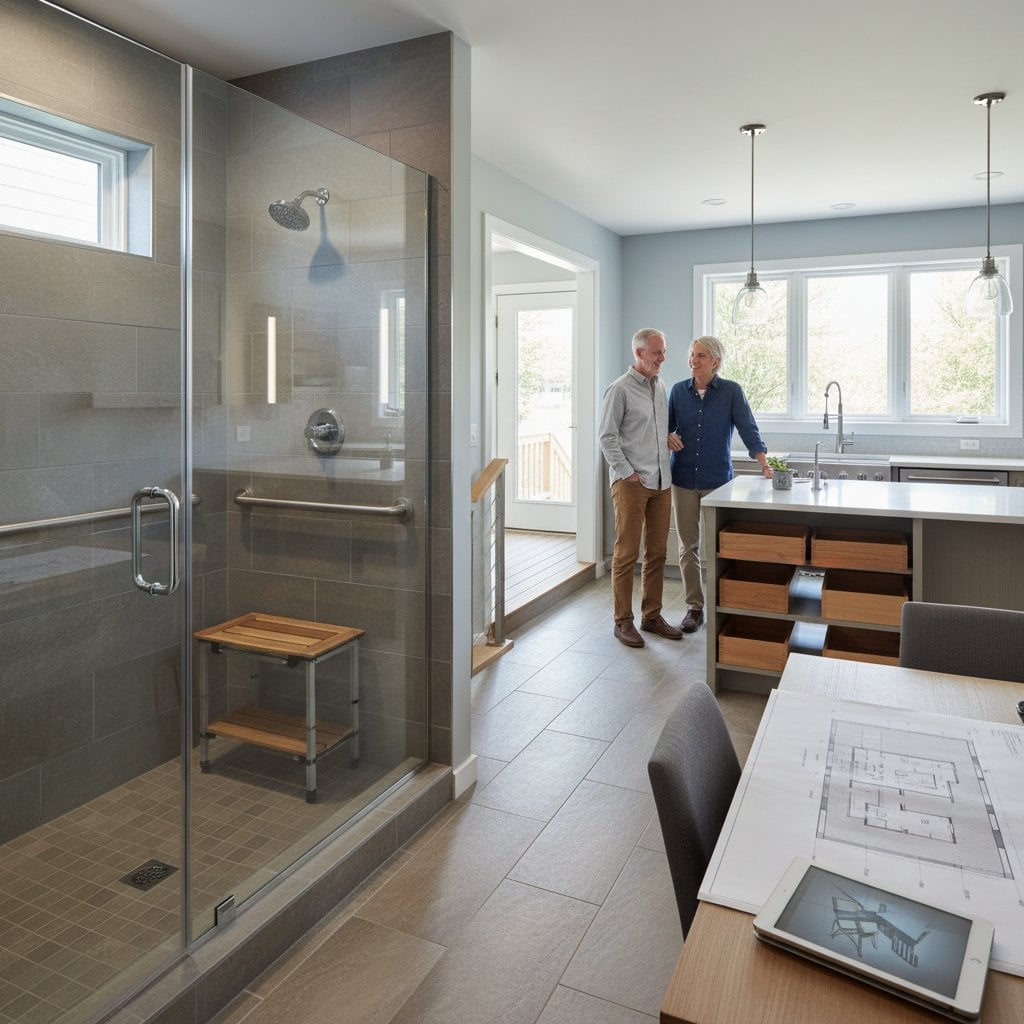
Save Big on 2026 Aging-in-Place Home Remodels
Aging-in-place remodeling enables homeowners to remain in their residences safely and comfortably as they age. This guide details planning an accessible renovation, managing expenses, and selecting upgrades that address future requirements while preserving property value.
Quick Overview
This resource outlines strategies to reduce costs on an aging-in-place remodel through proactive planning, emphasis on essential safety and accessibility enhancements, and selection of economical materials. Readers gain insights into anticipated pricing, scenarios for engaging professionals, and methods to verify compliance with accessibility guidelines.
Cost and Time Estimates
Expenses for aging-in-place remodeling vary based on home dimensions, involved areas, and necessity of structural alterations.
- Average total cost: $20,000 to $80,000
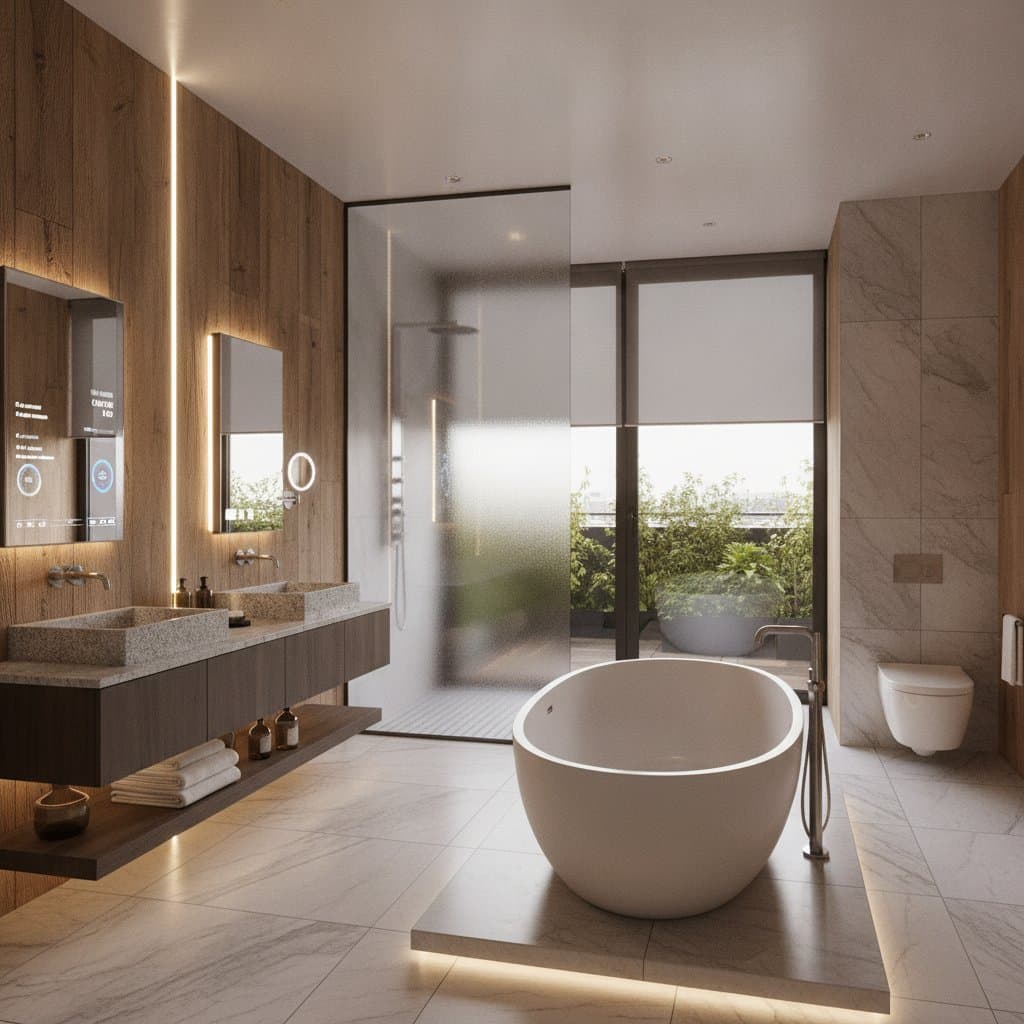
- Bathroom remodel: $10,000 to $25,000
- Kitchen accessibility upgrades: $15,000 to $40,000
- Entryway and main floor modifications: $5,000 to $15,000
- Professional labor: $75 to $150 per hour
- Permits and inspections: $500 to $2,000
Timeframe:
- DIY: Two to six months for small projects
- Professional: Two to twelve weeks for full remodels
Difficulty: Moderate to advanced. Numerous tasks encompass plumbing, electrical, or structural modifications that demand licensed specialists.
DIY vs Professional Guidance
Homeowners may handle minor enhancements independently, yet extensive alterations necessitate expert involvement to satisfy regulatory and safety criteria.
DIY-friendly tasks:
- Installing grab bars and handrails
- Replacing door knobs with lever handles
- Adding non-slip flooring mats
- Adjusting lighting and switch heights
Professional-only tasks:
- Widening doorways or hallways
- Replacing bathtubs with roll-in showers
- Moving plumbing or electrical lines
- Installing stair lifts or chair lifts
- Lowering countertops and cabinetry
Cost comparison:
DIY upgrades typically span $500 to $2,000, whereas comprehensive professional remodels surpass $25,000. Engaging a general contractor guarantees adherence to codes and seamless coordination among trades.
Step-by-Step Instructions
1. Assess Current and Future Needs
Evaluate potential mobility, vision, and reach constraints.
- Conduct a walkthrough to identify barriers such as narrow doors or elevated thresholds.
- Prioritize frequently used spaces like bathrooms and kitchens.
Check: Accessibility in each area without reliance on stairs or confined maneuvers.
2. Create a Floor Plan
Sketch a diagram illustrating door dimensions, furniture arrangements, and unobstructed pathways.
- Target 36-inch door widths and 5-foot turning radii in primary zones.
- Indicate fixture elevations for sinks, counters, and switches.
Check: Compatibility with wheelchair or walker navigation absent impediments.
3. Set a Realistic Budget
Compile a list encompassing all enhancements, supplies, and workforce expenses.
- Allocate 10 to 15 percent for unforeseen costs.
- Obtain bids from several licensed contractors.
Check: Alignment of total expenditure with financial boundaries prior to initiation.
4. Secure Permits and Inspections
Consult the local building authority regarding mandatory approvals.
- Modifications to electrical, plumbing, or structural elements invariably require oversight.
- Inquire about fee reductions or rebates for accessibility enhancements.
Check: Approval of all permits preceding any demolition.
5. Modify Entryways and Flooring
Facilitate secure, even entry from exterior to interior.
- Erect ramps featuring a 1:12 slope ratio.
- Substitute carpet with resilient options like vinyl or rubber.
Caution: Fall Risk. Employ interim guardrails during flooring replacement.
Check: Seamless and firm transitions across rooms.
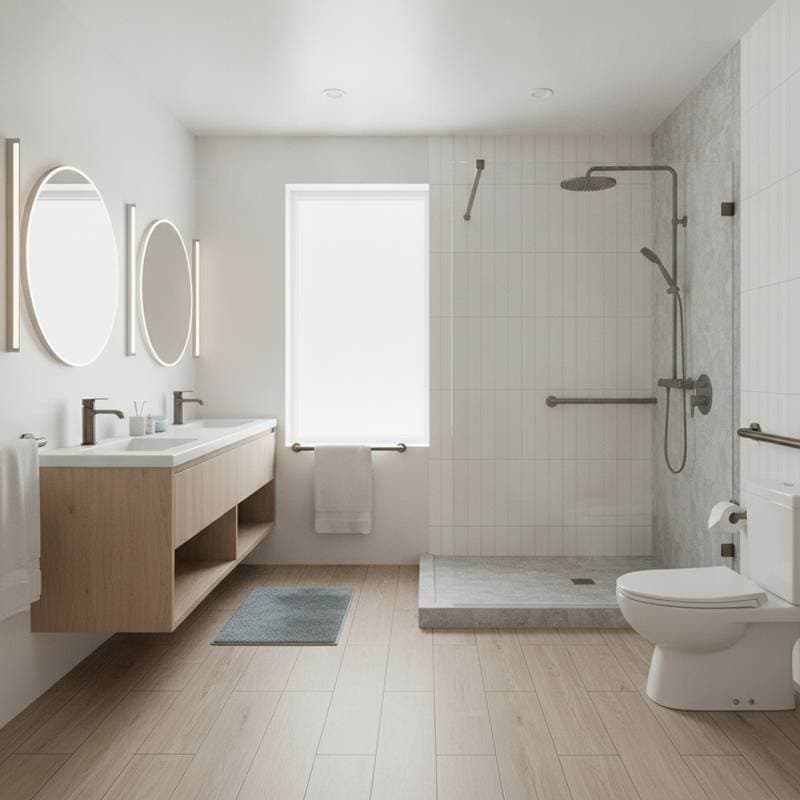
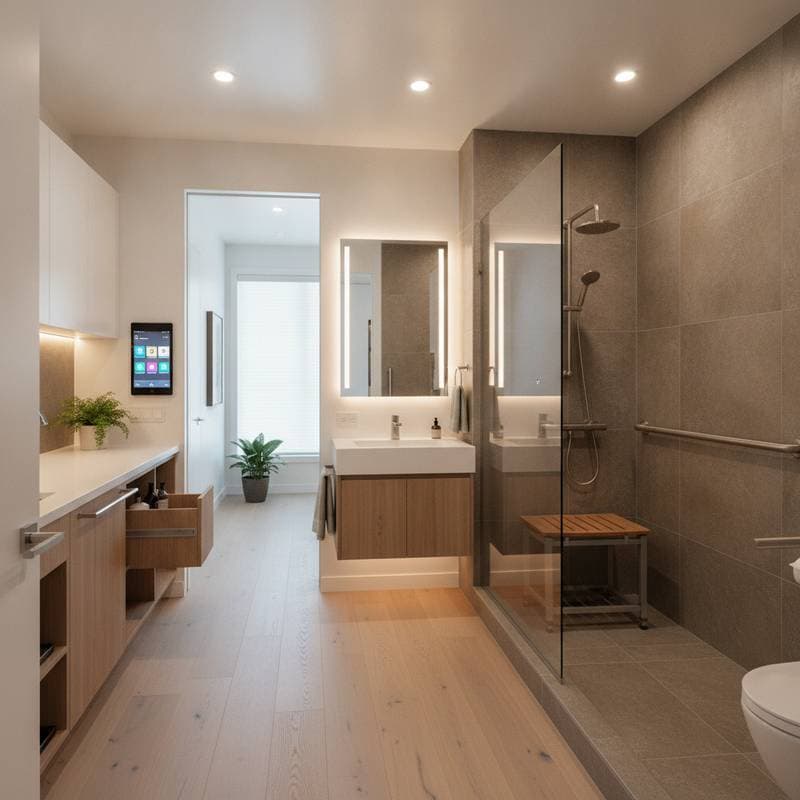
6. Upgrade the Bathroom
Emphasize fluid movement and resistance to moisture.
- Convert tubs to curbless showers.
- Affix grab bars supporting at least 250 pounds adjacent to toilets and showers.
- Mount handheld showerheads on adjustable rails.
Warning: Water Hazard. Isolate water supply prior to plumbing adjustments.
Check: Gentle shower floor incline directing to the drain.
7. Remodel the Kitchen
Enhance accessibility and ergonomic efficiency.
- Reduce countertop heights to 32 to 34 inches.
- Incorporate pull-down shelving and D-shaped pulls.
- Position everyday essentials between 15 and 48 inches from the floor.
Check: Reachability of storage without excessive extension.
8. Enhance Lighting and Electrical Access
Adequate illumination minimizes tripping hazards and aids orientation.
- Integrate under-cabinet and hallway task lights.
- Substitute standard switches with rocker or touch variants at 36 to 40 inches.
Warning: Electrical Hazard. Deactivate power at the breaker before modifications.
Check: Operational integrity of switches and outlets post-installation.
9. Add Smart Home Features
Leverage technology to bolster autonomy.
- Deploy motion-activated lighting sensors.
- Implement voice-activated climate controls and security setups.
- Install remote-access door mechanisms.
Check: Stable integration with the home network.
10. Conduct Final Inspection
Examine the project comprehensively alongside the contractor or official.
- Verify door clearances, illumination, plumbing, and accessibility.
- Ensure secure fastening of grab bars and fixtures.
Check: Conformance to accessibility norms and user safety.
Safety Warnings and Tips
- Protective gear: Don gloves, goggles, and knee pads for demolition activities.
- Fall prevention: Maintain dry, unobstructed floors amid construction.
- Electrical safety: Mark circuits prior to wire disconnection.
- Plumbing leaks: Validate seals before enclosing walls.
Troubleshooting and Quality Checks
Uneven flooring:
Resand or relevel the subfloor prior to new material application.
Loose grab bar:
Confirm wall blocking behind tile or drywall; secure with 2-inch screws into sturdy support.
Water pooling in shower:
Modify floor gradient or drain position.
Lighting too dim:
Advance to LED bulbs delivering at least 800 lumens each.
Door does not close properly:
Realign hinges or trim the door edge for fluid motion.
Cleanup and Disposal
Adhere to municipal guidelines for waste removal.
- Recycle metallic components and salvageable lumber.
- Encase hazardous edges before relocation.
- Thoroughly vacuum and damp-wipe surfaces to eliminate residual particles.
- Arrange municipal collection for oversized refuse.
Maintenance and Lifespan
- Grab bars: Examine semiannually for stability.
- Flooring: Weekly cleansing of non-slip areas using mild soap.
- Lighting: Periodic replacement with efficient LEDs.
- Plumbing fixtures: Annual leak detection and resealing around showers.
- Smart systems: Routine software updates for ongoing protection.
Accessibility elements endure 10 to 20 years under diligent care. Renew or restore worn components to avert risks.
When to Call a Professional
Engage experts for:
- Structural adjustments.
- Relocation of plumbing or electrical conduits.
- Code-compliant design assistance.
- DIY infeasibility due to physical constraints.
Professional remodel cost: $25,000 to $60,000 for comprehensive adaptations.
Choosing a contractor checklist:
- Confirm licensing and coverage.
- Solicit three or more references.
- Scrutinize contracts and guarantees.
- Probe expertise in aging-in-place certification.
Pro Tips for Success
- Initiate planning prior to mobility decline to mitigate urgent expenditures.
- Bundle projects to economize on labor and approvals.
- Select robust, minimal-upkeep surfaces such as quartz, vinyl, or fiberglass.
- Preserve broad pathways and vivid illumination against enduring fall threats.
- Arrange yearly evaluations to address minor concerns promptly.
Transforming a residence for aging-in-place sustains autonomy and ease. Thoughtful preparation and fiscal prudence yield a secure, navigable haven aligned with enduring well-being.