Mass Timber Versus Traditional Framing: Evaluating Costs and Efficiency
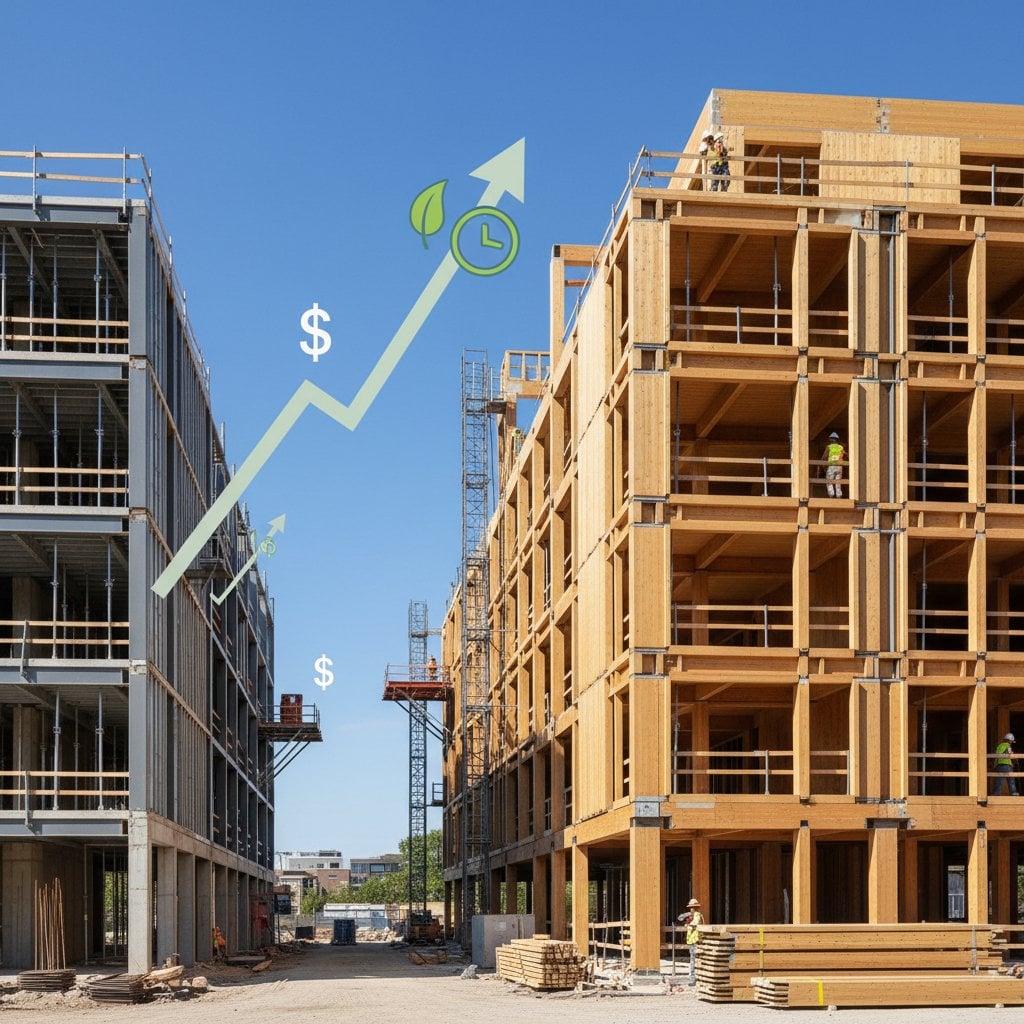
Mass timber reshapes structural framing practices by delivering robust strength, accelerated construction, and environmental advantages that rival steel and concrete. The choice between mass timber and traditional framing extends beyond initial material expenses to encompass design decisions, labor availability, supply logistics, and overall project objectives. This examination details the strengths and limitations of each approach to inform builders on achieving superior performance relative to investment.
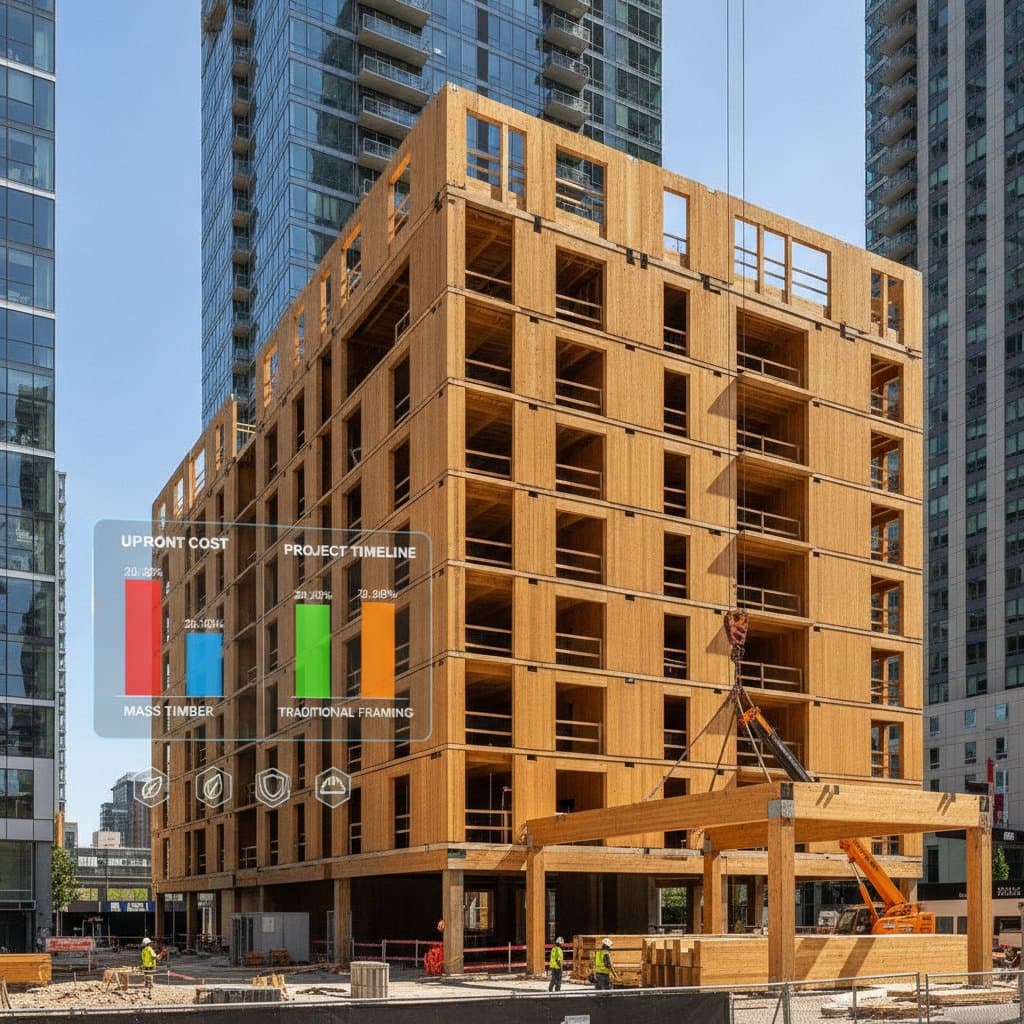
Cost and Timeline Projections
Construction expenses vary based on materials, workforce, and geographic factors. Consider a typical mid-sized commercial or residential development:
- Mass Timber: Structural framing materials cost between 60 and 90 dollars per square foot. Enhanced labor productivity often decreases overall installation expenses by 10 to 20 percent relative to steel or concrete alternatives.
- Traditional Framing (Steel or Concrete): Steel framing typically ranges from 50 to 80 dollars per square foot, whereas reinforced concrete falls between 70 and 100 dollars per square foot, influenced by formwork complexity and reinforcement levels.
Timeline Considerations:
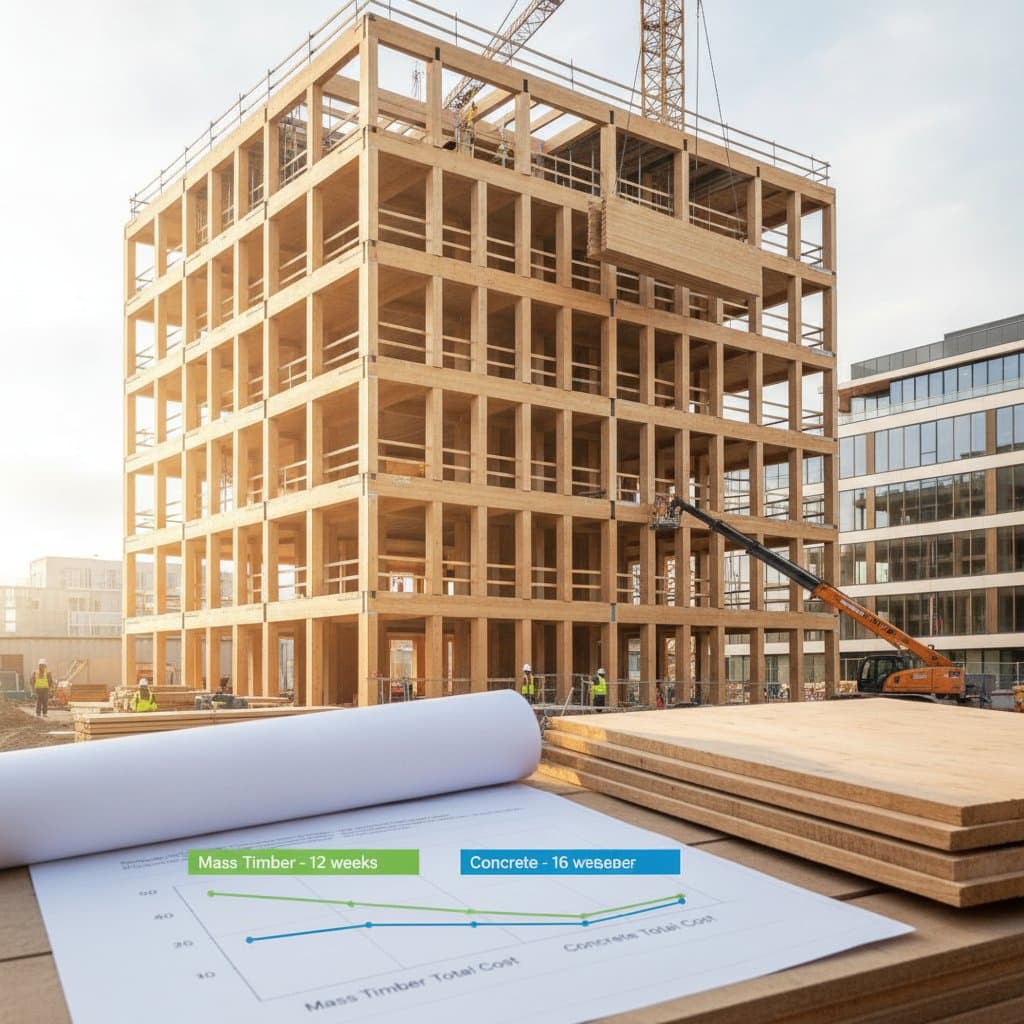
- Mass Timber: Prefabricated panels arrive pre-engineered for swift assembly, frequently shortening framing durations by 25 to 40 percent.
- Traditional Methods: Extended timelines result from on-site fabrication, concrete curing periods, or steel welding processes.
Complexity Level: Moderate to advanced. Professional structural engineering and trained installation teams remain essential for both systems.
Detailed Process for Each Framing Method
1. Design and Engineering Phase
- Mass Timber: Initiate with computer-aided design models to specify panel and beam dimensions for off-site fabrication.
- Verification: Ensure panel configurations align precisely with architectural features such as doors and windows.
- Traditional Framing: Develop plans outlining beam lengths, column dimensions, and joint specifications.
- Verification: Confirm reinforcement bar placements or steel connection configurations adhere to approved engineering documents.
2. Material Sourcing
- Mass Timber: Procure cross-laminated timber panels, glue-laminated beams, or nail-laminated components from certified manufacturers.
- Verification: Materials must comply with local fire resistance and load-bearing regulations.
- Traditional Framing: Acquire steel profiles, reinforcement bars, and formwork materials or dimensional lumber.
- Verification: All components satisfy ASTM specifications or equivalent regional standards.
3. Site Readiness
Establish a level, compacted foundation.
Install base supports calibrated to anticipated structural loads.
Verification: Secure anchor locations correspond to the approved framing layout.
4. Assembly of Framing Elements
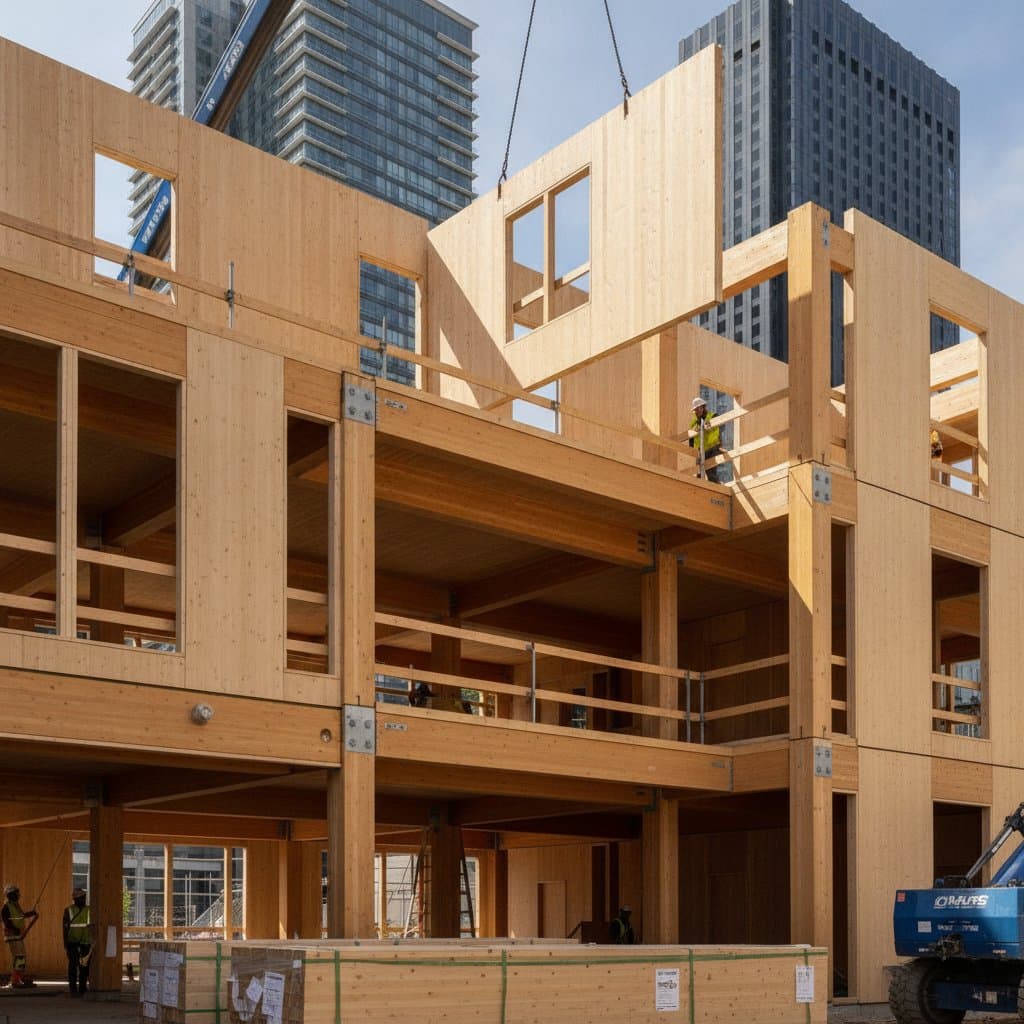
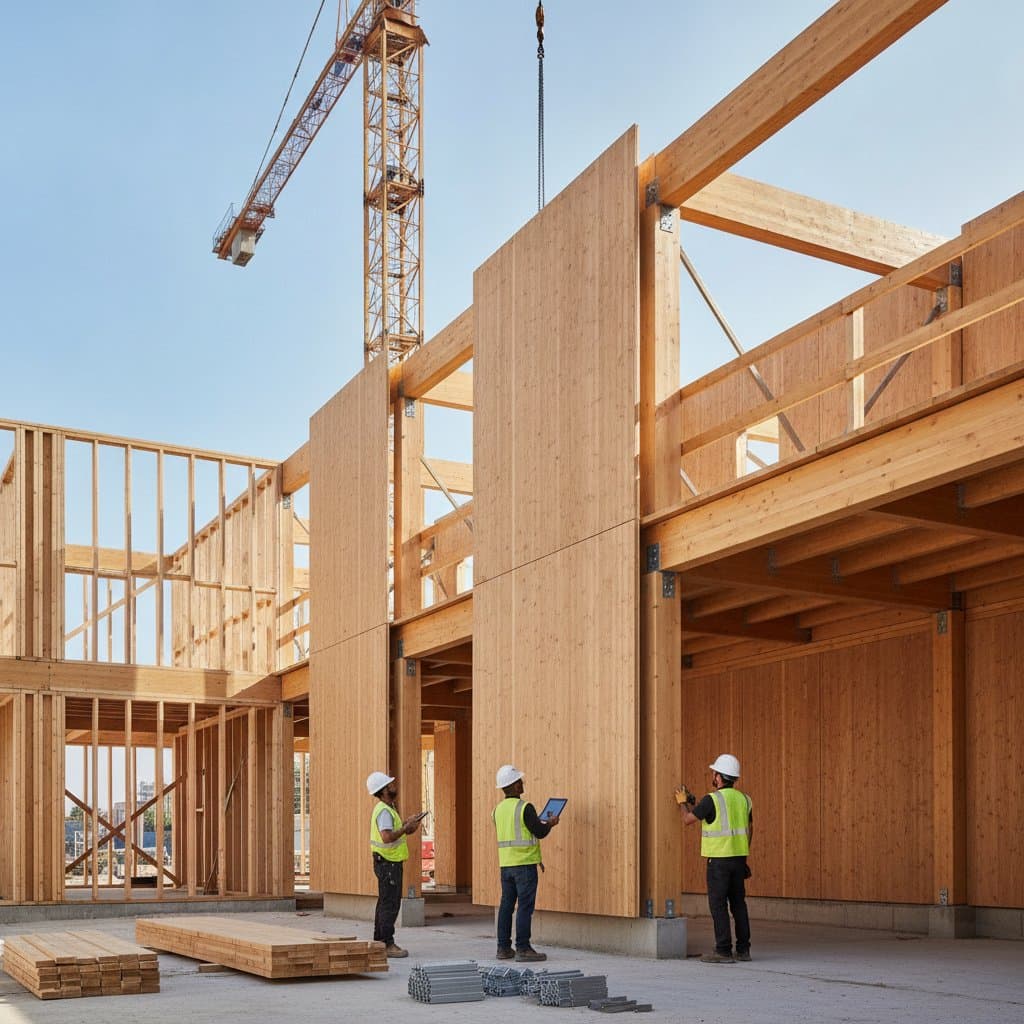
- Mass Timber: Employ cranes to position prefabricated panels. Secure connections using metal brackets and high-strength fasteners.
- Verification: Maintain tight, level joints prior to advancing to subsequent panels.
- Traditional Framing: Raise steel supports or construct and fill concrete molds.
- Verification: Align each element vertically and horizontally before finalizing welds or allowing concrete to set.
5. Quality Inspections and Joint Integrations
Examine all mechanical fasteners, bolts, or welds for secure attachment and proper orientation.
Perform humidity assessments on timber elements and curing evaluations for concrete.
Verification: Obtain structural engineer approval prior to proceeding with interior or exterior finishes.
Common Challenges and Resolution Strategies
Mass Timber Specifics:
- Issue: Expansion or improper alignment of panels due to environmental factors.
- Resolution: Permit panels to adjust to ambient site conditions prior to mounting. Substitute any compromised sections.
- Issue: Seams or voids between adjoining panels.
- Resolution: Tighten securing elements or apply code-approved sealants to achieve seamless integration.
- Validation: Confirm level surfaces and robust connections before integrating mechanical systems.
Traditional Framing Specifics:
- Issue: Incorrect positioning of reinforcement or inadequate concrete cover.
- Resolution: Reposition spacers to correct alignments before concrete placement.
- Issue: Surface rust on steel components during site exposure.
- Resolution: Remove debris and apply protective coatings prior to enclosing elements.
- Validation: Assess concrete compressive strength through standardized testing or evaluate weld integrity for uniform bonding.
Upkeep Requirements and Durability Expectations
Mass Timber:
Conduct yearly examinations of visible surfaces for signs of water penetration or degradation.
Renew sealing treatments every 5 to 10 years, adjusted for environmental exposure levels.
With vigilant protection against moisture and sunlight, service life surpasses 60 years.
Traditional Framing:
Steel demands routine corrosion evaluations and touch-up coatings.
Concrete requires monitoring for fissures and application of sealants.
Durability extends beyond 75 years when joints receive meticulous detailing and moisture barriers.
Proper execution in both approaches enhances longevity by minimizing water ingress at critical interfaces.
In-Depth Analysis of Cost Influences
Material Expenses
Mass timber incurs elevated costs per volume compared to steel or concrete, yet prefabrication minimizes on-site labor and material waste. Traditional concrete leverages inexpensive aggregates but demands extensive manpower for molds and setting times.
Workforce Productivity
Ready-to-install mass timber components enable rapid progress, allowing teams to complete substantial portions each day with limited modifications. Conventional techniques necessitate coordinated efforts from multiple specialists, prolonging overall timelines.
Machinery and Supply Chain Factors
Both mass timber and steel rely on lifting equipment for erection, but timber eliminates the need for cumbersome concrete supports and wait times. Remote sourcing may increase transport fees for timber, though its reduced weight often lowers overall logistics expenses.
Compliance with Fire and Regulatory Standards
Mass timber structures might necessitate additional flame-retardant measures or enhanced suppression systems per jurisdiction. Steel and concrete benefit from predefined compliance pathways backed by extensive fire performance data, streamlining approvals and reducing ancillary design costs.
Environmental Impact and Embodied Carbon
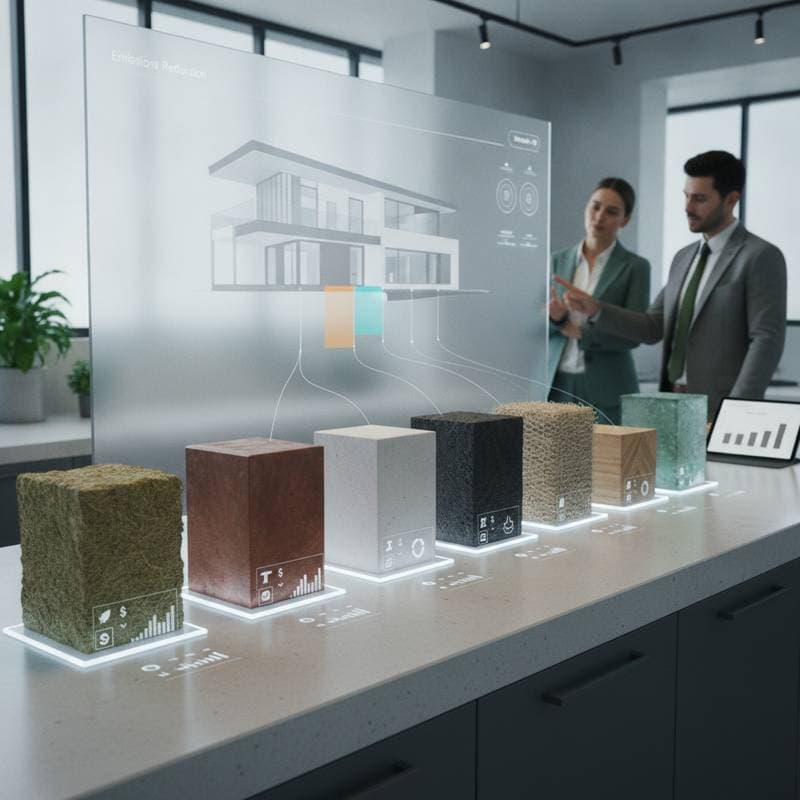
Mass timber sequesters carbon throughout its lifecycle, contrasting with the substantial emissions from concrete and steel manufacturing. Projects prioritizing ecological credentials or pursuing certifications gain advantages through potential rebates or incentives that mitigate financial disparities.
Overall Economic Benefits
Mass timber imparts natural aesthetics and diminished dead loads, potentially reducing foundation requirements. Traditional options provide assured resilience and contractor expertise. Across the building's operational phase, efficiencies in energy use or structural lightness may favor timber economically.
Implementing Your Framing Strategy
Selection hinges on project priorities. Mass timber suits initiatives emphasizing accelerated timelines, minimal site disturbance, and ecological responsibility, often recouping premiums through efficiency gains. Traditional steel or concrete aligns with demands for validated fire safety, budget constraints, or regional proficiency.
A hybrid configuration frequently optimizes outcomes, integrating mass timber in elevated levels or non-structural zones alongside concrete or steel bases. This method balances expenses with enhanced functionality.
Solicit proposals from firms versed in diverse techniques. Evaluate beyond raw materials to include timeline reductions, equipment durations, and integration with subsequent phases. Refine designs to streamline assemblies and limit bespoke elements.
Thorough comprehension of influencing factors, coupled with proactive planning, empowers selection of a framing solution aligned with fiscal and strategic aims. Effective coordination and expert oversight ensure the resulting structure meets standards for safety, productivity, and endurance.