Designing Homes That Adapt to Every Life Stage
A home designed to evolve with its occupants promotes comfort, independence, and safety throughout the years. This guide outlines strategies for incorporating universal design principles to support aging in place. Readers gain insights into planning renovations that balance functionality with aesthetic appeal.
Essential Overview
The focus centers on creating living spaces that accommodate shifting physical capabilities. Key elements include accessibility features, ergonomic layouts, and forward-thinking modifications. Such adaptations ensure the home remains a supportive environment across all life phases.
Project Cost and Timeline Projections
Typical Cost Spectrum:
Aging-in-place modifications generally span $10,000 to $90,000, influenced by project extent.
- Basic enhancements: $2,000 to $10,000, covering items like grab bars, lever handles, and improved lighting.
- Intermediate alterations: $15,000 to $45,000, involving bathroom or kitchen adjustments and doorway expansions.
- Extensive overhauls: $50,000 and beyond, such as adding ground-level bedrooms or comprehensive accessibility upgrades.
Influencing Variables:
Expenses fluctuate based on geographic location, labor expenses, material selections, and regulatory permits. Elements like bespoke cabinetry, wall reinforcements for potential grab bars, and integrated smart systems elevate overall costs.
Expected Duration:
- Self-directed initiatives: 1 to 4 weeks for straightforward changes.
- Expert-led transformations: 4 to 12 weeks, scaled to the complexity of the blueprint.
Complexity Level: Moderate to advanced. Structural adjustments or plumbing interventions necessitate certified specialists.
Self-Directed Efforts Versus Expert Assistance
Accessible Self-Directed Projects:
- Mounting grab bars or lever-operated door handles.
- Incorporating motion-activated lighting.
- Substituting round knobs with D-shaped pulls.
- Rearranging furnishings to broaden circulation paths.
Specialized Interventions:
- Reshaping bathroom or kitchen configurations.
- Fitting threshold-free showers.
- Altering stair systems or installing platform lifts.
- Expanding door widths or reducing countertop heights.
Expense Breakdown:
- Self-directed improvements: $500 to $3,000.
- Expert renovations: $20,000 and higher, contingent on scope.
Engage credentialed contractors for any structural, electrical, or plumbing alterations. Verify compliance with local permitting protocols prior to commencement.
Comprehensive Adaptation Roadmap
Step 1: Assess Present and Anticipated Requirements
Examine mobility, reach, and visual demands among household members. Pinpoint potential hazards in zones like staircases or confined corridors.
Validation Point: Compile a precise inventory of spaces or elements requiring refinement.
Step 2: Optimize Entryway Accessibility
Substitute steps with ramps or sloped pathways. Affix robust handrails and textured, non-slip paving.
Position entry doors at a minimum width of 36 inches.
Validation Point: The portal facilitates seamless passage for wheelchairs or walkers.
Step 3: Refine Bathroom Configurations
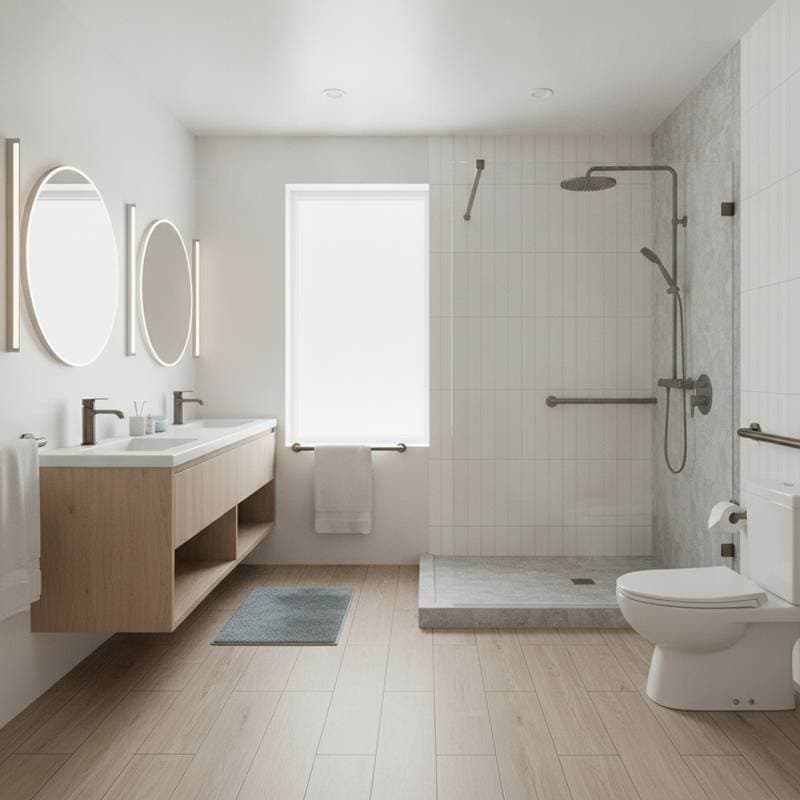
Incorporate a barrier-free shower equipped with anti-slip tiling. Position grab bars adjacent to the shower, commode, and bathtub.
Select a toilet at comfort height to simplify rising and sitting.
Alert: Slippage Peril on Damp Surfaces. Confirm effective drainage and traction integrity.
Validation Point: Shower zones permit entry without surmounting barriers.
Step 4: Customize Kitchen Ergonomics
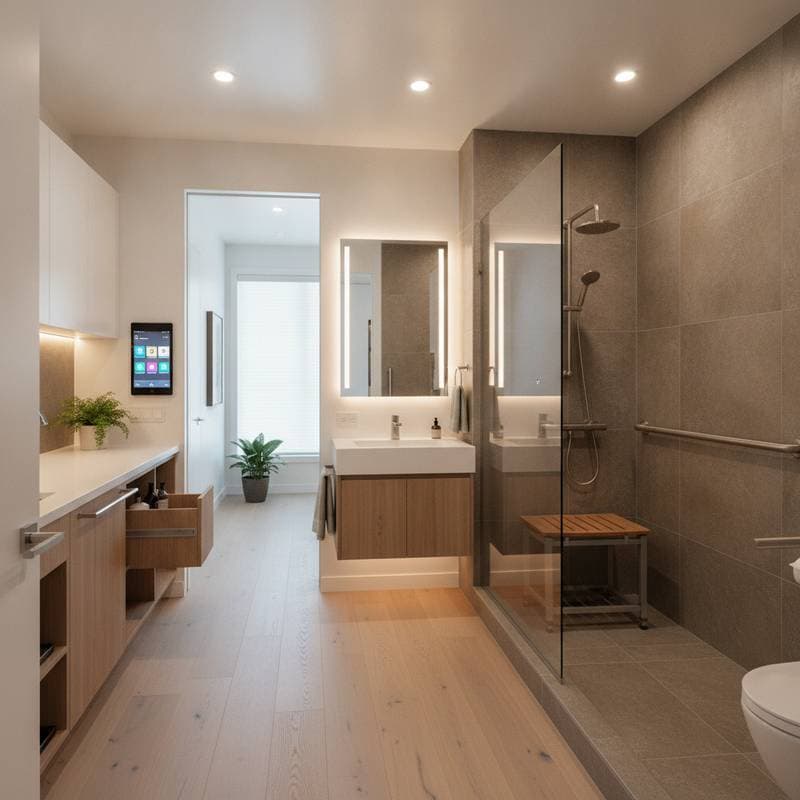
Adjust select countertop segments to 30 through 34 inches for wheelchair compatibility. Exchange twist knobs for lever mechanisms on taps and storage units.
Integrate sliding shelves and compartmentalized drawers to streamline retrieval.
Validation Point: Essential items remain accessible without excessive extension or stooping.
Step 5: Bolster Illumination and Clarity
Deploy multi-tiered lighting systems featuring task-oriented, general, and highlight options. Opt for toggle switches and automatic sensors to enhance usability.
Select subdued, matte surfaces to minimize reflective glare.
Validation Point: Circulation routes and operational areas receive uniform illumination devoid of stark shadows.
Step 6: Upgrade Surface Materials and Junctions
Employ resilient, even flooring such as vinyl plank, cork tiling, or minimal-nap carpeting. Remove any elevations exceeding half an inch at room interfaces.
Validation Point: Travel routes provide a flat, secure footing.
Step 7: Establish Primary-Floor Quarters
Designate a bedroom, complete lavatory, and washing facilities on the ground level. Construct corridors at least 42 inches broad to accommodate assistive devices.
Validation Point: Single-story living supports full daily routines if mobility declines.
Critical Safety Protocols
- Alert: Electrical Risks. Disconnect power sources prior to servicing switches or receptacles.
- Precaution: Tumble Threats. Deploy adhesive mats and adequate radiance proximate to elevations and wet areas.
Don protective gear including gloves, protective eyewear, and stable footwear throughout construction phases. Maintain unobstructed routes free from wiring and debris post-completion.
Issue Resolution and Verification Methods
Frequent Challenges and Remedies:
- Irregular floor junctions: Apply sloped ramp transitions.
- Diminished flow from updated plumbing: Purge strainers or inspect inflow regulators.
- Imbalanced radiance distribution: Introduce adjustable controls or elevated-output lamps.
Performance Assessment:
Simulate navigation with assistive equipment to gauge spatial allowances. Confirm grab bar sturdiness under maximum load. Ascertain that controls for water, electricity, and power access standing and seated postures alike.
Post-Project Clearance
Channel discarded components like outdated fittings, tiles, or coverings to community recycling facilities or authorized disposal services. Contribute functional cabinetry or fittings to salvage outlets. Thoroughly cleanse zones of particulate matter before repositioning decor.
Ongoing Upkeep and Durability
Conduct semiannual reviews of support bars, guides, and inclines. Renew fatigued surfaces or traction aids promptly. Routinely evaluate control mechanisms to ensure sensor reliability.
Anticipate 10 to 20 years of service from installed elements under diligent oversight.
Indicators for Expert Engagement
Summon specialists for endeavors encompassing:
- Load-bearing wall adjustments or foundational shifts.
- Relocation of water or wiring systems.
- Integration of vertical transport solutions.
- Comprehensive galley or lavatory redevelopments.
Standard Pricing:
Universal design overhauls by professionals fall between $25,000 and $80,000.
Specialist Evaluation Criteria:
- Authenticate regional certification and liability protection.
- Solicit a minimum of three endorsements.
- Demand itemized budgetary projections.
- Secure assurances on components and workmanship.
Advanced Strategies for Optimal Outcomes
Anticipate adaptability by embedding reinforcements in partitions for prospective supports. Favor versatile installations such as portable sprayers and detachable benches.
Reserve at least five feet of open area in sanitary and culinary spaces for fluid maneuvering. Explore intelligent automation like verbal-command illumination or climate regulators to amplify autonomy.
Sustaining Independence Through Adaptive Design
Thoughtful integration of these principles fosters enduring security and ease within cherished spaces. Quality execution extends the home's utility across generations, blending practicality with personal style.