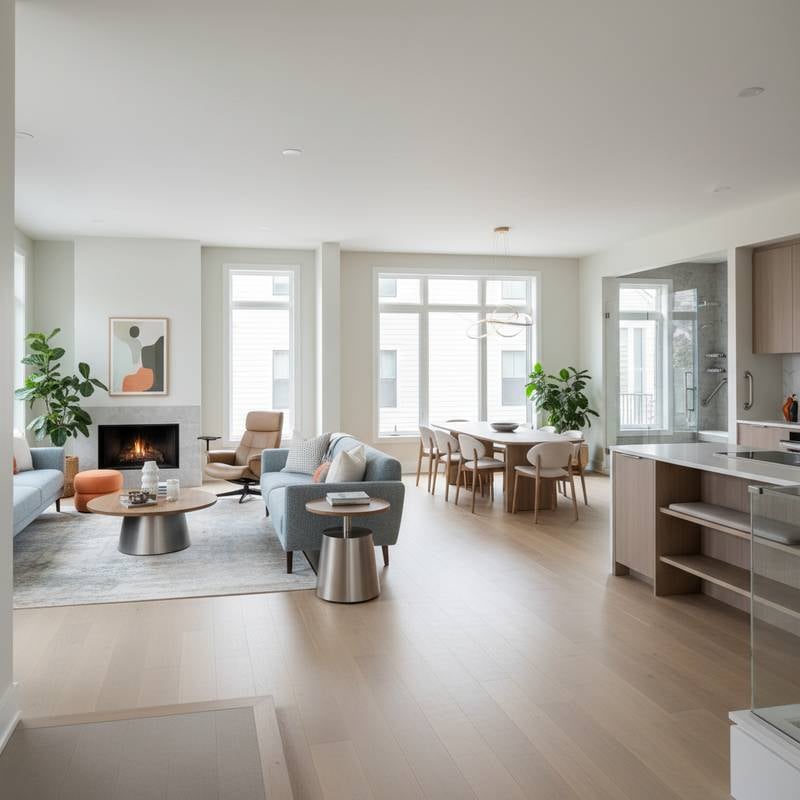
2026 Universal Design Costs for Aging-in-Place Homes
Aging-in-place remodeling enables individuals to remain in their homes safely and comfortably as mobility or accessibility needs evolve. Universal design principles create adaptable spaces that accommodate every age and ability level without sacrificing style or functionality. A clear understanding of these update costs assists in planning a remodel that promotes independence and preserves long-term property value.
This guide details the factors influencing universal design costs, outlines common improvement types, and provides strategies to balance comfort, safety, and budget when preparing a home for extended residency.
Factors Influencing Universal Design Remodeling Costs
Universal design costs vary based on multiple elements. A grasp of these components allows for more precise estimation of the overall investment.
Scope of the Project
Project scale exerts the strongest impact on expenses. For instance, installing grab bars in one bathroom incurs lower costs than reconfiguring an entire residence. Common initiatives span minor tweaks, such as lever handles on doors, to extensive overhauls like installing zero-step entries or expanding interior pathways to at least 36 inches wide.
Current Home Configuration
Homes built before 1980 frequently demand substantial alterations to integrate universal design elements. Features like 28-inch doorways, raised thresholds, or multi-level floors often necessitate structural reinforcements, which elevate both labor and material outlays. Evaluate your layout early to anticipate these adjustments.
Selection of Materials and Finishes
Universal design accommodates aesthetic preferences alongside practicality. Opt for resilient options such as porcelain tiles with a coefficient of friction exceeding 0.6 for slip resistance, or vinyl plank flooring that resists moisture and simplifies cleaning. Custom elements, including adjustable-height countertops or touchless faucets, further influence pricing based on quality and sourcing.
Professional Labor and Specialized Knowledge
Engaging contractors with certification in aging-in-place remodeling guarantees adherence to standards like those from the National Kitchen and Bath Association. These experts command premium rates, often $75 to $150 per hour, yet their precision minimizes rework and ensures seamless integration of features like motion-sensor lighting.
Required Permits and Structural Modifications
Initiatives altering load-bearing walls, plumbing configurations, or electrical wiring typically mandate local permits, costing $200 to $1,500 depending on jurisdiction. These requirements extend timelines by 2 to 4 weeks but safeguard against liability and uphold building codes for elements such as reinforced shower bases.
Budget Breakdown by Home Area
Develop a targeted budget by examining expenses per zone, which reveals how costs accumulate across the property.
-
Entryways and Outdoor Access: These enhancements, such as portable aluminum ramps (starting at $1,000) or automatic door openers ($500 to $2,000), improve first impressions and ease of entry. Add solar-powered pathway lights for $100 to $300 to enhance nighttime navigation.
-
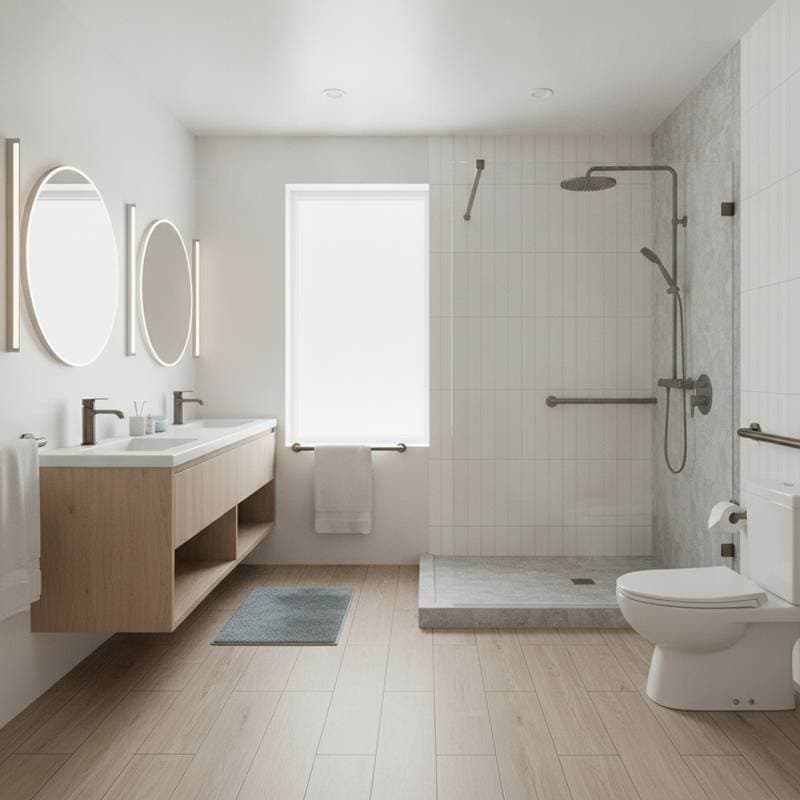
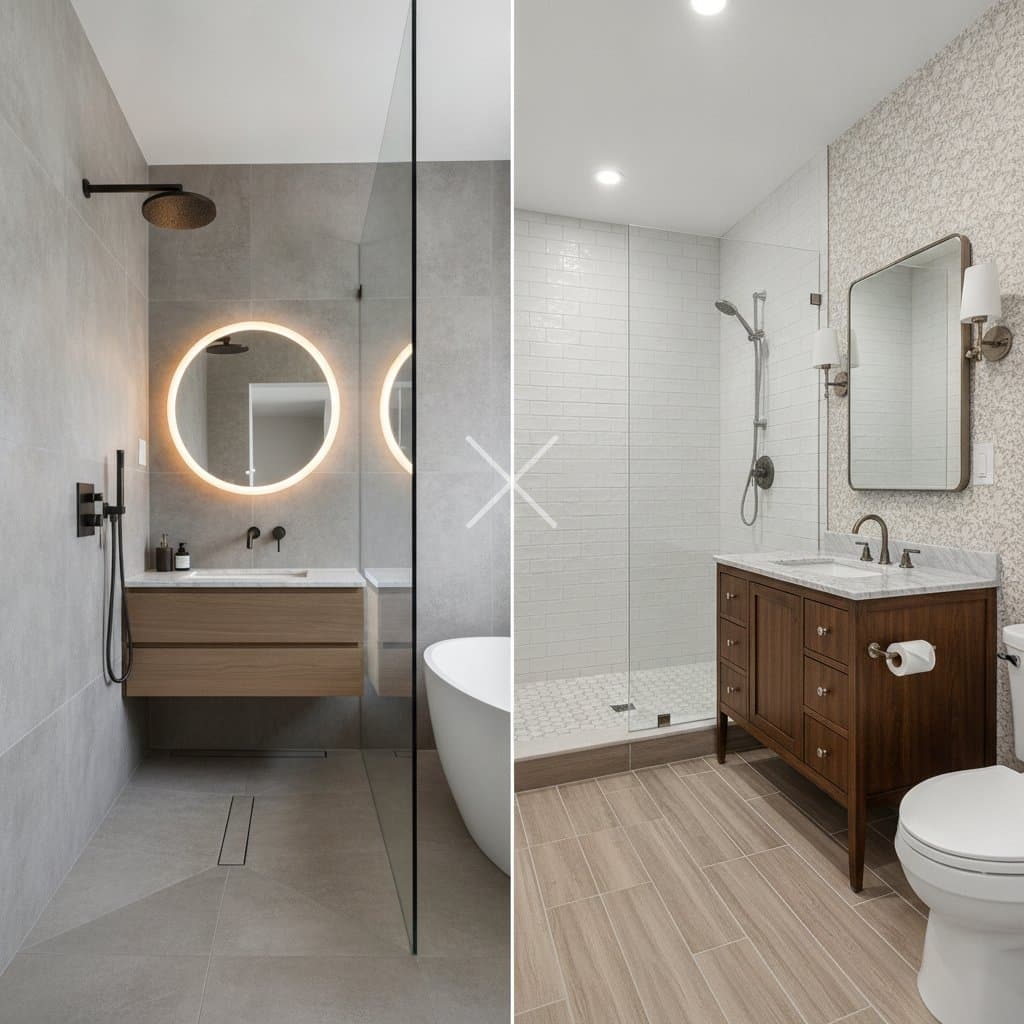
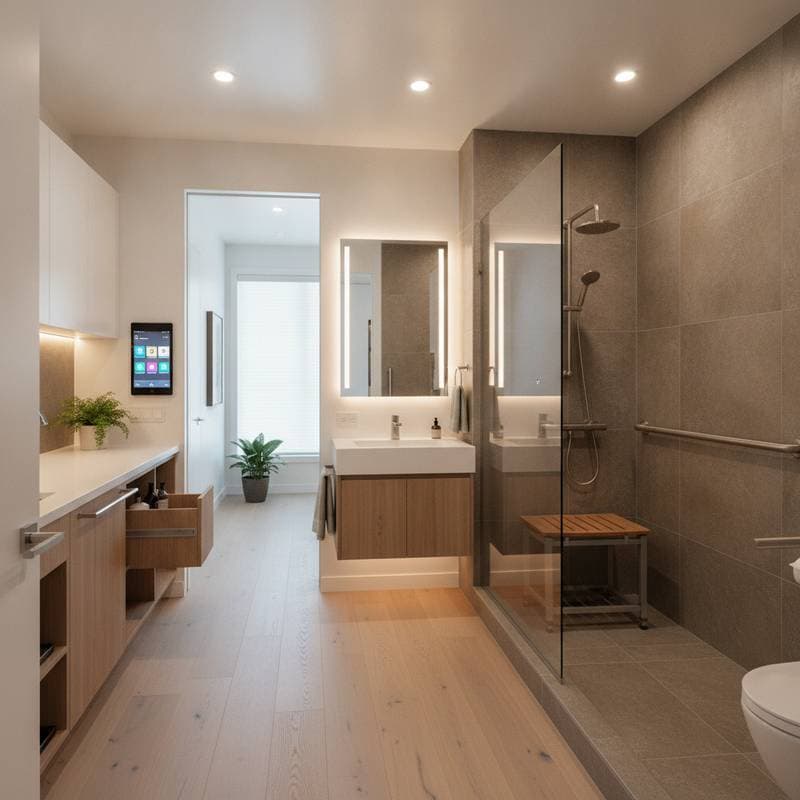
Bathrooms: As high-cost zones due to waterproofing and fixture relocation, expect $15,000 to $30,000 for a full update. Prioritize curbless showers with fold-down benches and anti-scald valves to support safe bathing routines.
-
Kitchens: Investments here range from $20,000 to $50,000, focusing on pull-out pantry shelves, side-mount drawer slides, and wall ovens at reachable heights. These changes facilitate meal preparation without strain.
-
Throughout the Home: Uniform updates like lever-style hardware ($50 per door) or LED under-cabinet lighting ($200 to $500) distribute expenses while refreshing the overall environment. Consider smart thermostats ($150 to $300) for voice-activated climate control.
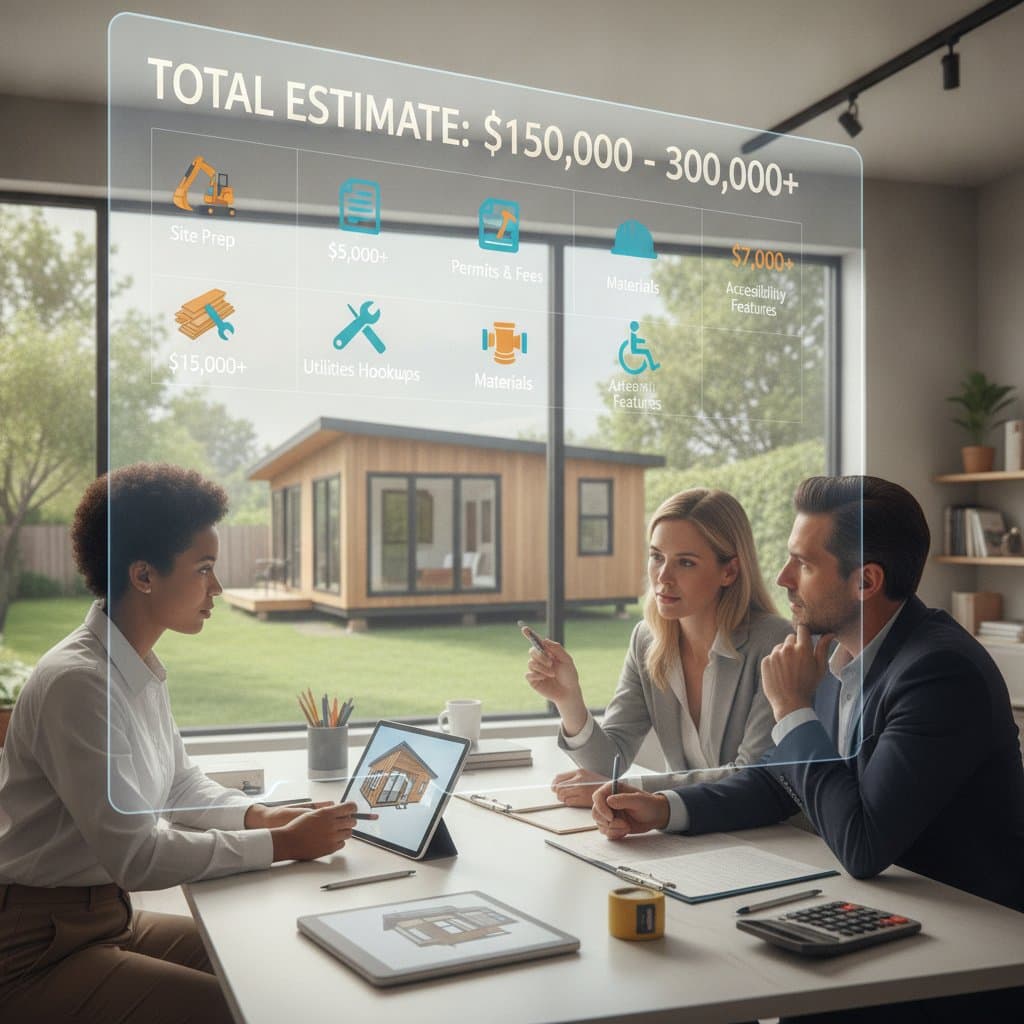
Factor in ancillary expenses: design consultations at $100 to $200 per hour, permit fees, and contingency funds for unforeseen issues like subfloor repairs. If undertaking a comprehensive remodel, allocate $2,000 to $5,000 for temporary relocation during construction.
Long-Term Financial Strategies
Universal design upgrades deliver immediate usability while boosting marketability; properties with these features often sell 10 to 20 percent faster. Explore rebates through programs like Medicaid waivers or the IRS Section 25C energy credit for qualifying installations such as energy-efficient windows.
Solicit itemized proposals from at least three contractors, delineating material sourcing, labor allocation, and add-ons like voice-activated outlets. This approach identifies opportunities to prioritize essentials, such as widening hallways over cosmetic finishes, without endangering core safety measures.
Preserving Remodeling Investments
Post-renovation, routine maintenance sustains performance and visual appeal. Wipe slip-resistant surfaces with pH-neutral cleaners to avoid degradation, inspect grab bar anchors quarterly for secure fastening, and replace bulbs with longer-lasting LEDs every two years.
Integrate these habits into household routines to avert minor problems from escalating. For example, lubricate door hinges annually to ensure smooth operation of widened passages. When contemplating additional projects, reference original plans to align new work with established accessibility standards.
Steps to Initiate Your Remodel
Start by conducting a home audit: walk through each room noting barriers like high light switches or steep stairs, then document measurements for doorways and counters. Partner with a Certified Aging-in-Place Specialist (CAPS) for a professional evaluation, which typically costs $300 to $600 but yields tailored recommendations.
Establish a phased budget if funds limit a full overhaul; begin with high-impact areas like the bathroom before addressing the kitchen. Choose materials certified for durability, such as solid-surface countertops resistant to scratches, to merge longevity with elegance.
Universal design transforms residences into responsive environments that support lifelong independence. Proactive modifications today secure a haven that remains secure, inviting, and efficient, allowing focus on enjoyment rather than adaptation.