
Aging in Place: Universal Design Remodels for 2026
Quick Answer Box
An aging-in-place remodel incorporates universal design principles to create a home that remains safe and accommodating for individuals of all ages and mobility capabilities. Homeowners may manage simple modifications, such as installing grab bars or adjusting lighting, independently. However, extensive projects demand the expertise of a licensed contractor. Timelines typically span one to six weeks, based on the project's scale. Expenses vary from several hundred dollars for basic accessibility enhancements to tens of thousands for comprehensive overhauls. Key risks include issues with electrical installations, plumbing alterations, and structural adjustments.
Step-by-Step Instructions
1. Assess Mobility Needs
Conduct a thorough walkthrough of every room to pinpoint potential hazards. Evaluate doorway dimensions, transitions between flooring types, and illumination levels throughout the space.
Success Check: Compile a detailed inventory of areas that hinder secure navigation.
2. Widen Doorways and Clear Pathways
Opt for doors measuring at least 36 inches in width to accommodate wheelchair passage. Eliminate elevated thresholds that pose tripping dangers.
Warning: Alterations to door frames may impact the integrity of surrounding walls. Engage a licensed contractor for any structural framing work.
Success Check: Pathways and doorways facilitate unrestricted movement free of barriers.
3. Improve Lighting and Visibility
Incorporate bright, uniform LED fixtures to illuminate key areas effectively. Integrate motion-activated sensors in corridors and bathrooms for automatic activation. Select diffused shades to minimize glare from direct light sources.
Electrical Hazard: Deactivate the circuit breaker prior to any lighting installations.
Success Check: Navigate the entire home without encountering dimly lit or obscured zones.
4. Replace Fixtures for Easier Use
Select lever-style handles for doors and faucets, which demand less force than traditional knobs. Upgrade from round doorknobs to ergonomic designs that accommodate reduced grip strength.
Success Check: Operate all handles and faucets effortlessly with limited physical exertion.
5. Remodel Bathrooms for Safety
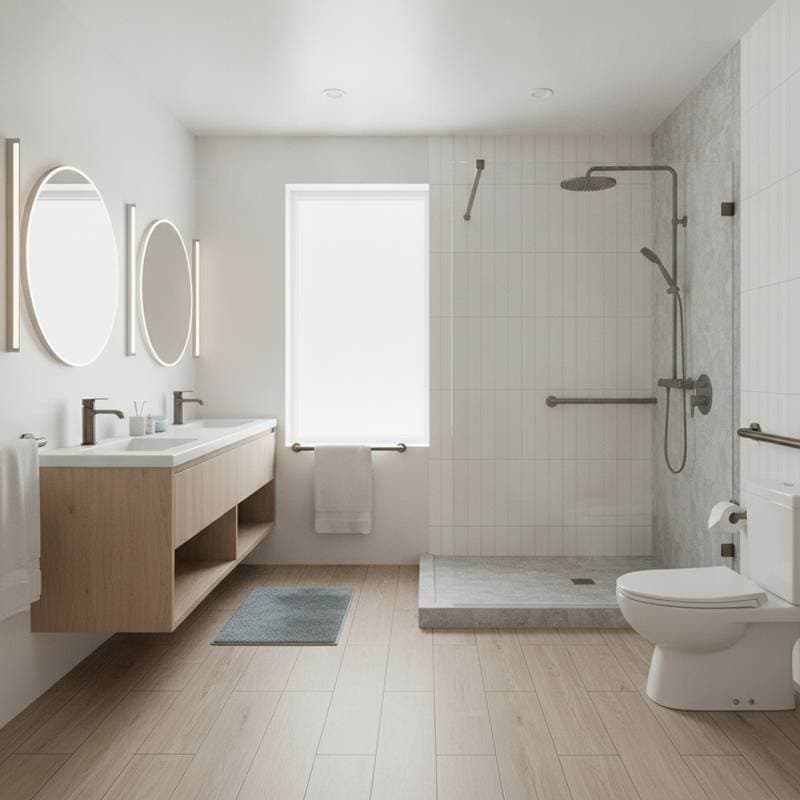
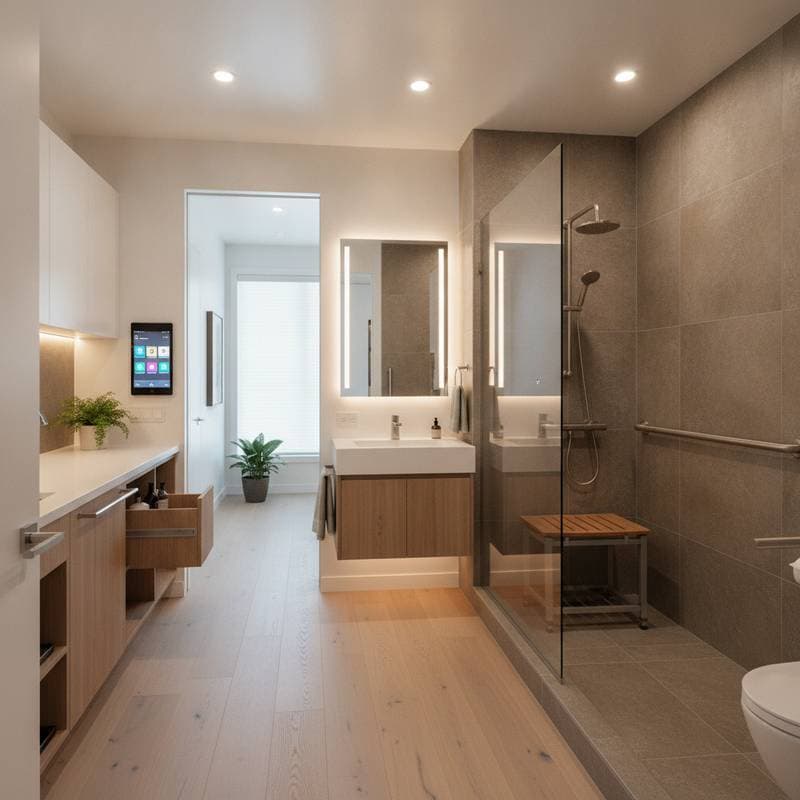
Position reinforced grab bars adjacent to toilets and within shower enclosures for support during transfers. Install non-slip flooring options, including textured ceramic tiles or resilient vinyl compositions.
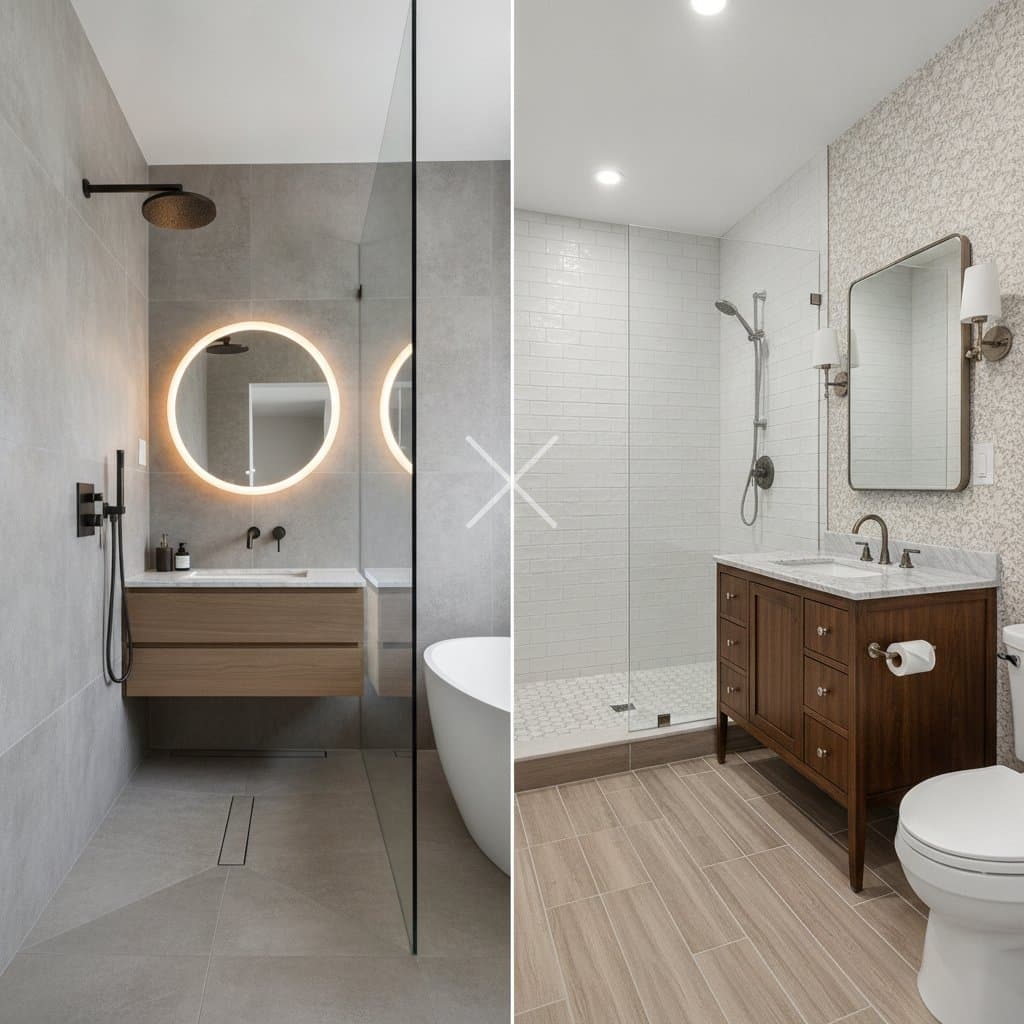
- Design a curbless shower entry paired with a adjustable handheld showerhead for enhanced usability.
- Elevate the toilet seat to a height of 17 to 19 inches to simplify sitting and standing motions.
Plumbing Risk: Consult a licensed plumber for modifications involving drain lines or water supply systems.
Success Check: Utilize the bathroom confidently without excessive strain or slip hazards.
6. Adjust Kitchen Work Areas
Modify countertops to lower heights or incorporate adjustable surfaces that adapt to user stature. Integrate pull-out shelves and deep drawers to bring items within comfortable reach.
Success Check: Access appliances, storage compartments, and preparation surfaces without awkward bending or overreaching.
7. Install Smart Accessibility Features
Deploy integrated smart home ecosystems to control lighting, door locks, and climate settings remotely. Prioritize voice-command or mobile app interfaces that diminish the need for manual operation.
Electrical Hazard: Summon a licensed electrician if new wiring proves necessary.
Success Check: Smart devices function consistently, streamlining daily routines with added ease.
Quality Checks and Troubleshooting
- Loose Grab Bars: Verify secure attachment to wall studs. Employ robust toggle anchors in instances where stud access proves challenging.
- Uneven Flooring: Level the subfloor substrate prior to laying non-slip coverings.
- Lighting Glare: Swap high-intensity bulbs for options equipped with softening diffusers to alleviate visual discomfort.
- Door Not Closing Smoothly: Adjust hinge alignments or lightly plane the door's edge for proper clearance.
Should issues continue, enlist a contractor to inspect and ensure installation integrity.
When to Call a Pro
Engage a licensed contractor for tasks involving:
- Relocation of plumbing or electrical conduits
- Demolition or reconfiguration of load-bearing walls
- Installation of exterior ramps or mechanical lifts requiring structural anchoring
- Custom layout planning to support wheelchair or walker navigation
Typical Costs:
- Basic enhancements, such as grab bars or lever handles: $200 to $600
- Accessibility-focused bathroom renovation: $8,000 to $20,000
- Complete home universal design transformation: $40,000 to $100,000
Request verification of licensing, insurance coverage, and client references from potential contractors. Examine detailed written proposals and ascertain inclusions for material and labor warranties.
Pro Tips for Success
- Develop layouts that accommodate evolving requirements over time.
- Focus initial efforts on safety enhancements in bathrooms and kitchens.
- Select resilient, easy-care materials to minimize ongoing maintenance demands.
- Perform a final walkthrough of the updated environment to validate usability and comfort.
A strategic universal design remodel empowers sustained independence, security, and ease within your residence. Through meticulous preparation and targeted professional assistance, craft an environment that supports every phase of life.