Universal Design Principles for Aging-in-Place Bathrooms
Universal design transforms bathrooms into spaces that accommodate users of all ages and abilities. These principles emphasize accessibility, safety, and ease of use without sacrificing aesthetics. By incorporating features like wider doorways and slip-resistant surfaces, homeowners can prepare their homes for long-term residency.
Aging in place offers significant benefits, including familiarity and reduced relocation stress. According to building experts, bathrooms pose the highest risk for falls among older adults. Implementing universal design early prevents costly retrofits later and enhances daily comfort.
Essential Overview
Universal design bathrooms prioritize functionality alongside style. Key elements include open layouts, supportive fixtures, and intuitive controls. Projects range from simple updates, such as adding grab bars, to comprehensive remodels involving plumbing adjustments.
Costs typically fall between $6,000 and $25,000, influenced by room size, material choices, and labor needs. Timelines vary from one week for minor alterations to several weeks for full renovations. Homeowners should anticipate moderate to advanced difficulty levels, with professional involvement recommended for structural changes.
Primary risks involve slips on wet floors and errors in electrical or plumbing modifications. Local building codes often require permits for alterations affecting drainage or wiring. Consulting a licensed contractor ensures compliance and safety from the outset.
Planning Your Bathroom Remodel
Effective planning forms the foundation of a successful universal design project. Begin by assessing current space constraints and future needs. Consider mobility aids, vision changes, and potential caregiver access to inform decisions.
Gather measurements and sketch preliminary layouts. Identify load-bearing walls and existing utilities to avoid surprises during installation. Research local regulations through your municipal building department to understand permit processes.
Budget allocation plays a crucial role. Allocate funds for materials, labor, and unforeseen adjustments. Prioritize high-impact features like flooring and grab bars before aesthetic enhancements.
Step 1: Optimize the Layout
Start with a thorough measurement of the bathroom dimensions. Designate at least 30 inches by 48 inches of clear floor space to facilitate wheelchair or walker navigation. Ensure doorways measure no less than 32 inches wide for smooth passage.
Position fixtures to maximize efficiency. Place the toilet and shower in close proximity while maintaining unobstructed pathways. Opt for doors that swing outward or pocket styles to preserve interior space.
Verify accessibility by simulating movement patterns. Walk through the planned layout using a chair to mimic mobility limitations. Adjust as needed to guarantee full turning radius of 60 inches in key areas.
Verification: Confirm the configuration provides unrestricted access to all elements and supports 360-degree mobility.
Selecting and Installing Safety Features
Safety features mitigate common hazards in bathrooms. Focus on materials and installations that withstand daily wear while promoting stability. Professional guidance proves invaluable for integrating these elements seamlessly.
Step 2: Choose and Lay Non-Slip Flooring
Select flooring materials with high traction ratings, such as textured porcelain tiles, luxury vinyl planks, or cork composites. These options resist moisture and provide cushioning underfoot. Steer clear of polished stone or smooth laminates that increase slip potential.
Prepare the subfloor by ensuring it remains level and dry. Apply a waterproof adhesive suitable for the chosen material, then grout joints with a sealant to block water infiltration. Allow adequate curing time before introducing moisture.
Test the installation by walking on the surface after wetting it. The flooring should offer a firm grip without excessive noise or bounce.
Verification: The floor maintains stability and resistance to slips in both dry and wet conditions.
Step 3: Upgrade the Toilet for Comfort and Support
Install a comfort-height toilet, elevated 17 to 19 inches from the floor, featuring an elongated bowl for better ergonomics. Reinforce the subfloor with plywood blocking to handle added weight securely.
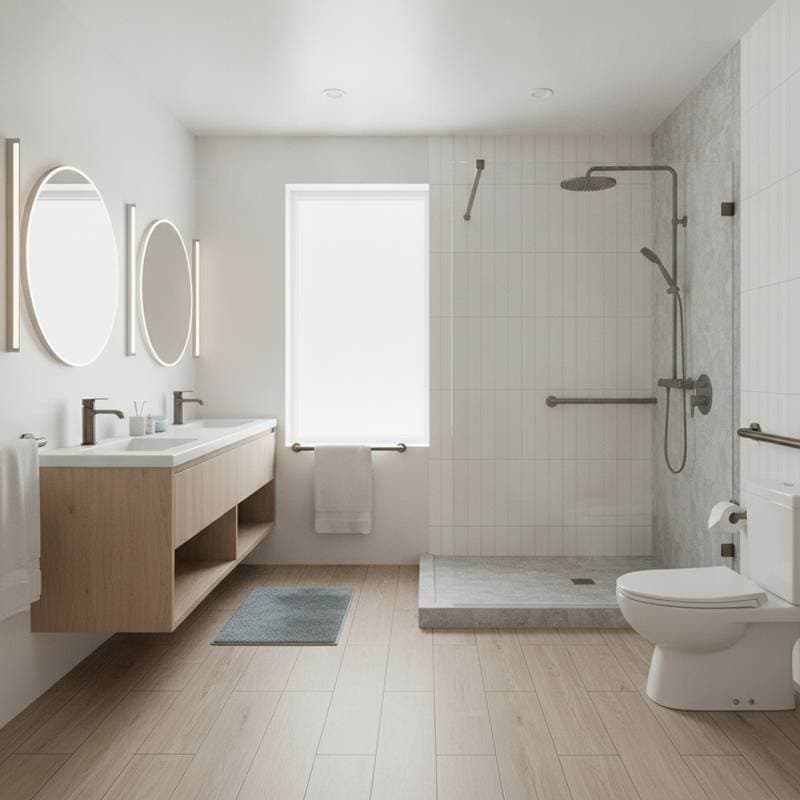
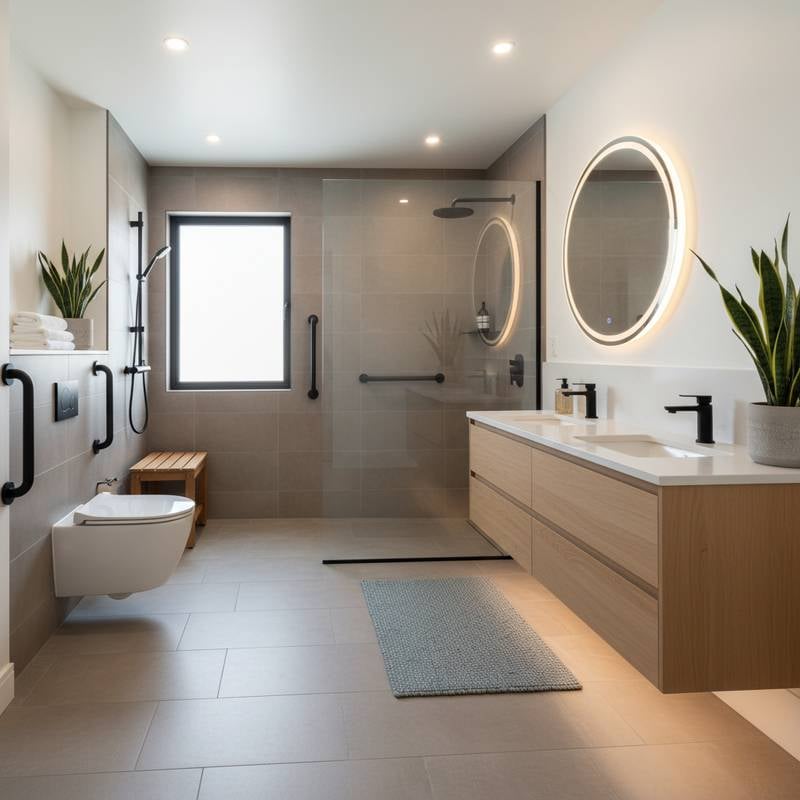
Position grab bars strategically: one horizontal bar at 33 to 36 inches high beside the toilet and a vertical one for rising assistance. Use corrosion-resistant materials like stainless steel for durability in humid environments.
Anchor all components firmly to prevent shifting. After installation, apply pressure to ensure stability.
Verification: The toilet remains steady under load, with bars offering reliable support.
Enhancing Shower and Bath Accessibility
Showers and baths demand careful modification to eliminate barriers. Curbless designs promote seamless entry, reducing trip hazards. These upgrades require precise execution to maintain waterproofing integrity.
Step 4: Construct a Barrier-Free Shower
Engage a licensed contractor experienced in universal design for curbless shower creation. They will depress the floor by 2 to 4 inches and install a sloped pan with a minimum 1/4-inch-per-foot gradient toward the drain.
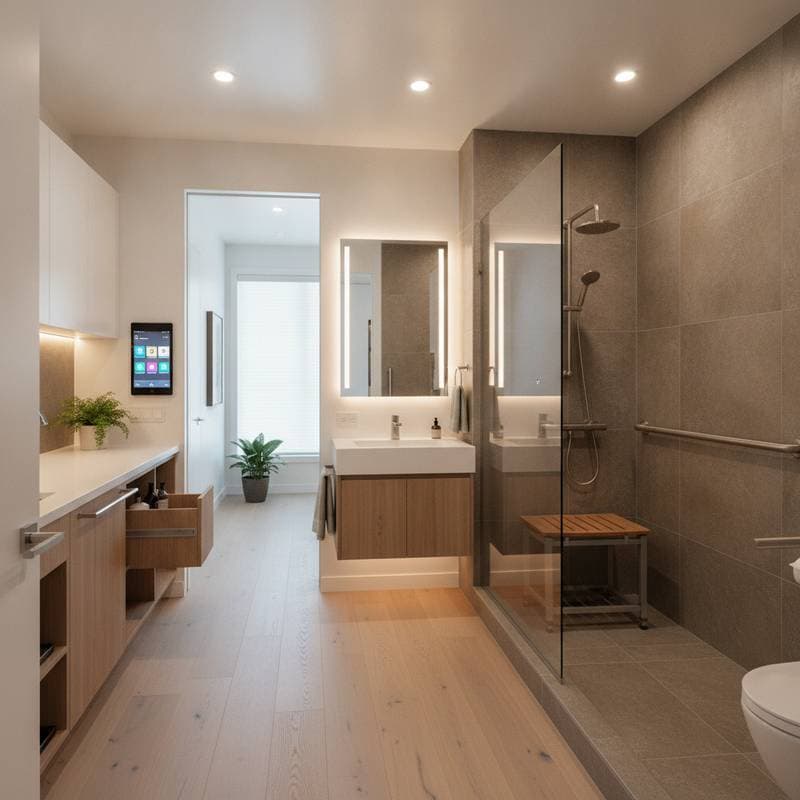
Incorporate a fold-down bench at 17 to 19 inches high, constructed from teak or composite for water resistance. Mount a handheld showerhead on an adjustable slide bar, positioned between 48 and 72 inches from the floor.
Seal all seams with silicone caulk and test for leaks by running water for 30 minutes. Ensure the space accommodates a 30-inch by 30-inch minimum shower area.
Verification: Drainage occurs efficiently without pooling, and seals remain intact under water exposure.
Step 5: Secure Grab Bars Throughout
Identify stud locations using a reliable detector to anchor grab bars properly. Install horizontal bars at 33 to 36 inches above the floor near the shower entry and vertical ones adjacent for transfer support.
For bathtub areas, if retained, add bars along the side and back walls. Employ 1.25- to 1.5-inch diameter bars rated to support 250 pounds or more. Space installations to cover transfer points comprehensively.
Tighten all fasteners and test by applying body weight gradually.
Verification: Bars withstand full-body pressure without flexing or detaching.
Improving Visibility and Usability
Lighting and controls influence usability significantly. Adequate illumination prevents accidents, while intuitive designs accommodate limited dexterity.
Step 6: Upgrade Lighting and Fixtures
Install layered lighting: overhead fixtures for general illumination and task lights above the vanity and shower. Aim for 200 to 400 lux brightness levels to highlight edges and contrasts.
Replace standard switches with rocker-style or touchless sensors mounted at 36 to 48 inches high. Select lever-handled faucets and single-control valves that operate with minimal force.
Incorporate nightlights with automatic activation for low-light navigation. Ensure all elements reach easily from seated positions.
Verification: Controls respond effortlessly to one-handed operation, and lighting eliminates shadows or glare.
Conducting Thorough Quality Assessments
Post-installation checks safeguard long-term performance. Address issues promptly to avoid escalation.
- Drainage Problems: Inspect slope angles and clear debris from drains; reseal as necessary.
- Unstable Fixtures: Reinforce anchors with toggle bolts or consult a professional for structural fixes.
- Inadequate Illumination: Adjust bulb types to warmer tones and reposition fixtures for even distribution.
Cease activities if structural concerns arise, such as persistent leaks or electrical faults, and summon qualified experts immediately.
Engaging Professional Services
Certain tasks necessitate specialized skills to meet safety standards. Hire licensed professionals for:
- Shower pan fabrication and waterproofing.
- Electrical upgrades, including GFCI outlet placements.
- Subfloor reinforcements and wall blocking.
- Plumbing reroutes for optimal fixture positioning.
Labor rates range from $60 to $120 hourly, depending on location and expertise. Request proof of licensing, bonding, and insurance. Review past projects and obtain multiple quotes to select the best fit.
Permits streamline the process and protect against code violations. Submit plans to your local authority, detailing proposed changes. Approval times vary but typically span one to four weeks.
Advanced Strategies for Longevity
Integrate smart technology for enhanced control, such as voice-activated lights or temperature sensors. Select durable, low-maintenance materials to minimize upkeep.
Test every feature post-completion, involving family members for feedback. Schedule annual inspections to maintain functionality.
Maintain clear pathways by removing unnecessary items and using wall-mounted storage. Contrasting colors on floors and walls aid visibility for those with visual impairments.
Achieving Independence Through Thoughtful Design
Universal design empowers homeowners to navigate their spaces confidently over time. These modifications not only address immediate safety but also foster emotional well-being.
Investing in such a remodel yields returns in comfort and autonomy. With meticulous execution, your bathroom becomes a reliable ally in aging gracefully at home.