Introduction to Universal Design
Universal design creates environments that accommodate individuals across all ages, abilities, and mobility levels. This approach integrates flexibility and usability into everyday spaces, eliminating the need for later modifications. Homeowners benefit from increased safety and convenience as they age, allowing them to maintain familiarity and control in their living spaces.
Aging in place refers to the desire to remain in one's home despite changing physical needs. Universal design supports this goal by anticipating potential challenges, such as reduced vision or balance. Early adoption of these principles prevents costly retrofits and enhances overall quality of life.
Core Principles of Universal Design
Seven fundamental principles guide universal design: equitable use, flexibility in use, simple and intuitive operation, perceptible information, tolerance for error, low physical effort, and size and space for approach and use. These elements ensure that spaces function effectively for everyone. For instance, equitable use means door handles operate similarly for all users, while low physical effort involves automatic doors or lever-style fixtures.
In residential settings, these principles translate to practical features. Wide doorways accommodate wheelchairs, and adjustable counter heights serve both seated and standing individuals. Applying these ideas from the outset creates a home that evolves with its occupants.
Benefits for Aging in Place
Implementing universal design reduces fall risks, a leading cause of injury among older adults. Features like handrails and non-slip flooring provide stability during movement. Enhanced lighting minimizes accidents in low-visibility areas, promoting confidence in navigation.
Beyond safety, these modifications foster independence. Kitchens with reachable storage allow self-sufficient meal preparation, while accessible bathrooms support personal hygiene without assistance. Property values also rise, as universally designed homes appeal to a broader market.
Financial advantages include lower long-term costs. Preventive upgrades avoid emergency repairs or institutional care expenses. Many changes qualify for tax credits or grants, making implementation more accessible.
Essential Upgrades by Room
Entryways and Hallways
Start with the entryway to ensure safe arrival and departure. Install ramps or zero-threshold entries to eliminate steps, facilitating wheelchair access. Add motion-sensor lighting to illuminate paths at night, reducing tripping hazards.
Maintain clear, wide pathways at least 36 inches across to allow easy passage. Use contrasting colors on floors and walls to improve depth perception. These adjustments create a welcoming threshold that supports daily routines.
Bathrooms
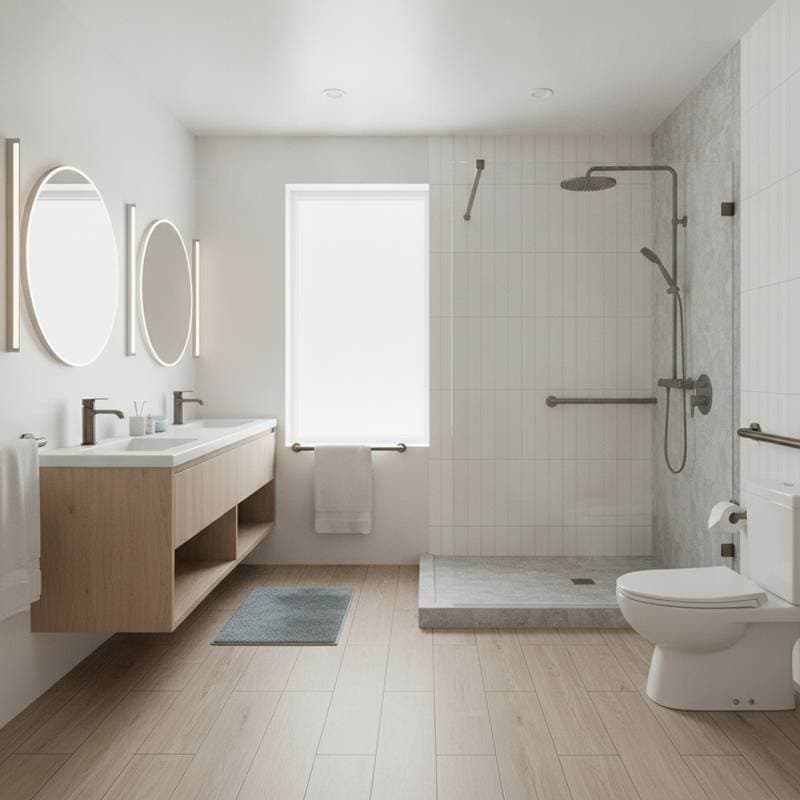
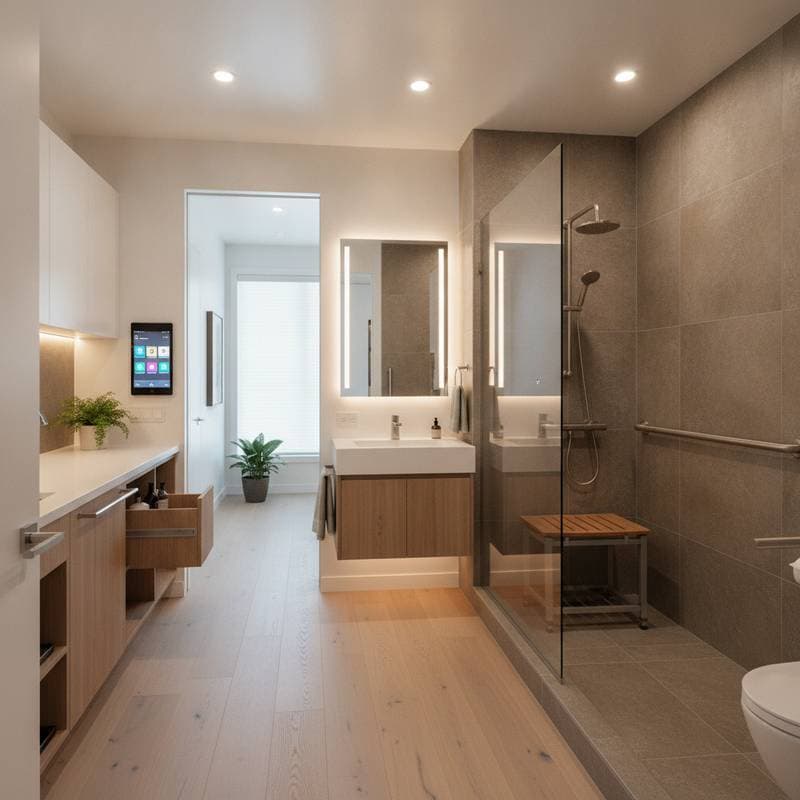
Bathrooms pose significant risks due to wet surfaces and confined spaces. Replace standard bathtubs with walk-in showers featuring low curbs, or install transfer benches for secure seating. Mount grab bars near toilets and showers, ensuring they align with studs for strength.
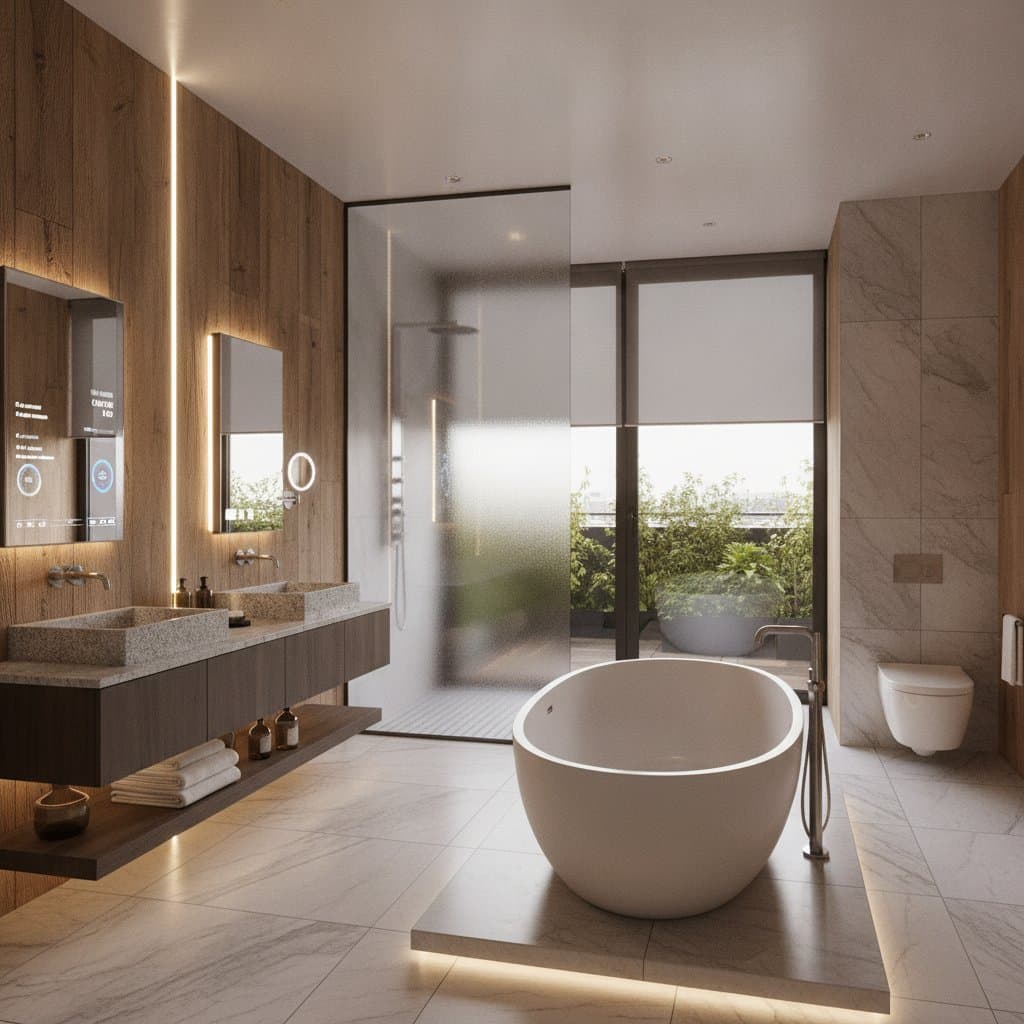
Upgrade to lever faucets and touchless fixtures to minimize strain. Incorporate non-slip mats and textured flooring to prevent slides. Bright, adjustable lighting over mirrors aids grooming tasks without shadows.
Kitchens
Design kitchens for efficiency and reach. Install pull-out shelves and lazy Susans in cabinets to access items without stretching. Lower select counters to 34 inches for seated use, and add open shelving for frequently needed utensils.
Choose matte-finish appliances to cut glare, and position controls at front-facing heights. Slip-resistant flooring protects against spills, while task lighting under cabinets illuminates work surfaces effectively.
Living Areas
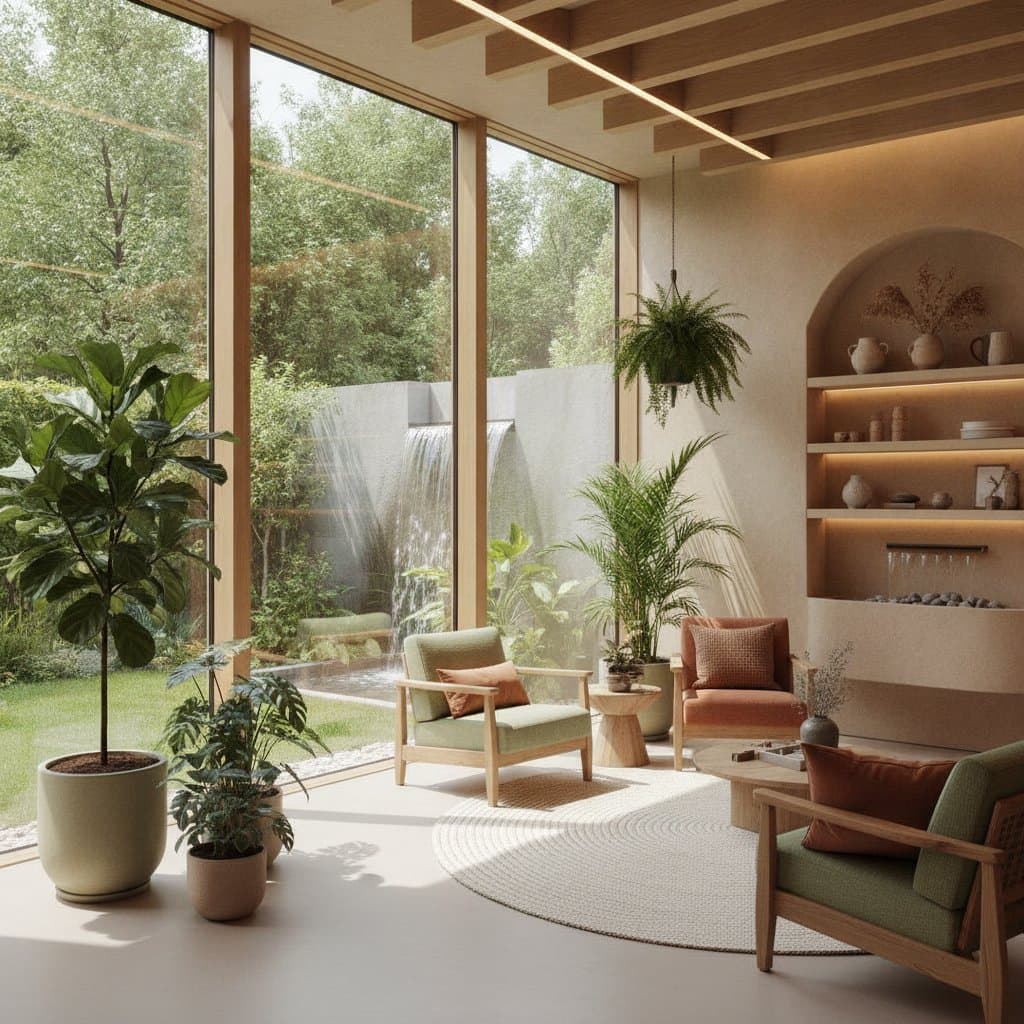
Arrange furniture to maximize open space and flow. Select sturdy, armrest-equipped seating for rising support. Install remote-controlled blinds and voice-activated lights to simplify operations.
Incorporate smart home technology for monitoring, such as automated temperature controls. These elements enhance comfort without altering the room's aesthetic appeal.
Hiring a Qualified Contractor
Select professionals experienced in universal and accessible design to ensure quality results. Request written estimates detailing materials, labor, and timelines. Verify proof of insurance and contact provided references to assess reliability.
Discuss your specific needs and review portfolios of similar projects. Confirm compliance with local building codes, particularly for structural alterations. A skilled contractor transforms concepts into durable, functional spaces.
Practical Implementation Strategies
Begin with an assessment of current hazards, such as uneven floors or dim corners. Prioritize high-impact areas like bathrooms and stairs. Budget for phased updates to spread costs over time.
Incorporate durable, low-maintenance materials from the start. Test prototypes, like temporary grab bar placements, to verify usability. Consult occupational therapists for personalized recommendations on layouts.
Pro Tips for Implementation
- Sketch layouts on paper to visualize changes and identify potential issues.
- Select contrasting colors for floors and walls to enhance visibility for those with visual impairments.
- Opt for matte finishes on surfaces to minimize glare from lights or windows.
- Ensure all pathways measure at least 36 inches wide for unobstructed movement.
- Place seating options in entryways and bathrooms to provide rest and stability points.
- Evaluate each modification for personal comfort prior to permanent installation.
Lever handles and enhanced lighting offer immediate improvements in usability. Initiate with modest changes, then scale up as requirements evolve.
Frequently Asked Questions
What defines universal design?
Universal design involves crafting environments usable by individuals of all ages and abilities, without requiring adaptations.
Does installing grab bars necessitate a permit?
Grab bars generally do not require permits, though structural modifications or plumbing alterations may.
What are the costs associated with an aging-in-place remodel?
Minor enhancements range from a few hundred dollars, while comprehensive remodels span several thousand to tens of thousands, based on project extent.
Is self-installation of grab bars feasible?
Yes, provided one locates wall studs and employs hardware rated for the load.
Which flooring options suit aging in place?
Slip-resistant vinyl, rubber, or low-pile carpet provide safety and require minimal upkeep.
Is bathtub replacement advisable?
If high tub edges impede entry, consider a low-threshold shower or transfer bench as alternatives.
Sustaining Accessibility Over Time
Regular inspections preserve the effectiveness of universal design features. Check grab bars for secure attachment and replace worn flooring promptly. Adjust lighting as vision changes occur to maintain clarity.
Update technology integrations to leverage advancements in smart home systems. These ongoing efforts ensure the home remains a supportive environment. Each adaptation reinforces security and autonomy throughout life's stages.