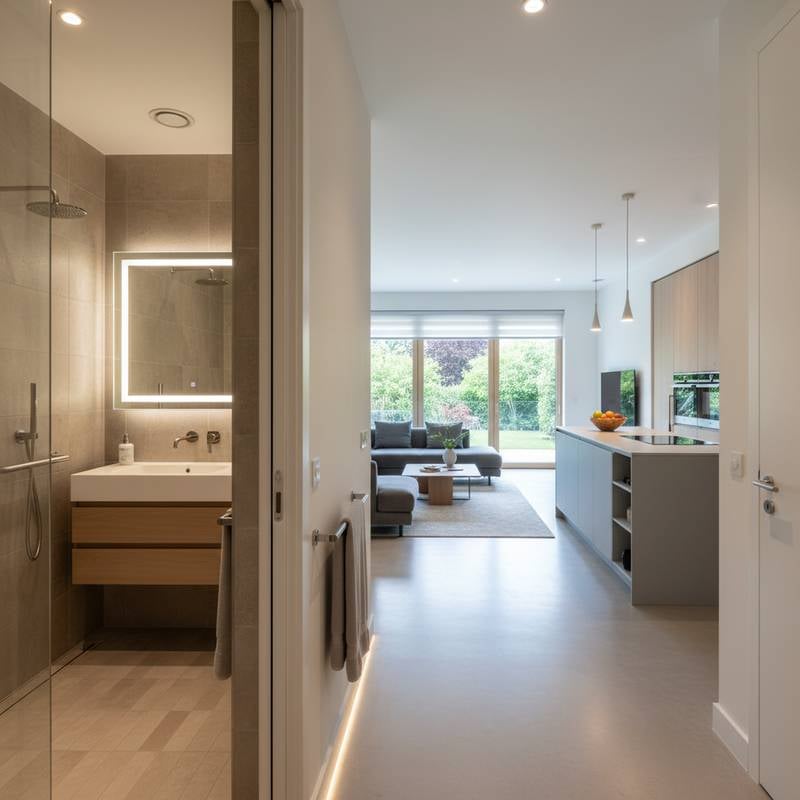
What 2026 Universal Design Costs Mean for Aging in Place
Aging in place allows individuals to remain in their homes as they age, maintaining independence and familiarity. Universal design incorporates features that accommodate people of all abilities and ages, from wide doorways to adjustable fixtures. With material and labor costs projected to rise by 5 to 8 percent in 2026 due to supply chain adjustments and increased demand, homeowners must anticipate these shifts to create safe, comfortable living spaces.
This guide details evolving costs, influencing factors, and practical strategies for remodeling. By focusing on high-impact areas, readers can balance budgets while enhancing accessibility and home value.
Factors Driving Cost Changes in 2026
Universal design costs fluctuate based on multiple elements, including raw material prices and skilled labor shortages. For instance, sustainable materials like recycled composites for flooring may increase by 10 percent, reflecting environmental regulations and sourcing challenges. Rising demand for aging-in-place solutions also spurs product innovation, such as integrated smart home technologies that blend seamlessly with traditional aesthetics.
Upgrades in functionality add to expenses but deliver enduring benefits. Grab bars now feature ergonomic designs that serve as decorative elements, while zero-threshold entries use reinforced concrete for durability without compromising style. Energy-efficient options, including automated shading systems and low-flow plumbing, elevate initial outlays yet lower utility bills over time, often recouping investments within five years.
Key Remodeling Areas and Their Costs
Targeting specific home zones maximizes the impact of universal design investments. Below, explore essential areas, estimated 2026 costs based on national averages, and integration tips for functionality and appeal.
Entrances and Doorways
Why it matters: Smooth entry points prevent tripping hazards and facilitate wheelchair access, setting the tone for an accessible home.
Estimated cost range: Widening a standard doorway costs $1,500 to $3,000, including framing adjustments. Installing lever handles and automatic door openers adds $500 to $2,000 per entry.
Pairing advice: Opt for solid-core doors in walnut or oak finishes to match interior trim. Pair with non-slip mats in earthy tones like terracotta for subtle traction without visual clutter.
Bathrooms
Why it matters: Bathrooms pose significant fall risks; universal updates promote safety through stable surfaces and easy-reach elements.
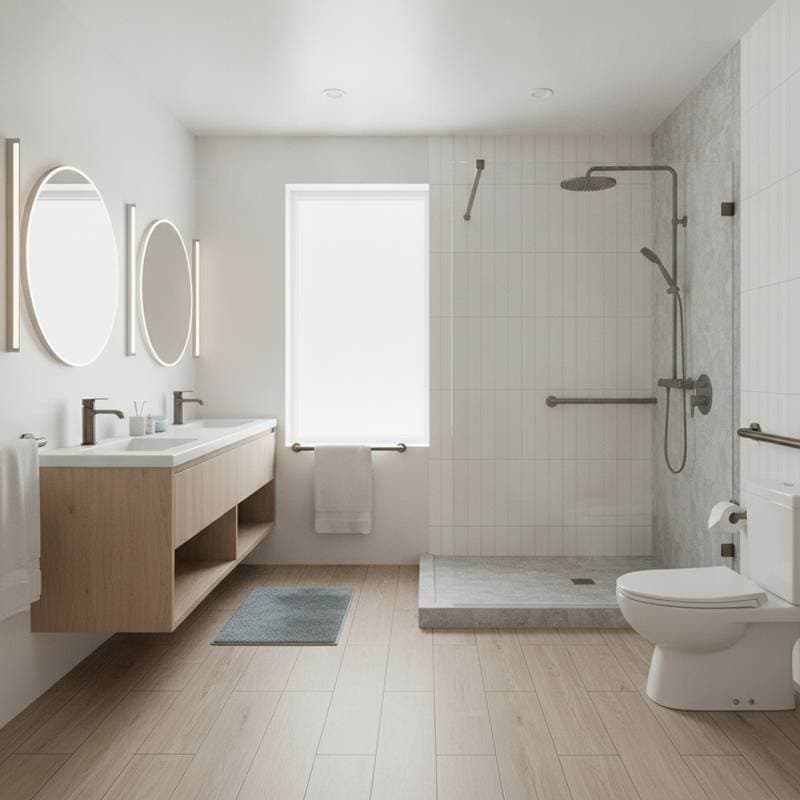
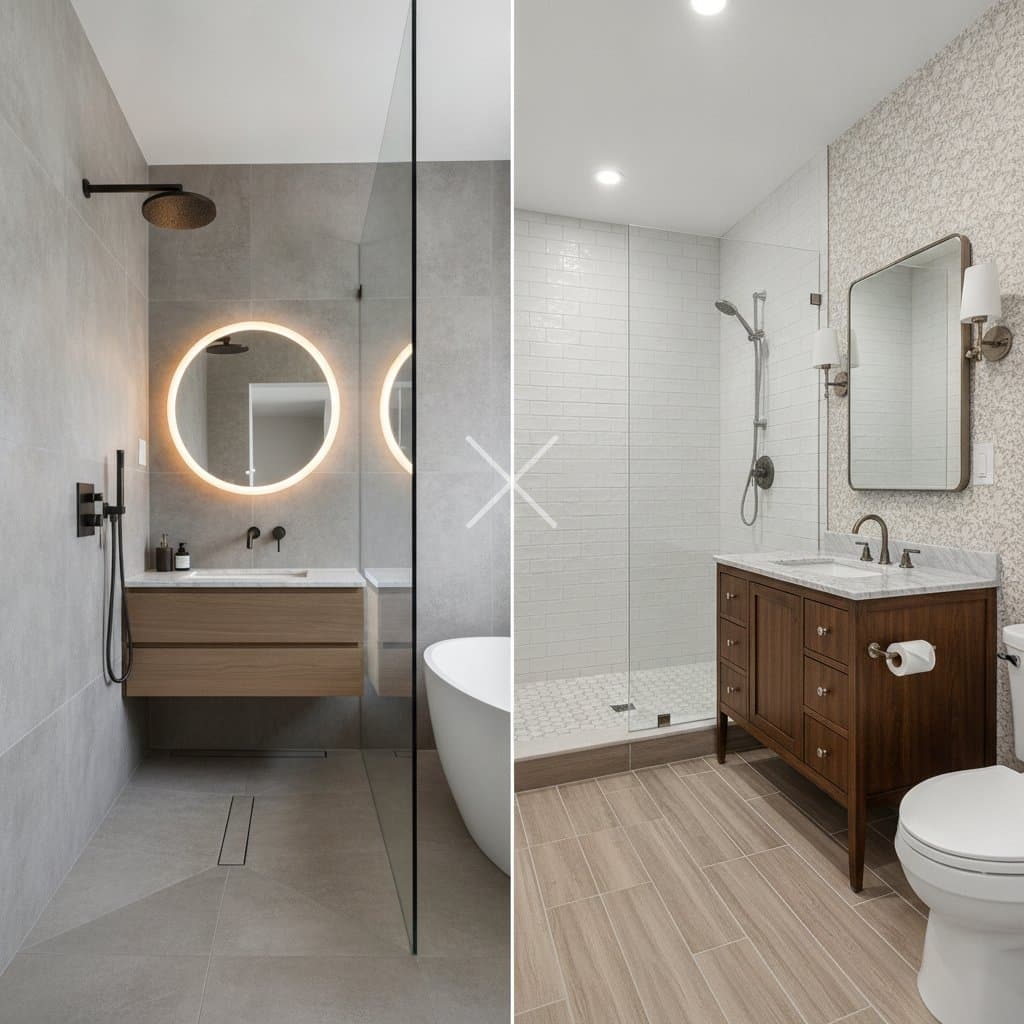
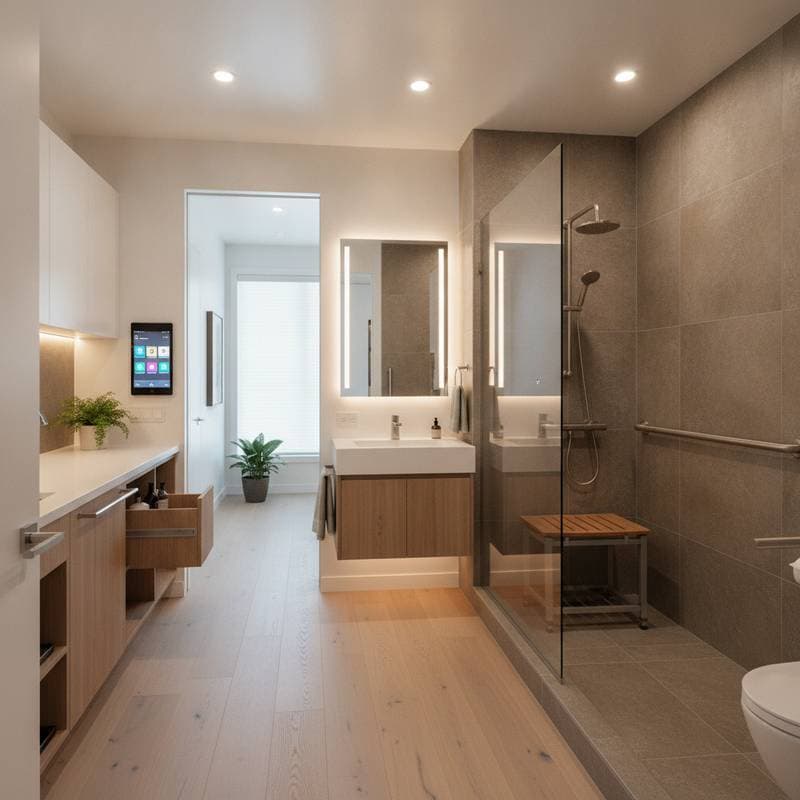
Estimated cost range: Converting a tub to a curbless shower ranges from $4,000 to $8,000 for basic setups. Comprehensive remodels with heated floors and adjustable vanities reach $15,000 to $25,000.
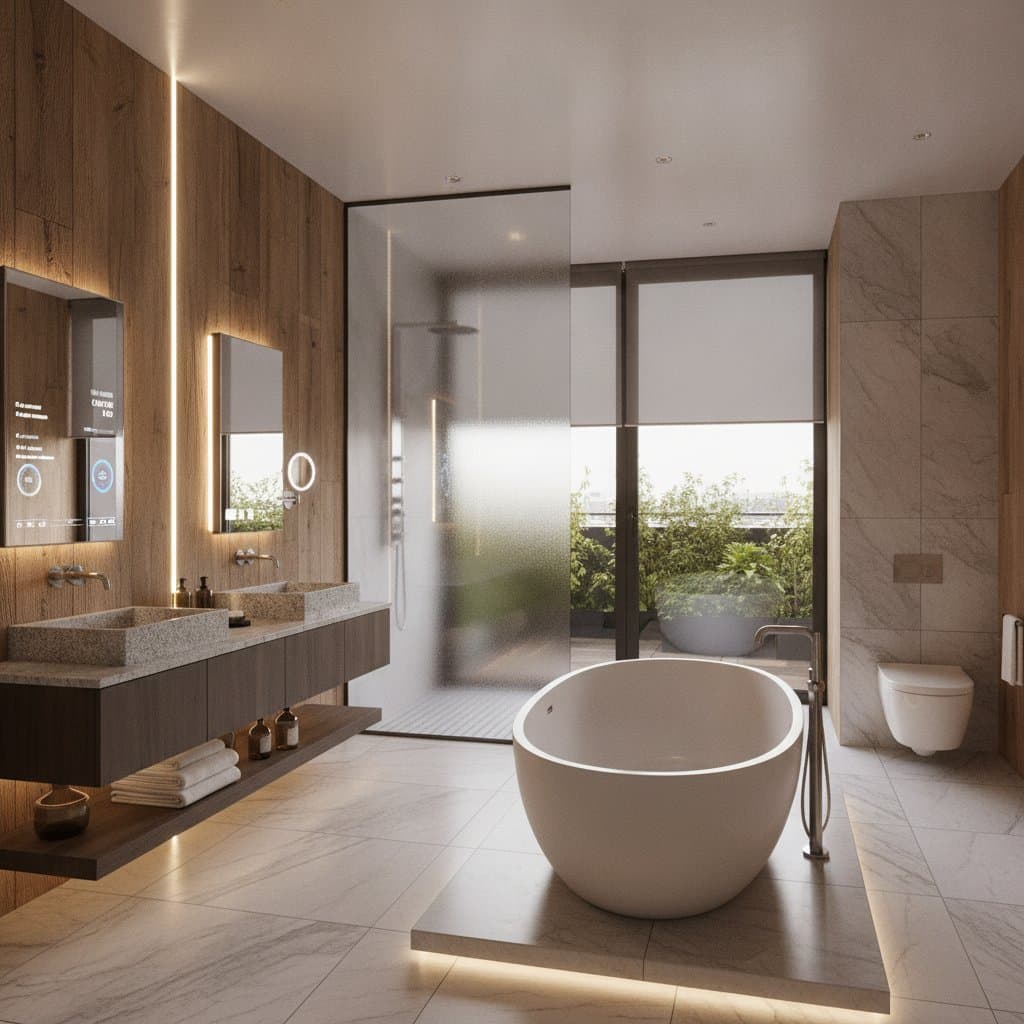
Pairing advice: Choose slip-resistant porcelain tiles in warm greige shades for a spa ambiance. Integrate rainfall showerheads with handheld options and brushed nickel grab bars for coordinated elegance.
Kitchens
Why it matters: Adaptive kitchens support daily tasks for all users, from lower counters for seated cooking to pull-out shelves for easy access.
Estimated cost range: Installing pull-down shelving and adjustable-height islands costs $3,000 to $6,000. Full kitchen overhauls with universal appliances total $20,000 to $40,000.
Pairing advice: Select quartz countertops in soft taupe for durability and warmth. Combine with matte black hardware and open shelving in light wood to encourage flow and visibility.
Lighting and Electrical Systems
Why it matters: Strategic illumination minimizes accidents, supports visual tasks, and fosters a welcoming atmosphere.
Estimated cost range: Upgrading to motion-sensor switches costs $200 to $500 per room. Comprehensive systems with LED recessed lights and smart controls range from $2,000 to $5,000.
Pairing advice: Install warm 2700K LED bulbs for soothing light. Use dimmable fixtures in hallways and pair exterior floods with soft bronze finishes for security without harsh glare.
Flooring and Hallways
Why it matters: Consistent, hazard-free flooring ensures safe movement throughout the home, reducing joint stress.
Estimated cost range: Replacing carpet with vinyl plank flooring costs $5 to $10 per square foot, totaling $3,000 to $7,000 for a standard hallway. Adding handrails extends to $1,000 to $2,500.
Pairing advice: Choose wide-plank luxury vinyl in muted olive for resilience and style. Contrast with wall paint in clay gray to guide sightlines and enhance spatial awareness.
Stairways and Vertical Mobility
Why it matters: Reliable stair solutions maintain access to upper levels, preserving home usability.
Estimated cost range: Straight stair lifts cost $3,000 to $6,000. Curved models or platform lifts range from $10,000 to $20,000, with elevators starting at $30,000.
Pairing advice: Fit railings with smooth oak grips and integrated LED underlighting. Select powder-coated steel in warm metallic tones to complement surrounding decor.
Understanding Core Cost Drivers
Project budgets hinge on several variables that demand careful evaluation. High-quality materials, such as antimicrobial countertops, extend usability but inflate costs by 20 to 30 percent. Experienced contractors specializing in accessibility command premium rates, yet their precision avoids costly rework.
Structural alterations, like reinforcing floors for lifts, involve engineering assessments adding $2,000 to $5,000. Custom elements, including voice-activated faucets, further elevate totals, while permits for modifications average $500 to $1,500 depending on location.
Request detailed breakdowns from professionals to identify savings opportunities, such as phased implementations that spread expenses over time.
Achieving Design Harmony
Universal design enhances rather than detracts from aesthetic appeal. Select palettes that promote tranquility, such as soft beige walls paired with textured rugs in natural fibers.
Color and texture strategies:
- Employ muted olive accents for depth without overwhelming spaces.
- Layer textures like linen curtains over hardwood for tactile comfort.
- Balance high-contrast elements, such as dark floors with light walls, to aid navigation.
Material integration tips:
- Coordinate hardware in consistent brushed nickel across fixtures.
- Choose low-VOC paints in warm neutrals for health and fade resistance.
- Incorporate stone accents in entryways for grounding permanence.
These choices create cohesive environments where safety supports serenity.
Enduring Advantages of Universal Design
Investments in universal features yield multifaceted returns. Enhanced independence reduces reliance on external care, while broader market appeal can boost resale values by 10 to 15 percent. Accommodating diverse needs also benefits family members and visitors, fostering inclusive living.
Maintenance efficiencies compound savings: durable surfaces require less frequent repairs, and efficient systems cut energy costs by up to 25 percent annually. Over a decade, these elements transform homes into resilient assets.
Steps to Plan Your Remodel
Begin by conducting a thorough home audit, identifying mobility challenges in each area. Prioritize interventions based on immediate needs, such as bathroom grab bars before kitchen expansions.
Consult certified universal design specialists to develop customized plans. Review cost projections, material samples, and timelines to align with your vision. Finalize selections that honor your home's architecture, ensuring updates feel like natural evolutions.
Through deliberate planning, achieve a space that nurtures well-being for years ahead.