Verification Step: Surfaces provide firm, non-slip footing during movement.
7. Transform the Bathroom
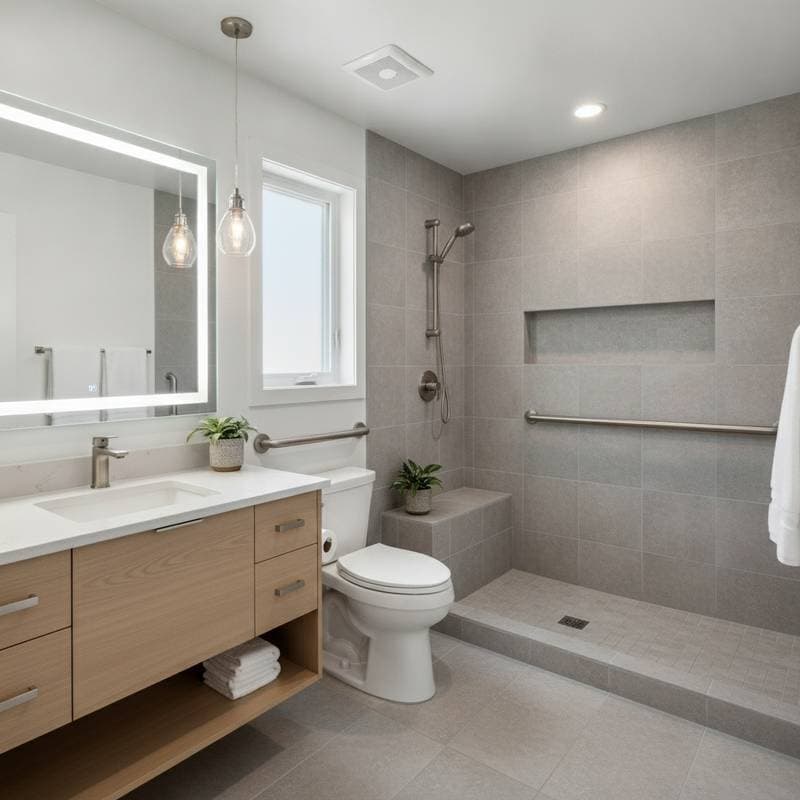
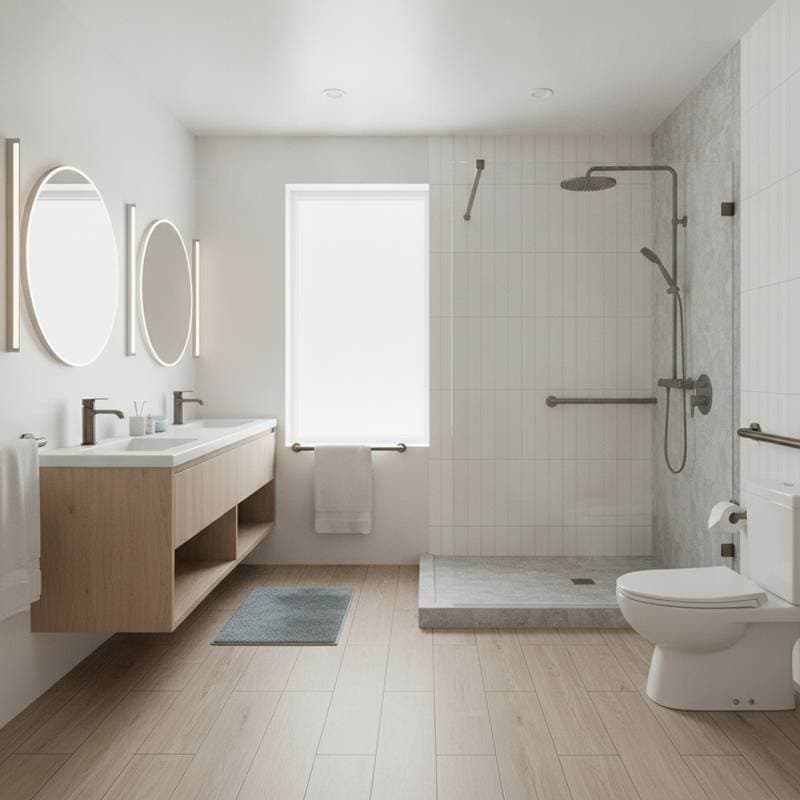
Incorporate a walk-in shower or tub with minimal entry barrier. Include an integrated seating area and adjustable showerhead. Adjust water heater settings to 120 degrees Fahrenheit for scald prevention.
Plumbing Consideration: Repiping or drain adjustments demand a certified plumber's expertise.
Verification Step: Safe entry and exit from the shower area require no excessive bending or extension.
8. Reconfigure the Kitchen
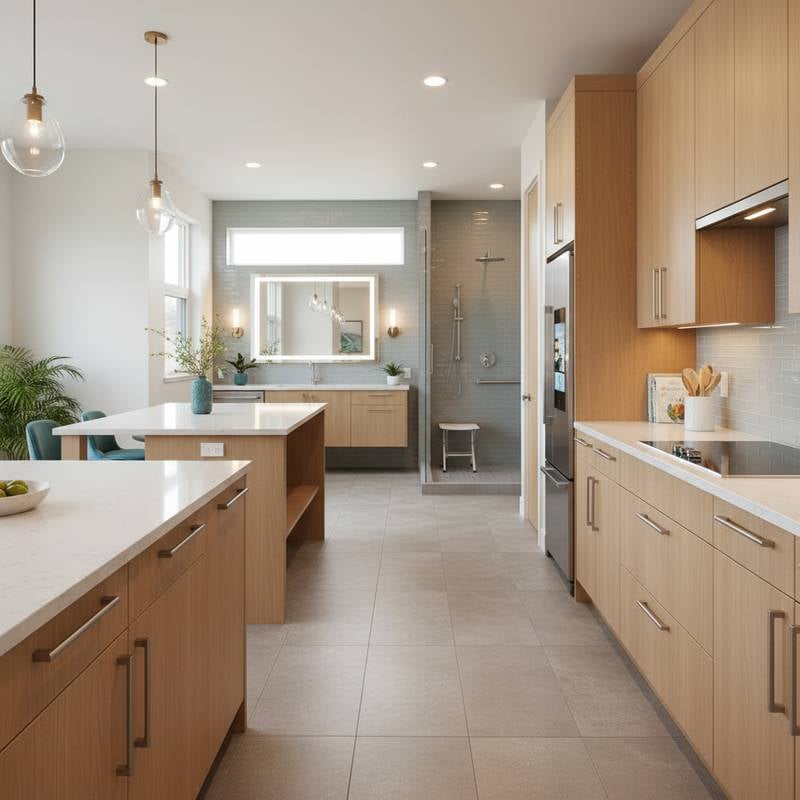
Reduce countertop heights or integrate pull-out shelving units for accessible reach. Position everyday essentials at waist height.
Electrical Consideration: Install ground-fault circuit interrupter (GFCI) protection for outlets near water sources; engage an electrician if absent.
Verification Step: Meal preparation and cleanup proceed without undue stretching or crouching.
9. Widen Passages and Openings
For users of mobility aids, contract a specialist to expand doorways to a minimum clear width of 32 inches.
Structural Consideration: Alterations to load-bearing walls require professional assessment and modification.
Verification Step: Unrestricted navigation occurs through all interior spaces.
10. Validate All Modifications
Perform a complete walkthrough following each alteration. Monitor for emerging impediments, reflective light, or irregular terrain.
Verification Step: Enhancements facilitate smoother, safer navigation without creating additional challenges.
Post-Project Cleanup and Waste Management
Collect discarded items including outdated fixtures, flooring segments, and hardware components. Categorize materials for recycling or proper disposal. Metals from faucets and bars often qualify for recycling programs. Thoroughly sweep and vacuum workspaces to eliminate dust and particles. Clean newly installed surfaces using a gentle detergent solution and water. Transport non-recyclable waste, such as old flooring or drywall, to designated municipal facilities in accordance with local regulations.
Inspection Protocols and Issue Resolution
Frequent Problem Areas
- Grab bars destabilizing from inadequate fixation
- Ramps accumulating moisture or frost
- Lights intermittently failing due to faulty wiring
- Flooring warping under humidity exposure
Straightforward Remedies
- Reinforce or reposition grab bars directly into studs.
- Integrate drainage features or anti-slip treatments on ramps.
- Substitute defective bulbs and verify electrical connections.
- Apply moisture-resistant adhesives or sealants along flooring perimeters.
Ongoing Upkeep and Durability
Routine Maintenance Plan
Examine grab bars, handrails, and flooring semiannually. Renew deteriorated seals and secure loose fasteners. Dust lighting fixtures regularly to preserve optimal output. Verify GFCI outlets each month by activating the test function and ensuring proper reset.
Indicators Requiring Intervention
- Hardware exhibiting looseness or instability
- Illumination diminishing despite recent bulb replacement
- Doors or cabinets resisting smooth operation
- Accumulation of water adjacent to plumbing elements
Prompt attention to these signals averts potential dangers and escalates repair expenses.
Engaging Professional Assistance
Tasks Demanding Certification
- Modifications to structural frameworks
- Extensive electrical system overhauls
- Relocation of plumbing conduits
- Complete bathroom reconfigurations
Certified contractors guarantee adherence to building codes, secure necessary permits, and provide warranty protections. Professional rates range from $75 to $150 per hour, varying by specialization and location.
Selecting a Reliable Contractor
- Confirm possession of valid licensing and insurance documentation.
- Request references from comparable aging-in-place initiatives.
- Scrutinize contract terms prior to any deposit.
- Ensure materials conform to Americans with Disabilities Act (ADA) or universal design criteria.
The Financial and Practical Advantages of Aging-in-Place Remodels
Aging-in-place modifications generate strong returns by merging enhanced comfort, risk reduction, and broad market appeal. Prospective buyers prioritize properties equipped with universal design elements. Features like accessible showers, expanded doorways, and level entries draw diverse demographics, including families, those recovering from injuries, and seniors. This versatility broadens the potential buyer pool.
From a fiscal perspective, accessibility investments curtail expenses associated with assisted living or frequent relocations. One comprehensive project can offset multiple years of institutional costs. Energy-conserving lights and appliances further decrease utility expenditures over time.
Numerous adaptations qualify for regional rebates or tax credits. Consult local housing agencies or state elder services for eligible initiatives.
Strategies for Optimal Outcomes
Prioritize renovations by area, beginning with entrances and bathrooms before addressing kitchens and sleeping quarters. Select materials that harmonize utility with aesthetics; contemporary non-slip vinyl options complement various interior styles. Maintain circulation paths at a minimum width of 36 inches to support effortless movement. Integrate user-friendly technologies, such as sensor-operated faucets or automated lighting systems. Record all alterations through photographs and invoices to support future sales or claims.
These thoughtful aging-in-place remodels safeguard personal autonomy, elevate property worth, and instill assurance in a home's adaptability to changing circumstances.