Budget-Smart Updates for Aging in Place
Aging in place allows you to remain in your home safely as needs change. Targeted modifications enhance accessibility while controlling costs. This guide focuses on practical changes that deliver safety and independence.
Cost and Time Estimates
Aging in place projects range from simple additions to full room renovations. Basic modifications typically cost between $500 and $5,000. Larger bathroom or kitchen updates often fall between $8,000 and $25,000.
Labor usually represents 40 to 60 percent of the total expense. Materials account for the remainder. Regional rates and permit fees influence the final amount.
DIY tasks with grab bars, lighting, and lever handles often require a few days to one week. Professional work involving plumbing or electrical systems may span several weeks. Many updates suit DIY efforts, yet electrical and plumbing changes require licensed professionals.
DIY Versus Professional Work
Homeowners can handle several updates without outside help. These include installing grab bars and handrails, fitting non-slip mats, swapping doorknobs for levers, adding LED bulbs, and rearranging furniture for clearer paths.
Licensed contractors become necessary for roll-in showers, doorway widening, new electrical circuits, and plumbing relocations. Simple DIY projects stay under $1,000. Professional bathroom or kitchen modifications generally begin at $5,000 and may exceed $20,000.
Step-by-Step Improvements
Assess the Current Layout
Walk through each room and note narrow passages or slippery areas. Confirm that doorways and hallways measure at least 32 inches wide. Verify that high-traffic zones receive adequate light. Successful assessment allows safe movement without awkward reaching or collisions.
Improve Entryways
Create at least one step-free entrance with a low-profile ramp or sloped pad. Add motion-sensor lights outside main doors. These changes permit easy access without lifting feet high or risking balance.
Enhance Bathroom Safety
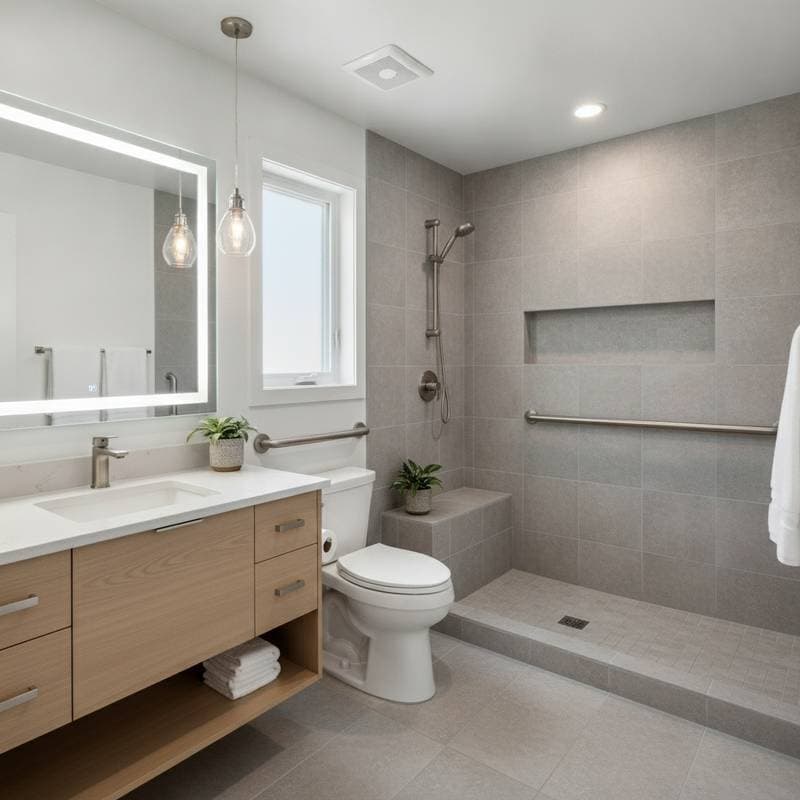
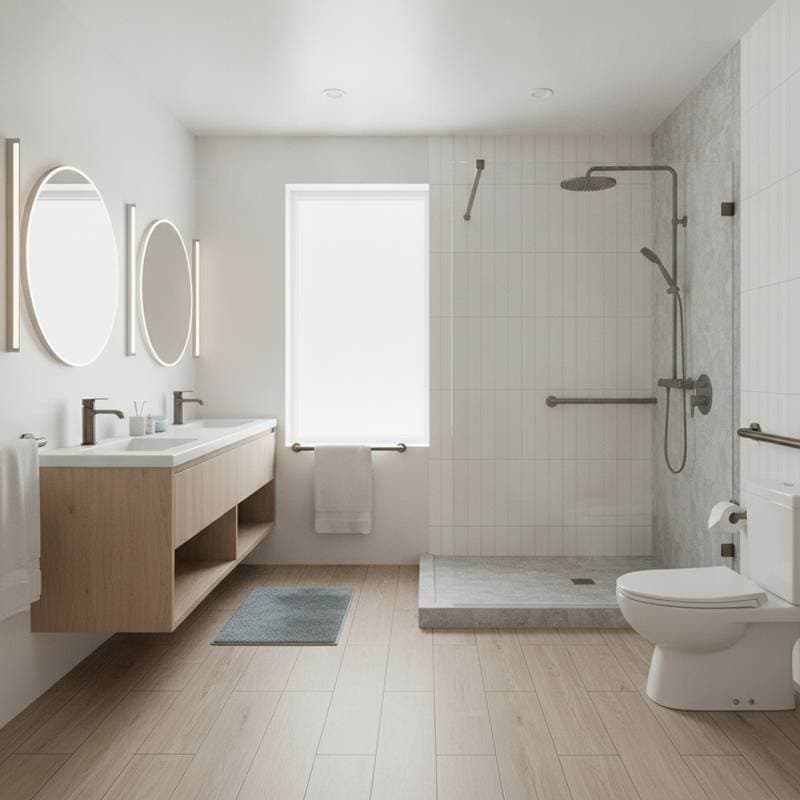
Bathrooms present the greatest fall risk. Anchor grab bars into wall studs near toilets and showers. Replace standard toilets with comfort-height models. Apply textured flooring or non-slip mats. Proper upgrades allow entry and exit without steadying against walls.
Upgrade Lighting
Replace dim fixtures with bright, energy-efficient LEDs. Select daylight bulbs for living areas and install night lights in hallways. Consistent, shadow-free lighting reduces tripping hazards throughout the home.
Update Hardware
Swap round knobs for lever handles and toggle switches for rocker styles. Label multi-switch panels for quick identification. These controls operate with one hand and minimal effort.
Adjust Kitchen Layout
Lower select countertop sections or add pull-out shelves. Store heavy items at waist height. Replace cabinet knobs with D-shaped pulls. These steps keep essential items within easy reach.
Install Slip-Resistant Flooring
Choose vinyl, rubber, or textured tile over slick surfaces. Secure rugs with non-slip pads. Finished floors maintain traction in both dry and damp conditions.
Safety Precautions
Shut off power at the breaker before any electrical work and test circuits with a voltage tester. Use stable ladders and non-slip shoes during overhead tasks. Wear gloves and eye protection when drilling or cutting. Consult a contractor if weight ratings or structural support remain uncertain.
Common Issues and Fixes
Loose grab bars require reinstallation into studs or use of anchors rated for at least 250 pounds. Water pooling in showers calls for adjusted slope or added trench drains. Glare from new bulbs lessens with frosted or lower-lumen options. Test each area by performing daily movements to confirm comfort and safety.
Cleanup and Ongoing Care
Dispose of old materials at approved construction waste sites. Never pour adhesives or paint into drains. Wipe surfaces with mild detergent and allow them to dry before replacing furnishings.
Inspect grab bars, flooring, and lighting twice yearly. Tighten hardware and replace worn components promptly. LED bulbs often last up to ten years. Vinyl flooring typically endures 15 to 20 years with routine care. Clear pathways and maintain steady lighting preserve safety over time.
When Professional Help Is Needed
Contact a licensed contractor when plumbing or electrical lines must move, structural changes are required, or wall support for grab bars cannot be verified. Hourly rates range from $75 to $150. Confirm licenses, insurance, references, and written warranties before signing an agreement. Request estimates that detail permits, disposal, and finish work.
Planning Recommendations
Begin with the rooms used most often, such as bathrooms and kitchens. Pair safety features with aesthetic updates to preserve a familiar atmosphere. Maintain 36-inch pathways to accommodate future mobility aids. A certified aging-in-place specialist can provide a tailored home assessment when budget permits.
Strategic improvements completed early support continued independence. Selective upgrades create a functional environment without excessive expense.