Legal Home Projects That Require No Permit in 2026
Small home improvements often proceed without permits when they leave structural elements, electrical systems, plumbing lines, and gas connections untouched. These projects suit most skill levels and fit within modest budgets. Completion times range from a single afternoon to two weekends.
- Confirm local height and size limits before starting any outdoor structure.
- Select materials rated for the intended exposure and load.
- Verify that new work remains detached from load-bearing walls or framing.
- Maintain required setbacks from property lines and utilities.
- Document every step with dated photos and receipts.
Build a Ground-Level Deck or Platform
Most jurisdictions waive permits for decks that sit less than 30 inches above grade and stay unattached to the house. Begin by excavating four to six inches of soil and installing a compacted gravel base. Lay pressure-treated joists labeled for ground contact, then fasten deck boards with stainless-steel screws spaced no more than 24 inches apart. Check that the surface sits level in both directions and that no fasteners protrude above the walking plane.
Update Interior Trim and Molding
Cosmetic trim replacement never triggers permit requirements. Remove existing pieces with a thin pry bar and hammer, protecting drywall with a wide putty knife. Measure each wall run and cut new trim on a miter saw set to 45-degree angles for corners. Secure the pieces with 2-inch finish nails placed every 16 inches, then fill nail holes with painter's putty before sanding smooth.
Install Floating Flooring
Floating vinyl, laminate, or engineered wood planks can be laid directly over existing subfloors. Start by removing baseboards and sweeping the surface clean. Unroll underlayment if required, then click the planks together while leaving a 3/8-inch expansion gap at every wall. Reinstall the baseboards to conceal the gap and confirm that the finished floor shows no movement under foot traffic.
Place a Prefabricated Storage Shed
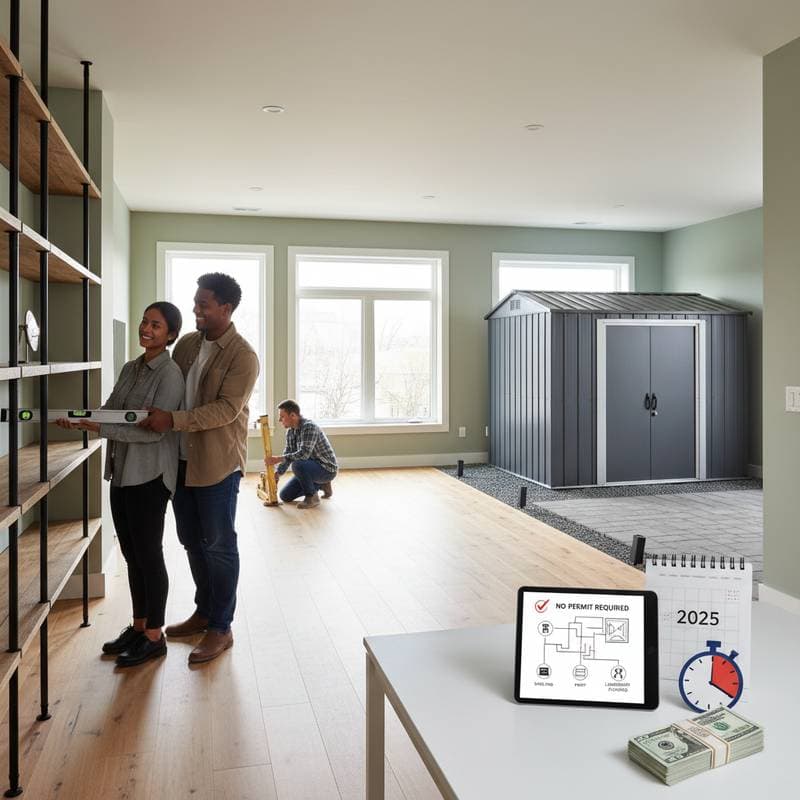
Portable sheds under 120 square feet usually avoid permit review. Position the unit on a level bed of crushed stone or concrete pavers to promote drainage. Anchor the corners to the base with galvanized straps and maintain at least three feet of clearance from fences or neighboring structures. Test that doors open and latch without binding.
Swap Doors or Windows of Identical Size
Replacement units that fit existing rough openings require no structural changes and therefore no permit. Measure the jamb width and height at three points each, then order units that match those dimensions exactly. Apply self-adhesive flashing tape around the opening before setting the new frame. Tool exterior caulk into the gap between the frame and siding to create a continuous weather seal.
Refresh Surfaces Through Painting and Refinishing
Surface treatments such as painting, wallpapering, and floor refinishing remain permit-free in every jurisdiction. Ventilate the workspace and cover adjacent surfaces with drop cloths. Apply primer followed by two finish coats, sanding lightly between layers for a uniform appearance. Dispose of solvent-soaked rags in a sealed metal container away from living areas.
Addressing Common Installation Issues
Uneven paint or caulk lines can be corrected by light sanding and a fresh topcoat. Loose boards or trim respond to additional fasteners driven at opposing angles. Persistent moisture under new flooring signals the need to locate and repair the source before reinstallation.
Situations That Require Licensed Professionals
Any modification to load-bearing walls, foundations, or electrical, plumbing, and gas systems demands a qualified contractor. Obtain written bids that list license numbers, insurance coverage, and a clear payment schedule. Retain copies of all permits and inspection reports for future property transactions.
Protecting Your Investment Over Time
Store maintenance records and material specifications in a single folder. Schedule annual inspections of decks, sheds, and exterior seals to catch minor wear before it escalates. These measured upgrades enhance daily comfort while preserving long-term property value.