Understanding Luxury Vinyl Plank and Hardwood Flooring
Luxury vinyl plank flooring, often abbreviated as LVP, represents a modern alternative to traditional materials. It mimics the appearance of wood through advanced printing and embossing techniques on durable vinyl layers. Homeowners appreciate LVP for its versatility in various room settings, including kitchens and bathrooms where moisture poses a concern.
Hardwood flooring, derived from real timber such as oak or maple, delivers a timeless appeal. Each board varies naturally in grain and color, contributing to a unique aesthetic. Professionals recommend hardwood for living areas and bedrooms to elevate the overall ambiance of a residence.
Both options suit diverse interior designs, yet their differences in composition influence practical decisions. Selecting between them requires consideration of immediate needs alongside future implications.
Cost Comparison for 2025
The financial aspect often determines the flooring choice for many projects. Luxury vinyl plank typically ranges from $2 to $5 per square foot for materials alone. This pricing makes LVP accessible for larger areas without straining budgets. Installation adds $1 to $3 per square foot, depending on the method, which keeps total expenses low.
Hardwood flooring commands a higher price point, averaging $8 to $15 per square foot. Premium species like Brazilian cherry or exotic imports push costs toward $20 or more. Professional installation, essential for solid hardwood to prevent warping, contributes an additional $3 to $6 per square foot.
Over a 1,000-square-foot space, LVP totals approximately $3,000 to $8,000, while hardwood reaches $11,000 to $21,000. These figures highlight how LVP achieves roughly half the cost of hardwood, freeing resources for other renovations.
Installation Timelines and Processes
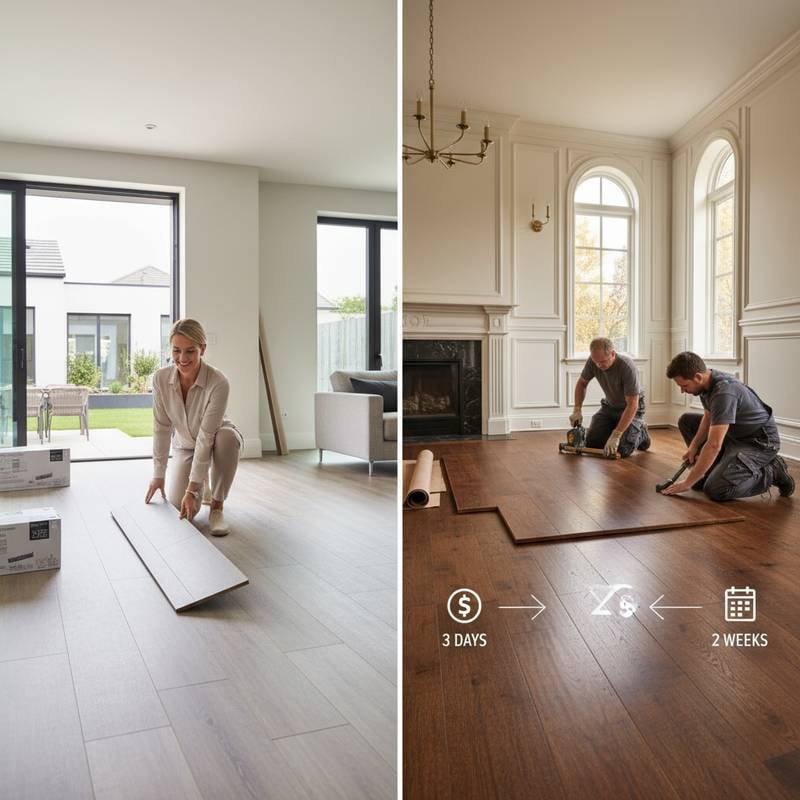
Speed of completion appeals to homeowners eager to minimize disruption. Luxury vinyl plank installs efficiently, often within days for average-sized rooms. Click-lock systems allow floating installation over existing subfloors, requiring no adhesives or nails. DIY enthusiasts complete projects in a weekend using basic tools like a utility knife and tape measure.
Hardwood installation demands more time and precision. Solid hardwood requires acclimation for several days, followed by nailing or gluing to the subfloor. This process spans one to two weeks for professionals, accounting for sanding and finishing stages. Engineered hardwood offers slightly faster setup but still exceeds LVP timelines.
For urgent projects, LVP enables occupancy shortly after completion, whereas hardwood curing periods delay full use. These differences suit varying schedules and tolerance for construction mess.
Durability and Maintenance Insights
Longevity factors into the value equation for flooring investments. Luxury vinyl plank withstands heavy foot traffic and resists scratches from pets or furniture. Its waterproof core prevents swelling in humid environments, ideal for families with children or spills. With proper underlayment, LVP lasts 15 to 25 years.
Hardwood demonstrates remarkable resilience, potentially enduring 50 years or longer with refinishing every decade. It handles wear through sanding up to four times, restoring original beauty. However, exposure to water risks cupping or buckling, necessitating vigilant maintenance in moisture-prone areas.
Upkeep for LVP involves simple sweeping and damp mopping, avoiding harsh chemicals. Hardwood requires regular dusting, immediate spill cleanup, and periodic professional refinishing. While LVP demands less effort, hardwood rewards diligence with enduring elegance.
Key Pros and Cons
- Luxury Vinyl Plank Pros: Affordable pricing, quick installation, moisture resistance, easy maintenance.
- Luxury Vinyl Plank Cons: Limited refinishing options, potential for fading under direct sunlight.
- Hardwood Pros: Authentic wood feel, high resale value, customizable finishes.
- Hardwood Cons: Higher costs, longer installation, vulnerability to humidity changes.
These attributes guide decisions based on lifestyle priorities.
Factors to Consider for Your Home
Assess room usage when choosing flooring. High-traffic zones benefit from LVP's toughness, while formal spaces gain from hardwood's sophistication. Budget constraints favor LVP, but long-term homeownership supports hardwood's appreciation potential.
Environmental concerns also play a role. LVP incorporates recycled materials in some products, reducing waste. Hardwood sourcing from sustainable forests ensures ecological balance, though transportation adds a carbon footprint.
Consult local climate data; arid regions suit both, but coastal areas prioritize LVP's water resistance. Measure square footage accurately and factor in subfloor preparation costs.
Steps to Select and Install Your Flooring
- Evaluate your space: Identify traffic levels, moisture exposure, and design preferences.
- Set a budget: Allocate for materials, installation, and potential underlayment or transitions.
- Research samples: Visit showrooms to compare textures and colors in person.
- Choose installation method: Opt for DIY with LVP or hire pros for hardwood precision.
- Prepare the area: Clear furniture, repair subfloors, and ensure even surfaces.
- Maintain post-installation: Follow care guidelines to maximize lifespan.
Following these steps ensures a seamless project outcome.
Realizing Value in Your Flooring Choice
Investing in the right flooring enhances comfort and property appeal. Luxury vinyl plank delivers immediate savings and convenience, transforming homes efficiently. Hardwood provides a legacy of quality, boosting marketability over time.
Regardless of selection, both options elevate living spaces when chosen thoughtfully. Homeowners who align choices with practical needs enjoy lasting satisfaction and functionality.