- Straightforward for fixture swaps or lighting enhancements
- Intermediate for surface-level flooring or threshold adjustments
- Expert for systems involving plumbing or load-bearing elements
DIY Options Versus Professional Assistance
Certain modifications suit hands-on homeowners, while others demand specialized expertise to ensure compliance and safety.
Suitable for DIY:
- Securing grab bars to wall studs
- Swapping traditional doorknobs for lever-style handles
- Applying non-slip adhesive strips to stairs or floors
- Upgrading to energy-efficient task lighting and pathway illuminators
Best Left to Professionals:
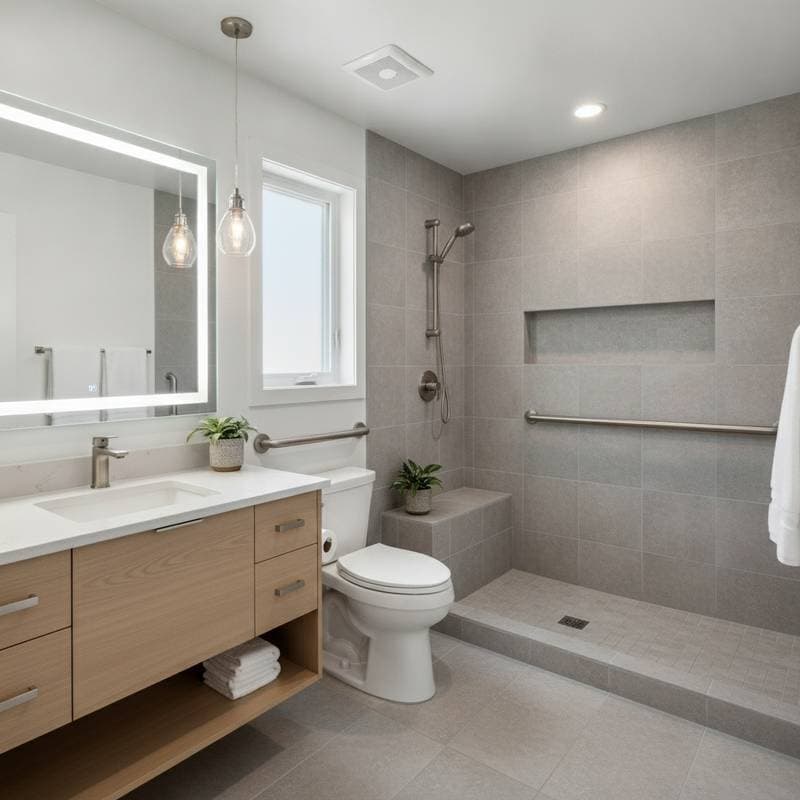
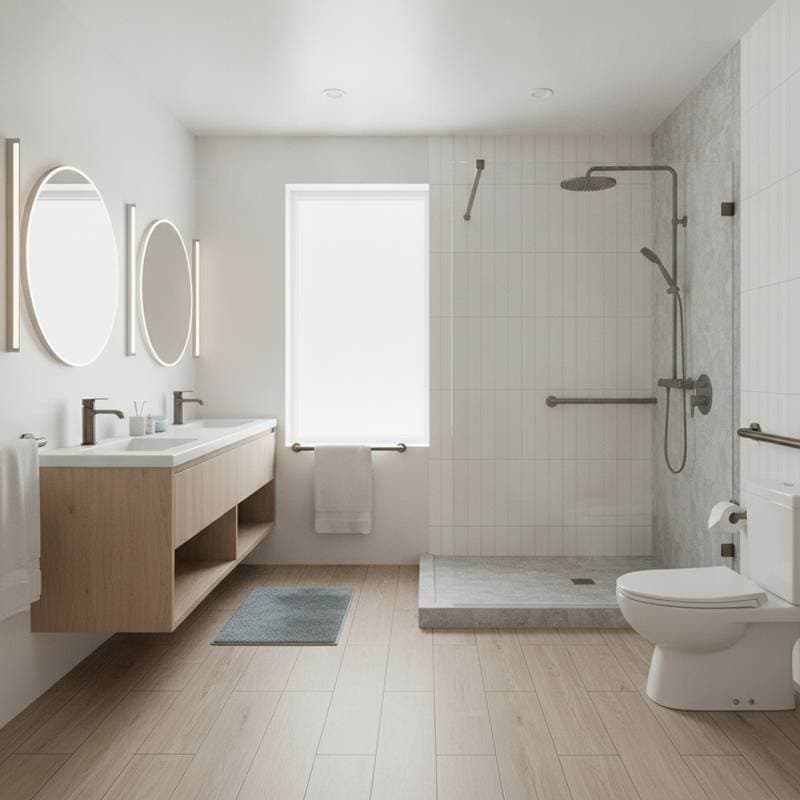
- Retrofitting showers for walk-in access
- Altering electrical wiring or plumbing lines
- Reshaping staircases or expanding door frames
- Constructing outdoor ramps or mechanical lifts
Financial Breakdown:
Professionals typically bill $50 to $150 hourly, influenced by qualifications and location. Opting for DIY reduces expenses, provided individuals possess appropriate tools and adhere to safety protocols.
Detailed Guidance for Primary Modifications
Enhancing Lighting for Better Visibility
-
Swap out low-wattage bulbs for high-lumen LED options that prioritize energy savings.
Select warm-toned bulbs to minimize eye strain from harsh glare.
Incorporate motion-sensing lights in high-traffic zones like corridors and restrooms.
Verification: Confirm uniform illumination across spaces, eliminating shadowed areas. -
Position rocker-style switches at heights between 36 and 44 inches from the floor.
Opt for switch plates in colors that contrast with wall surfaces.
Verification: Operate switches comfortably without excessive reaching or stooping.
Installing Grab Bars and Support Rails
-
Pinpoint vulnerable locations such as restrooms, staircases, and main entrances.
-
Select corrosion-resistant bars in stainless steel or aluminum, engineered to bear 250 pounds or more.
-
Secure anchors into wooden studs using a reliable stud detector prior to drilling.
Seal bases with silicone to block moisture ingress.
Verification: Tug firmly on each bar to ensure unwavering stability under body weight.
Updating Bathroom Elements
-
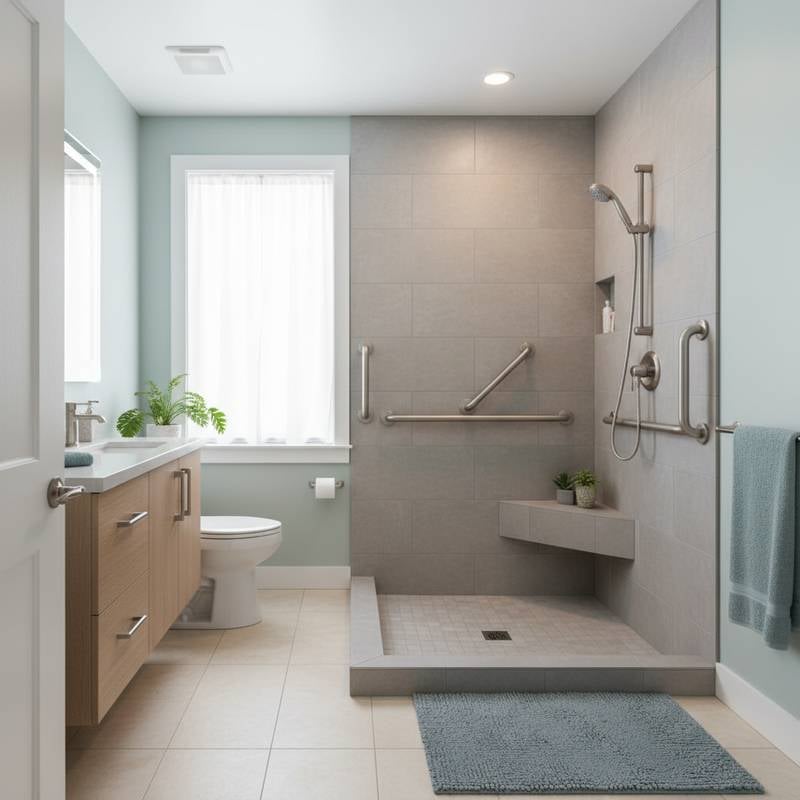
Fit single-lever faucets that simplify mixing hot and cold water.
-
Mount adjustable showerheads with handheld extensions for versatile use.
-
Integrate foldable benches or dedicated shower seats to facilitate seated washing.
-
Upgrade to elevated toilets measuring 17 to 19 inches in height for reduced strain.
Verification: Transition between sitting and standing positions effortlessly, independent of external aid.
Securing Floors Against Slips
-
Anchor loose area rugs using grippy underlays or remove them entirely.
-
Substitute glossy surfaces with durable, textured alternatives like vinyl planks or rubber mats.
-
Level room transitions to a maximum rise of 0.5 inches.
Verification: Navigate spaces or maneuver assistive devices smoothly, free from snags.
Adapting Doors and Entryways
-
Assess door widths; aim for at least 32 inches of clear passage to accommodate wheelchairs.
-
Employ pivot hinges to gain additional clearance without structural reconfiguration.
-
Convert push-style knobs to ergonomic levers.
-
Install subtle threshold ramps at exterior portals.
Verification: Swing doors with minimal effort, avoiding hazardous ledges.
Optimizing Kitchen Layout
-
Adjust counter elevations to range from 30 to 36 inches, incorporating varied levels.
-
Replace fixed shelving with extendable drawers and pull-out organizers.
-
Attach D-pull hardware to cabinetry for secure handling.
-
Store everyday essentials within arm's reach, between hip and chest height.
Verification: Access cooking utensils, tableware, and appliances without undue effort or imbalance.
Integrating Smart Technology
-
Deploy voice-controlled systems for lights, climate control, and secure entry.
-
Program alerts for overlooked appliances like stovetops.
-
Equip entrances with cameras for remote monitoring of arrivals.
Verification: Manage features via intuitive apps or spoken directives.
Essential Safety Precautions
Electrical Safety:
Deactivate circuits at the main panel before handling any wiring or outlets. Verify absence of power using a multimeter.
Fall Prevention:
Avoid solo use of unsteady platforms; enlist assistance for stability during elevated tasks.
Personal Protection:
Don eye shields, hand coverings, and treaded footwear. Utilize padding for kneeling on hard surfaces.
Regulatory Compliance:
Consult municipal codes for interventions affecting utilities or frameworks; inspections may apply to certain works.
Resolving Issues and Final Inspections
Frequent Challenges and Solutions:
- Bars becoming insecure: Re-secure fasteners and upgrade anchors as needed.
- Shower pooling: Regrade drainage or install containment edges.
- Persistent sensor activation: Relocate units or fine-tune detection thresholds.
- Wet-weather ramp traction: Apply grit-infused sealants or secure matting.
Performance Evaluations:
Traverse routines simulating daily movement. Maintain 36-inch-wide corridors. Operate controls unilaterally. Assess postures for ergonomic fit.
Post-Project Cleanup
Clear away remnants responsibly. Adhere to community recycling protocols for metals, plastics, and organics. Vacuum thoroughly to avert hazards. Direct chemical residues to designated disposal sites per manufacturer instructions.
Ongoing Upkeep and Durability
Maintenance Schedule:
Wipe supports and grips with gentle cleaners weekly. Survey surfaces for wear quarterly. Validate automated functions monthly. Renew seals annually to avert water intrusion.
Longevity Expectations:
- Support fixtures: 10 to 20 years
- Resilient flooring: 10 to 15 years
- Efficient illuminants: Up to 20 years
- Durable hardware: 15 to 25 years
Track conditions systematically to preempt failures.
Indicators for Professional Involvement
Engage experts for tasks beyond basic capabilities. Seek licensed help for utility integrations, advanced bathing solutions, or code-mandated adaptations.
Pricing for Expert Services:
- Full bath transformations: $8,000 to $25,000
- Portal enlargements: $1,500 to $4,000
- Accessibility ramps: $2,000 to $10,000
- Automation setups: $500 to $3,000
Selection Criteria:
Confirm credentials and liability protection. Obtain detailed proposals. Review client testimonials. Secure guarantees on labor spanning 1 to 5 years.
Strategies for Effective Implementation
Prioritize high-use areas like hygiene and cooking zones. Bundle compatible tasks to optimize efficiency. Select timeless aesthetics that harmonize with interiors. Position vital contacts accessibly. Reassess annually amid evolving requirements.
Frequently Asked Questions on Accessibility Enhancements
Which modification offers the quickest safety gain?
Grab bars in wet areas and along descents provide instant support at minimal expense.
Are permits necessary for these changes?
Basic cosmetic or fixture updates rarely require them. Interventions touching infrastructure often do; verify with authorities.
Is full-scale work avoidable for accessibility?
Affirmative. Incremental shifts in hardware, illumination, and surfaces yield substantial improvements sans disruption.
How to minimize indoor falls?
Declutter pathways, reinforce supports, and ensure steady lighting en route to key facilities.
Optimal flooring choices for older adults?
Grip-enhancing vinyl, cushioned rubber, or shallow-weave carpets excel. Steer clear of polished stones or voluminous mats.
Does investing in a barrier-free tub pay off?
For limited mobility, such units foster secure, self-reliant routines. Evaluate designs with seamless entries and integrated perches.
Advancing Toward a Supportive Living Environment
Targeted enhancements transform residences into enduring allies for aging gracefully. Initiate with foundational safety measures, progressing to tailored adjustments. With deliberate planning and expert input where essential, these adaptations sustain vitality and security over time.