Mass Timber Surpasses Steel Framing Costs by 2026
Mass timber transitions from a specialized material to a standard option in construction. Building costs and performance metrics demonstrate its direct competition with steel and concrete framing. This article details the reasons behind the narrowing cost gap, key pricing factors, and preparation strategies for builders adopting engineered wood structures.
Essential Overview
Readers gain insights into cost comparisons, construction timelines, and enduring performance between mass timber and traditional framing. These elements clarify scenarios where mass timber emerges as the superior economic choice for structural applications. Builders discover practical advantages that support informed decision-making.
Detailed Cost and Timeline Analysis
Material Expenses
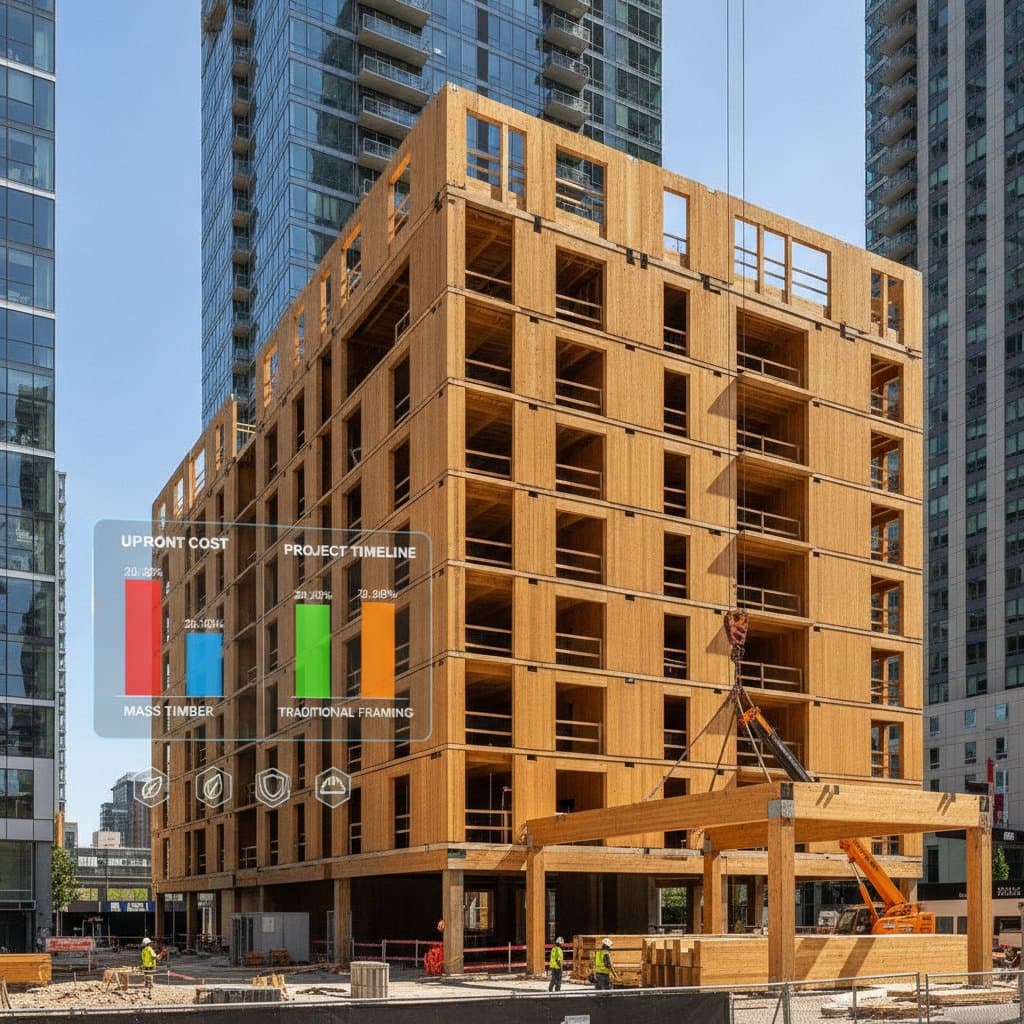
Cross-laminated timber panels range from $25 to $35 per square foot for structural floor coverage. Glulam beams and columns cost $10 to $15 per square foot. In contrast, steel or concrete framing typically demands $30 to $45 per square foot.
These figures reflect current market rates, influenced by regional availability and scale of production. Mass timber benefits from renewable sourcing, which stabilizes long-term pricing.
Labor Expenses
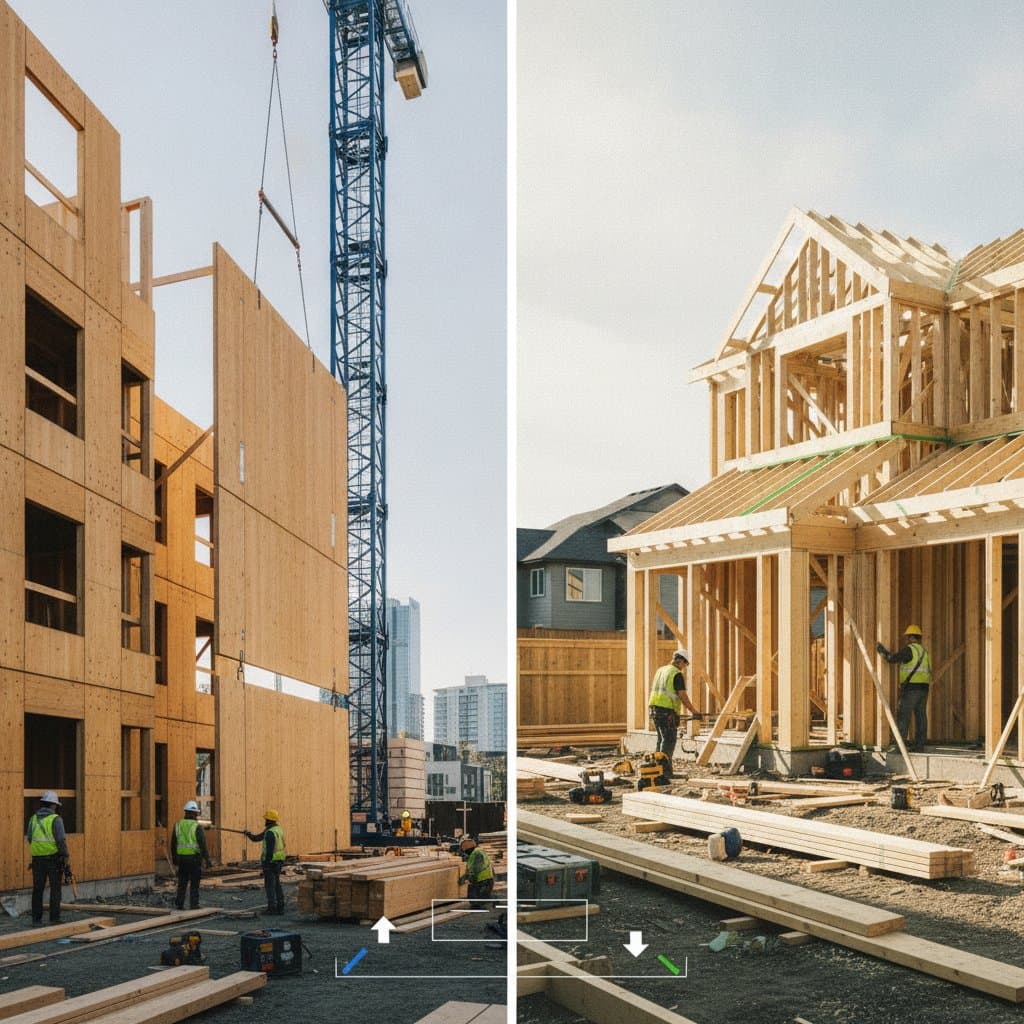
Assembly of mass timber involves fewer personnel and minimal equipment, reducing on-site labor by 20 to 30 percent relative to steel installation. Prefabrication minimizes exposure to weather disruptions and accelerates workflow.
Trained crews complete connections efficiently, leveraging modular components. This efficiency translates to substantial savings on large-scale projects.
Total Project Costs
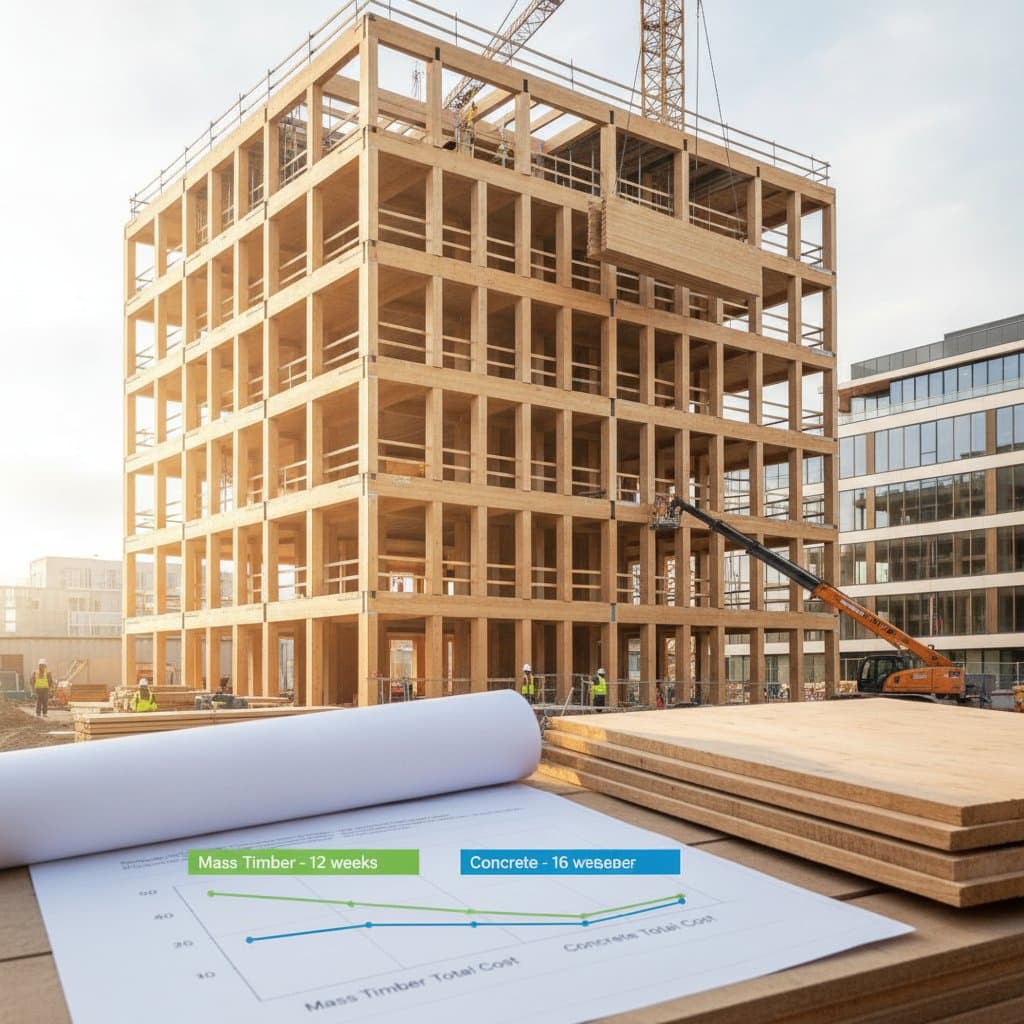
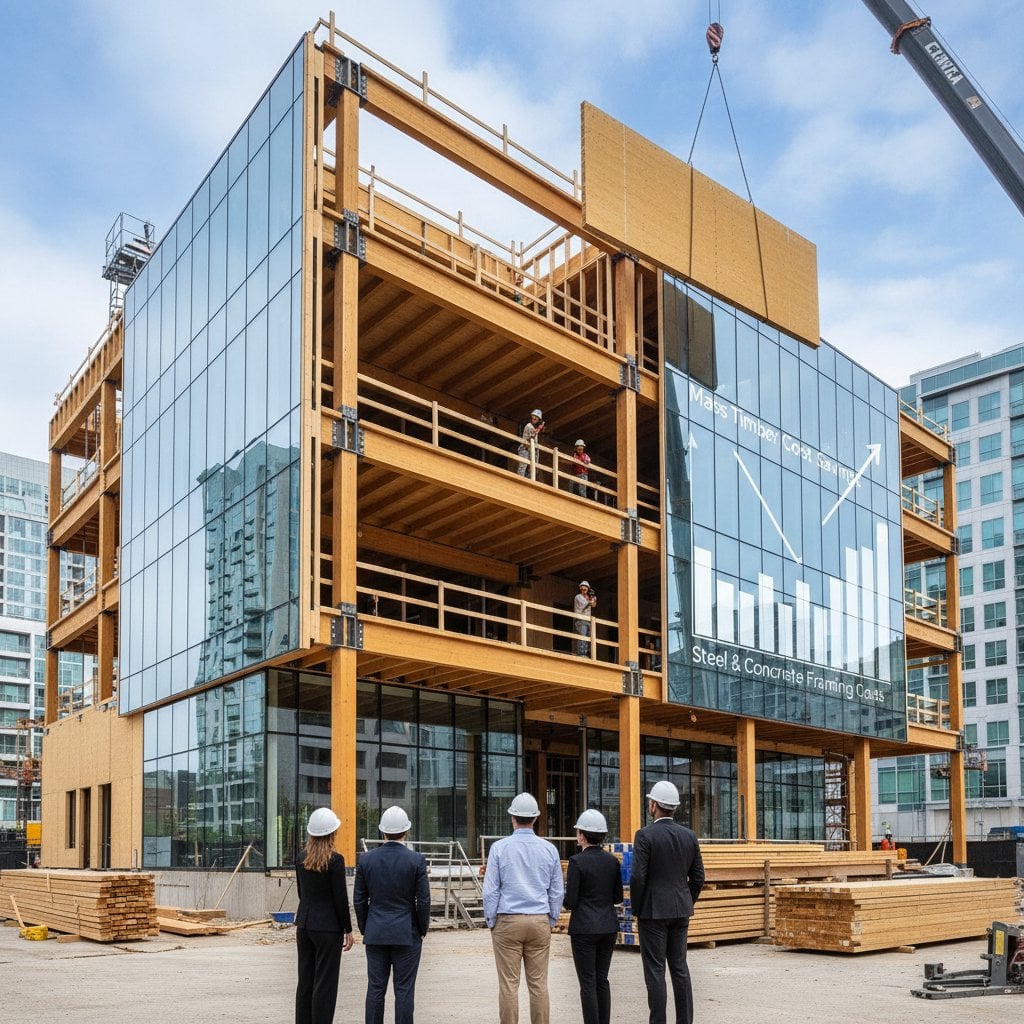
Complete mass timber projects fall between $180 and $250 per square foot. Equivalent steel or concrete builds range from $200 to $275 per square foot. Projections indicate mass timber undercutting these alternatives by 2026 through optimized supply chains.
Variations arise from site-specific conditions, such as urban density or material transport. Early adoption yields competitive edges in bidding processes.
Construction Timelines
Mid-rise developments proceed 20 to 30 percent quicker with mass timber erection. Complexity ratings span moderate for standard designs to advanced for intricate configurations.
Shorter timelines reduce financing costs and enable faster occupancy. Builders schedule phases tightly to capitalize on these gains.
Local timber availability, haul distances, crane suitability, and regulatory approvals adjust these estimates. Comprehensive planning mitigates potential delays.
DIY Approaches Versus Professional Expertise
Mass timber demands exacting installation and specialized connections. Small-scale users handle basic framing, yet expansive CLT applications necessitate heavy machinery and qualified teams.
DIY Applications
Individuals or modest builders tackle small cabins, sheds, or single-story additions with prefabricated elements. Essential tools include carpentry basics, approved adhesives, and fasteners for precise alignments.
Success hinges on meticulous measurements and adherence to guidelines. Such projects suit those with foundational skills.
Professional Applications
Multi-story, commercial, or certified builds require licensed professionals. Engineers provide stamped plans addressing fire and seismic standards.
Coordination ensures compliance and safety. Expertise elevates project reliability.
Expense Breakdown
DIY for compact structures: $100 to $150 per square foot. Professional multi-story endeavors: $200 to $250 per square foot.
These ranges account for scope and oversight levels. Budgets reflect value in durability and code adherence.
Comprehensive Construction Sequence
-
Design and Engineering Phase
Collaborate with a mass timber-certified structural engineer. Confirm load distribution, shear wall integration, and fire resistance specifications. Validate the design against local codes and anticipated structural demands. -
Material Acquisition
Source CLT panels, glulam components, and hardware from verified suppliers. Ensure moisture levels stay below 12 percent prior to delivery. Inspect all items for labeling and conformity to detailed shop drawings. -
Foundation Setup
Install concrete footings and anchor plates with exact elevation measurements. Align bolts to beam plates within one-eighth-inch precision. This foundation supports the entire superstructure. -
Delivery and On-Site Preparation
Position panels on stable supports and protect from precipitation. Verify dryness and absence of deformation before hoisting operations commence. -
Assembly Execution
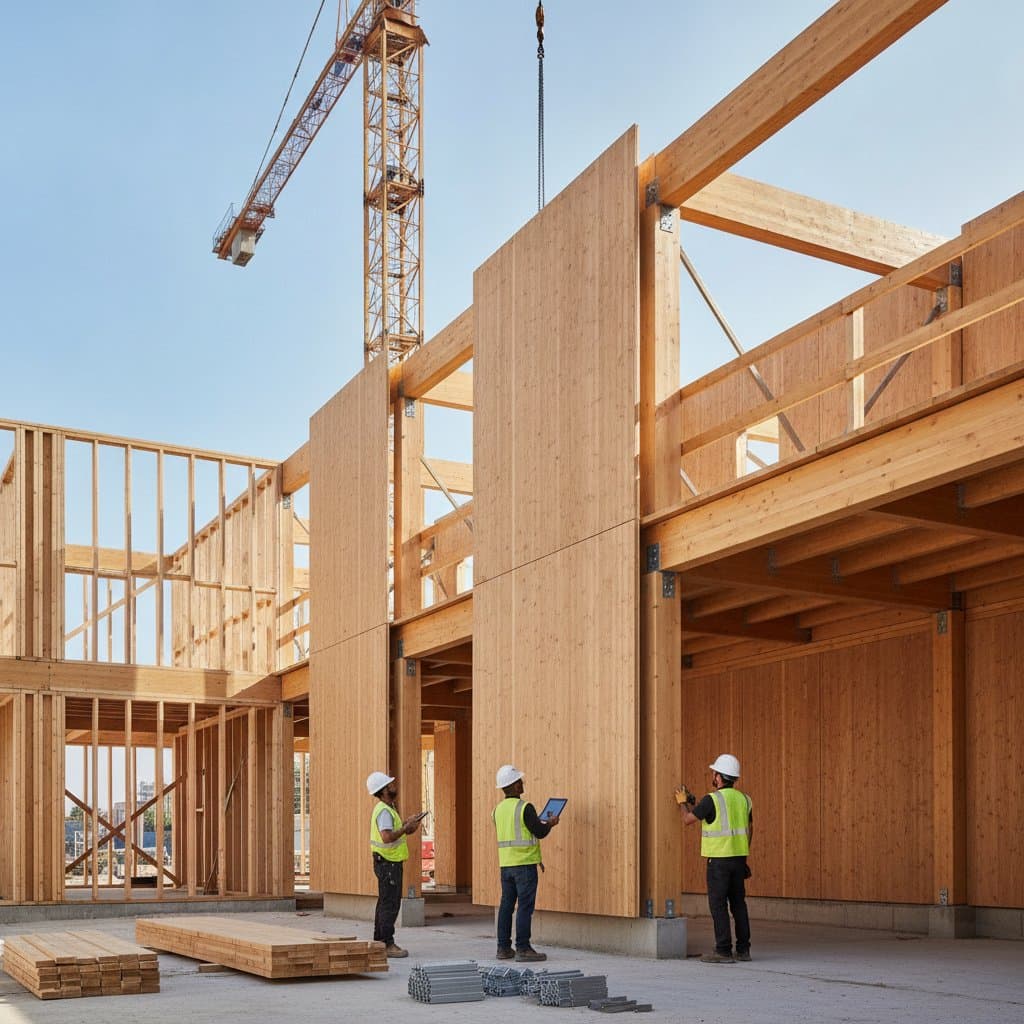
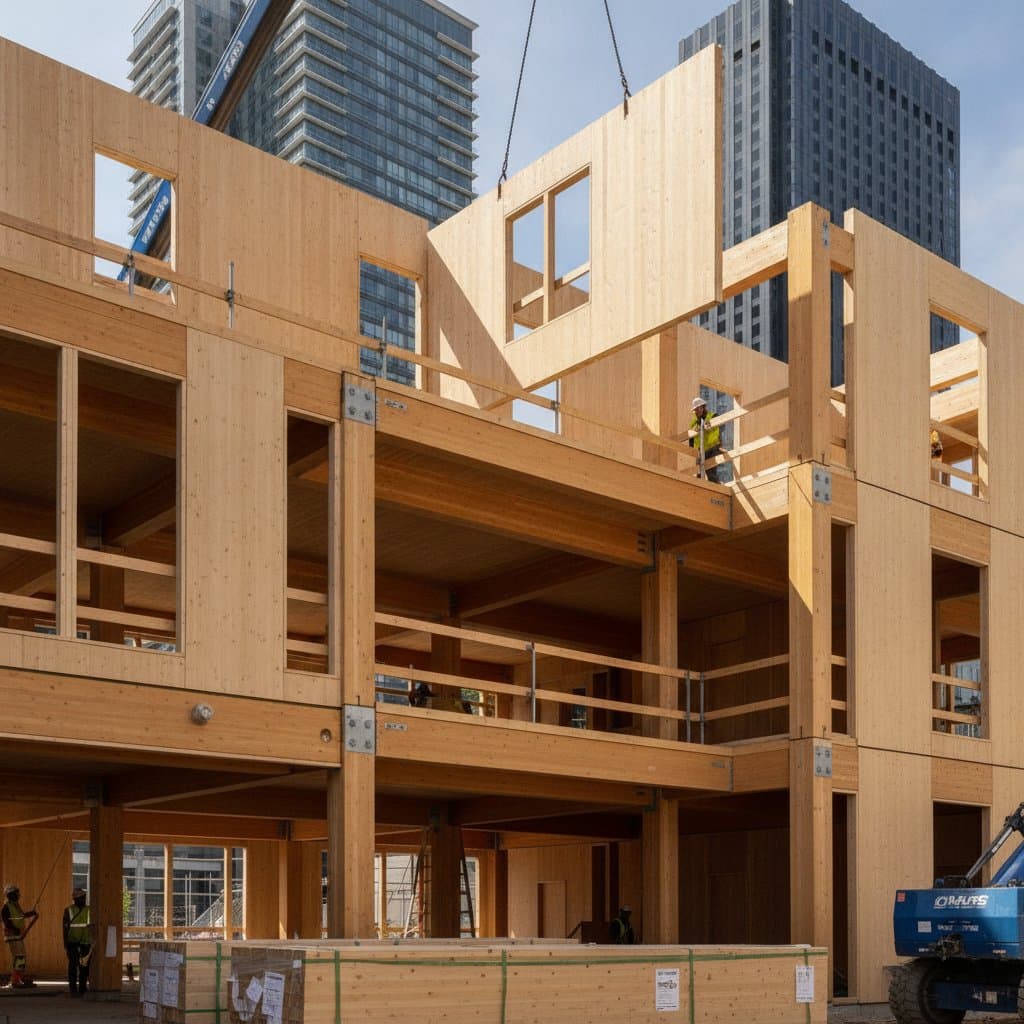
Employ cranes equipped with spreader bars for panel positioning. Fasten using steel brackets and heavy-duty screws. Confirm joint integrity and level accuracy via laser tools. -
Protective Treatments
Coat surfaces with intumescent materials or layer with gypsum for fire compliance. Incorporate acoustic insulation between floors as needed. Pass inspections to affirm code conformity.
Safety Protocols and Precautions
Fall hazards peak during lifting and securing phases; deploy certified harnesses and perimeter barriers. Avoid positioning under elevated loads to prevent shift-related incidents.
Handle timber with protective gloves to avoid edge injuries. Inspect rigging points rigorously before every lift.
Regular training reinforces these measures. Prioritizing safety sustains project momentum.
Issue Resolution and Verification
Address panel gaps by adjusting fasteners or inserting certified shims. Combat moisture issues with immediate ventilation to avert damage.
Correct bolt misalignments through grid re-verification and plate adjustments. Maintain level tolerances at one-quarter inch over 20 feet, ensuring flush panel contacts.
Routine checks preserve quality. Prompt resolutions minimize rework.
Post-Construction Management
Segregate wood scraps for recycling or repurposing; suppliers often reclaim offcuts. Follow regulations for adhesive and coating disposal. Clear sites daily to eliminate slip risks.
These practices promote sustainability. Efficient cleanup supports seamless transitions.
Ongoing Upkeep and Durability
Conduct biannual inspections for moisture intrusion in mass timber assemblies. Preserve exterior barriers and mend cladding defects promptly.
Well-maintained CLT and glulam rival concrete or steel in longevity. Renew interior finishes every decade to a decade and a half for sustained integrity.
Proactive care extends service life. It safeguards investments effectively.
Indicators for Professional Involvement
Engage experts when projects surpass two levels, incorporate fire barriers, or feature mechanical integrations. Professional oversight proves essential for crane logistics and connection engineering.
Such scenarios demand specialized knowledge. Timely consultation averts complications.
Strategies for Optimal Outcomes
Select suppliers with proven track records in mass timber fabrication. Integrate early code consultations to streamline approvals.
Leverage prefabrication for timeline compression. Monitor environmental factors to protect materials.
These approaches enhance efficiency and cost control. Builders achieve superior results through deliberate planning.
Mass timber redefines structural economics by 2026, delivering speed, sustainability, and savings. Adopting this material positions projects for competitive advantages and enduring value.