Why Mass Timber Often Costs Less Than Steel or Concrete Overall
Mass timber construction attracts notice for its durability, environmental benefits, and rapid execution. Builders and developers find its cost efficiency particularly compelling. Although initial material prices may seem elevated, the comprehensive expenses of a mass timber project frequently prove lower than those for steel or concrete frameworks. This examination details the mechanisms behind these economies and the variables that shape them.
Understanding Mass Timber
Mass timber consists of sizable engineered wood elements that serve as primary building supports. Prominent varieties encompass Cross-Laminated Timber (CLT), Glue-Laminated Timber (Glulam), and Nail-Laminated Timber (NLT). Fabricators create these by laminating wood layers, yielding components that surpass ordinary lumber in robustness and stability.
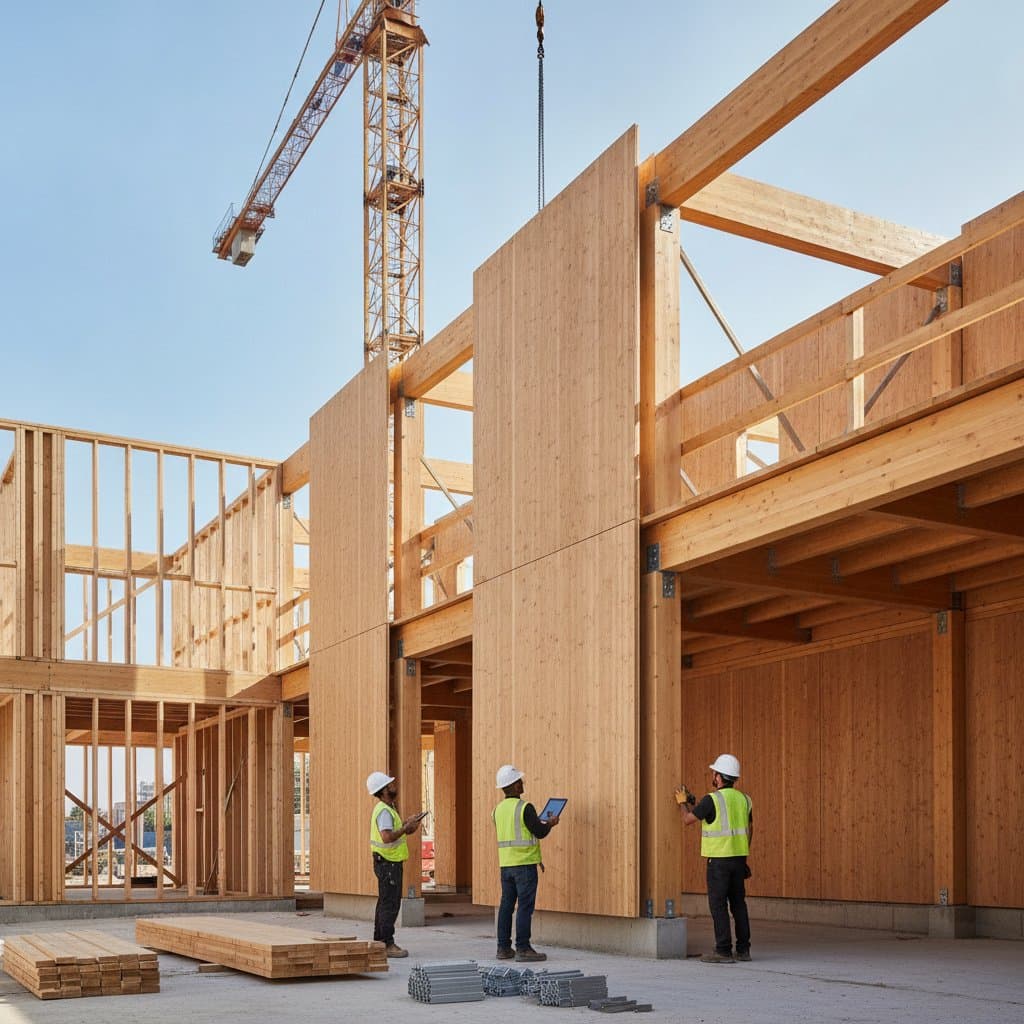
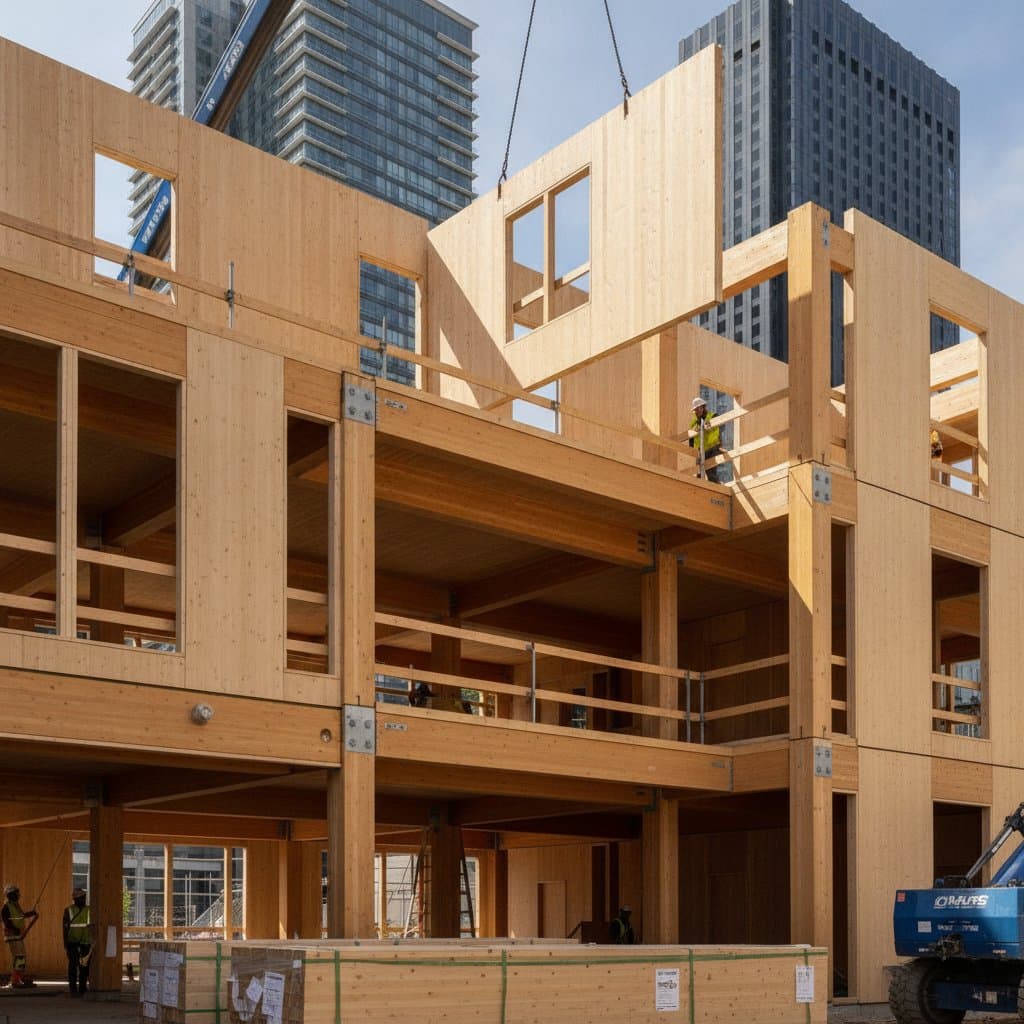
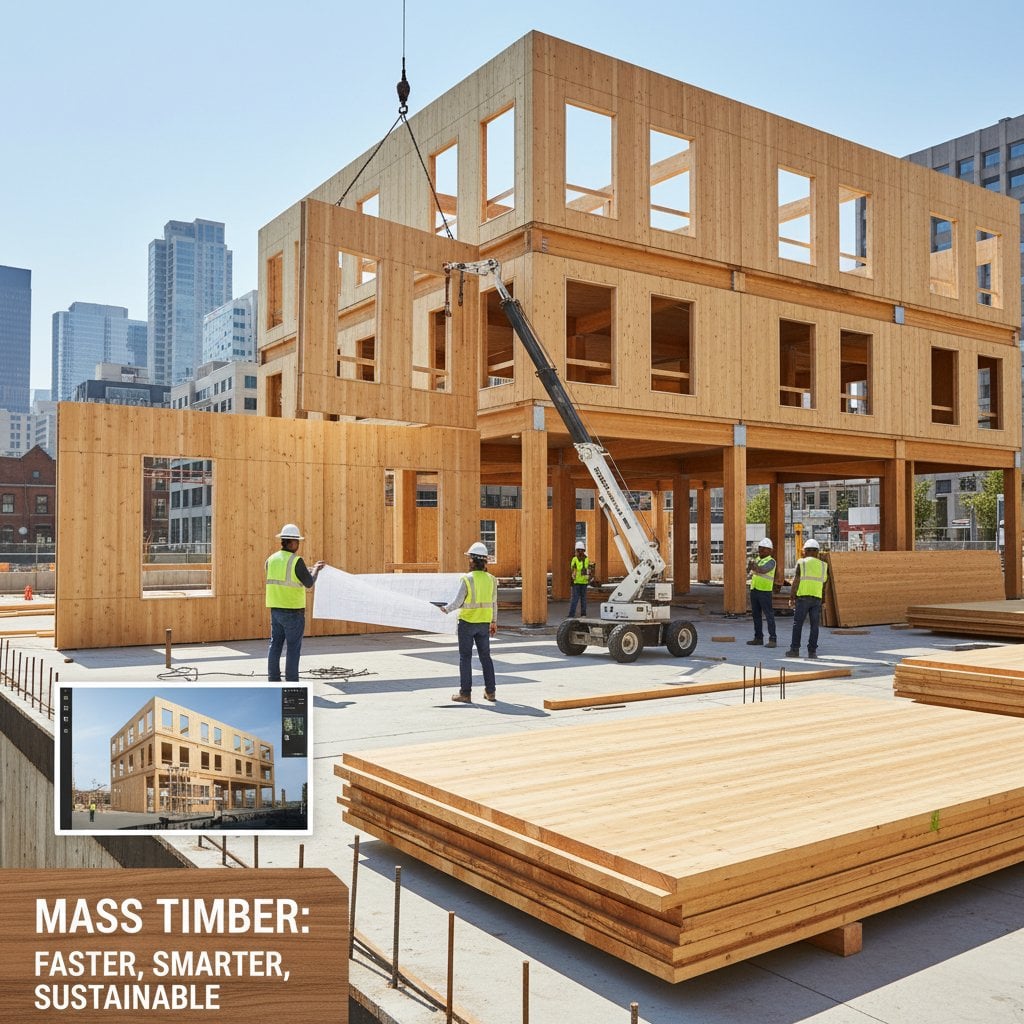
Prefabricated panels arrive at the site prepared for installation, bypassing piecemeal framing of walls and floors. This method alters key expense categories throughout the building phase.
Factors Driving Lower Total Costs
Engineered production positions mass timber as a specialized choice, yet economies arise from streamlined labor, accelerated timelines, reduced foundation demands, and diminished finishing requirements.
1. Accelerated Construction Timelines
Efficiency in time represents a primary financial gain. Pre-engineered panels facilitate swift erection, allowing teams to complete floors in days rather than weeks. Such pace diminishes expenditures on workforce, machinery leases, and on-site supervision.
Briefened durations further alleviate funding burdens. Projects that conclude promptly incur less interest accrual and operational overhead. Developers facing stringent schedules benefit substantially from this acceleration.
2. Streamlined Labor Demands
Conventional methods demand extensive on-site modifications, joins, and sequential trade involvement. Mass timber streamlines operations through pre-drilled apertures for entries, glazing, and utilities. Smaller crews achieve greater coverage with minimal equipment.
This approach trims payroll outlays and mitigates delay risks. In regions plagued by workforce scarcity, the accuracy of factory-prepared elements addresses availability issues effectively.
3. Simplified Foundation Needs
The reduced density of mass timber compared to concrete or steel permits more modest substructures. Lesser weight demands less material volume, expedited digging, and economical hauling. In high-rise applications or areas with challenging terrain, these reductions prove especially valuable.
4. Built-In Finishing Elements
Exposed wood surfaces in mass timber designs frequently serve as the ultimate interior treatment. This obviates the installation of gypsum boards or overhead linings. The outcome yields an inviting, contemporary look suitable for diverse settings, while sparing resources on supplementary layers and workmanship.
5. Optimized Material Use and Minimal Waste
Precision manufacturing via digital tools generates scant scraps, which factories repurpose for additional components or fuel. On-site debris management, prevalent in legacy techniques, thus becomes negligible.
CLT assemblies inherently offer insulation and noise control, potentially reducing ancillary product needs. Enhanced joint seals promote superior airtightness, fostering long-range energy conservation.
Real-World Cost Comparisons
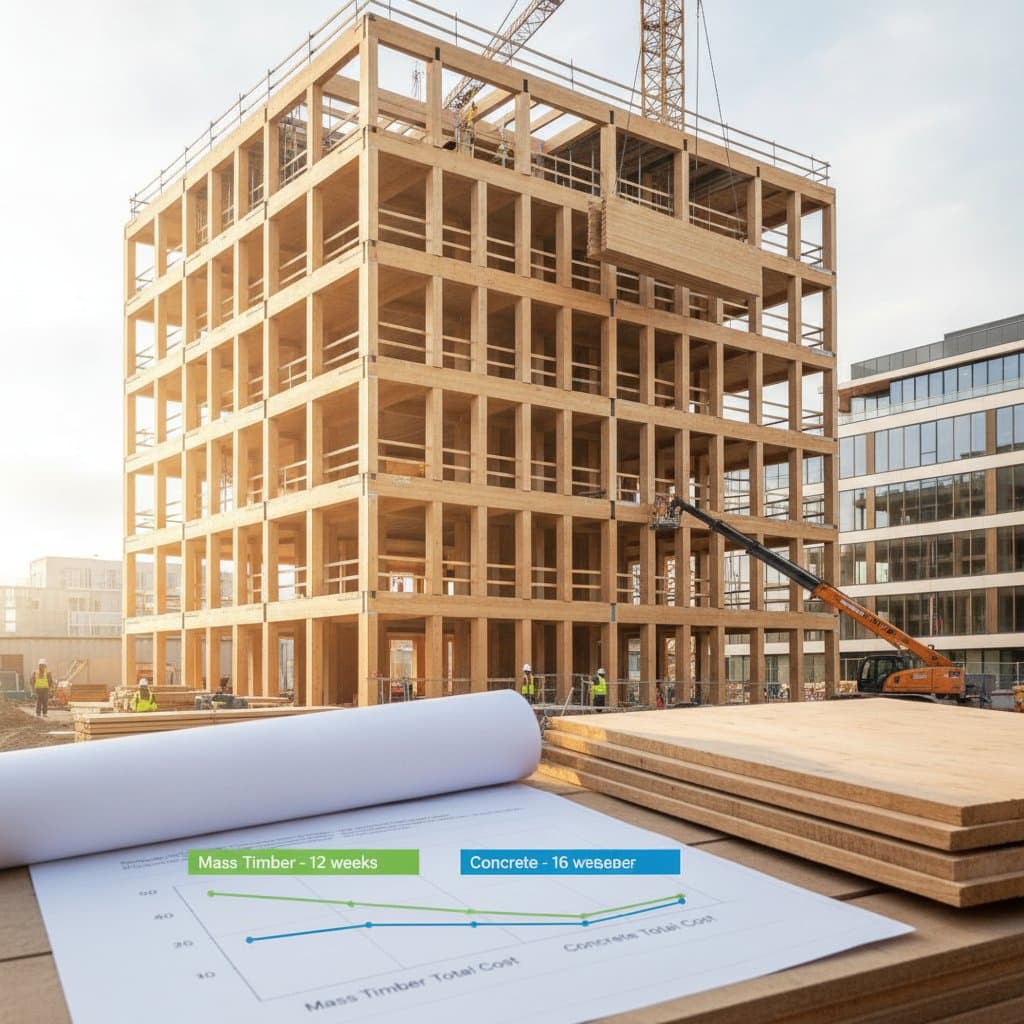
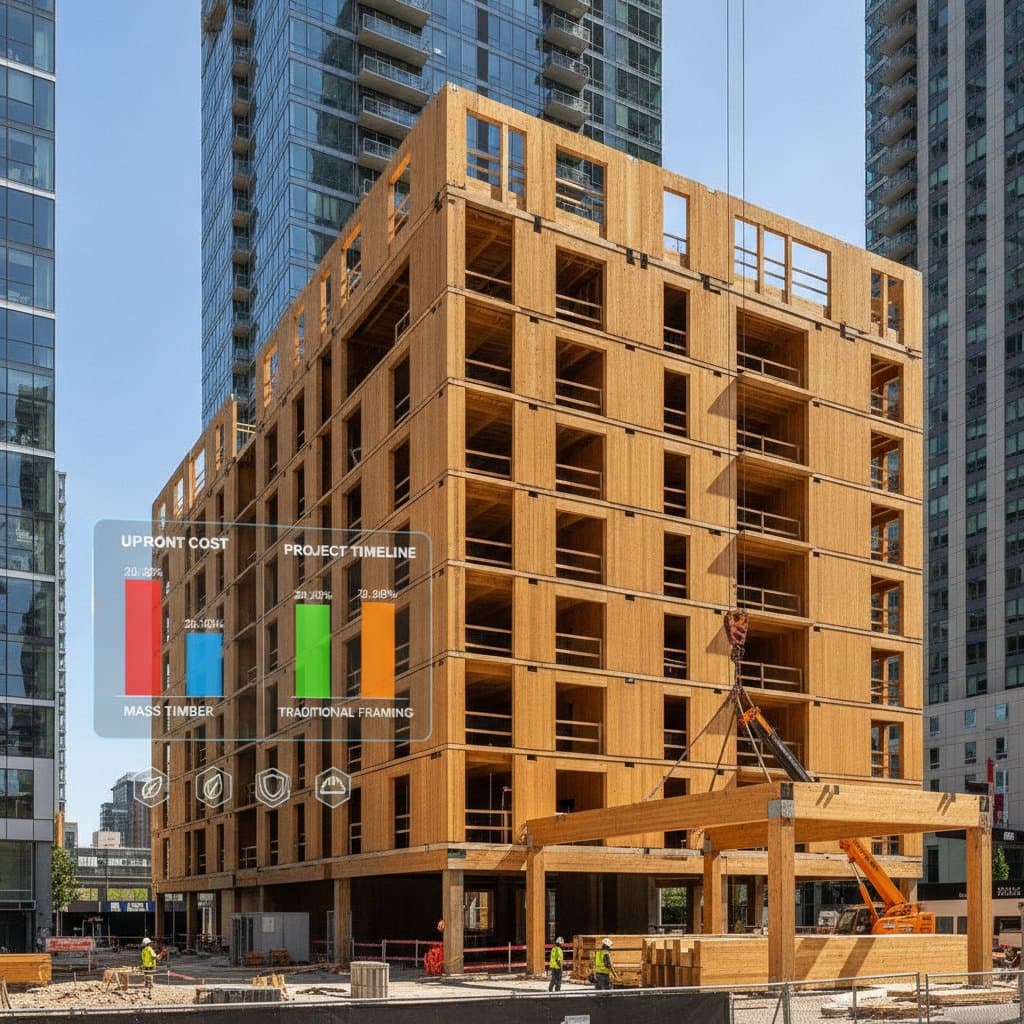
Material rates per unit area may position mass timber marginally above alternatives initially. However, integrating labor, scheduling, completion, and base costs reveals parity or savings versus steel or concrete.
Consider a medium-height edifice employing CLT: shortened build periods slash supervisory and capital charges. Prompt finalization enables swifter tenant ingress or income streams for investors, advantages elusive in standard systems.
Enhanced Design Options and Structural Integrity
Mass timber supports expansive spans sans internal supports, fostering unobstructed layouts. Factory precision ensures exact alignments and refined aesthetics. Architects value this blend of reliability and organic appeal.
Structurally, mass timber exhibits robust fire endurance as outer layers carbonize, shielding interiors. Updated regulations acknowledge this trait, permitting greater elevations. Thoughtful construction also counters humidity and seismic forces adeptly.
Environmental Advantages and Enduring Benefits
Economies persist post-erection. As a replenishable resource, wood sequesters carbon across its service life. Substituting it for high-emission alternatives lowers the edifice's ecological impact. Jurisdictions and funders favor such practices, offering rebates or elevated asset appraisals.
Upkeep remains uncomplicated. Shielded from persistent dampness, mass timber sustains integrity and visual charm for generations. Its modest mass and modular form simplify future modifications.
Key Steps for Mass Timber Adoption
Prospective users should evaluate these aspects prior to commitment:
- Regional Sourcing: Proximity to producers influences rates and delivery schedules.
- Expert Collaboration: Engage seasoned structural specialists from project outset for precise specifications.
- Environmental Controls: Implement robust barriers and drains to safeguard visible timber.
- Regulatory Alignment: Confirm adherence to jurisdiction-specific fire and load standards.
Partnering with proficient contractors eases navigation and maximizes fiscal gains.
Advancing Your Project with Mass Timber
Mass timber reshapes assembly dynamics, merging velocity, resilience, and ecological merit against established paradigms. Factoring full-spectrum elements from personnel to logistics reveals timber's fiscal edge. Developers poised for innovation find it a pathway to superior outcomes.