Bathroom Remodels for Safe Aging in Place
A thoughtfully remodeled bathroom supports aging in place by promoting safety and independence. Strategic updates minimize accident risks while preserving personal comfort. This guide details essential modifications for accessibility, usability, and aesthetic appeal, ensuring the space integrates seamlessly into your home.
Why an Accessible Bathroom Matters
Slips and falls occur frequently in bathrooms, particularly as mobility decreases with age. Everyday activities, such as stepping into a shower or accessing storage, can pose challenges. An accessible design addresses these issues through practical features that enhance stability and ease, creating an environment that feels welcoming rather than institutional. Such adaptations allow users to navigate confidently, reducing reliance on assistance.
The Principle of Universal Design
Universal design creates environments accessible to individuals across all ages and abilities. In bathrooms, this principle emphasizes intuitive layouts, secure surfaces, and flexible elements. Key aspects include wide pathways for wheelchairs, lever-style handles for easier operation, and adjustable-height counters. These features benefit everyone in the household, from children to seniors, by prioritizing inclusivity and foresight in functionality.
Balancing Safety and Style
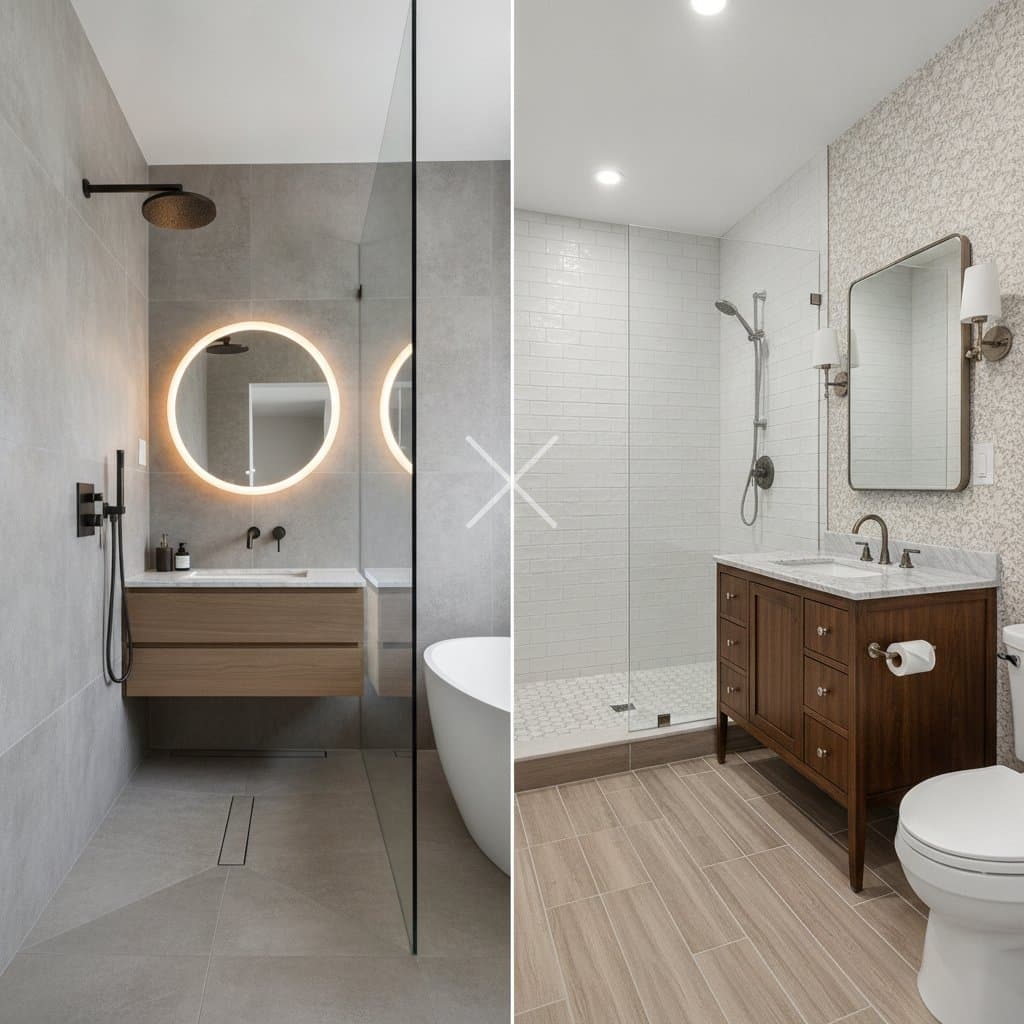
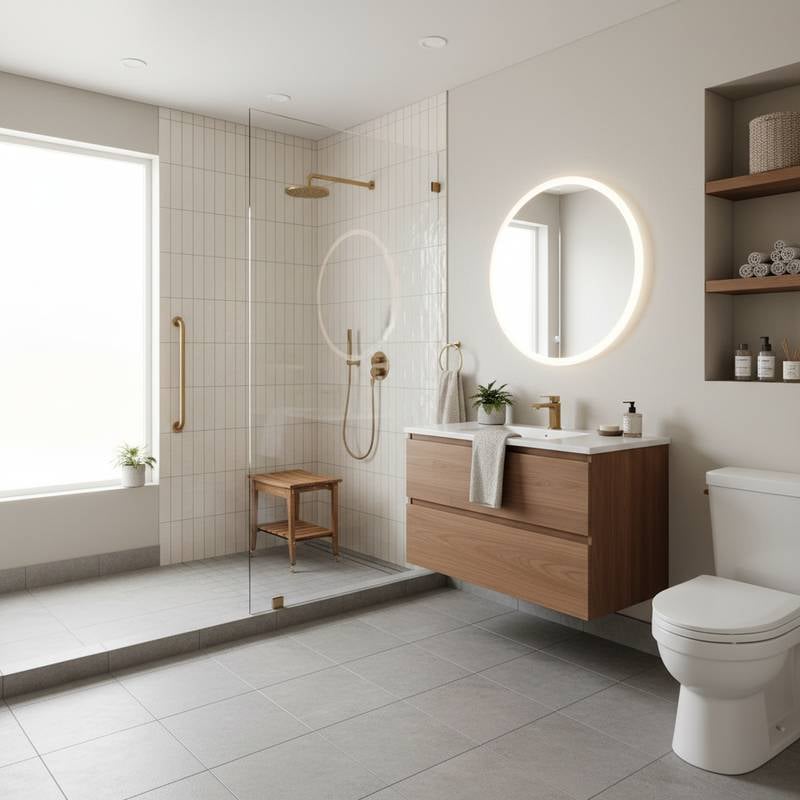
Safety features in an aging-in-place bathroom integrate smoothly with decorative choices to avoid a sterile appearance. Select durable, low-maintenance materials like porcelain tiles with textured surfaces for traction. Incorporate natural elements, such as bamboo vanities or linen curtains, to add warmth and texture.
Neutral palettes, including shades like pale greige or seafoam mist, foster a serene atmosphere and coordinate with organic materials such as reclaimed wood accents or polished pebble flooring. Pair these with metallic hardware in consistent finishes, like brushed nickel, for a unified look.
Style tips:
- Introduce a subtle accent color, such as slate blue towels or warm bronze fixtures, to add depth without overwhelming the space.
- Opt for clean, minimalist lines in cabinetry and shelving to preserve clear circulation paths.
- Layer lighting with dimmable options: bright task lights over mirrors for precision and soft ambient fixtures for relaxation.
Warmer lighting temperatures, around 2700K, promote coziness, while cooler options near 4000K improve visibility for tasks like shaving or applying makeup. This combination ensures the room serves both practical and emotional needs.
Planning the Remodel
Effective planning for an accessible bathroom remodel requires evaluating present and anticipated requirements. Identify primary users and potential changes in physical capabilities, such as reduced grip strength or balance. Collaborate with designers to map out spatial flow, ensuring at least 30 inches of clearance around fixtures.
Steps to plan effectively:
- Evaluate space: Assess doorway widths (minimum 32 inches), turning radii (at least 60 inches for wheelchairs), and distances between fixtures to avoid bottlenecks.
- Set priorities: Address high-risk areas first, including non-slip flooring with a coefficient of friction above 0.6 and zero-threshold entries to showers.
- Choose finishes: Prioritize moisture-resistant options like vinyl plank flooring or epoxy-coated tiles that withstand humidity and frequent cleaning.
- Plan lighting: Install motion-sensor lights for nighttime use, along with adjustable-height sconces and waterproof LED strips under cabinets.
- Consult professionals: Engage contractors certified in ADA guidelines to handle structural reinforcements, plumbing rerouting, and electrical upgrades for compliance.
Cost considerations: Expenses range from $5,000 for basic updates like grab bar installations to $25,000 for comprehensive overhauls involving custom showers. Factor in permits for electrical work and potential rebates from local aging programs. Professional oversight ensures longevity, while selective DIY tasks, such as installing peel-and-stick backsplashes, can control budgets.
Essential Safety Features
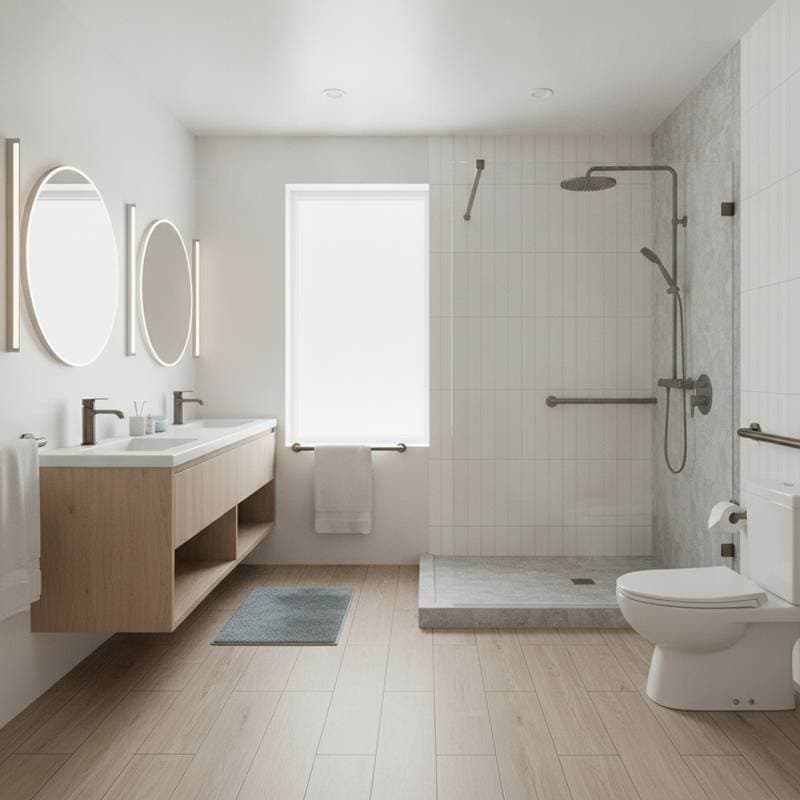
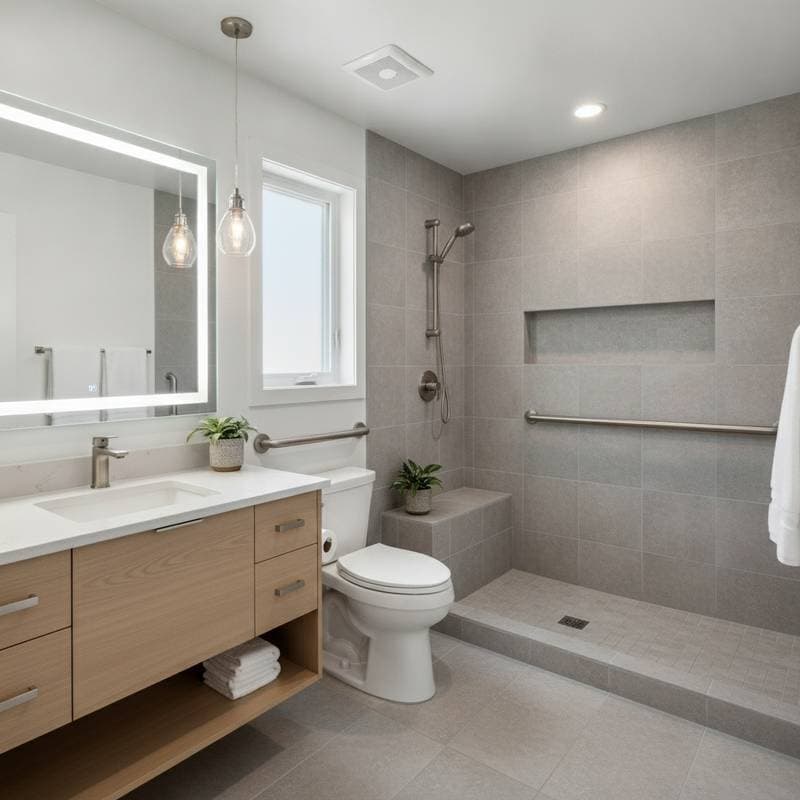
Incorporate grab bars strategically near toilets and showers, positioned 33 to 36 inches above the floor for optimal support. Select models with knurled grips for better hold, and reinforce walls with plywood blocking during the remodel for secure mounting.
Upgrade to a curbless shower with a linear drain to eliminate tripping hazards; include a built-in bench at 17 to 19 inches high and a handheld showerhead on a slide bar for versatile positioning. For bathtubs, add transfer benches or low-step models if retention is preferred.
Flooring choices extend beyond aesthetics: install heated mats or radiant underfloor systems to prevent chills on bare feet, paired with anti-microbial sealants for hygiene. Storage solutions, like pull-out shelves and reach-assist rods, keep essentials within 48 inches of the floor, accommodating varying heights.
Common Questions
How do I choose a trim color for an accessible bathroom? Select trim that contrasts with wall colors by at least 70 percent to aid visibility. For light walls in soft white, pair with medium gray trim to outline edges clearly without harshness.
Does an accessible remodel affect resale value? Accessible updates often increase appeal and value by 5 to 10 percent, attracting diverse buyers including families and older adults seeking long-term homes.
Should I remove the bathtub entirely? Retain a tub if bathing remains a preference, but prioritize a spacious walk-in shower with integrated seating for daily use. Many homes benefit from one dedicated tub elsewhere to satisfy varied needs.
Can grab bars be added later? Installation is feasible post-remodel, though pre-installing wall blocks simplifies the process and prevents surface damage. Use toggle bolts for retrofits in existing drywall.
Living with Your Design
A completed accessible bathroom empowers daily routines with subtle support. Textured floors provide sure footing, while intuitive controls foster self-reliance. These enhancements not only safeguard well-being but also elevate the home's enduring appeal and adaptability.