Universal Design: Creating Enduring Bathroom Safety
A thoughtfully designed bathroom promotes safety, comfort, and ease of use for individuals of all ages and abilities. Universal design realizes this vision by developing environments that accommodate evolving requirements while preserving aesthetic appeal. Whether the goal involves long-term residency in the home or enhancement of market value, incorporating universal design elements into the bathroom guarantees sustained security and adaptability.
This guide details the process of renovating a bathroom to maintain functionality, visual attractiveness, and accessibility over extended periods. Readers will discover essential features to incorporate, typical associated expenses, and circumstances that necessitate professional involvement.
Essential Elements for a Durable, Accessible Bathroom
1. Curbless or Walk-In Showers
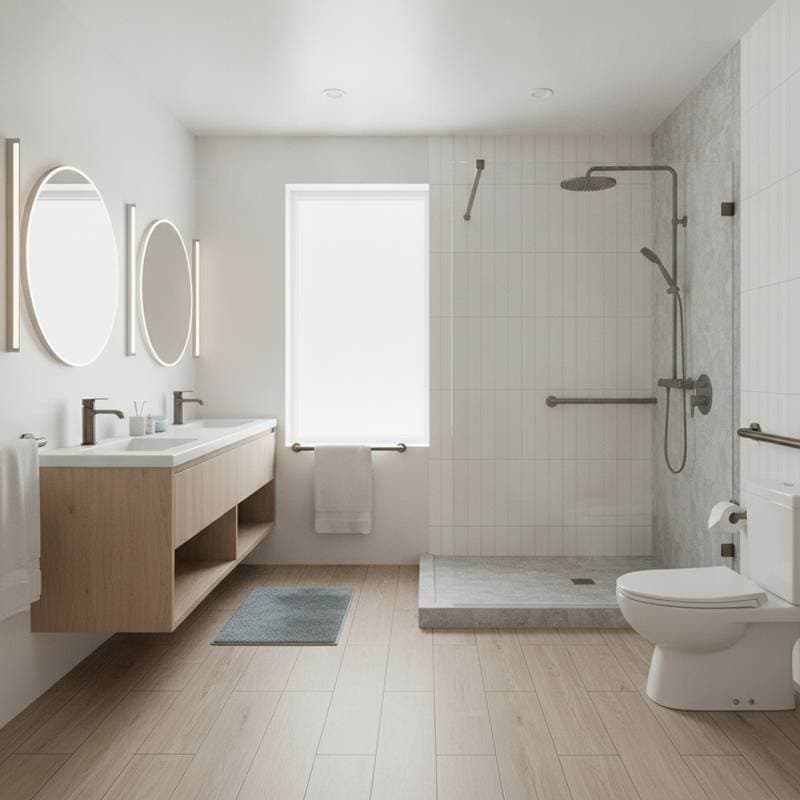
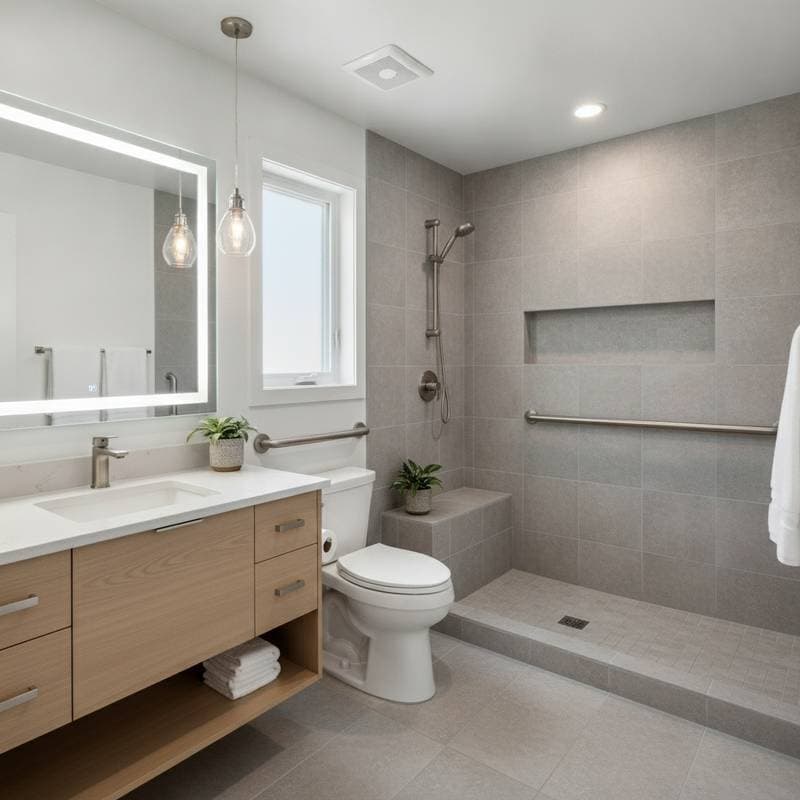
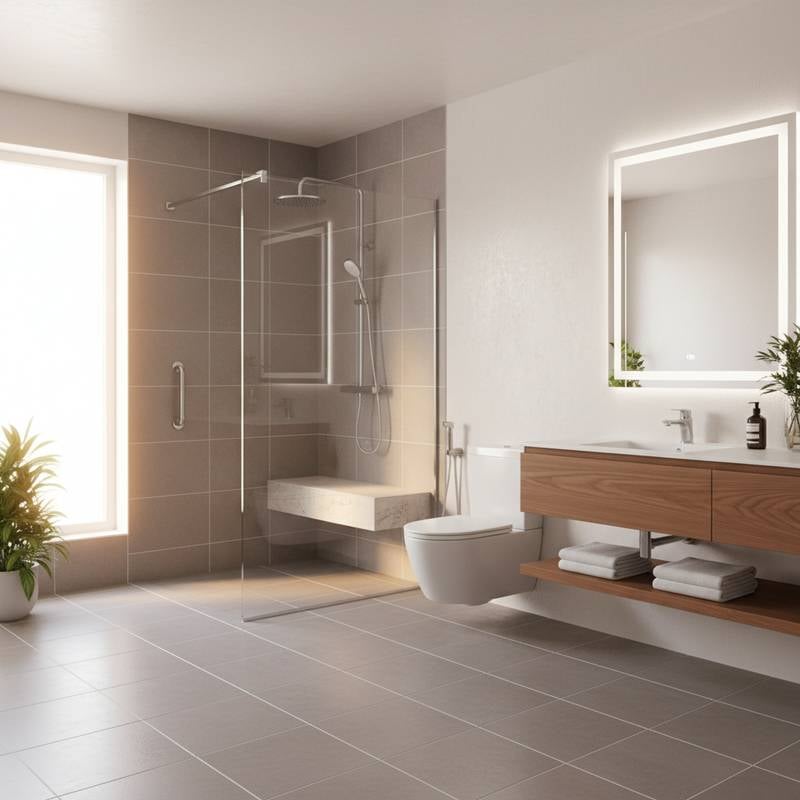
Importance: Curbless showers eliminate the traditional step threshold, facilitating seamless access for those using mobility aids such as walkers or wheelchairs. This configuration also delivers a contemporary, streamlined appearance.
Estimated Cost and Return on Investment: Budget between $3,000 and $8,000, influenced by factors like tile selection, waterproofing measures, and plumbing modifications. Properties featuring accessible bathrooms frequently experience heightened desirability in the real estate market.
DIY or Professional Approach: Achieving effective waterproofing and precise floor sloping demands expertise. Engage a licensed contractor to verify adequate drainage and adherence to building regulations.
Practical Recommendations: Opt for a linear drain system, select tiles with enhanced slip resistance, and ensure the shower base aligns flush with the adjacent bathroom floor. Incorporate a handheld showerhead to provide versatile water delivery options.
2. Comfort-Height Toilets
Importance: Positioned approximately two inches above standard heights, these toilets simplify the actions of sitting and rising for individuals with reduced mobility.
Estimated Cost: Replacement with installation typically ranges from $300 to $800.
DIY or Professional Approach: Homeowners with basic tools may manage the swap, yet a plumber guarantees a secure seal and prevents potential leaks.
Practical Recommendations: Select models equipped with soft-close lids and efficient water-flush mechanisms to enhance user experience and sustainability.
3. Grab Bars and Wall Reinforcement
Importance: Strategically placed grab bars offer crucial support adjacent to the toilet and shower areas. Reinforcing the underlying wall structure enables future adjustments or additions without major disruptions.
Estimated Cost: Individual grab bars range from $50 to $100, with wall reinforcement during a remodel adding $200 to $400.
DIY or Professional Approach: Securing bars directly into wall studs qualifies as a manageable DIY project, but installing reinforcement behind finished surfaces requires a contractor's skills.
Practical Recommendations: Choose bars that coordinate with existing fixtures for seamless integration. Finishes like brushed nickel or matte black complement modern interiors effectively.
4. Non-Slip Flooring Options
Importance: Moisture on floors heightens the danger of slips and falls. Surfaces engineered for traction maintain elegance while minimizing risks.
Estimated Cost: Non-slip porcelain or vinyl flooring costs $5 to $10 per square foot.
DIY or Professional Approach: Vinyl plank installation suits DIY efforts, whereas tile application benefits from professional execution to avoid irregularities.
Practical Recommendations: Prioritize tiles rated highly for slip resistance, and steer clear of overly reflective or glossy options.
5. Enhanced Lighting and Control Mechanisms
Importance: Adequate illumination minimizes shadows and enhances visibility for safer navigation. User-friendly elements like rocker-style switches and motion-activated sensors simplify operation.
Estimated Cost: Implementing a multi-layered lighting setup, including overhead, vanity, and low-level options, averages $600 to $1,500.
DIY or Professional Approach: Basic fixture or bulb replacements fall within DIY capabilities, but electrical rewiring or new circuit additions demand a licensed electrician.
Practical Recommendations: Install warm white LED bulbs for comfortable ambiance, and position switches at heights between 36 and 44 inches from the floor to accommodate varied users.
Strategies for Cost Efficiency and Value Maximization
Initial investments in accessibility-focused remodels may exceed standard projects, yet they safeguard assets over time. Consider these approaches to manage expenses while elevating property worth:
- Incorporate preparations during initial phases. Strengthen walls and install blocking amid broader renovations to eliminate the need for future invasive work.
- Select versatile fixtures. Items like adjustable showerheads, portable sprayers, and integrated seating fulfill both aesthetic and functional roles.
- Invest in resilient materials. Choices such as textured porcelain tiles and solid-surface counters demand minimal upkeep and endure prolonged use.
- Emphasize market appeal. Accessible bathrooms broaden the potential buyer pool, often leading to elevated home valuations, particularly for families spanning generations.
Frequently Asked Questions on Universal Design in Bathrooms
What doorway width supports optimal accessibility? A minimum of 32 inches accommodates wheelchairs, while 36 inches offers greater maneuverability.
Must grab bars appear utilitarian? Contemporary designs mimic decorative towel bars, available in stylish finishes that satisfy safety criteria without compromising decor.
Does universal design elevate property value? Affirmative; such features attract diverse buyers, including those planning for aging in place or accommodating family members with varying needs.
Which flooring excels in slip prevention? Textured porcelain tiles and luxury vinyl planks deliver superior grip alongside resistance to moisture.
Are permits necessary for accessibility modifications? Structural, plumbing, or electrical alterations generally require permits. Consult local codes prior to commencing work.
Preserving Functionality and Security Over Time
Post-remodel, uphold the bathroom's integrity through routine practices: promptly dry surfaces, ensure consistent illumination, and monitor fixture conditions. Conduct periodic checks on grab bars and seals for wear. Address any deterioration in flooring or grout promptly to sustain performance.
Universal design transforms the bathroom into a haven of daily ease and forward-thinking preparation. Through meticulous planning, quality materials, and professional input, this approach yields a space that gracefully accommodates life's transitions.