Mass Timber vs Steel: Which Cuts Carbon in 2026
Introduction to Sustainable Building Choices
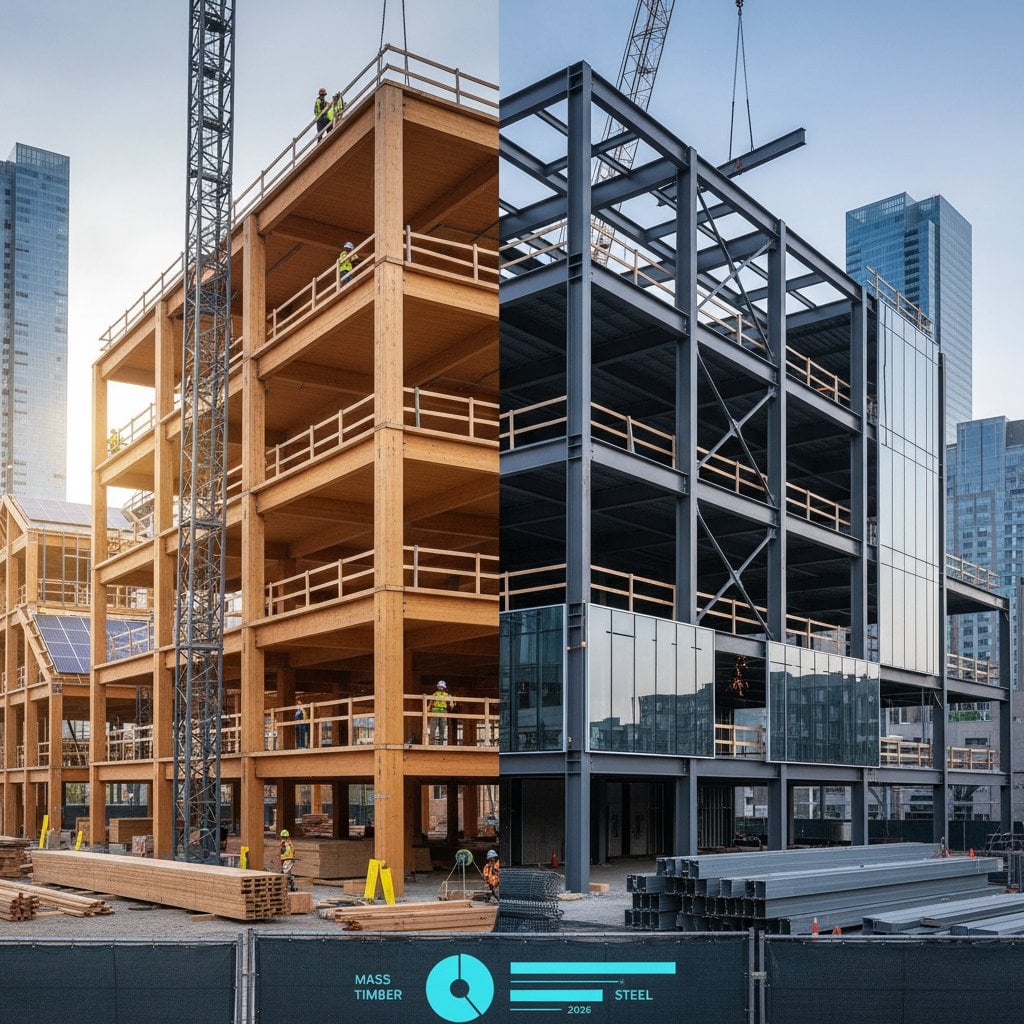
Construction materials shape the future of urban development, particularly as environmental regulations tighten in 2026. Mass timber emerges as a renewable alternative to traditional steel, promising lower carbon emissions throughout the building lifecycle. Builders face decisions that balance structural integrity with ecological responsibility, making a direct comparison essential for informed project planning.
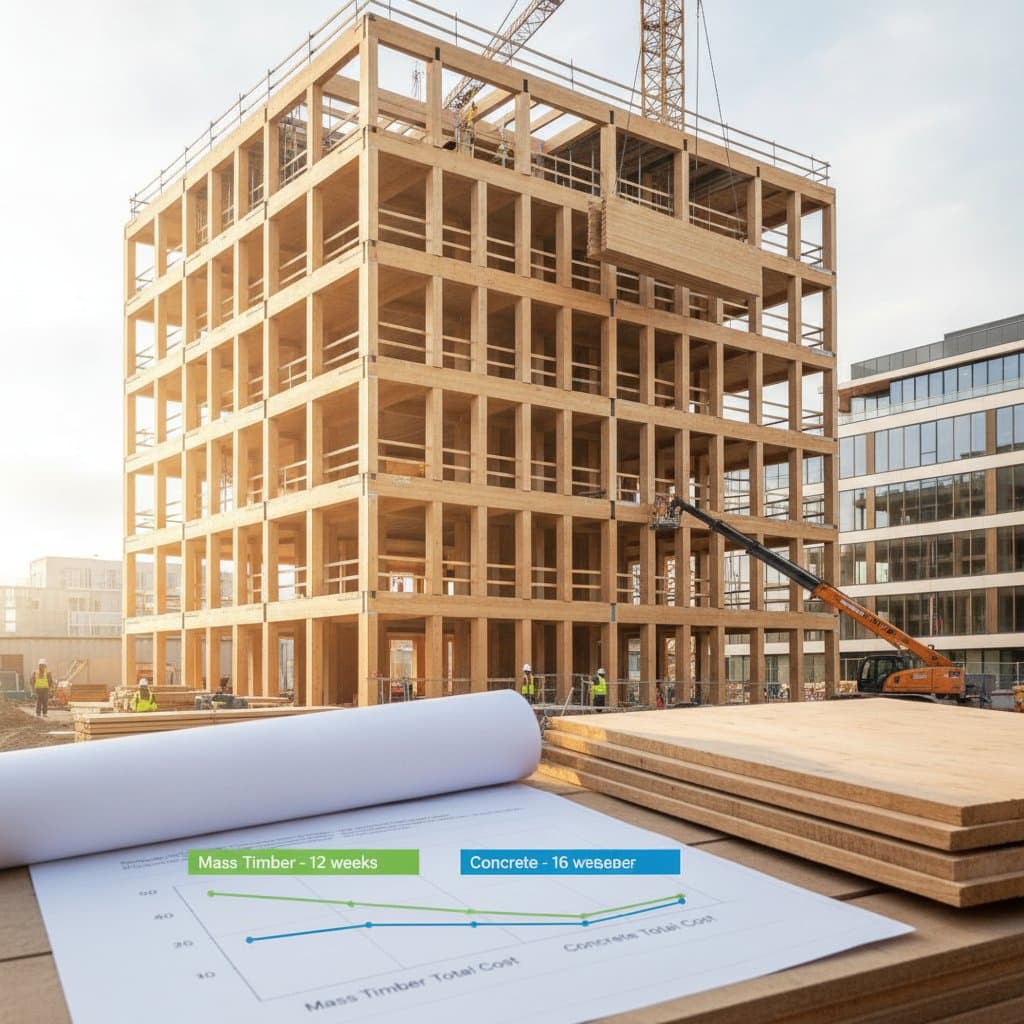
Mass timber, composed of engineered wood products like cross-laminated timber, gains traction in mid-rise commercial structures. Steel remains a staple for its versatility in high-rise applications. This analysis explores their carbon impacts, alongside costs, timelines, and performance factors, to guide selections for sustainable builds.
Carbon Footprint Breakdown
Carbon emissions define material sustainability in modern construction. Steel production involves energy-intensive processes, such as smelting iron ore in blast furnaces, which release substantial CO2. A typical steel beam generates around 1.5 to 2 tons of CO2 per ton of material, factoring in mining, refining, and transportation.
Mass timber presents a contrasting profile. Harvested from sustainably managed forests, it sequesters carbon during growth, storing it in the final structure. Production requires less energy, with emissions often below 0.5 tons of CO2 per ton, depending on regional sourcing. Over a building's life, mass timber can achieve net-negative emissions if paired with renewable energy sources.
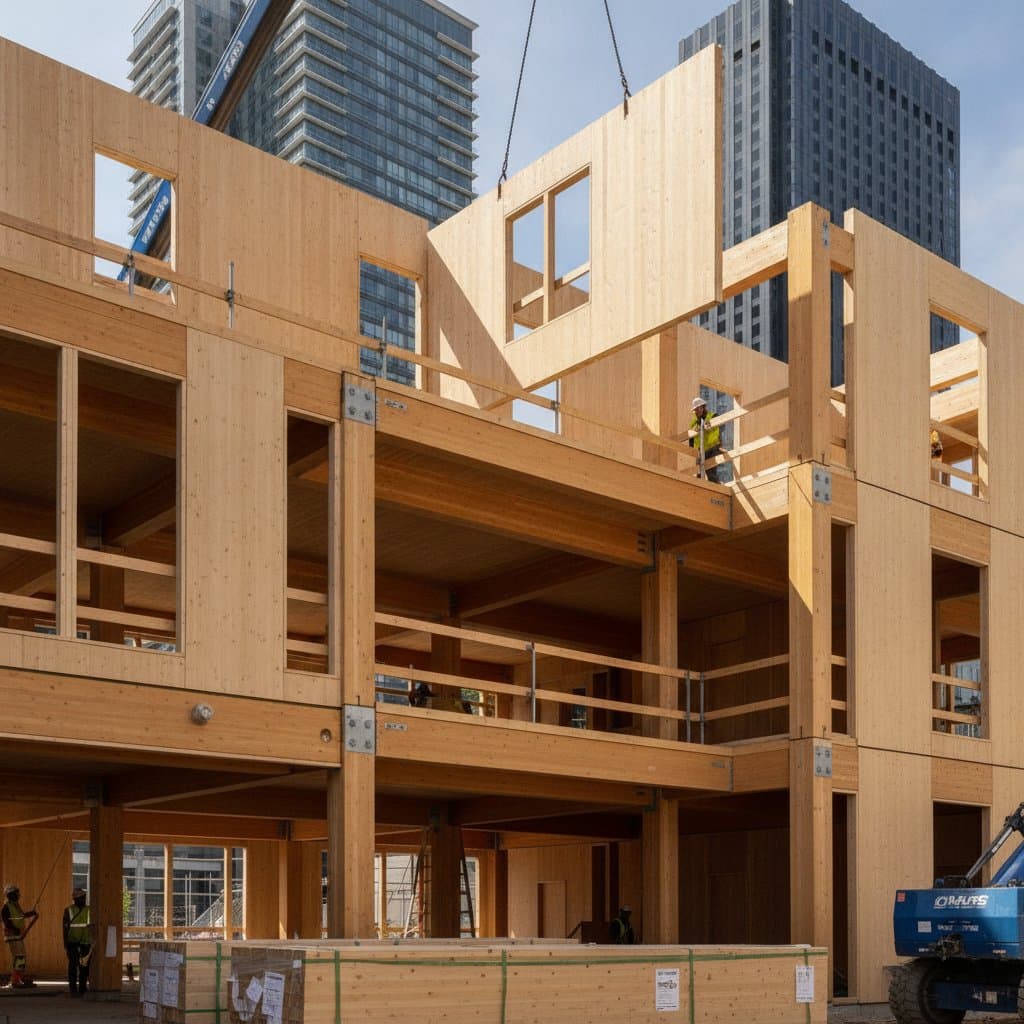
Transportation further influences footprints. Steel's density demands heavier logistics, increasing fuel use. Mass timber panels, lighter and prefabricated, streamline delivery and reduce on-site emissions. For a 10-story office building, mass timber might cut total embodied carbon by 25 to 45 percent compared to steel frameworks.
Cost and Timeline Considerations
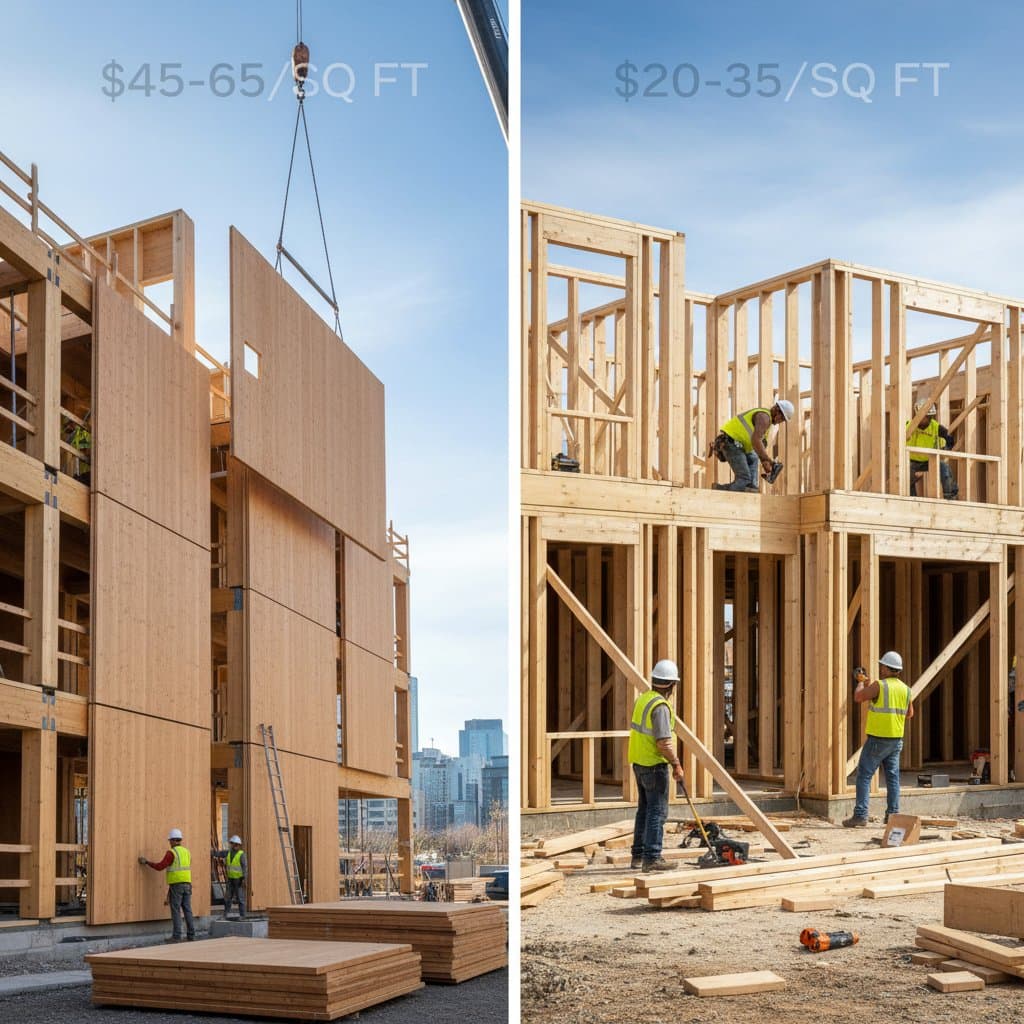
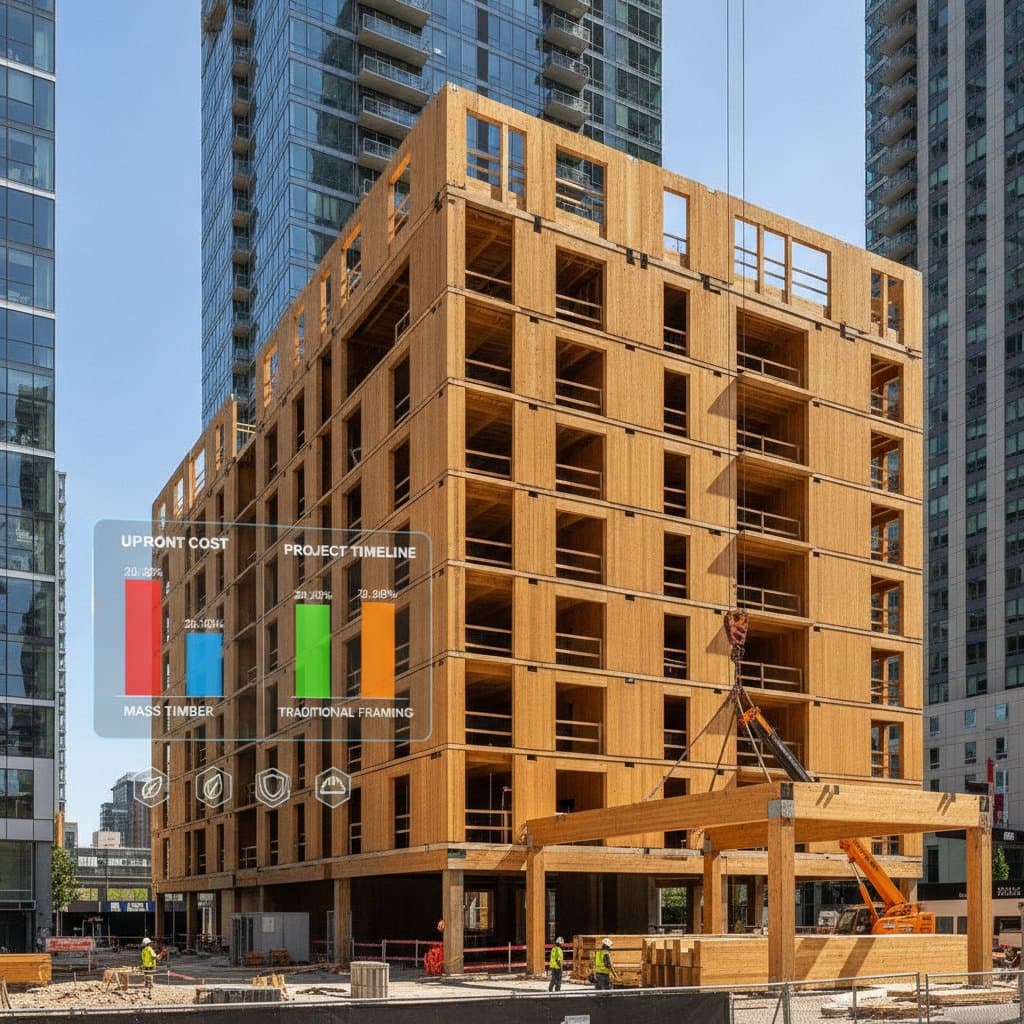
Budget constraints drive material decisions, yet long-term savings often favor sustainability. Initial costs for mass timber range from 5 to 15 percent higher than steel due to milling and engineering. However, prefabrication accelerates assembly, shortening timelines by 20 to 30 percent and lowering labor expenses.
Steel installation benefits from established supply chains, keeping upfront prices competitive. Delays arise from welding and bolting processes, which extend schedules in complex designs. Over time, mass timber's thermal efficiency reduces heating and cooling demands, yielding energy savings that offset premiums within five years.
For 2026 projects, incentives like tax credits for low-carbon materials tip scales toward mass timber. Developers report return on investment through faster occupancy and reduced operational costs. Evaluate site-specific factors, such as local wood availability, to optimize financial outcomes.
Strength and Durability Performance
Structural reliability underpins any build. Steel excels in tensile strength, supporting skyscrapers with minimal material volume. Its ductility allows flexibility during seismic events, a critical advantage in earthquake-prone regions.
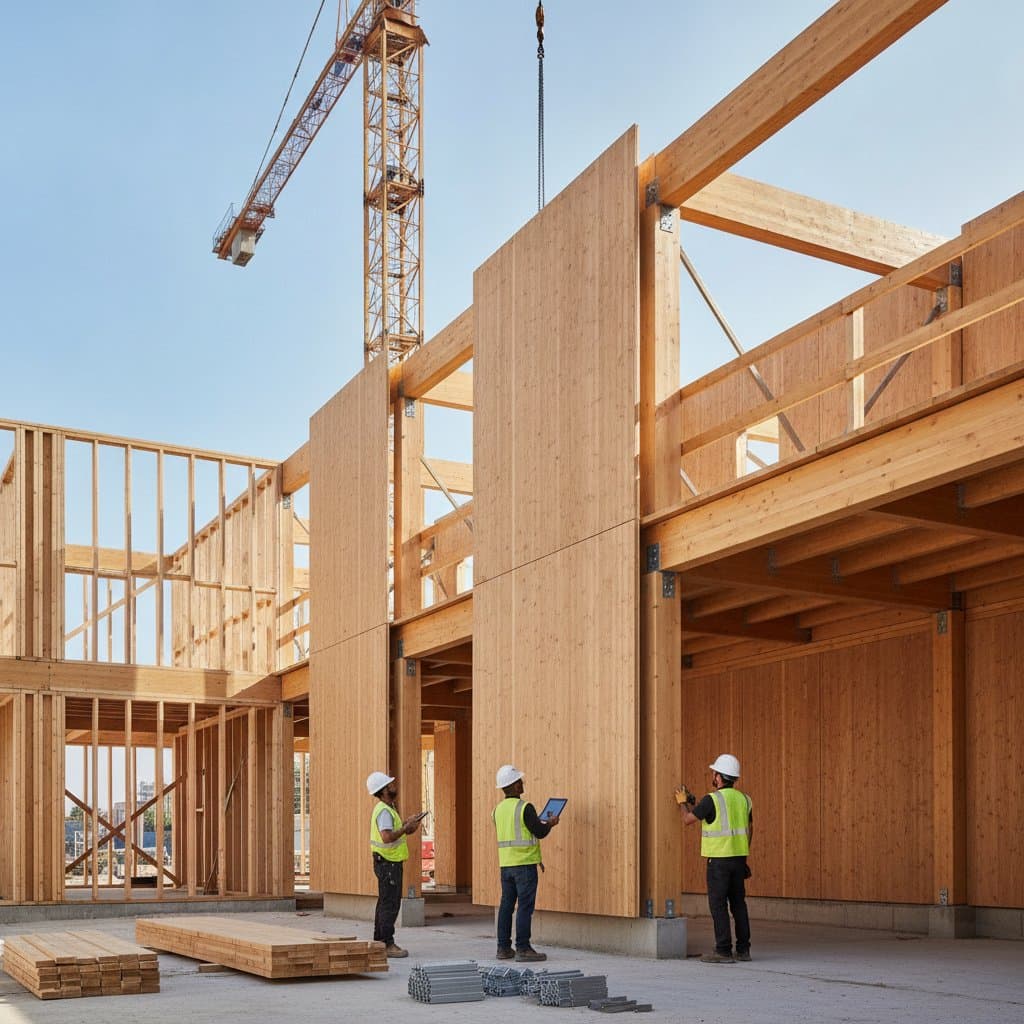
Mass timber matches steel in compressive strength for mid-rise applications, with panels engineered to span wide distances. Connections use metal fasteners for enhanced stability, meeting or exceeding building codes. Durability tests show mass timber resisting moisture and pests when properly treated, though it requires protective coatings in humid climates.
Hybrid approaches combine both materials, using steel for foundations and timber for upper levels. This strategy leverages steel's load-bearing prowess while minimizing overall weight. Engineers recommend finite element analysis to verify hybrid designs against wind and fire loads.
Fire Safety and Code Compliance
Fire performance addresses a common concern for wood-based systems. Mass timber chars predictably during exposure, forming an insulating layer that slows flame spread. Recent studies confirm assemblies maintain integrity for two hours or more, aligning with international standards.
Steel conducts heat rapidly, risking structural failure without fireproofing sprays. These coatings add costs and maintenance needs, potentially cracking under prolonged heat. In 2026, updated codes like the International Building Code permit mass timber up to 18 stories with sprinklers, expanding its viability.
Compliance involves third-party certifications for both materials. Mass timber benefits from mass plywood panels tested for flame resistance. Builders should consult local authorities early to navigate evolving regulations, ensuring projects meet safety benchmarks without delays.
Maintenance and Lifecycle Impacts
Ongoing upkeep influences total ownership costs. Steel structures demand periodic inspections for corrosion, especially in coastal areas, with treatments adding to expenses. Repainting every 10 to 15 years preserves integrity but generates waste.
Mass timber requires minimal intervention if sealed against humidity. Its natural insulation properties enhance indoor air quality, reducing HVAC reliance. At end-of-life, timber biodegrades or repurposes easily, unlike steel recycling which consumes energy.
Lifecycle assessments reveal mass timber's edge in circular economy principles. Demolition yields reusable components, cutting landfill contributions. For commercial projects, this translates to lower environmental liabilities and stronger ESG reporting.
Selecting the Optimal Material for Your Project
Choices hinge on project scale and goals. Mid-rise offices or schools favor mass timber for carbon reductions and rapid erection. High-rises lean toward steel or hybrids for unparalleled height capabilities.
Conduct a full environmental product declaration to quantify impacts. Collaborate with architects experienced in both systems to tailor solutions. In 2026, prioritizing low-carbon options not only complies with mandates but elevates project value in competitive markets.
Sustainable construction demands strategic material selection. By weighing these factors, builders craft enduring structures that minimize ecological harm while maximizing efficiency.