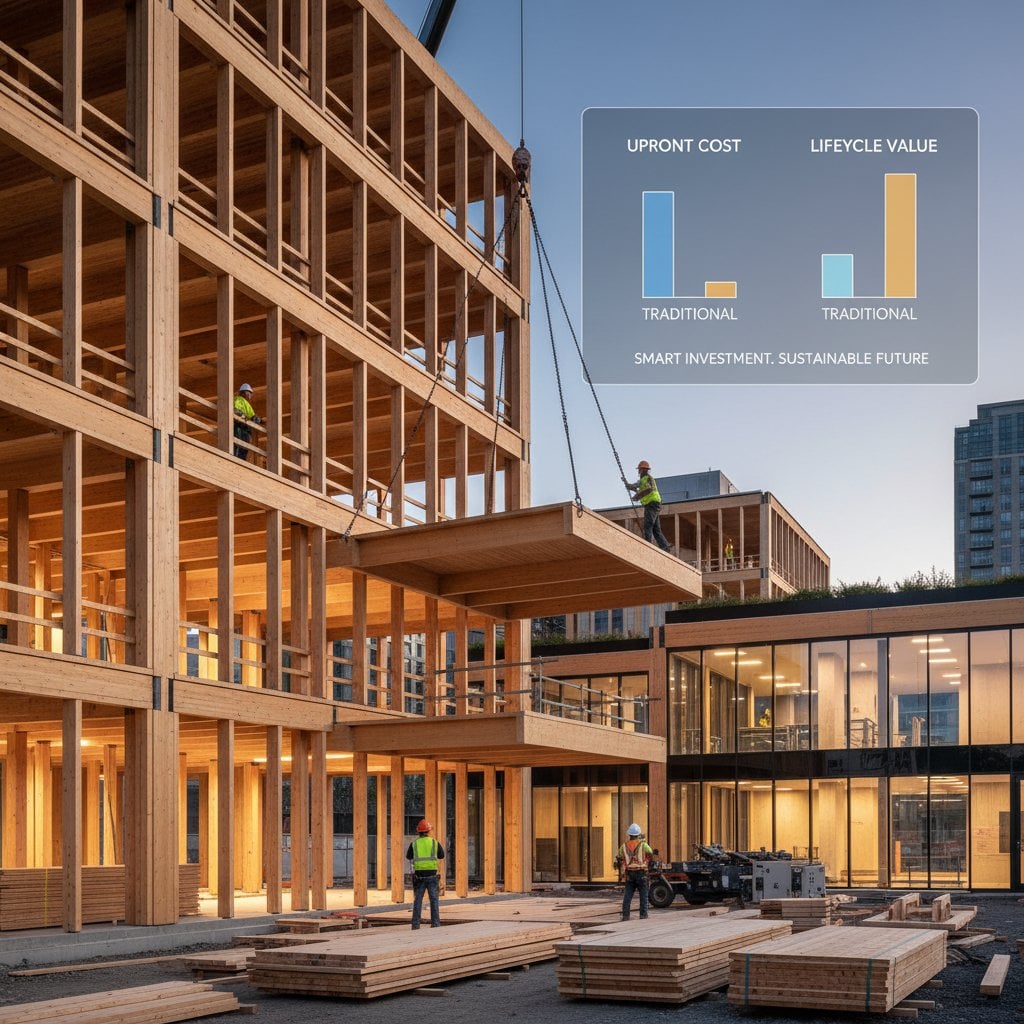
Mass Timber Versus Traditional Framing: Key Cost Insights
Building materials shape the aesthetics, functionality, and economics of any structure. They also affect construction timelines and environmental impacts. Homeowners and developers increasingly evaluate mass timber against traditional light wood framing to determine which option provides superior overall value. Such assessments frequently uncover unexpected details regarding expenses, workforce requirements, and enduring financial benefits that extend far beyond upfront material prices.
This resource examines the complete economic landscape of mass timber compared to framing. It covers material and labor expenses, operational efficiencies, environmental sustainability, and potential resale enhancements. Additionally, it delivers guidance on engaging qualified experts, ensuring regulatory adherence, and addressing ongoing upkeep needs for each method.
Core Material Overview
Defining Mass Timber
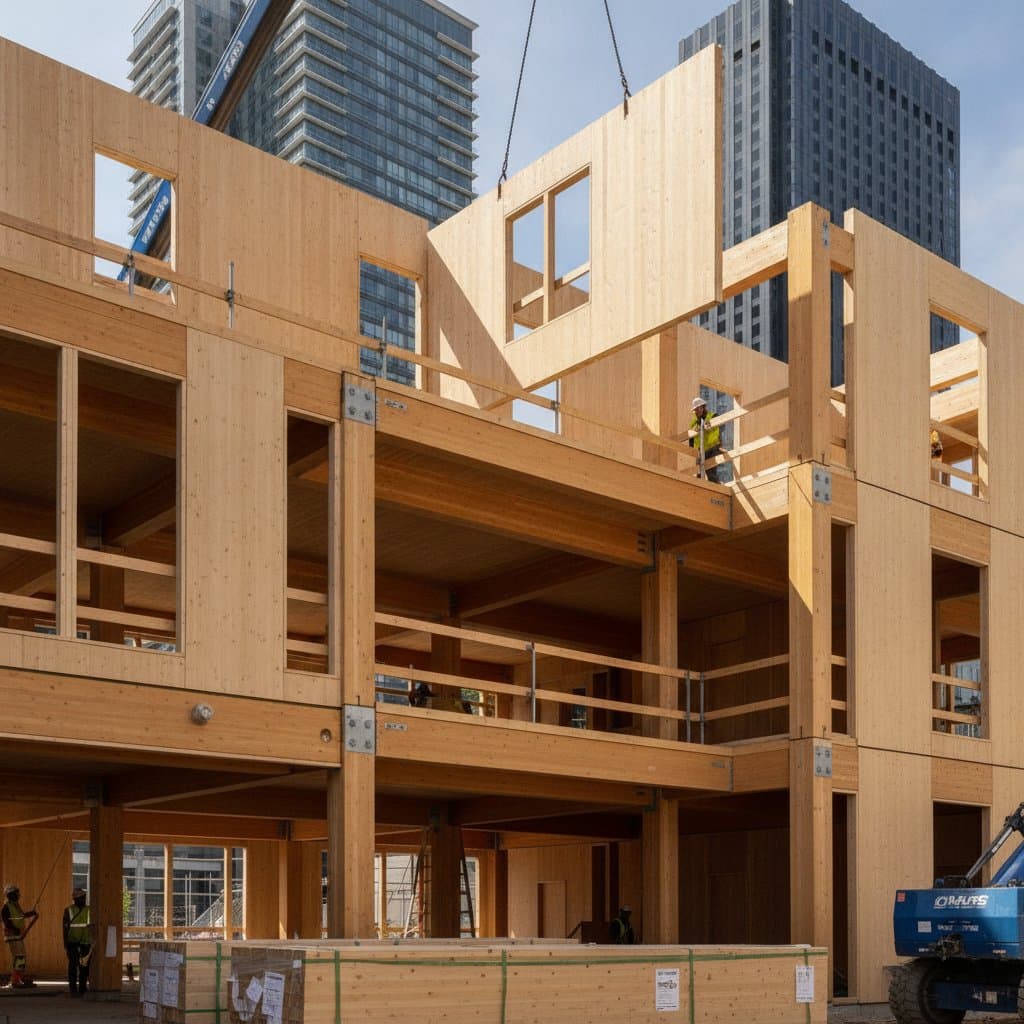
Mass timber consists of engineered wood productsand adhering layers of lumber or panels into robust, solid assemblies. Prominent varieties include cross-laminated timber (CLT), glued laminated timber (glulam), and nail-laminated timber (NLT). These components serve as primary structural supports, often substituting for steel or concrete in mid-rise commercial and residential applications. In home settings, they deliver both essential load-bearing capacity and an appealing organic appearance.
To select the appropriate type, consider project scale and design goals. For instance, CLT excels in wall and floor panels due to its bidirectional strength, while glulam suits curved beams or columns for architectural flair. Consult material specifications from certified suppliers to match performance ratings with local climate demands.
Defining Traditional Framing
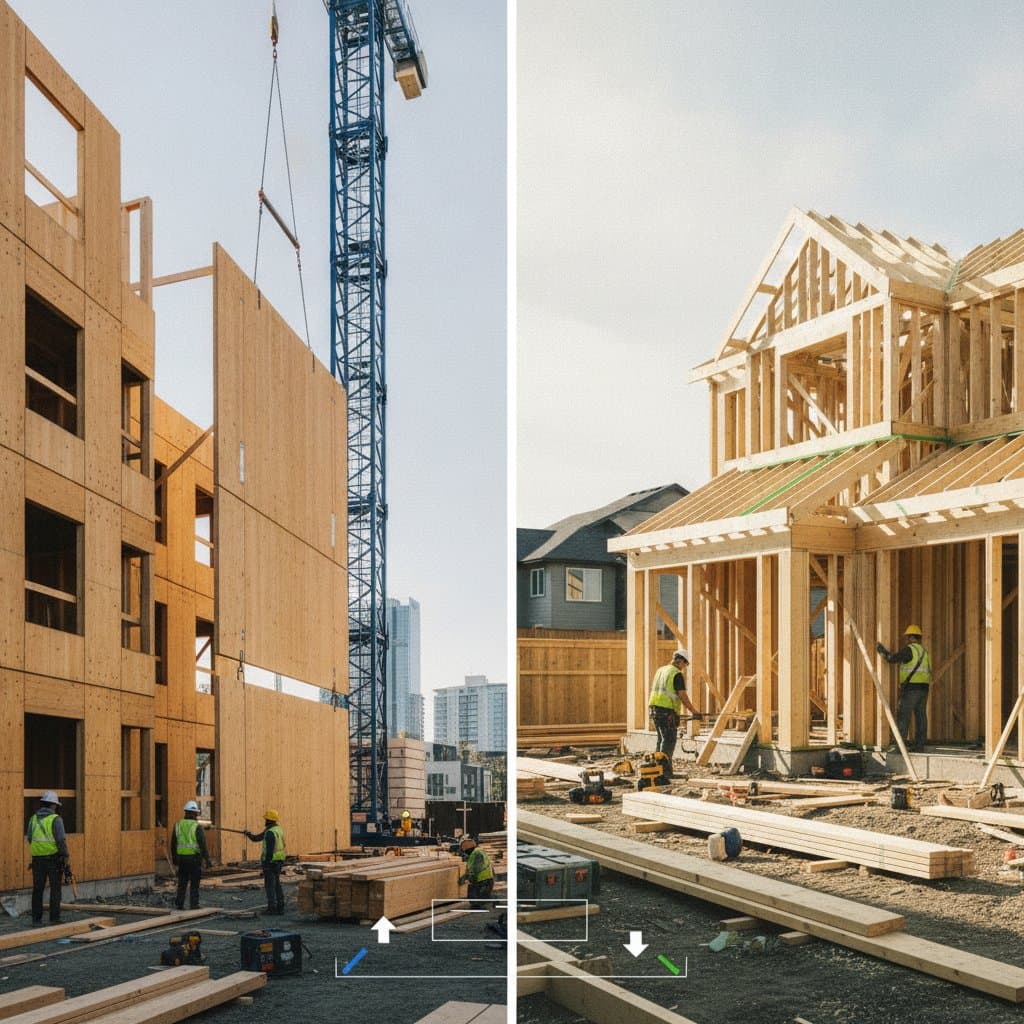
Traditional framing, commonly referred to as stick framing, employs standard dimensional lumber like 2x4s or 2x6s to construct walls, floors, and roofs. This technique prevails in residential builds because of its adaptability, widespread availability, and modest material expenses. Builders assemble components on-site, allowing customization during erection.
For optimal results, source lumber graded for structural use, such as No. 2 or better, to minimize defects. Pair it with sheathing and bracing to enhance stability against wind and seismic forces. This approach suits straightforward designs but demands meticulous planning to avoid alignment issues.
Installation Speed, Waste Management, and Performance Metrics
Accelerating Construction Timelines
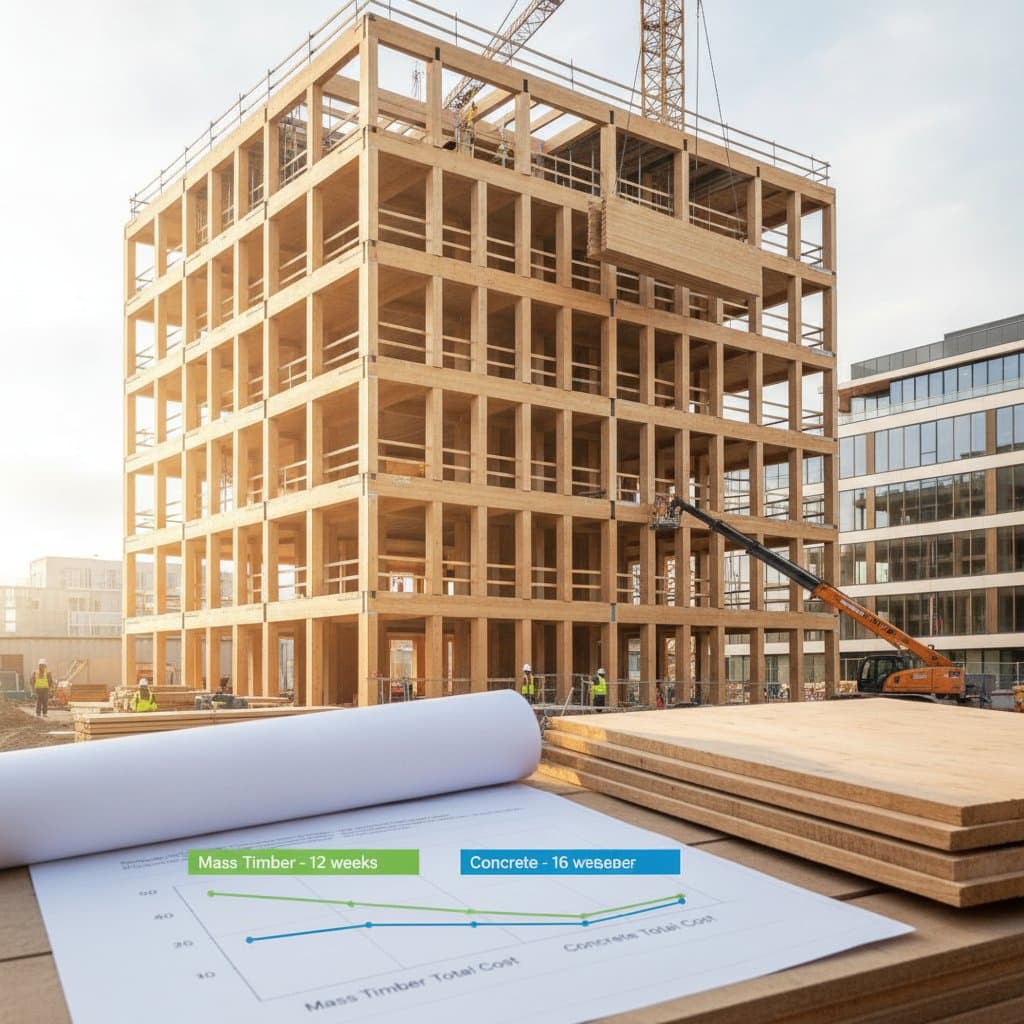
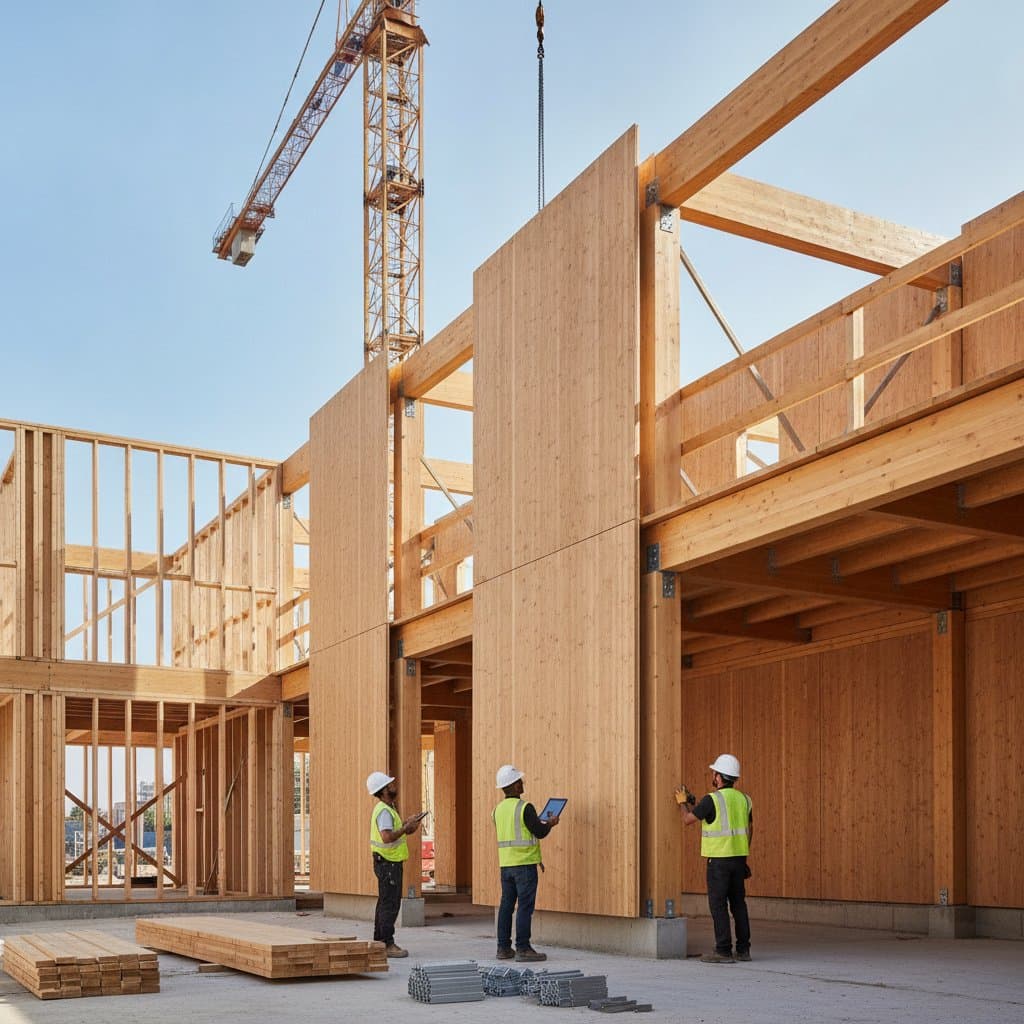
One primary economic benefit of mass timber lies in its prefabrication process. Manufacturers produce panels off-site to exact specifications, minimizing errors and exposure to adverse weather during assembly. Upon delivery, installation proceeds rapidly, which shortens the overall project duration.
This efficiency translates to direct savings: labor crews spend fewer days on payroll, equipment rentals conclude sooner, and provisional utilities incur lower charges. Moreover, quicker completion enables earlier occupancy, thereby reducing interim financing burdens or lost rental income. For a typical three-story residential project, mass timber can cut construction time by 30 to 50 percent compared to stick framing.
Minimizing Waste Generation
Precision manufacturing environments yield far less waste with mass timber than on-site cutting typical of stick framing. Panels arrive optimized, with scraps repurposed in factories, which curbs disposal expenses and promotes cleaner work areas. Safer sites result from reduced clutter, lowering accident risks and associated insurance premiums.
Quantify these gains by tracking waste volumes: traditional methods often produce 15 to 20 percent scrap, while mass timber hovers below 5 percent. Implement recycling protocols for any remnants to further align with sustainability objectives and potentially qualify for green building incentives.
Enhancing Thermal and Energy Outcomes
Mass timber panels, particularly CLT and glulam, provide inherent thermal mass and superior airtightness, which boost energy conservation post-installation. These qualities stabilize indoor temperatures, decreasing reliance on HVAC systems. In contrast, framed assemblies necessitate extra insulation layers and moisture barriers to achieve comparable insulation values.
Long-term, these attributes generate tangible reductions in utility bills, especially in regions with extreme seasonal variations. Calculate potential savings using energy modeling software that factors in local rates and climate data; a mass timber home might save 20 to 30 percent on annual heating costs versus a framed equivalent. Prioritize designs that integrate passive solar features to amplify these efficiencies.
Balancing DIY Efforts with Expert Involvement
Scenarios for DIY Implementation
Experienced builders find traditional framing more accessible for self-directed work. Homeowners can tackle modest expansions, internal dividers, or outdoor platforms using basic carpentry tools and protective gear. Sourcing materials proves straightforward at local suppliers, and skills develop through structured courses or guidance from seasoned mentors.
Start with detailed blueprints and safety protocols to ensure compliance. Measure twice before cutting to conserve resources, and incorporate temporary bracing during assembly to maintain stability. This method empowers cost control for budget-conscious projects under 500 square feet.
Necessity of Professional Expertise
Mass timber installations demand advanced handling techniques, exact engineering calculations, and specialized joint configurations that require professional intervention. Engage structural engineers and accredited installers to oversee panel positioning, humidity safeguards, and fire-resistant treatments. Even modest CLT applications benefit from contractors versed in engineered wood protocols.
Professionals mitigate risks like improper alignment, which could compromise integrity. Verify credentials through industry associations, and request portfolios demonstrating successful mass timber executions. Budget for their involvement early to streamline permitting and avoid delays.
Criteria for Engaging Licensed Professionals
Complex or expansive projects invariably necessitate certified specialists. Involve a contractor or engineer under these conditions:
- Structures feature multiple levels or extended spans exceeding 20 feet.
- Designs incorporate hybrid elements, such as metal fasteners or concrete bases.
- Jurisdictional regulations mandate engineer-stamped plans.
- Erection requires heavy machinery like cranes for panel placement.
- Compliance with fire safety or earthquake standards is essential.
During contractor selection, inquire about prior CLT or glulam experience, solicit client testimonials, and confirm coverage for engineered wood liabilities. Develop a detailed scope of work to align expectations and track progress against milestones.
Frequently Asked Questions
Does mass timber resist fire effectively?
Thick sections char externally while preserving internal integrity. Incorporate encapsulation and intumescent coatings to elevate resistance levels beyond code minimums.
Requires mass timber greater upkeep than framing?
No. Proper sealing against moisture ensures longevity with routine checks. Inspect annually for sealant degradation or water entry points, and reapply finishes as needed.
Is retrofitting framed residences with mass timber feasible?
Yes. Integrate CLT elements for floors, supports, or overhead features to bolster strength or aesthetics. Collaborate with an engineer to assess existing loads and integration points.
Suits mass timber humid environments?
Yes, with diligent detailing. Apply permeable barriers, extended eaves, and durable sealants to block excess dampness and sustain performance.
Advancing Your Project Forward
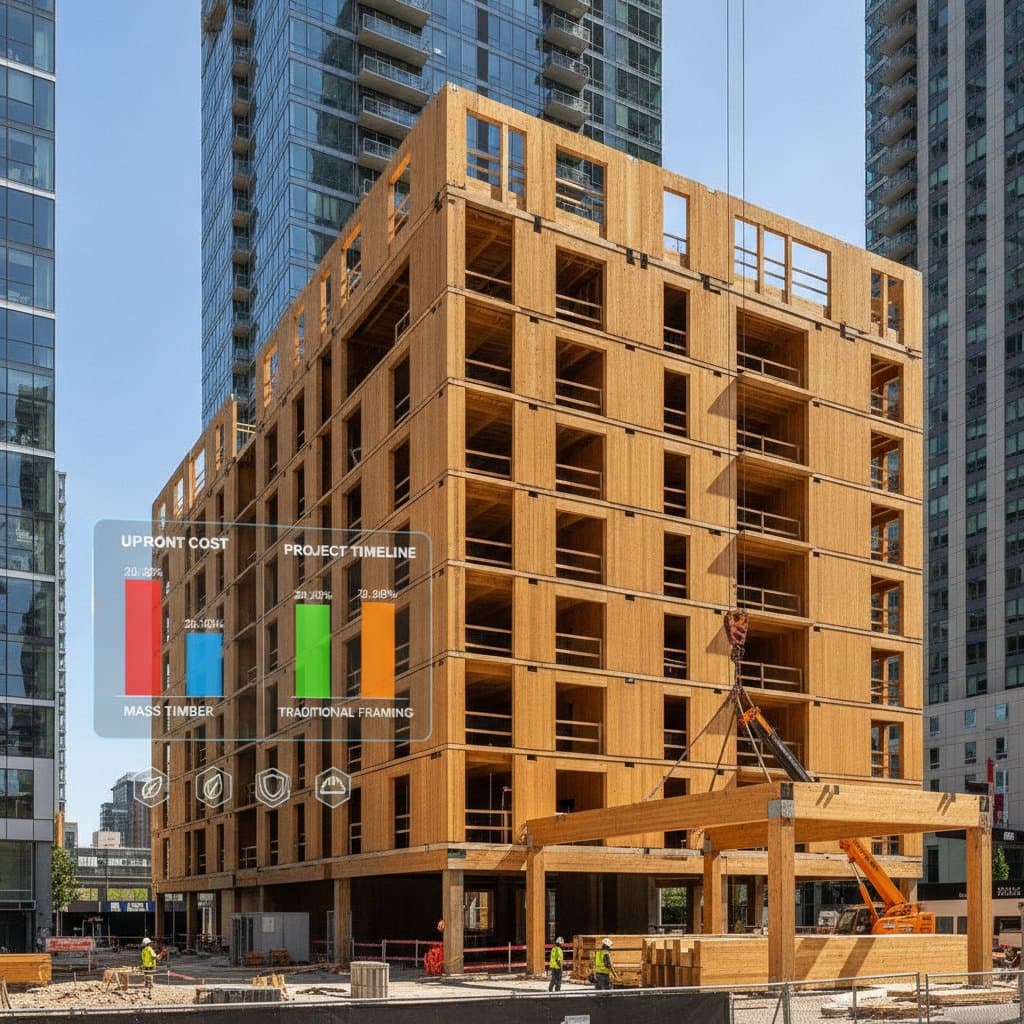
Decisions between mass timber and traditional framing hinge on objectives, financial parameters, and schedules. Stick framing delivers economy for compact residences and basic layouts, whereas mass timber accelerates timelines, ensures accuracy, and advances ecological priorities.
Initiate collaboration with seasoned advisors to obtain competitive bids, review ordinances, and simulate operational efficiencies. Through thorough preparation, harmonize aesthetic visions, economic realities, and build processes to yield a resilient edifice that endures and appreciates over generations.