Mass Timber Versus Traditional Materials: A Comprehensive Cost Analysis
Key Insights at a Glance
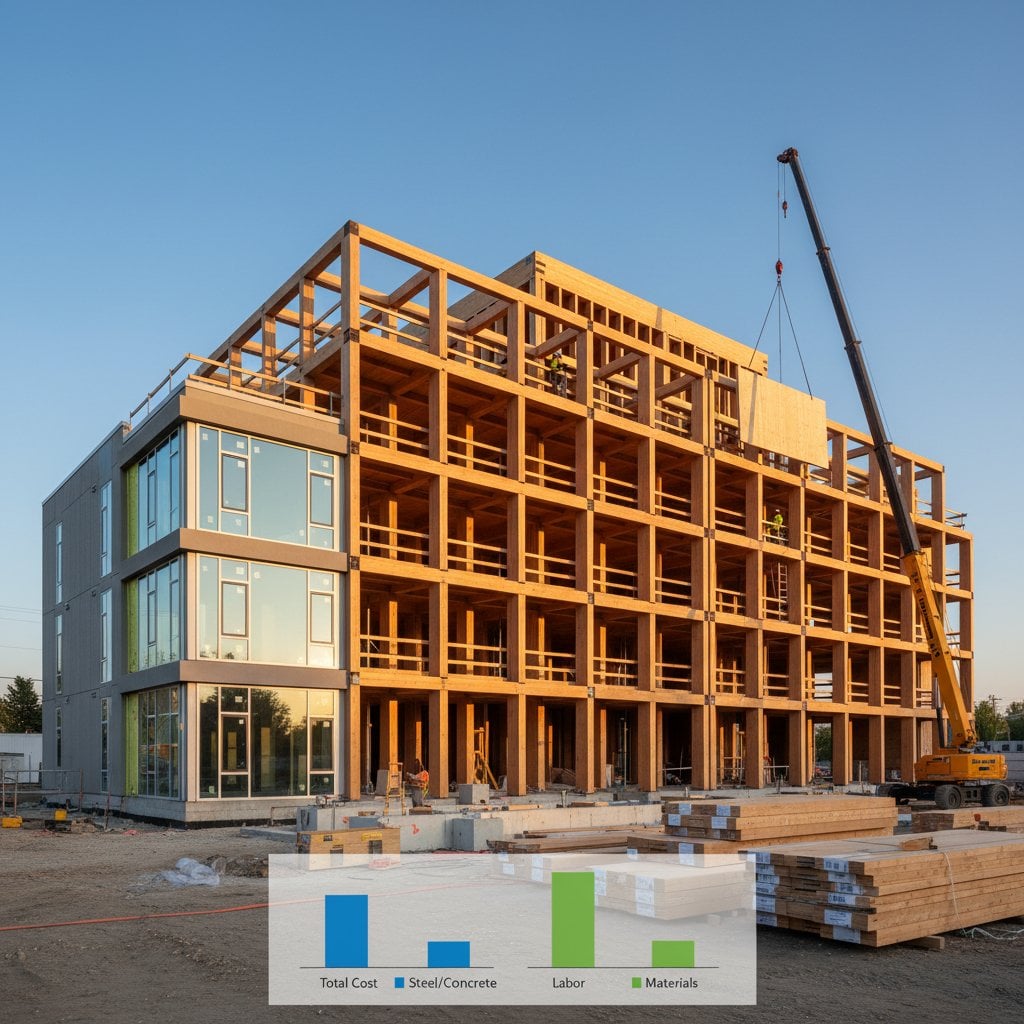
Building with mass timber, including cross-laminated timber panels, shortens construction timelines and cuts site labor expenses when compared to concrete or steel frameworks. Although material prices tend to run higher, the efficiencies in speed, workforce needs, and foundational elements often offset these increases to balance the overall budget. For a medium-scale commercial or multi-family residential development, projects fall into moderate to high complexity levels, necessitating expert engineering and fire-rated configurations. Timelines align closely with those of steel builds or prove slightly briefer, with achievable cost reductions of 5 to 15 percent when conditions favor the approach. Engage a licensed structural engineer and consult local code authorities early in the evaluation of mass timber feasibility.
Detailed Step-by-Step Evaluation
1. Analyze Structural Demands
Begin the process with a thorough structural review. Identify load paths, seismic considerations, and deflection thresholds. Mass timber panels function as unified diaphragms, differing from the member-by-member reliance in steel or concrete systems.
Verification Step: Ensure the proposed design complies with regional load-bearing and fire safety regulations prior to material selection.
2. Calculate Material Expenses
Mass timber panels carry a premium per cubic foot over concrete or steel equivalents. Cross-laminated timber panels typically cost between $8 and $15 per square foot of floor space, varying by panel thickness, species, and proximity to suppliers. Conventional dimensional lumber offers lower upfront costs but demands extended installation periods.
Verification Step: Factor in shipping fees and on-site storage expenses for timber elements, as these can influence net savings.
3. Evaluate Labor and Equipment Needs
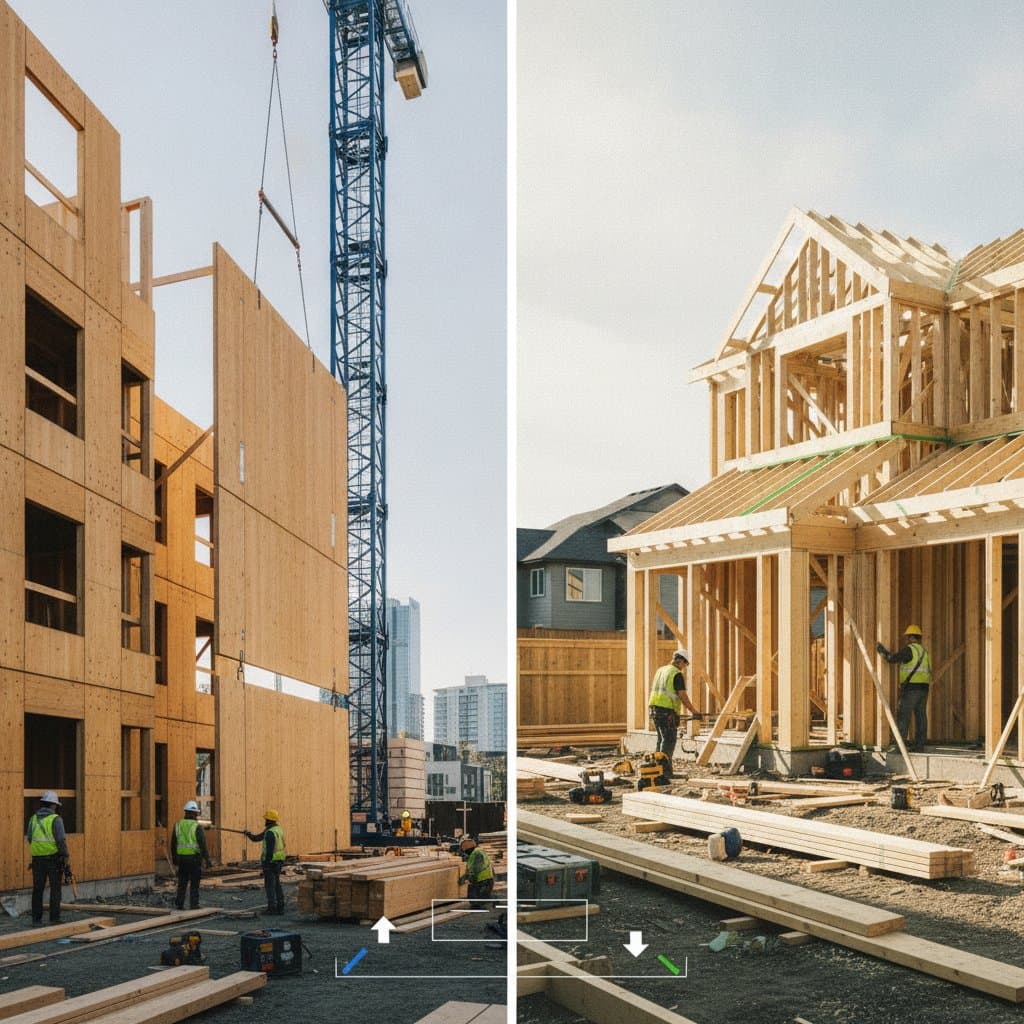
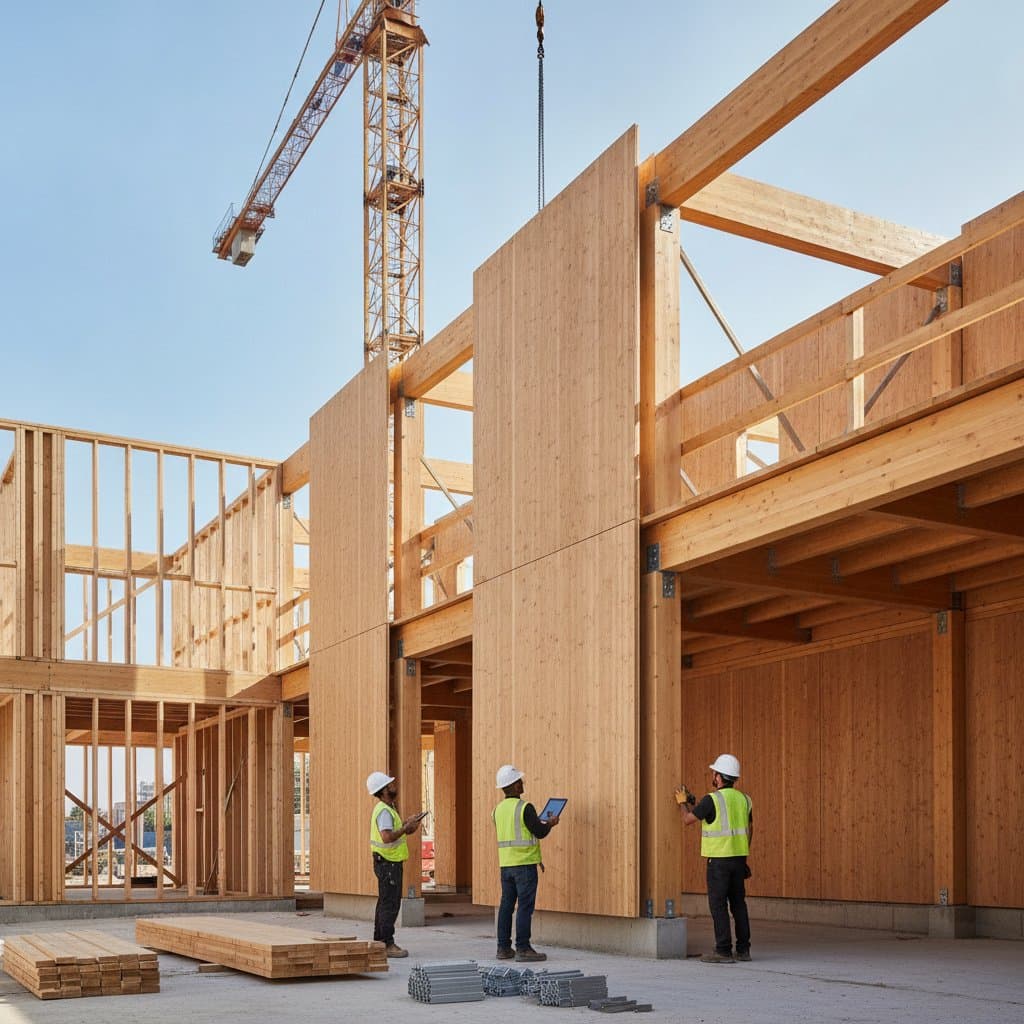
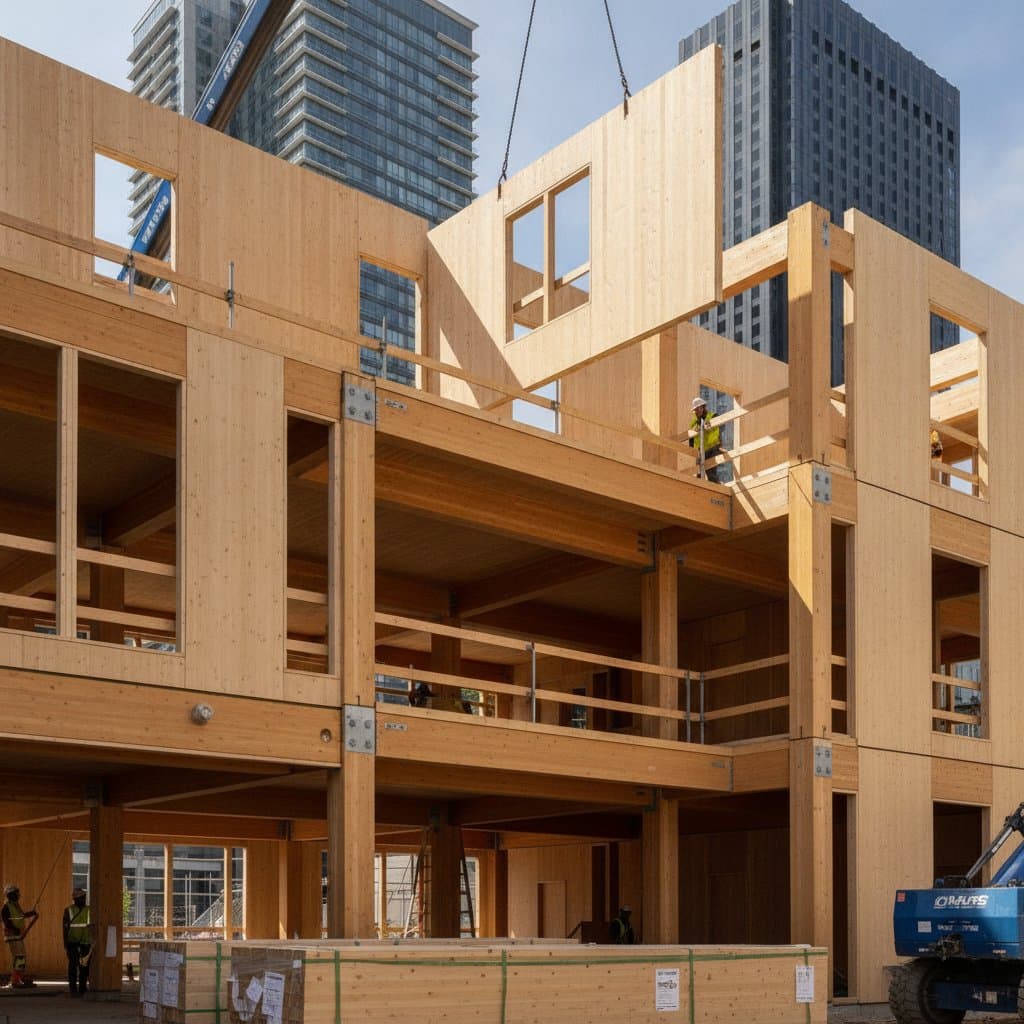
Mass timber minimizes on-site labor through prefabricated, precision-cut panels. A compact team, supported by cranes, erects structures rapidly. In contrast, concrete construction involves extensive formwork, curing intervals, and specialized finishing teams, while steel erection requires on-site welding, bolting, and alignment adjustments.
Verification Step: Contrast labor hours required per floor level. Mass timber frequently trims site activities by 25 to 40 percent.
4. Consider Foundation Specifications
The lighter weight of mass timber compared to concrete or steel diminishes foundation stresses, potentially allowing for reduced excavation depths and lesser concrete volumes.
Verification Step: Consult the project engineer to determine if a shallower slab or more compact footings suffice without compromising structural integrity.
5. Examine Fire and Acoustic Performance
Mass timber achieves required fire resistance through surface charring that shields the interior. Certain jurisdictions mandate additional encapsulation, such as gypsum board layers. Steel demands intumescent coatings for protection, whereas concrete offers built-in fire endurance.
Verification Step: Validate fire-rated assembly details with the local building official prior to material procurement.
6. Address Energy Efficiency and Moisture Management
Timber provides inherent insulation properties, limiting thermal bridging without supplemental layers common in concrete or steel designs. Protecting panels from moisture during erection remains paramount; maintain coverage until the roof closes in.
Verification Step: Employ a moisture meter to verify wood content stays below 16 percent prior to enclosing the structure.
7. Plan Interior Finishes and Aesthetics
Exposed mass timber surfaces deliver a natural, warm appearance, potentially eliminating the need for additional drywall or cladding and thus curbing finish expenses. Conventional materials typically require full covering.
Verification Step: Secure approval from interior design professionals for exposed wood elements, ensuring applied coatings satisfy fire safety and low-VOC criteria.
8. Assess Ongoing Maintenance Needs
Mass timber calls for periodic checks on surfaces for moisture ingress or pest indications. Steel structures need anti-corrosion treatments, and concrete may demand repairs for developing cracks.
Verification Step: Establish a routine of yearly inspections to identify and address concerns promptly.
9. Weigh Sustainability and Environmental Impact
Mass timber sequesters carbon throughout its lifecycle, markedly lowering the project's ecological footprint. Production of concrete and steel consumes substantial energy and releases significant emissions.
Verification Step: Obtain Environmental Product Declarations from suppliers to substantiate claims of environmental performance.
10. Review Timeline Influences
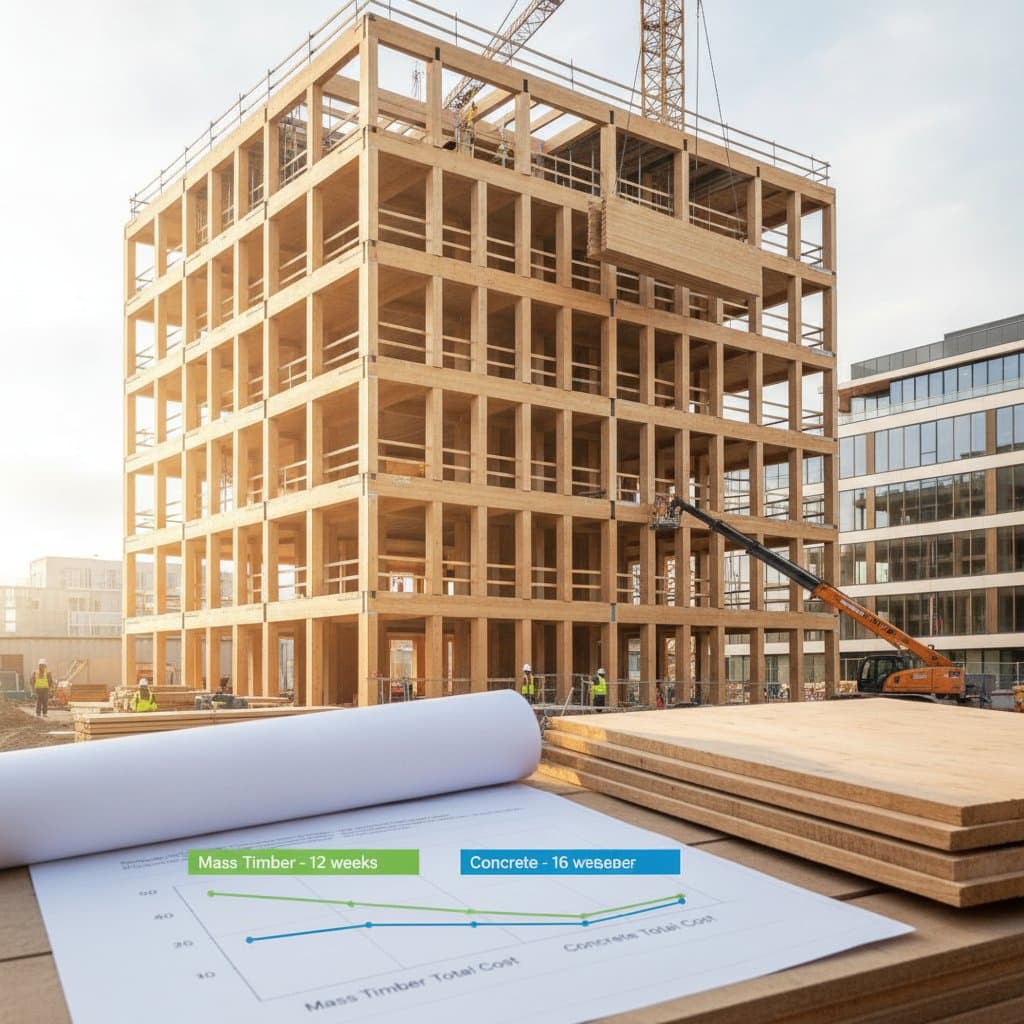
Prefabrication of timber panels compresses overall schedules. Quicker erection phases reduce expenses for crane operations and supervisory oversight. Traditional methods extend durations due to sequential curing, welding, or framing processes.
Verification Step: Develop parallel Gantt charts to illustrate potential time reductions clearly.
Essential Quality Assurance and Issue Resolution
Frequent Challenges
- Panel Distortion: Results from unintended moisture contact. Store and handle panels under protective cover until full enclosure.
- Insecure Joints: Arise from inadequate torque application or misalignment. Adjust connections according to manufacturer guidelines.
- Inadequate Fire Seals: Inspect all penetrations thoroughly to apply correct firestopping materials.
Practical Remedies
- Swap out any connectors displaying corrosion signs.
- Utilize wood filler or structural epoxy to mend small surface imperfections.
- Reapply edge sealants using products endorsed by the manufacturer.
Markers of Effective Implementation
- Seams between panels fit flush without noticeable separations.
- Moisture levels consistently register under 16 percent.
- Every fastener achieves the prescribed torque level.
Engaging Professional Expertise
Involve a licensed structural engineer for scenarios including:
- Structures surpassing two stories in height.
- Projects incorporating fire-rated assemblies.
- Modifications to load-bearing walls.
- Indications of moisture affecting core elements.
For panel hoisting and placement, retain a crane operator compliant with regional safety protocols. Engineering and installation fees generally span moderate to high ranges, scaled to project dimensions and intricacies.
When selecting professionals, require:
- Valid licensing and comprehensive insurance coverage.
- References from completed mass timber initiatives.
- Detailed written proposals enumerating materials, labor inputs, and waste management.
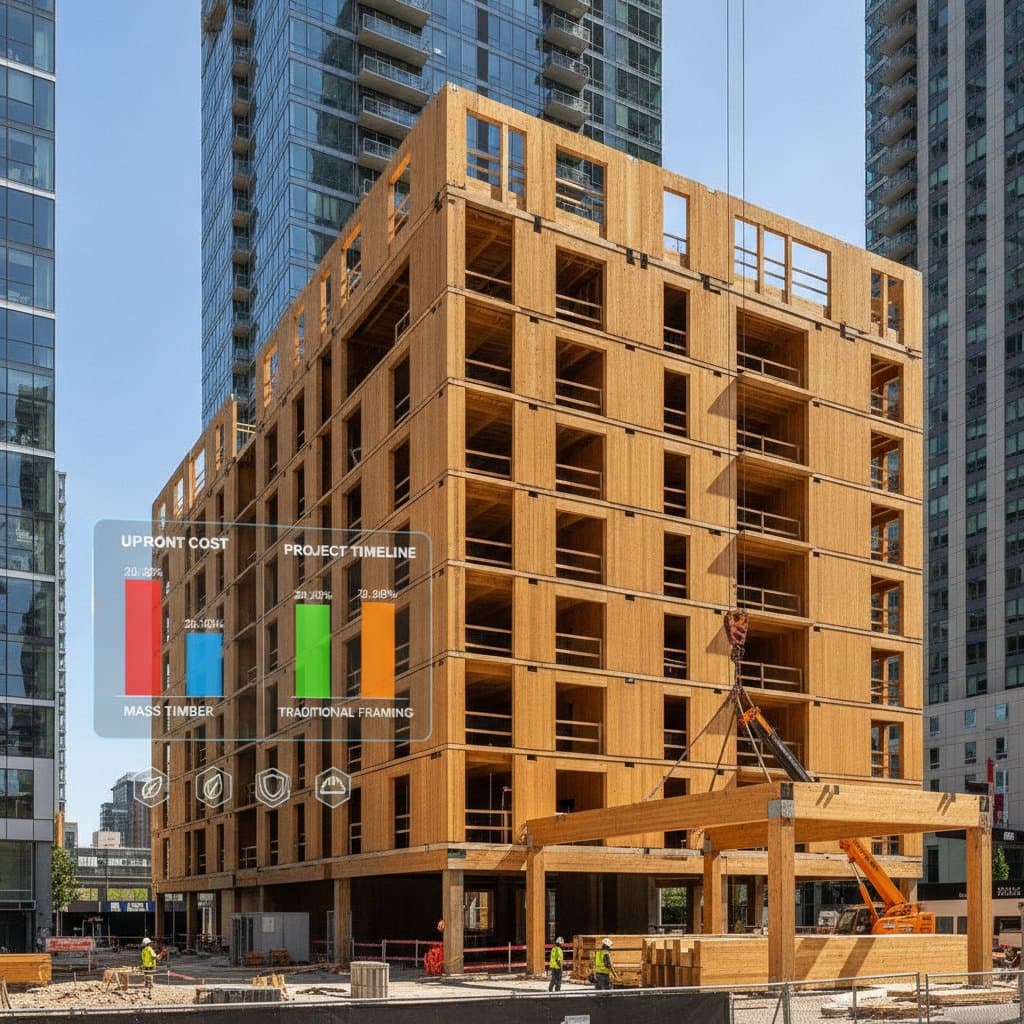
Cost Overview Summary
| Category | Mass Timber | Traditional (Concrete or Steel) |
|---|---|---|
| Material Cost | Higher | Lower |
| Labor Cost | Lower | Higher |
| Construction Time | Shorter | Longer |
| Foundation Cost | Lower | Higher |
| Fire Protection | Char layer or encapsulation | Coatings or inherent |
| Maintenance | Moderate | Moderate |
| Environmental Benefit | Carbon storage | High embodied energy |
| Design Flexibility | Moderate | High |
These assessments vary by geographic location, structure category, and regulatory demands. Collaborate with the design team to refine budget projections.
Strategies for Optimal Results
- Initiate panel orders well in advance, as manufacturing lead times often extend several weeks.
- Shield timber components from precipitation using tarps or interim roofing solutions.
- Sequence crane operations meticulously to avoid disruptions and added expenses.
- Select fasteners that harmonize with the assembly; prevent galvanic corrosion from dissimilar metals.
- Document moisture measurements across all project phases for records.
Mass timber emerges as a robust material choice that benefits from precise planning and teamwork. It streamlines project durations, enhances occupant comfort through natural warmth, and diminishes carbon emissions. Traditional options continue to serve demanding or load-intensive applications reliably. The decision hinges on balancing priorities in efficiency, visual appeal, and ecological responsibility.
Through accurate accounting of materials, workforce, and timelines, teams realize resilient, economical outcomes aligned with specific performance and fiscal objectives.