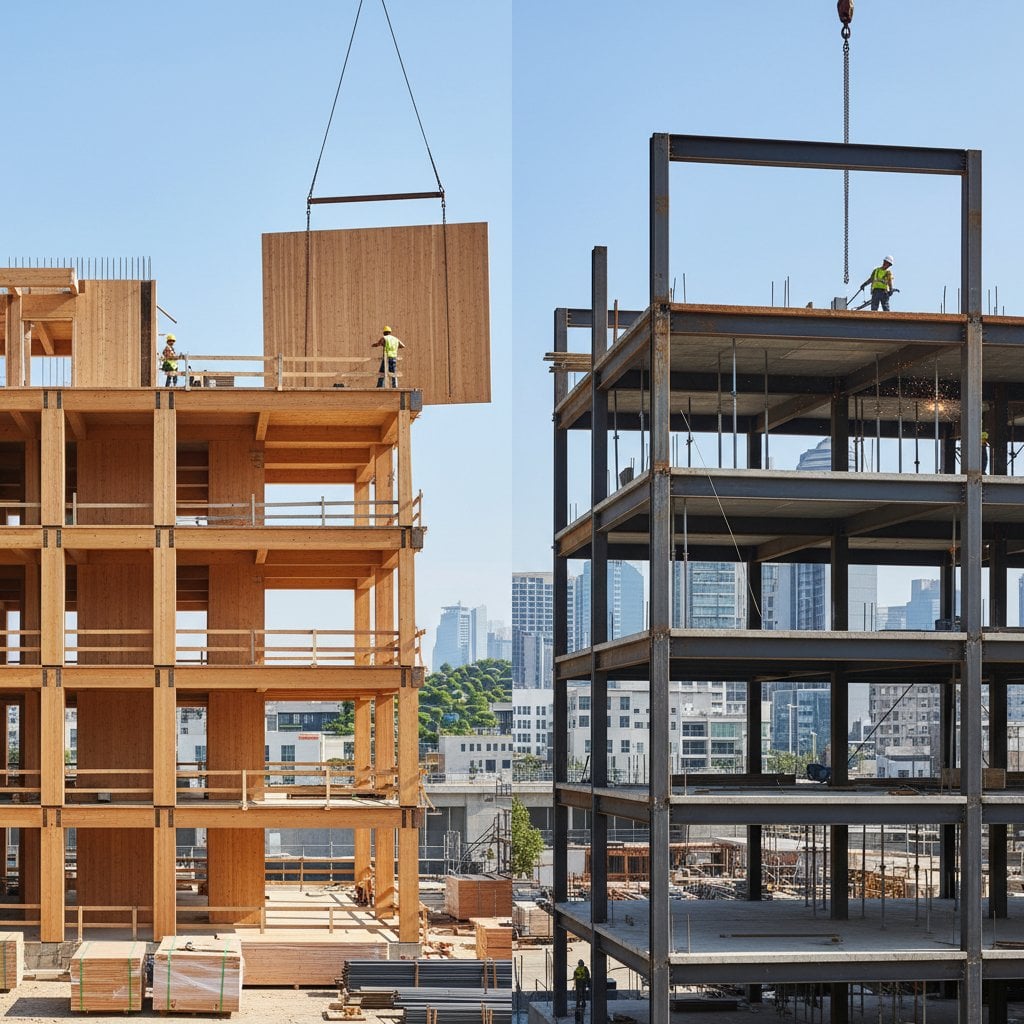
Mass Timber Costs Compared to Traditional Steel Framing
Mass timber construction attracts architects, developers, and homeowners seeking sustainable buildings that maintain structural integrity and aesthetic appeal. Cross-laminated timber (CLT) leads as a preferred material for mid-rise commercial projects, custom residences, and renovations. Although initial perceptions suggest mass timber exceeds the expense of steel or concrete, the full cost analysis proves more nuanced. Evaluating mass timber against steel framing clarifies its fit for specific project objectives related to budget, timeline, and overall performance.
This overview details mass timber pricing mechanisms, factors influencing cost variances from steel methods, and key areas of savings or hurdles in design and execution phases.
Key Elements of Mass Timber and Cost Influences
Mass timber consists of engineered wood products formed by bonding layers of lumber into robust panels or beams. Common types include CLT panels for walls and floors, glued-laminated (glulam) beams for spanning supports, and nail-laminated timbers for vertical elements. These replace steel framing in various structural roles, from foundations to rooftops.
Material and Manufacturing Expenses
Wood serves as the primary renewable resource for mass timber, frequently sourced from nearby forests to minimize transport fees. The production demands advanced equipment for layering and bonding with high-strength adhesives, elevating upfront costs.
- Cost per square foot for CLT components: Ranges from $50 to $80, varying by thickness and grade.
- Steel framing equivalent: Falls between $35 and $55 per square foot, influenced by market steel prices and regional availability.
While mass timber materials appear pricier initially, streamlined manufacturing and minimal on-site finishing often narrow this margin effectively.
Labor and Assembly Dynamics
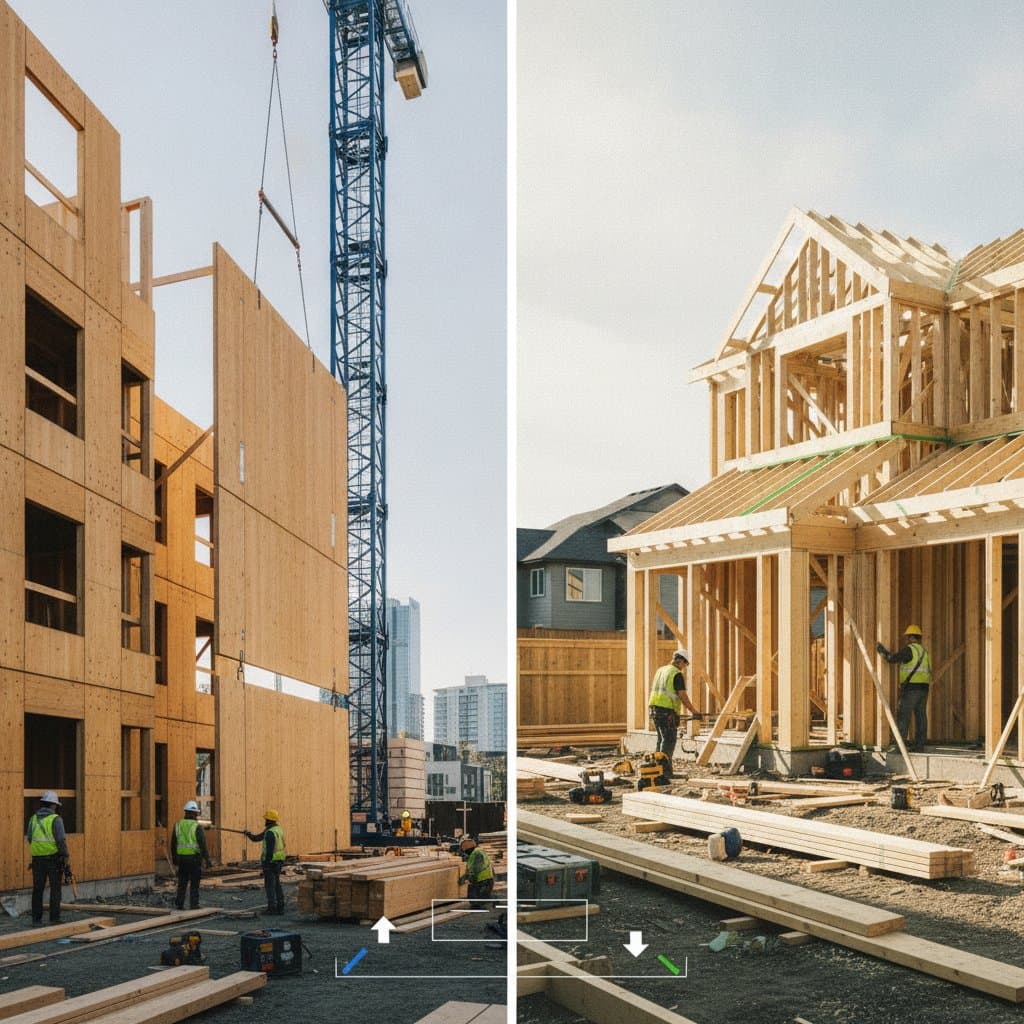
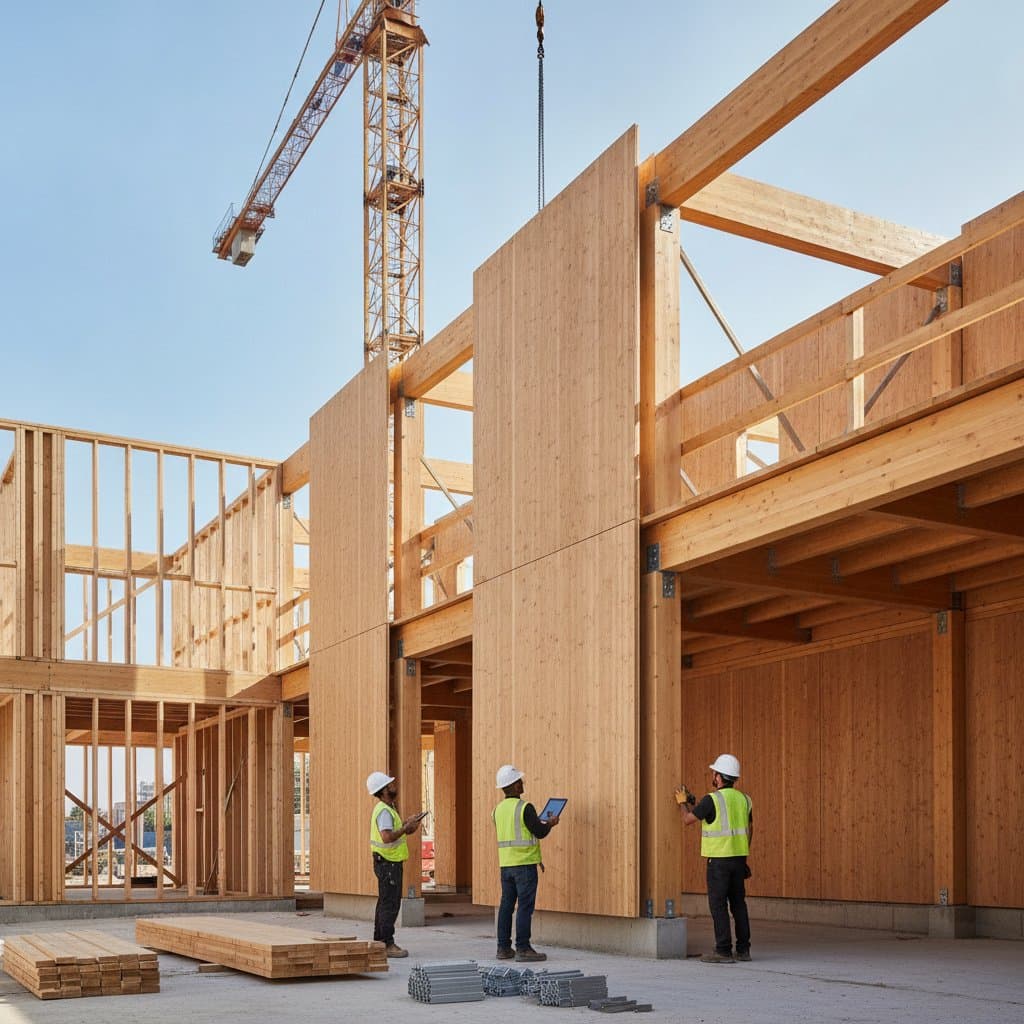
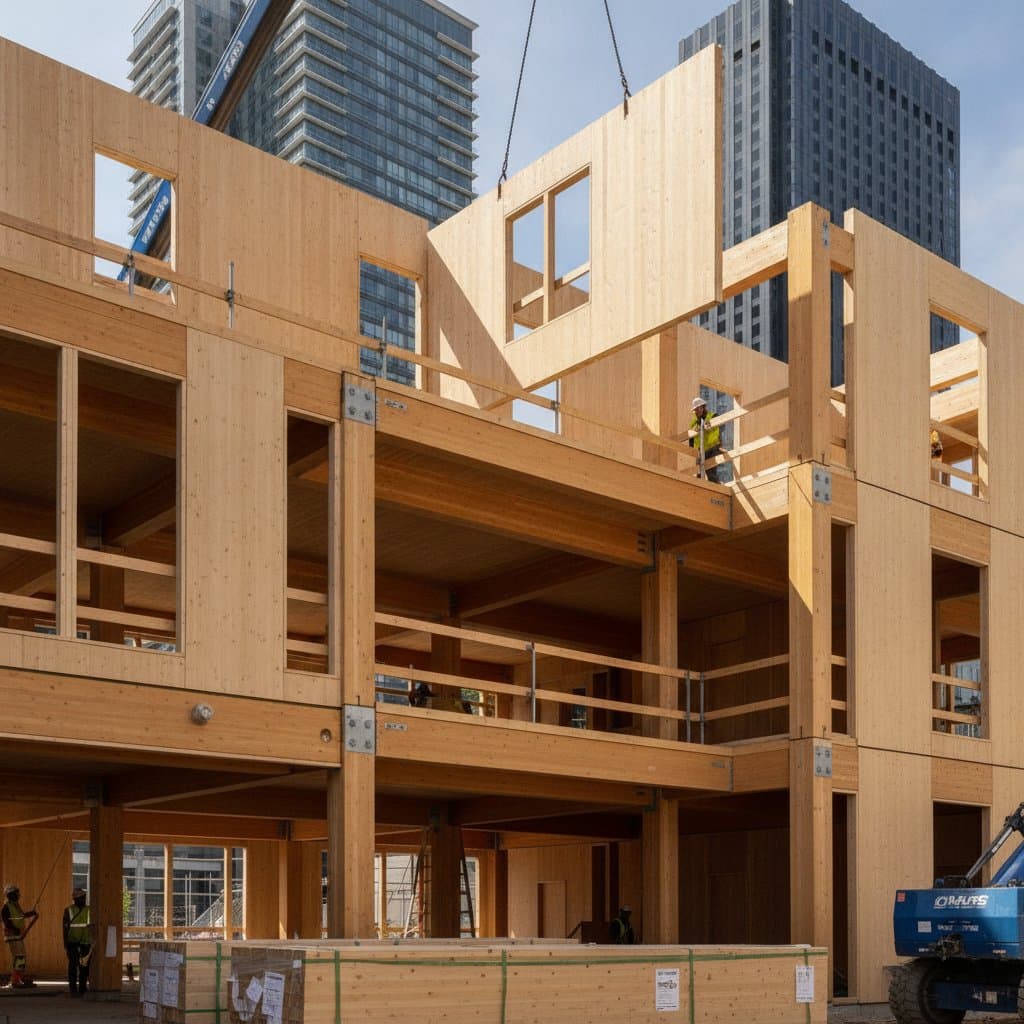
Prefabricated mass timber arrives in large, ready-to-assemble units, enabling crews to erect full floors or walls within days instead of weeks.
- Labor reductions: On-site hours drop by 20 to 30 percent relative to steel framing, which involves extensive cutting and welding.
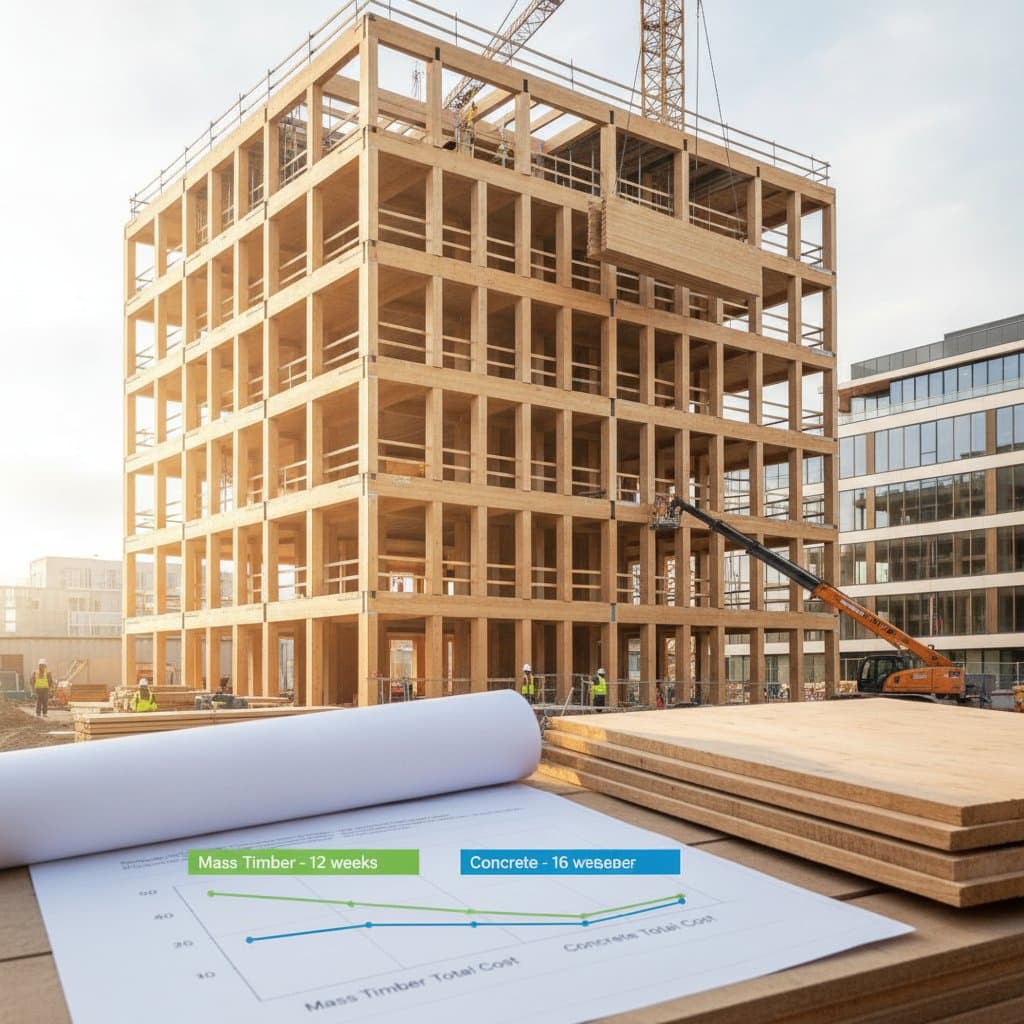
- Timeline benefits: Accelerated schedules cut overhead expenses, including temporary site protections and interest on loans.
Steel installation, though material-efficient, relies heavily on specialized welders and fabricators, extending labor demands and exposure to weather delays.
Scenarios Where Mass Timber Delivers Savings
Mass timber excels in projects designed to leverage its prefabrication and lightweight properties from the outset. Close integration among architects, engineers, and contractors proves crucial for realizing these benefits.
Savings emerge prominently when:
- Designs incorporate uniform floor plans or modular configurations to simplify panel fabrication.
- Suppliers locate near the site to reduce shipping logistics and delays.
- Applications substitute costly steel or concrete in non-high-load zones.
- Priorities emphasize rapid occupancy, lower emissions, and decreased fieldwork.
Under such alignments, overall project expenditures for mass timber match or undercut steel equivalents, factoring in temporal and operational efficiencies.
Installation Options: DIY Versus Expert Involvement
Assessing DIY Potential
Steel framing suits skilled DIY enthusiasts for modest residential tasks, such as erecting sheds or basic additions. Homeowners often manage framing, sheathing, and basic connections with standard tools, provided they adhere to safety protocols, precise measurements, and local building codes.
Mass timber, however, requires industrial cranes for handling heavy panels, synchronized factory deliveries, and exact alignments beyond typical amateur capabilities. Components like CLT slabs, weighing several hundred pounds each, render solo or small-team efforts impractical and hazardous.
Criteria for Professional Engagement
Engage certified experts for:
- Spans surpassing conventional lumber limits, demanding engineered solutions.
- Integration of CLT, glulam, or similar advanced systems.
- Necessity of permits, seismic assessments, or custom engineering.
- Multi-level or hybrid commercial structures.
Select contractors boasting verified mass timber portfolios, and confirm fabricators adhere to industry certifications for load-bearing capacity and fire performance.
Durability and Upkeep Factors
Mass timber and steel framing both necessitate routine checks to guard against environmental degradation. Factory-applied sealants protect CLT surfaces, yet all seams and fasteners demand vigilant moisture barriers.
- Expected service life: Mass timber installations, with proper care, endure beyond 60 years.
- Ongoing expenses: Align closely with steel when preventive measures control corrosion or rot effectively.
Steel components resist pests inherently but demand coatings to prevent rust, while traditional framing's individual pieces facilitate targeted repairs, though they prove more susceptible to widespread damage from leaks or infestations without diligent maintenance.
Strategies for Maximizing Cost Efficiency
- Involve specialists from project inception. Initial team input refines panel dimensions and joint details, minimizing material waste and rework.
- Adopt consistent design elements. Uniform modules streamline production runs and accelerate on-site erection.
- Map out supply chains meticulously. Pre-arrange delivery paths and equipment positioning to avert disruptions.
- Integrate complementary systems. Employ concrete for bases paired with timber upper levels, or steel accents for enhanced stability, to fine-tune economics.
- Safeguard materials on site. Shield panels from rain and humidity to eliminate repair needs.
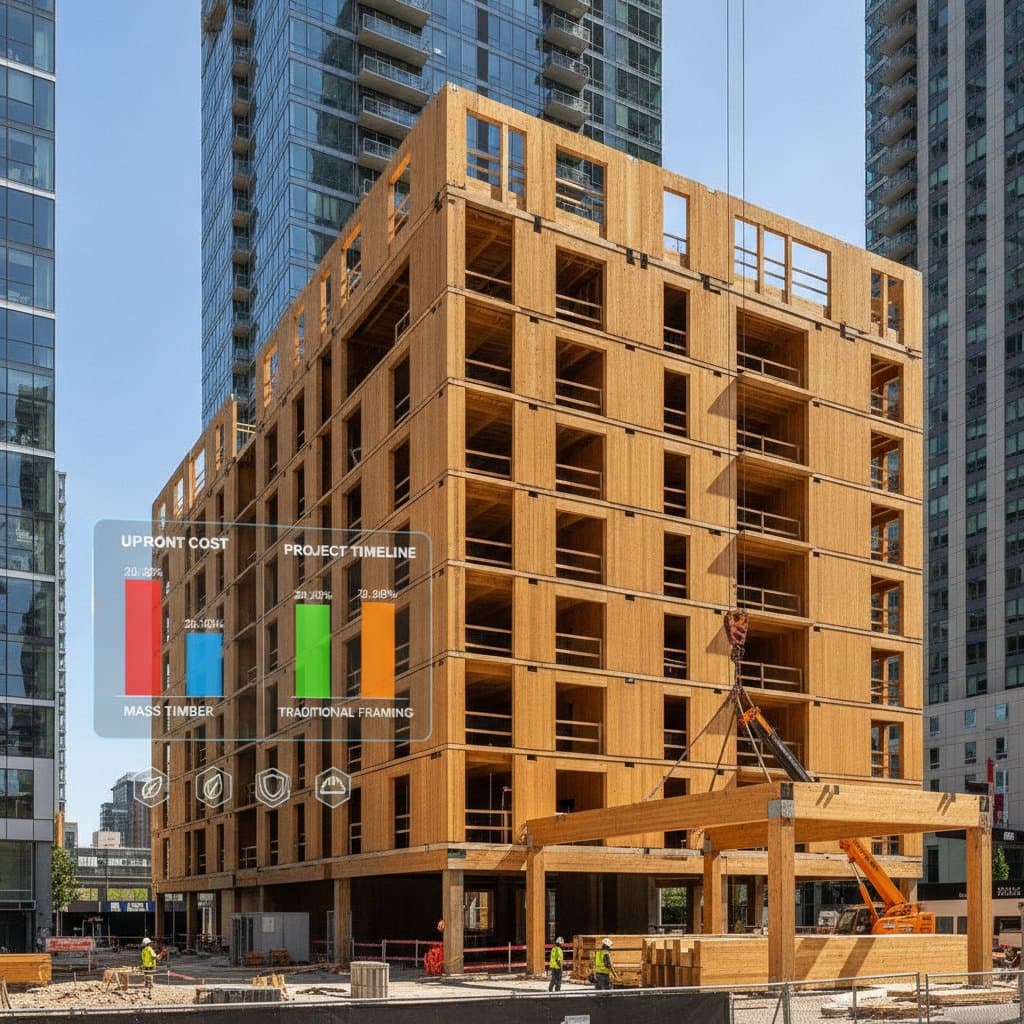
Industry analyses indicate that strategically managed mass timber initiatives align within 0 to 10 percent of steel-framed counterparts, delivering quicker completion and reduced ecological impact.
Frequently Asked Questions on Mass Timber Economics
Does mass timber undercut concrete or steel in price? Materials often command a premium, yet offsets from labor efficiencies, lighter foundations, and expedited timelines frequently equalize totals.
Is mass timber viable for home builds? Absolutely, particularly in bespoke residences or extensions valuing design flair and eco-credentials. Though initial outlays exceed basic framing, enduring benefits in resale and efficiency justify the investment.
What unique care does mass timber require? Upkeep mirrors other wooden assemblies, with heightened focus on sealing against water ingress to preserve integrity.
Advancing Your Project with Informed Choices
Selecting mass timber over steel hinges on core objectives like swift build times, emission reductions, and warm interiors. Both approaches demand rigorous preparation and interdisciplinary teamwork to succeed.
Grasp the implications of each on finances, durations, and functionality to select innovations that deliver sustained returns on your construction endeavors.