Mass Timber vs Traditional Construction: Uncovering Cost Savings
Quick Cost Overview
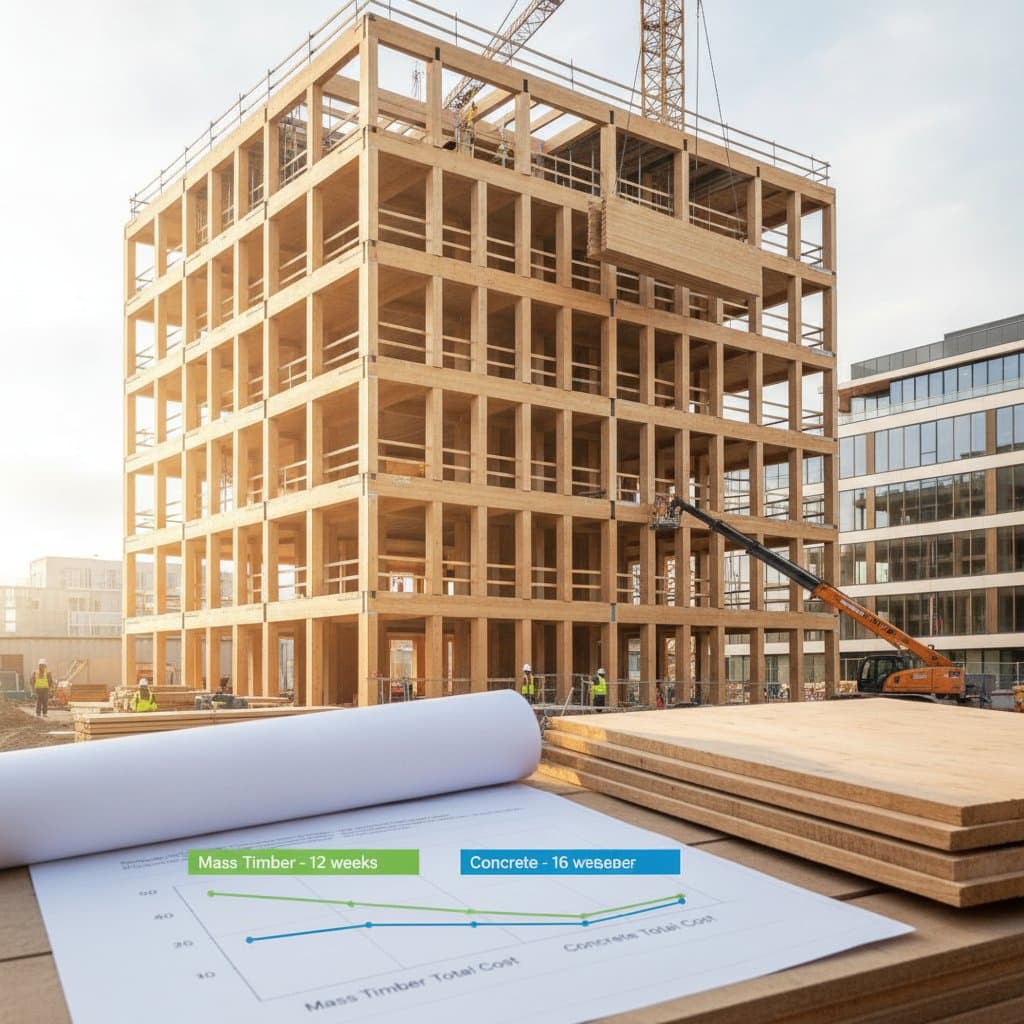
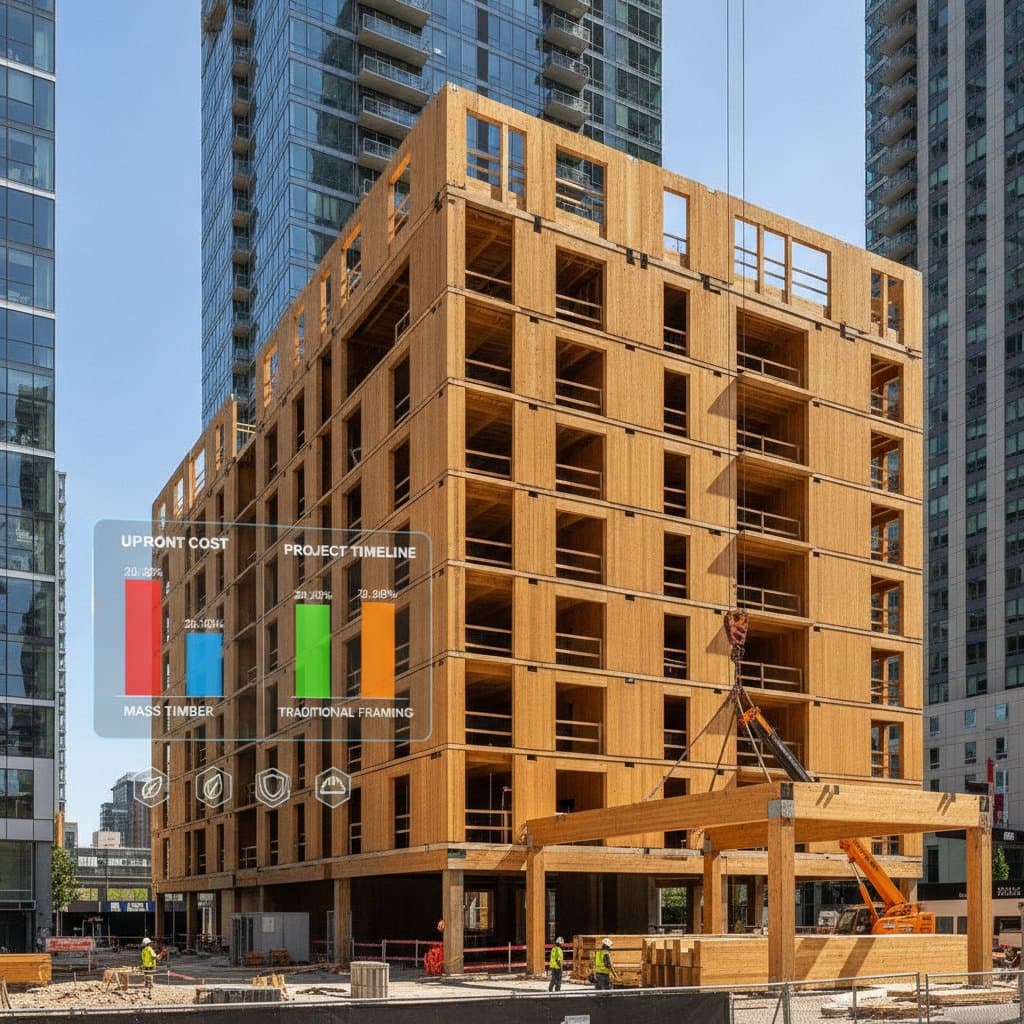
Mass timber buildings generally cost $250 to $400 per square foot. Traditional steel or concrete structures range from $300 to $500 per square foot. Projects using mass timber achieve average savings of 10 to 25 percent, influenced by design complexity, local labor rates, and material availability.
Key cost factors encompass material selection and sourcing, such as cross-laminated timber (CLT), glulam, concrete, or steel; labor expertise and supply; building height and structural demands; fabrication and transportation expenses; and overall construction speed and site efficiency.
Key Benefits and Considerations
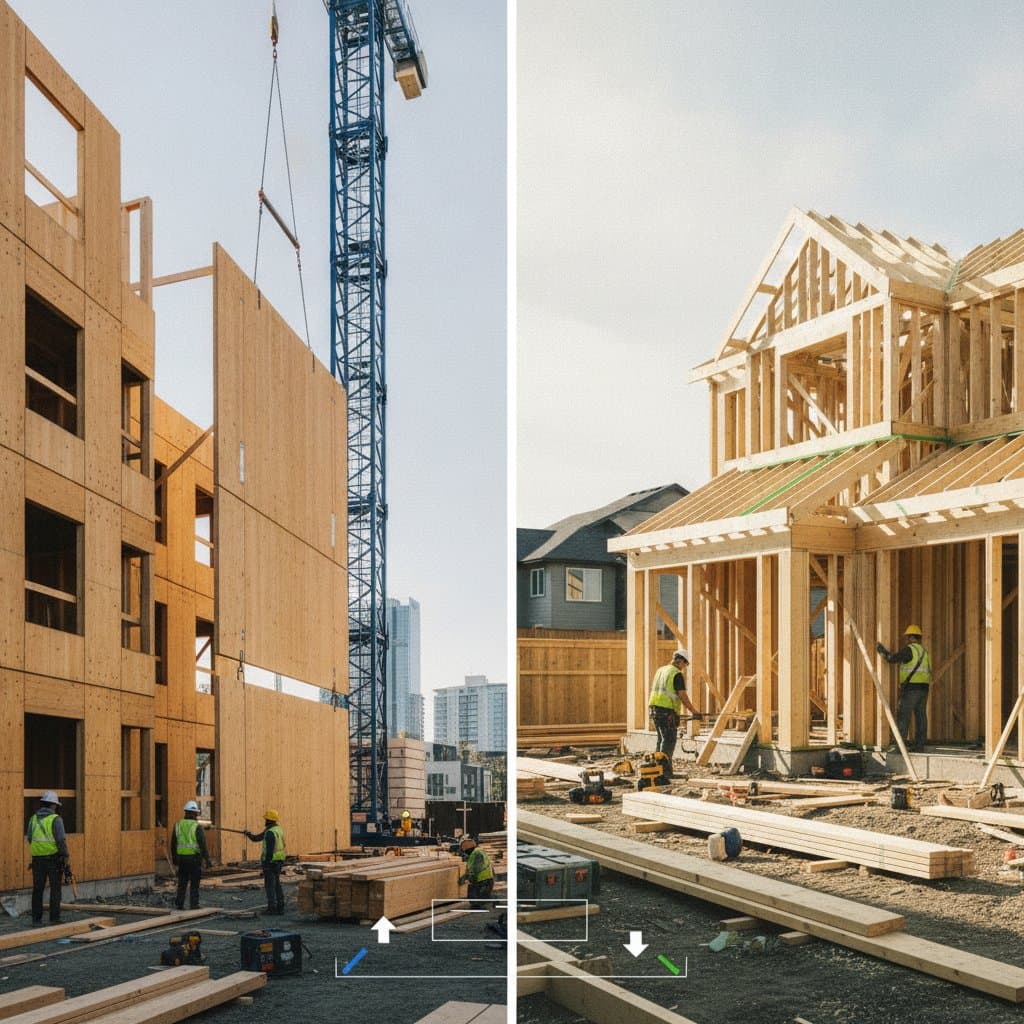
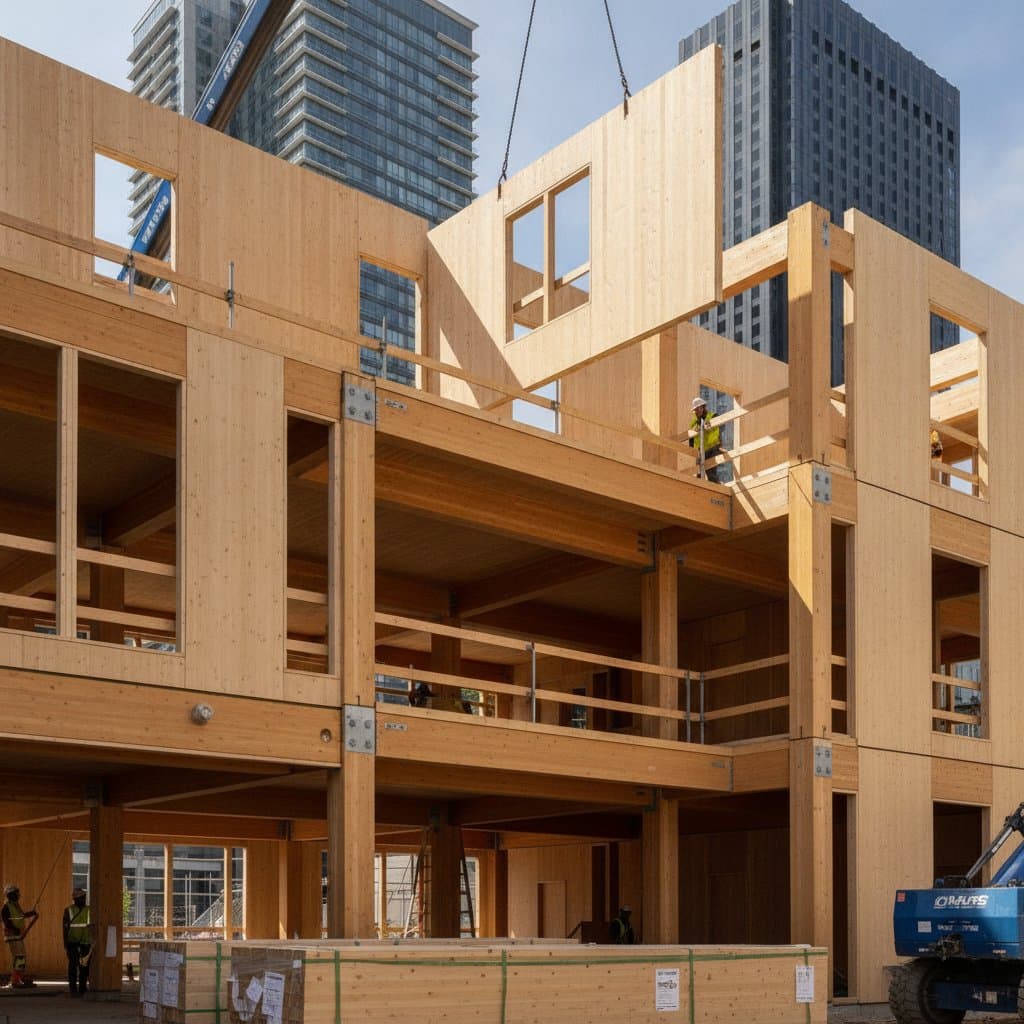
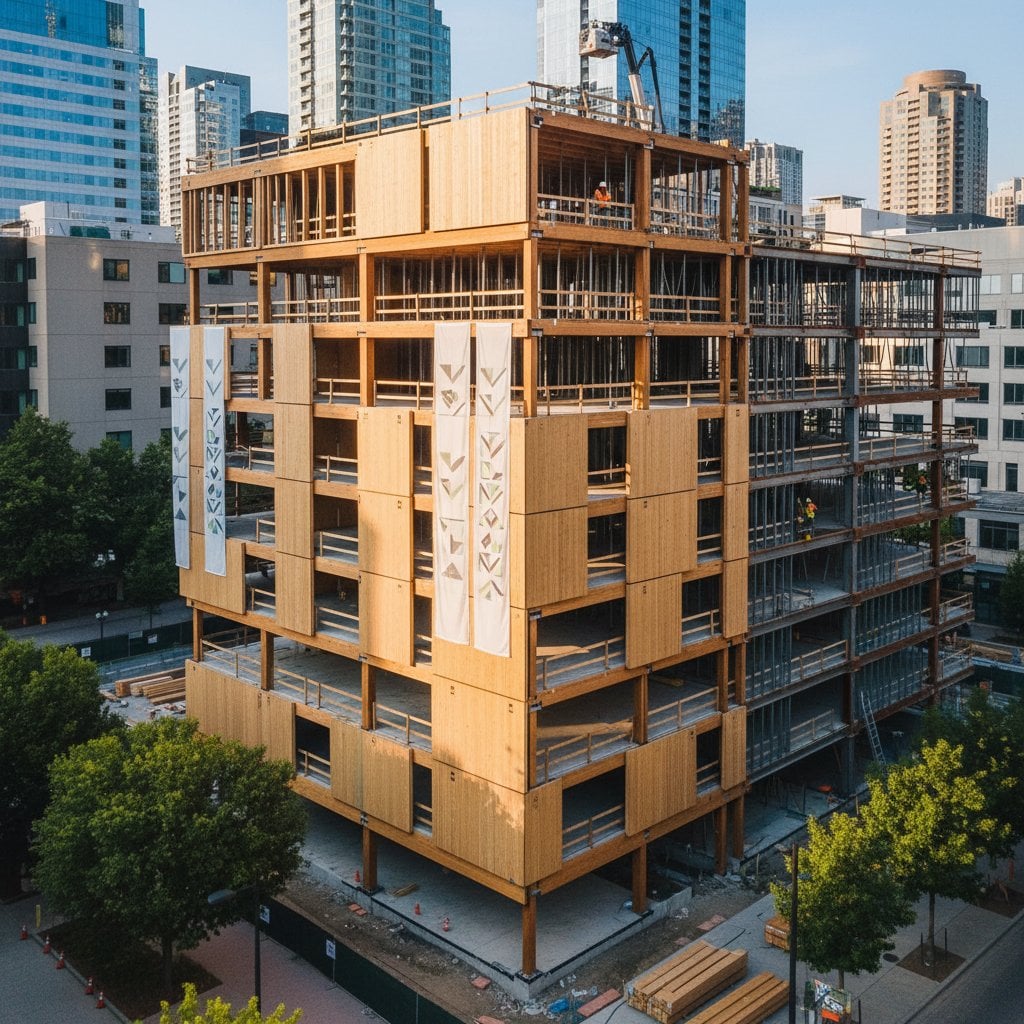
Material efficiencies arise from prefabricated wood panels and their reduced weight compared to traditional options. Installation proceeds more rapidly, which decreases labor expenses and accelerates project timelines. Environmental advantages frequently secure tax incentives or credits for green building practices.
Structural constraints in taller or intricate designs may elevate costs. Fire and acoustic treatments incur additional fees, though advancements in products mitigate these over time.
Costs by Building Type and Scale
Cost variations between mass timber and traditional methods hinge on project size and purpose.
Small and Mid-Scale Commercial Structures
For projects below 100,000 square feet, savings prove most substantial. Prefabricated CLT panels streamline assembly and minimize on-site labor. These buildings cost $260 to $350 per square foot, versus $320 to $450 per square foot for equivalent concrete or steel builds.
Large and High-Rise Developments
In taller structures or intensive commercial applications, savings diminish. Enhanced bracing and fireproofing raise expenses. Mass timber high-rises cost $400 to $500 per square foot, while steel or concrete equivalents reach $450 to $550 per square foot.
Institutional and Community Facilities
Schools, libraries, and community centers benefit from mass timber's aesthetic warmth and sustainability. Costs average $275 to $375 per square foot, compared to $325 to $475 per square foot for traditional construction.
Labor and Contractor Expenses
Mass timber demands specialized skills in panel assembly and connection systems. Professional teams certified in these techniques handle most projects.
Professional Contractor Expenses
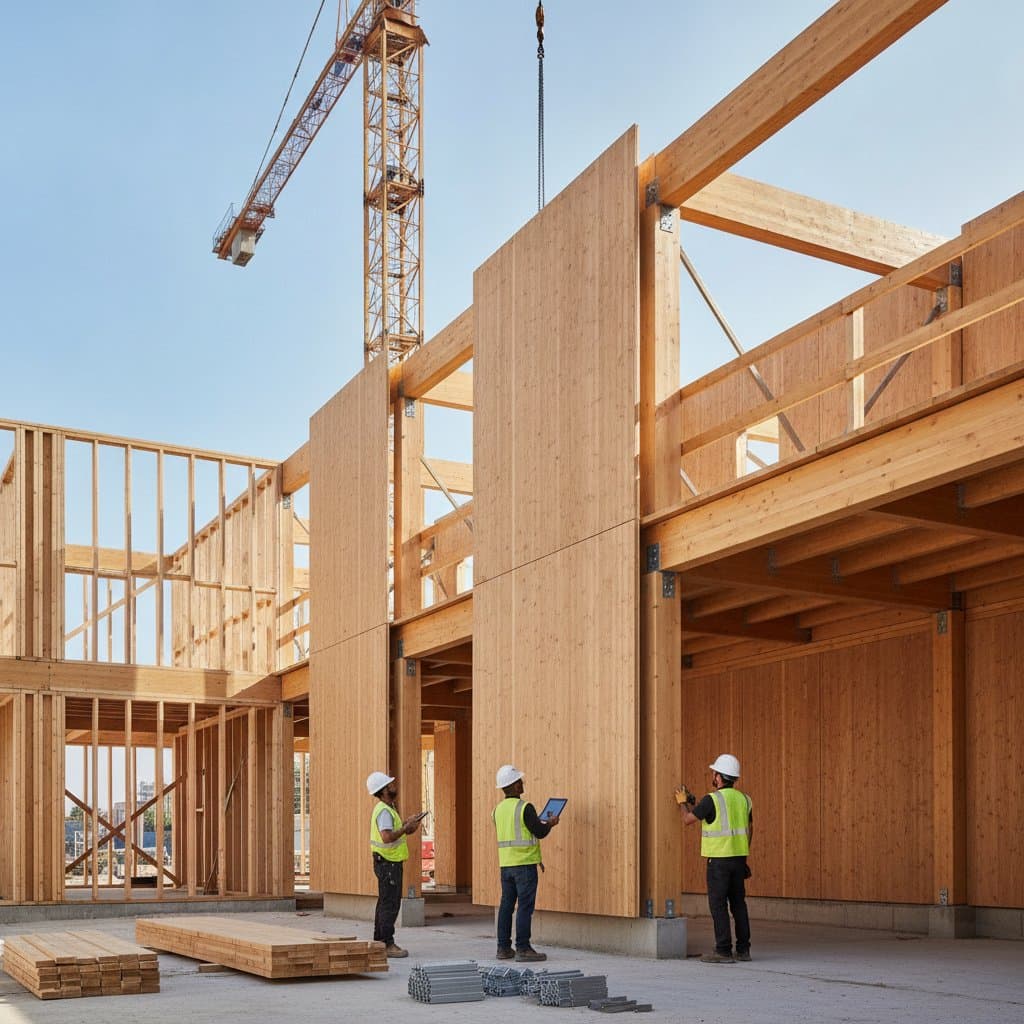
Labor constitutes 35 to 50 percent of total costs. Prefabricated panels reduce on-site hours by up to 25 percent relative to concrete or steel. Fewer crane operations, quicker framing, and smaller crews drive these reductions.
Contractors experienced in engineered wood minimize risks and rework. Inexperienced teams risk negating savings through delays or errors in alignment.
DIY Limitations
Full DIY construction suits mass timber poorly due to the need for factory precision and engineered joints. Skilled homeowners may manage smaller interior tasks, such as finishes, partitions, and trim, once the primary frame stands complete.
Influential Cost Elements
Multiple variables shape mass timber project budgets. Addressing them enables precise financial control.
Materials and Procurement
CLT panels and glulam beams dominate usage. CLT costs $6 to $10 per square foot of panel surface, while glulam beams range from $4 to $7 per linear foot. Sourcing locally cuts shipping fees; imports or distant transport inflate material costs by 10 to 15 percent.
Design Intricacy
Basic rectangular forms with open spans cost less than curved or multi-level configurations. Custom angles, complex joints, or steel-hybrid integrations extend design and fabrication durations.
Engineering and Regulatory Approvals
Local codes dictate structural caps and fire standards. Mass timber designs often necessitate additional engineering reports for approval. Permit and compliance fees add $3 to $8 per square foot, varying by location.
Fire and Acoustic Protections
Mass timber resists fire through charring, yet codes typically mandate treatments or encasements. Coatings add $2 to $5 per square foot. Acoustic barriers for multi-occupancy or office spaces contribute another $1 to $3 per square foot.
Moisture Safeguards
Unprotected CLT absorbs moisture readily. Robust envelopes and vapor barriers, costing $2 to $4 per square foot, avert future complications.
Strategies for Cost Optimization
Deliberate planning positions mass timber as more economical than conventional approaches.
- Select standard panel dimensions over bespoke cuts to curb prefabrication premiums.
- Incorporate hybrid timber-steel elements for areas needing extra strength or span.
- Coordinate architects, engineers, and builders from project outset to limit change orders and errors.
- Adopt modular prefabrication for multi-story builds to slash on-site work and weather disruptions.
- Procure materials regionally to eliminate high transport fees for heavy panels.
- Budget fire and acoustic features upfront; integrated designs often trim redundant expenses.
Investment Returns
Mass timber yields financial gains extending past upfront savings.
Accelerated Timelines and Occupancy
Reduced build durations lower interest expenses and enable prompt tenant ingress. Developers note timelines shortened by 4 to 8 months for mid-sized commercial projects.
Reduced Foundation Requirements
Timber's lighter profile permits downsized foundations, saving $5 to $15 per square foot based on soil conditions and loads.
Enhanced Energy Performance
Wood's inherent insulation cuts heating and cooling needs by 10 to 15 percent, boosting net operating income over years.
Elevated Market Value
Exposed wood aesthetics and sustainability draw premium tenants or purchasers, lifting resale prices or rental yields.
Estimation Basis
These figures stem from current contractor bids, surveys of commercial and institutional builds, and adjusted regional benchmarks. Estimates cover materials, labor, overhead, and contractor markups, omitting land acquisition and interior completions.
Professional vs Partial DIY Approaches
Suitable DIY Scope
Limit DIY to final phases like flooring, non-structural walls, or trim installation. Experienced individuals save 5 to 10 percent on labor without compromising structure.
Necessity of Professionals
Core tasks—framing, panel erection, and connections—require certified experts and engineers to confirm load paths and seals. Bypassing professionals invites safety hazards and code violations.
Expense Variations
Full professional execution runs $250 to $400 per square foot. Partial DIY adjustments lower this to $230 to $370 per square foot, contingent on involvement level.
Sustainability and Compliance Factors
Mass timber sequesters carbon via renewable wood sources, earning zoning perks or certification credits in many areas.
Regulations differ; some cap heights or demand fire tests, prolonging design and adding consultant costs. Yet compliance guarantees safety and approval.
Insurers adapt to mass timber's reliability, though initial premiums may exceed traditional norms. Accumulating performance data should equalize these over time.
Performance Comparisons
Strength and Endurance
Engineered wood offers density and stability with sealing. CLT handles tension and compression akin to equivalent concrete.
Weight and Logistics
Mass timber weighs about one-fifth of concrete, easing crane needs, foundation scale, and site access.
Upkeep and Lifespan
Sealed mass timber endures like traditional builds. Control moisture and inspect yearly; refresh finishes periodically.
Addressing Cost Myths
- Mass timber always undercuts prices: Complex or tall projects may match or exceed steel costs.
- Wood ignites readily: Thick sections char externally, preserving integrity when engineered to code.
- Upkeep proves costly: Sealed and inspected, expenses parallel concrete or steel.
- Design options remain restricted: Contemporary methods support curves, spans, and hybrids affordably.
Frequently Asked Questions
How does mass timber cost compare to concrete or steel?
Mass timber averages $250 to $400 per square foot; traditional options range from $300 to $500 per square foot.
Do mass timber buildings withstand fires safely?
Yes; charring sustains structure within code limits when treated appropriately.
Is tall construction feasible with mass timber?
Yes, though savings lessen with height due to intensified engineering and protections.
What maintenance does mass timber need?
Routine checks and sealing suffice; focus on moisture and UV defense.
Is mass timber environmentally sound?
Yes; it captures carbon, renews resources, and accesses green incentives.
How quickly can mass timber projects finish?
Prefabrication enables up to 25 percent faster completion than concrete or steel.
Sustaining Long-Term Value
Post-construction, preserve efficiency through sealed envelopes, functional drainage, and annual wood inspections. Reapply coatings to visible areas as required.
Monitor energy use to capture operational gains. Mass timber's blend of swift builds, modest upkeep, and energy thrift delivers enduring cost benefits alongside ecological merits. For ventures prioritizing pace, eco-friendliness, and efficiency, it constructs resilient assets that hold worth for generations.