Top 2026 Trends in Accessible Bathroom Remodeling
Accessible bathroom design extends beyond basic safety measures to encompass comfort, autonomy, and intentional aesthetics. Homeowners preparing for aging in place or seeking versatile family spaces discover that current remodeling trends fuse practical engineering with elegant form. This approach ensures bathrooms serve immediate needs while adapting to future requirements.
The following sections detail innovative elements, from fixtures to layouts, that simplify daily tasks and maintain visual harmony. Each trend emphasizes materials and configurations that support accessibility without diminishing the room's appeal.
1. Zero-Threshold Showers
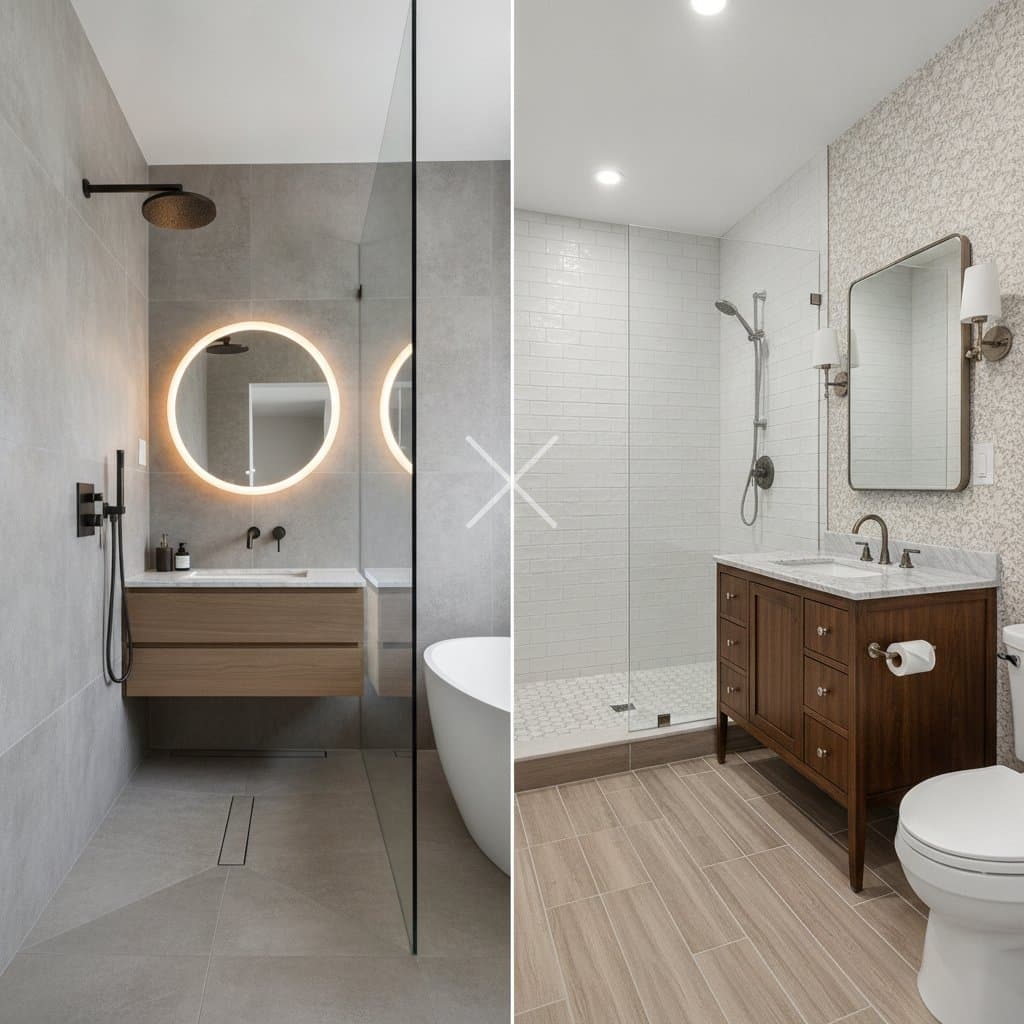
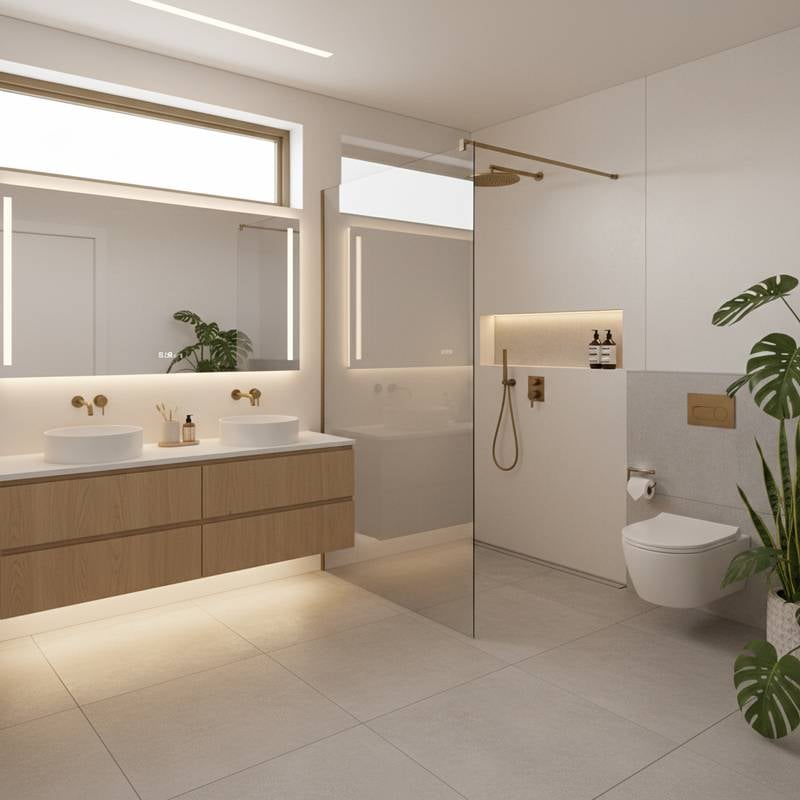
Zero-threshold showers remove the conventional entry step, allowing the shower floor to align seamlessly with the surrounding bathroom surface. This configuration minimizes tripping hazards and facilitates smooth passage for wheelchairs, walkers, or standard mobility.
The design contributes to an expansive, spa-inspired atmosphere by opening the space visually. Proper installation includes a subtle floor slope toward a central drain, which directs water flow efficiently and prevents pooling.
For optimal integration, select large-format porcelain tiles that span the entire floor without visible seams. Incorporate a linear drain along the back wall to preserve clean sightlines. Complement the setup with a fixed or folding frameless glass enclosure, which preserves natural light and enhances the sense of openness. These choices align well with modern or transitional interiors that prioritize streamlined profiles.
2. Smart Fixtures and Touchless Controls
Advancements in technology shape accessible bathroom environments through intuitive, automated features. Touchless faucets, motion-sensor lights, and voice-activated mirrors gain prominence, offering responsive operation tailored to individual preferences.
Such elements promote superior hygiene by eliminating manual contact and ease physical effort for users with reduced grip strength. Programmable options, including preset water temperatures and automatic illumination, enhance user comfort while optimizing energy use.
Opt for fixtures in durable finishes like matte black or brushed nickel to achieve a sophisticated edge. Position under-cabinet LED strips that trigger via proximity sensors, providing safe navigation during low-light conditions. Select smart mirrors equipped with anti-fog capabilities and adaptive brightness, which sync with ambient room conditions. These integrations foster an environment that anticipates needs, blending efficiency with security.
3. Adjustable Vanity Heights and Floating Sinks
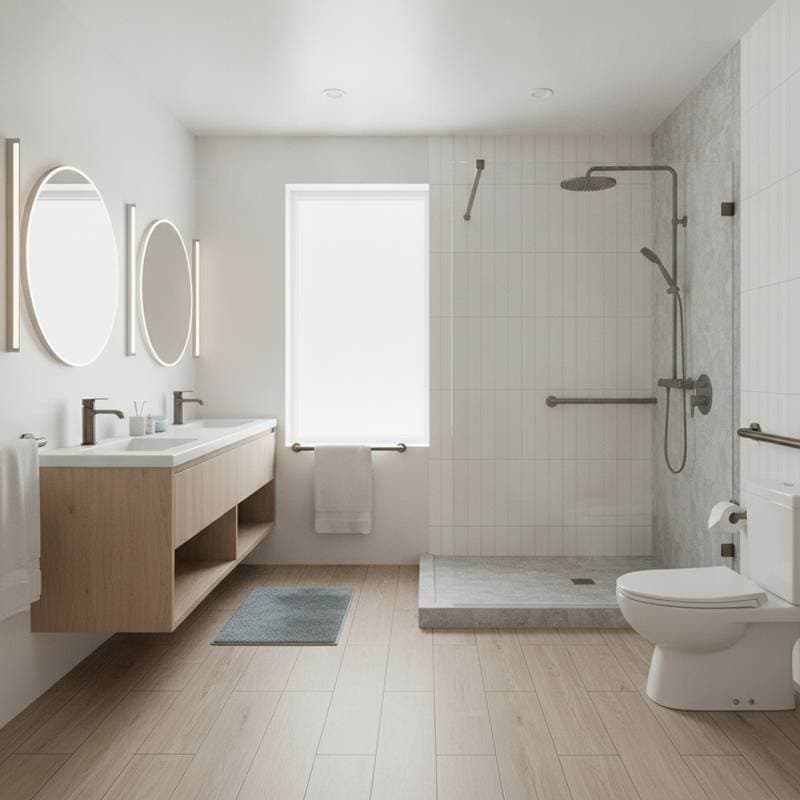
Conventional vanities often pose challenges for seated users due to fixed heights and enclosed bases. Contemporary solutions feature wall-mounted or electronically adjustable vanities paired with open-space sinks, accommodating varied postures and devices.
This arrangement creates ample legroom beneath the surface while concealing essential plumbing behind the wall. Height versatility allows customization for standing adults, children, or wheelchair users, promoting inclusivity across generations.
Pair these vanities with ergonomic single-lever faucets that require minimal force for operation. Select finishes in neutral tones, such as light walnut or dove gray, to brighten the area and reflect light effectively. Integrate slim LED task lighting beneath the vanity edges, illuminating the workspace without casting shadows. Such designs harmonize with minimalist or Nordic styles, emphasizing functional elegance and spatial efficiency.
4. Grab Bars with Integrated Style
Grab bars transcend their utilitarian origins to serve as refined architectural details. Available in diverse materials and configurations, they coordinate with surrounding hardware for a unified appearance.
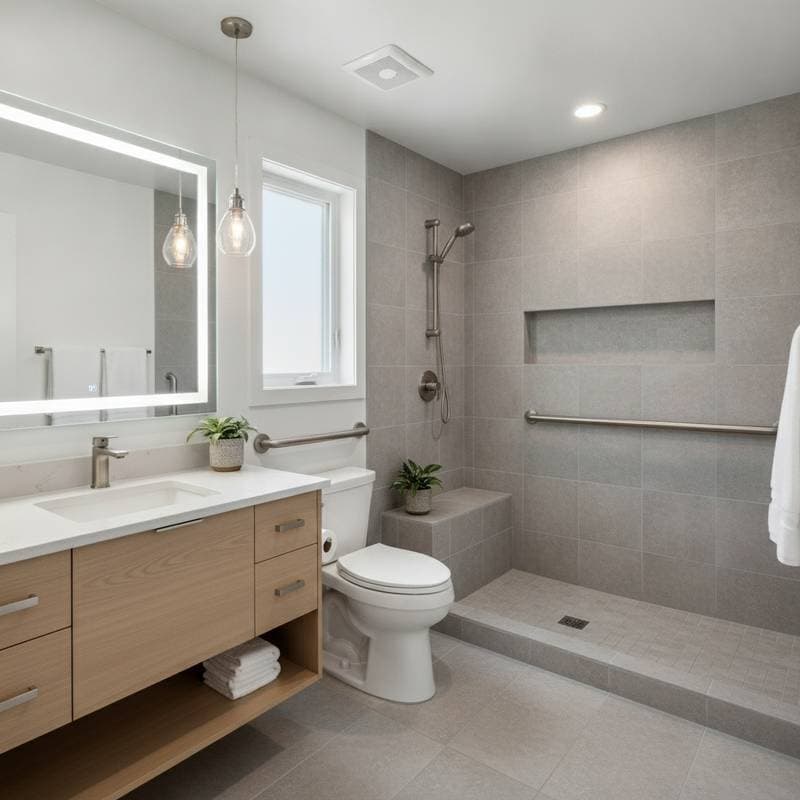
Strategically placed near toilets, shower entries, and bathing areas, these supports provide reliable assistance without disrupting flow. Multifunctional variants incorporate towel rings or storage ledges, maximizing utility in compact layouts.
Coordinate bar finishes with faucet sets and cabinet pulls to ensure tonal consistency. Position horizontal bars at waist height adjacent to showers and vertical ones beside commodes for intuitive grasping. Favor models with ergonomic, knurled grips and hidden fasteners that mount flush to walls. This method upholds safety standards while preserving the bathroom's polished, cohesive character.
5. Layered Lighting for Visibility and Ambiance
Effective lighting schemes in accessible bathrooms address both navigation and mood through strategic layering. Overhead fixtures, focused task lights, and subtle accents work together to banish dark spots and enhance depth perception.
This multifaceted approach aids users with impaired vision by delivering even illumination across surfaces. Dimmable and color-temperature adjustable options allow personalization, from energizing morning routines to relaxing evenings.
Install recessed ceiling LEDs with wide beam spreads for general coverage. Flank mirrors with wall-mounted sconces positioned at eye level to eliminate facial shadows during grooming. Incorporate pathway lighting strips along baseboards or floors, activated by motion detectors for overnight use. These layers cultivate a secure yet inviting space that adapts to daily rhythms.
6. Durable, Low-Maintenance Materials
Selecting resilient materials forms the foundation of bathrooms designed for sustained performance. Engineered surfaces like solid-surface composites, quartz slabs, and premium acrylics withstand daily wear while simplifying care routines.
These choices resist staining, etching, and bacterial growth, extending the lifespan of installations. Seamless fabrication reduces joints and grout, curbing moisture accumulation and associated issues like mold.
Combine countertops with matching integral sinks and full-height backsplashes for a monolithic effect. Apply low-VOC sealants to matte or satin surfaces, which hide smudges and diffuse harsh reflections. Equip showers with detachable spray heads on slide bars, featuring quick-connect mechanisms for straightforward maintenance. This selection advances eco-friendly practices and preserves the bathroom's fresh, immaculate look over time.
Essential Planning Strategies for Accessible Remodels
Thorough preparation underpins successful accessible bathroom projects, balancing innovation with feasibility.
Begin by mapping clearances: Allocate at least 30 inches between fixtures to accommodate mobility aids, verifying door swings do not impede paths.
Address drainage intricacies: For curbless showers, engineer a 1/4-inch-per-foot slope toward drains, reinforced with pan liners and membrane waterproofing to avert leaks.
Prioritize robust selections: Invest in ADA-compliant hardware rated for frequent use, factoring in warranties that cover structural integrity.
Engage certified experts for complex elements: Licensed plumbers handle pipe rerouting, while tilers ensure waterproof assemblies meet code. Electricians integrate low-voltage systems safely, preventing hazards in wet zones.
Structural modifications, such as reinforcing walls for heavy fixtures, demand professional oversight to align with building regulations and preserve design intent.
Enduring Advantages of Universal Bathroom Design
Universal design in bathrooms yields benefits that extend well beyond initial installation. These spaces foster independence, reducing reliance on assistance for routine activities and enhancing quality of life for occupants of all abilities.
Financially, such remodels appreciate property value by appealing to broader markets, including multigenerational families and potential buyers prioritizing adaptability. Maintenance costs decline over years, as durable components resist premature replacement.
On a personal level, these environments promote confidence and well-being, accommodating life changes like mobility shifts or temporary injuries. The result is a home that evolves with its inhabitants, offering lasting utility and aesthetic satisfaction.