Budgeting Tips for Aging in Place Remodeling Success
Quick Answer Box
Aging in place remodeling allows homeowners to remain in their residences safely as physical needs evolve. Individuals with moderate do it yourself experience can handle basic updates. Structural changes or electrical modifications require a licensed contractor. Costs range from several thousand dollars for minor improvements to substantially more for complete room renovations. Planning requires one to two weeks while construction may extend over several weeks. The risk level remains moderate because of potential electrical, plumbing, and fall hazards.
Before You Start
Consult the local building department to determine whether permits are necessary for plumbing, electrical, or structural modifications. Accessibility features such as grab bars and widened doorways must comply with residential building codes.
Safety Warnings
- Electrical hazard: Disconnect power before any work near outlets or fixtures.
- Fall risk: Use stable ladders and shoes with nonslip soles during measurement and installation.
- Plumbing hazard: Shut off water supplies before fixture removal or replacement.
Skill Level: Moderate. Comfort with hand tools and basic plan interpretation is required.
Expected Time: One to two weeks for planning and several weeks for construction.
Tools and Materials
- Measuring tape
- Level
- Drill and appropriate bits
- Stud finder
- Nonslip flooring
- Grab bars rated for at least 250 pounds
- Lever style door handles
- LED lighting fixtures
- Adjustable shower heads
Step by Step Instructions
-
Assess Your Needs
Walk through every room and note mobility or safety concerns such as narrow doorways, slippery surfaces, or inadequate lighting. Success check: A written list of rooms and specific issues exists. -
Set a Realistic Budget
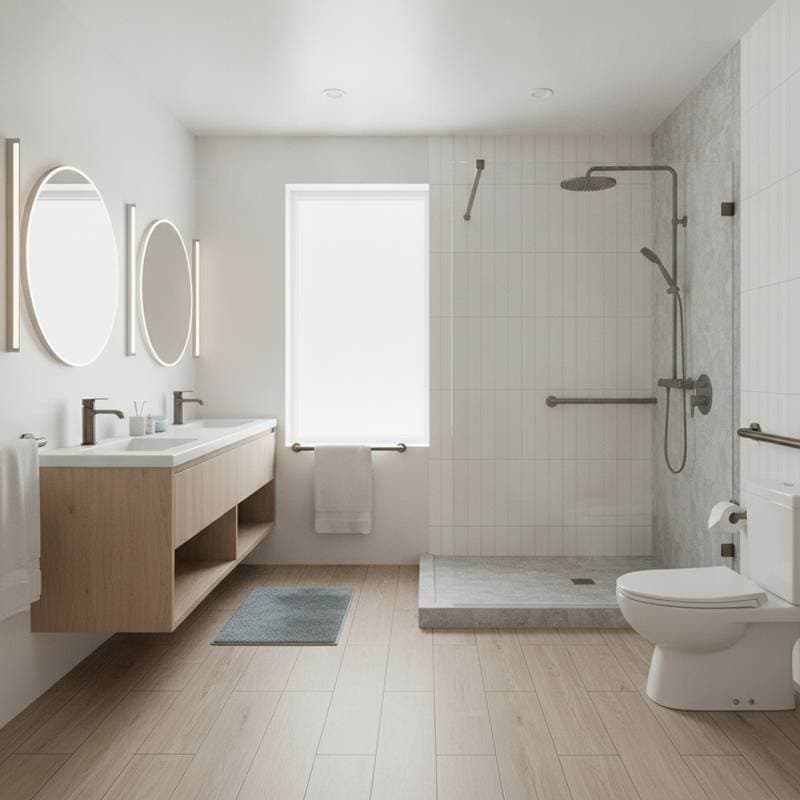
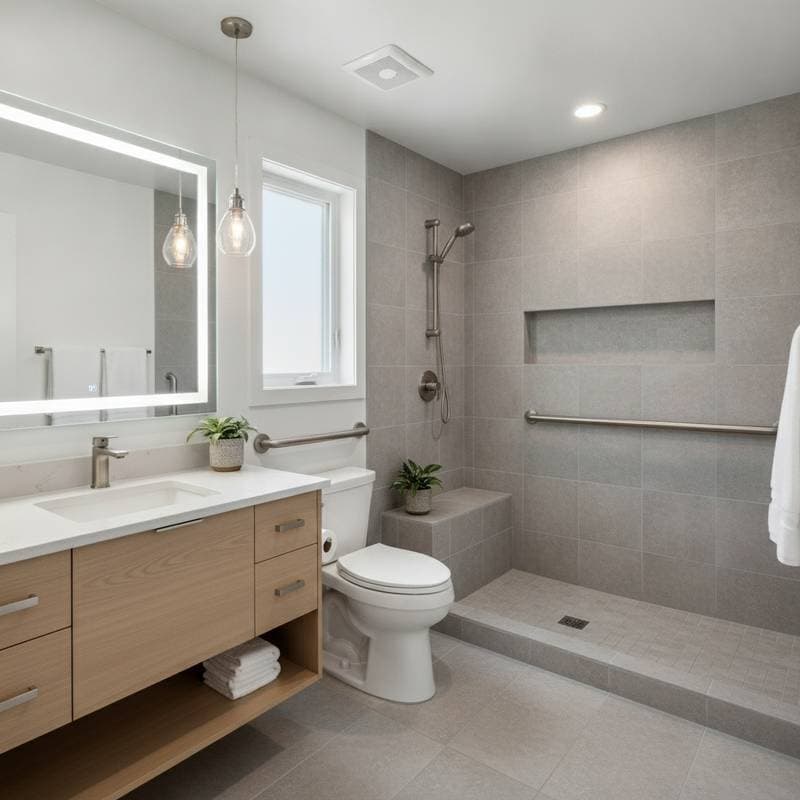
Research current costs for accessible features. Small additions such as grab bars may total a few hundred dollars while a barrier free shower often requires several thousand. Success check: The budget aligns with the priority list. -
Prioritize High Impact Areas
Begin with entryways, bathrooms, and kitchens because these spaces involve the greatest daily use and risk. Success check: A clear upgrade sequence is documented. -
Obtain Professional Estimates
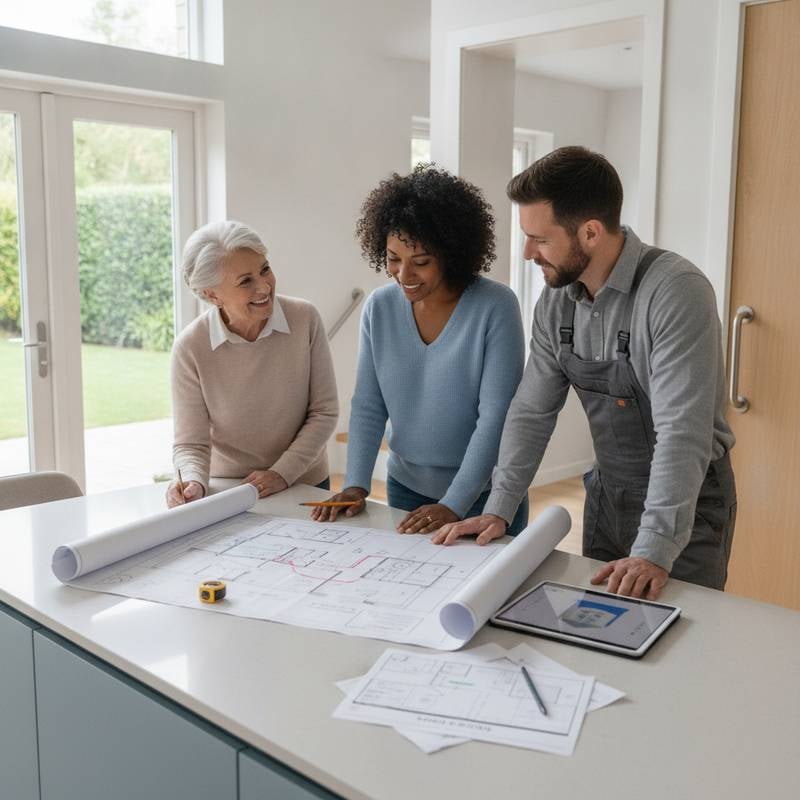
Request itemized quotes from at least two licensed contractors for major tasks. Separate material, labor, and permit costs in each proposal. Success check: The price difference between do it yourself and professional work is understood. -
Plan for Future Needs
Select designs that accommodate future mobility equipment. Reinforce bathroom walls during initial construction to allow later grab bar installation. Success check: The plan permits adjustments without extensive demolition. -
Monitor Spending and Progress
Compare receipts against the budget each week. Modify the plan promptly if costs exceed projections. Success check: Total expenditures stay within ten percent of the original budget.
Cleanup and Disposal
Remove debris and packaging at the end of each day to maintain a safe work area. Recycle metal fixtures and donate usable materials when feasible. Take broken tiles, drywall, and flooring to a local facility that accepts construction waste.
Quality Checks and Troubleshooting
Verify stability and function of every installed item. Test grab bars for movement and confirm that lighting switches operate correctly. Tighten or re anchor any loose fixture into a wall stud. Replace burned out bulbs with bright, energy efficient models.
Maintenance and Lifespan
Clean nonslip surfaces weekly. Inspect grab bars, handrails, and fixtures every few months for tightness. Replace worn flooring or cracked tiles immediately. Properly installed accessibility features typically remain serviceable for many years with routine care.
When to Call a Pro
Engage a licensed contractor for electrical rewiring, plumbing relocation, or structural changes. Small repairs may cost a few hundred dollars while full room remodels require several thousand. Confirm that the contractor maintains current licensing, insurance, and references.
Practical Recommendations
Apply accessibility principles to every project. Install lever handles, increase lighting levels, and keep pathways clear of obstacles.