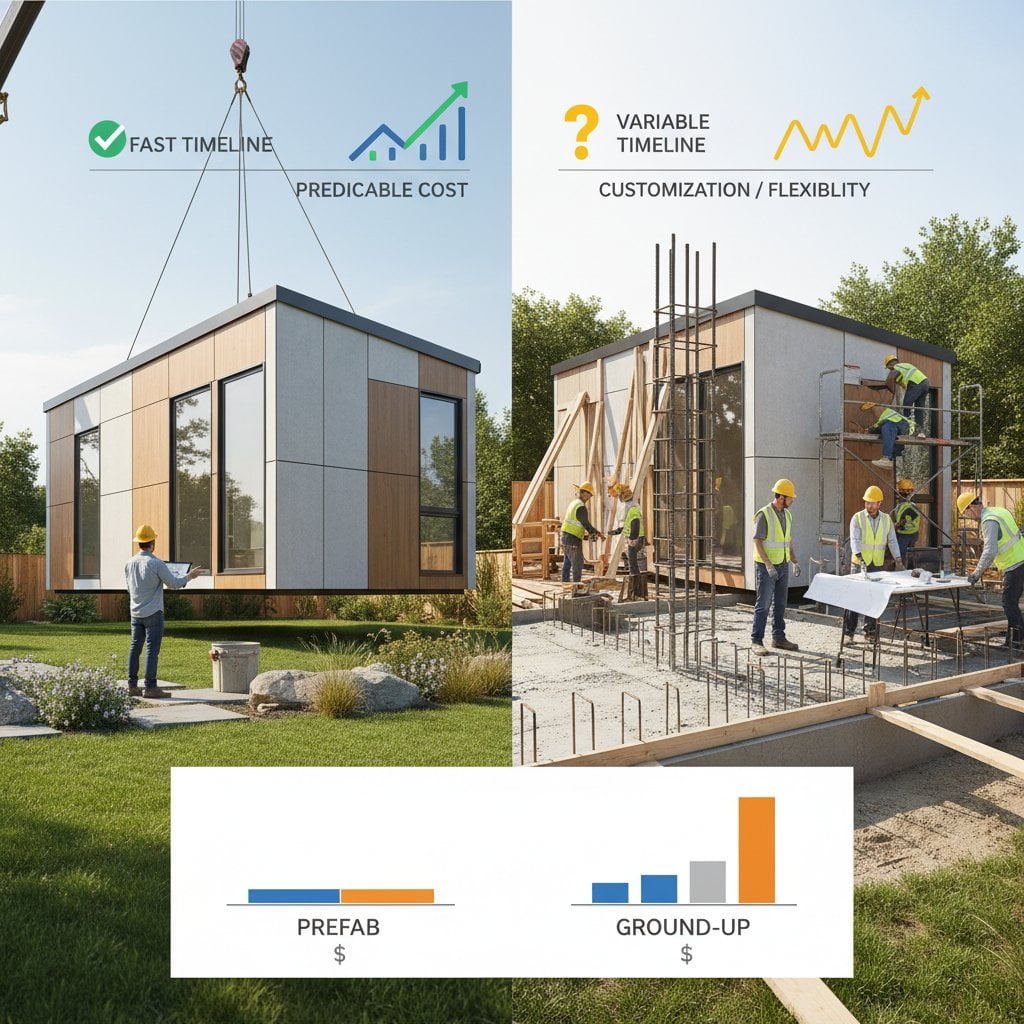
Prefab ADU vs Ground-Up: Real 2026 Cost Breakdown
Building an accessory dwelling unit transforms property use. Homeowners often seek rental income, a dedicated office, or additional family space. The primary options involve prefab ADUs or ground-up construction. Each approach presents distinct pricing, timelines, and levels of flexibility. This analysis details actual costs, influencing factors, and decision criteria to align with budget constraints and objectives.
Understanding the Two Types of ADUs
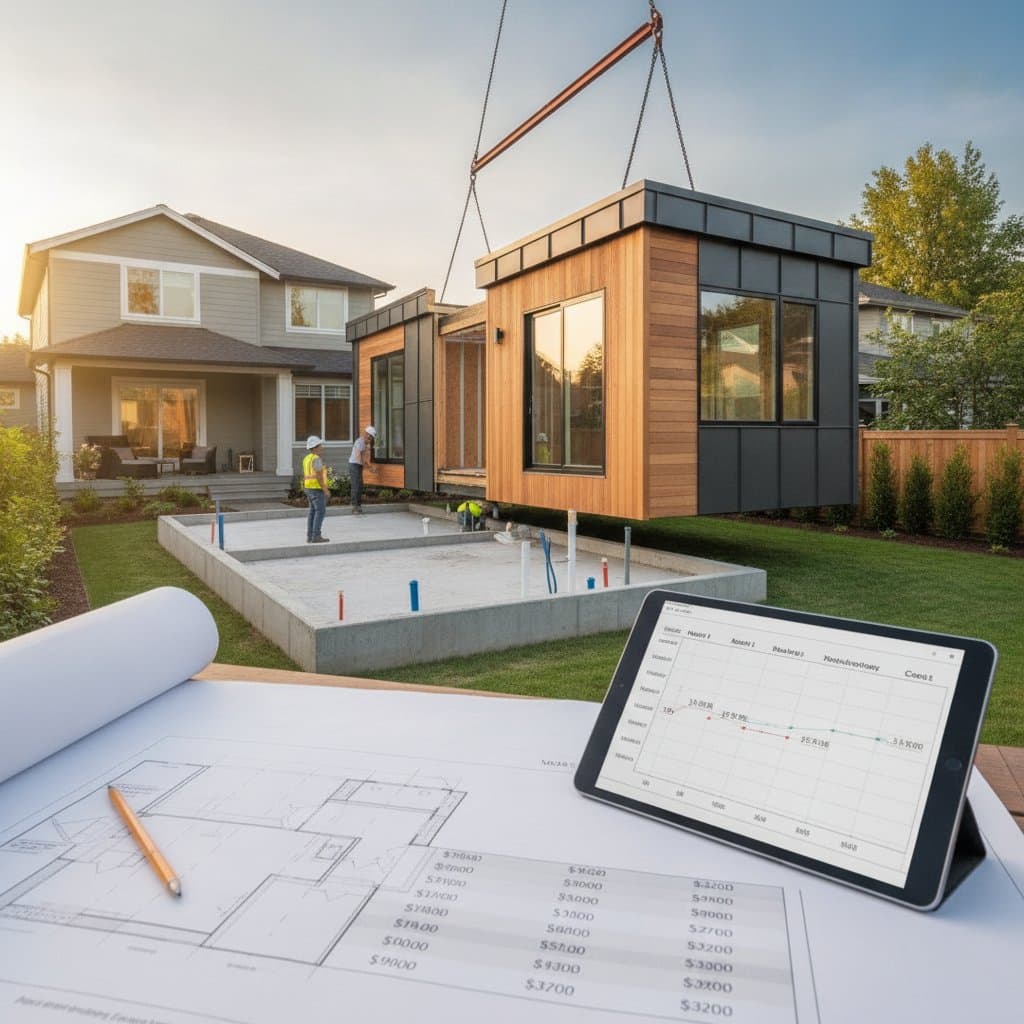
A prefab ADU undergoes factory construction before transportation to the site for foundation installation. The unit arrives nearly complete, which minimizes on-site labor and accelerates the overall timeline. This method suits projects where efficiency ranks high.
A ground-up ADU receives full construction on the property. Workers handle foundation work, framing, and interior finishes directly at the location. Although this process demands greater coordination, it provides extensive design options.
Both methods yield durable structures compliant with building standards. Selection hinges on preferences for speed versus customization.
Comparing Total Costs
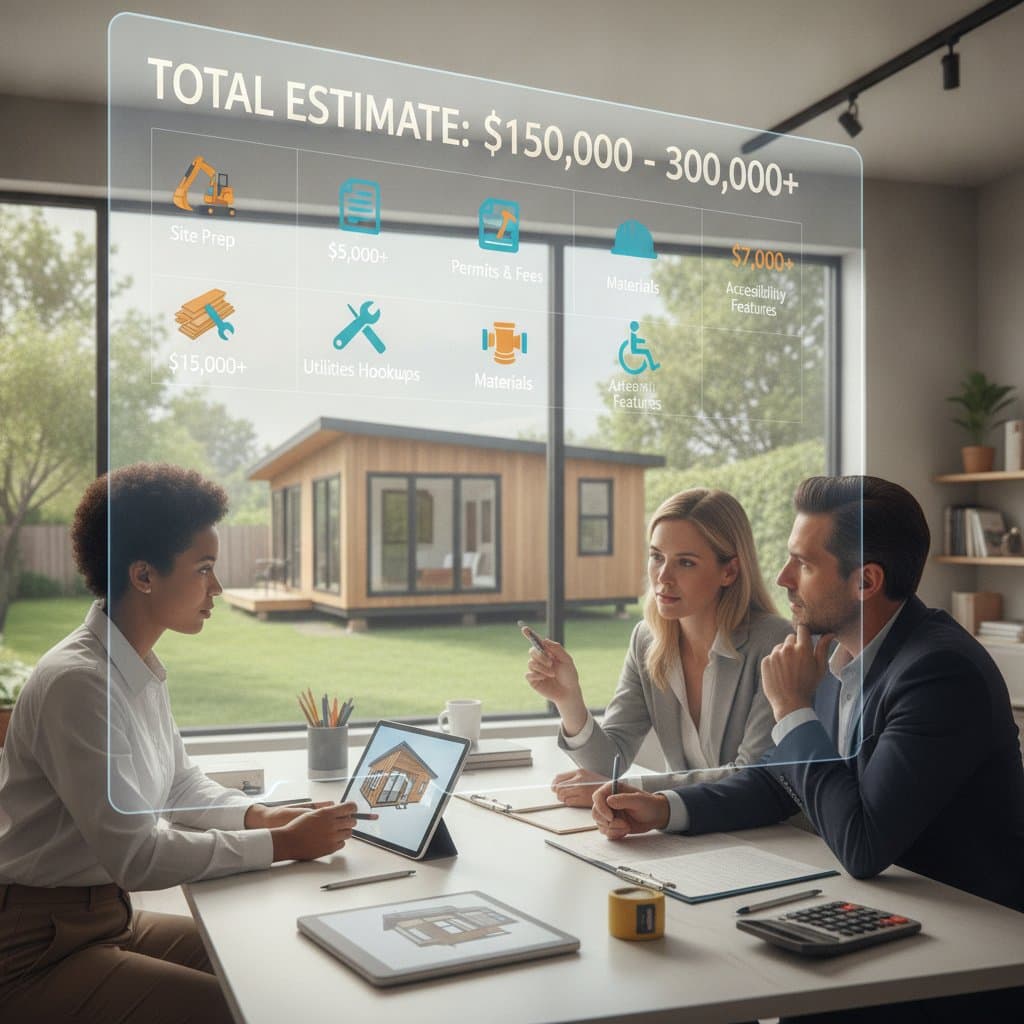
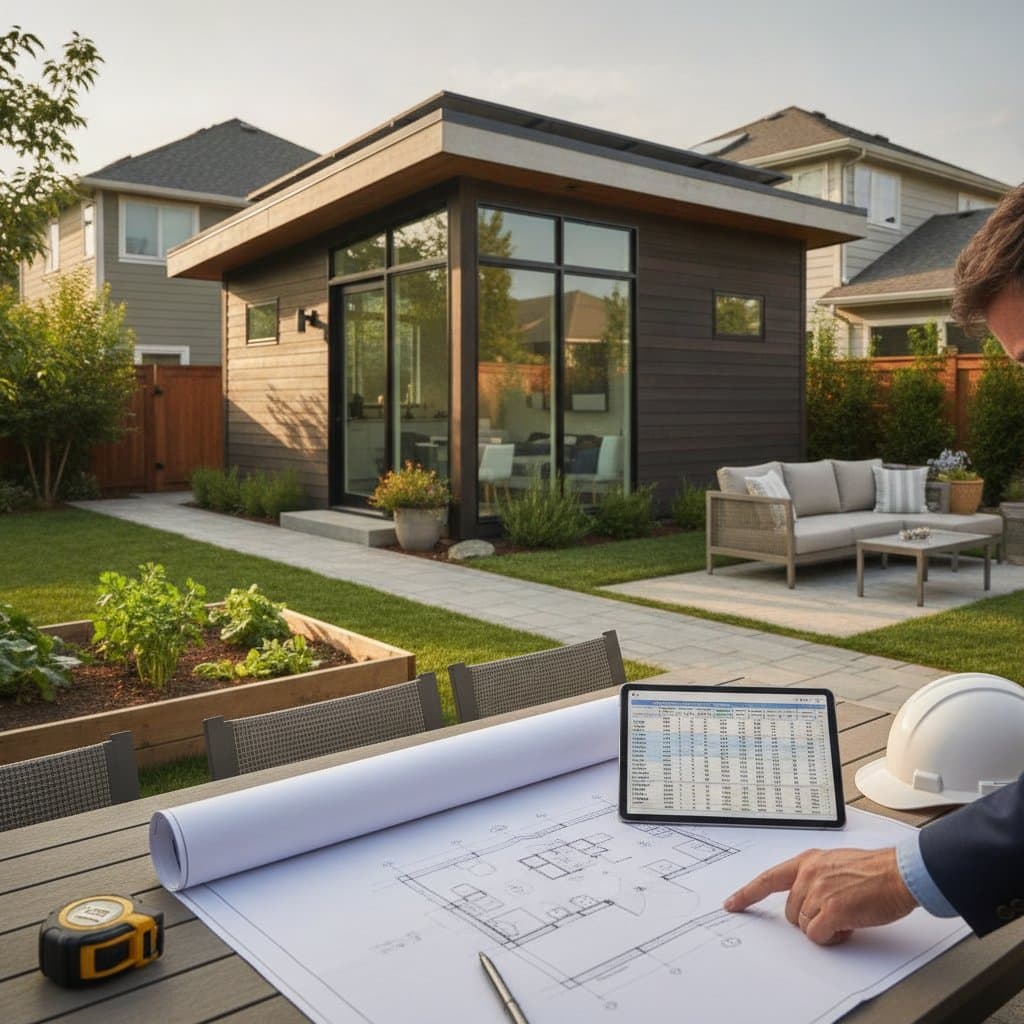
Comprehensive expenses encompass design, permits, site preparation, construction, utilities, finishes, and oversight. For a typical one-bedroom ADU spanning 400 to 800 square feet, costs vary by material choices, site conditions, and regional regulations. The following table outlines estimated ranges for 2026.
| Category | Prefab ADU | Ground-Up ADU |
|---|---|---|
| Design & Permits | $7,000–$20,000 | $20,000–$50,000 |
| Site Prep & Foundation | $10,000–$25,000 | $20,000–$40,000 |
| Construction | $150,000–$250,000 | $200,000–$350,000 |
| Utilities | $10,000–$20,000 | $15,000–$30,000 |
| Finishes | $5,000–$15,000 | $10,000–$40,000 |
| Delivery or Oversight | $5,000–$10,000 | $5,000–$15,000 |
| Estimated Total | $187,000–$340,000 | $270,000–$525,000 |
Prefab costs benefit from standardized processes that limit surprises. Ground-up projects face higher variability due to custom elements. To refine estimates, consult local contractors early for site-specific assessments.
Long-Term Value and Durability
Proper maintenance ensures both ADU types endure for decades. Prefab units employ high-quality materials equivalent to site-built homes and adhere to rigorous codes. Integrated systems facilitate routine upkeep, though modifications require professional intervention.
Ground-up ADUs excel in adaptability for future expansions or renovations. Their modular construction on-site allows seamless integration of upgrades. Resale appeal varies by locale; custom designs enhance value in traditional neighborhoods, while prefabs integrate well in contemporary settings.
Evaluate property aesthetics and market trends before proceeding. A professional appraisal can quantify potential value addition.
Style and Customization Options
Prefab ADUs feature predefined designs, typically modern with clean lines. Options include fiber cement siding, stucco, or metal panels for exteriors. Limited customization covers colors and minor trim adjustments, but core structures remain fixed.
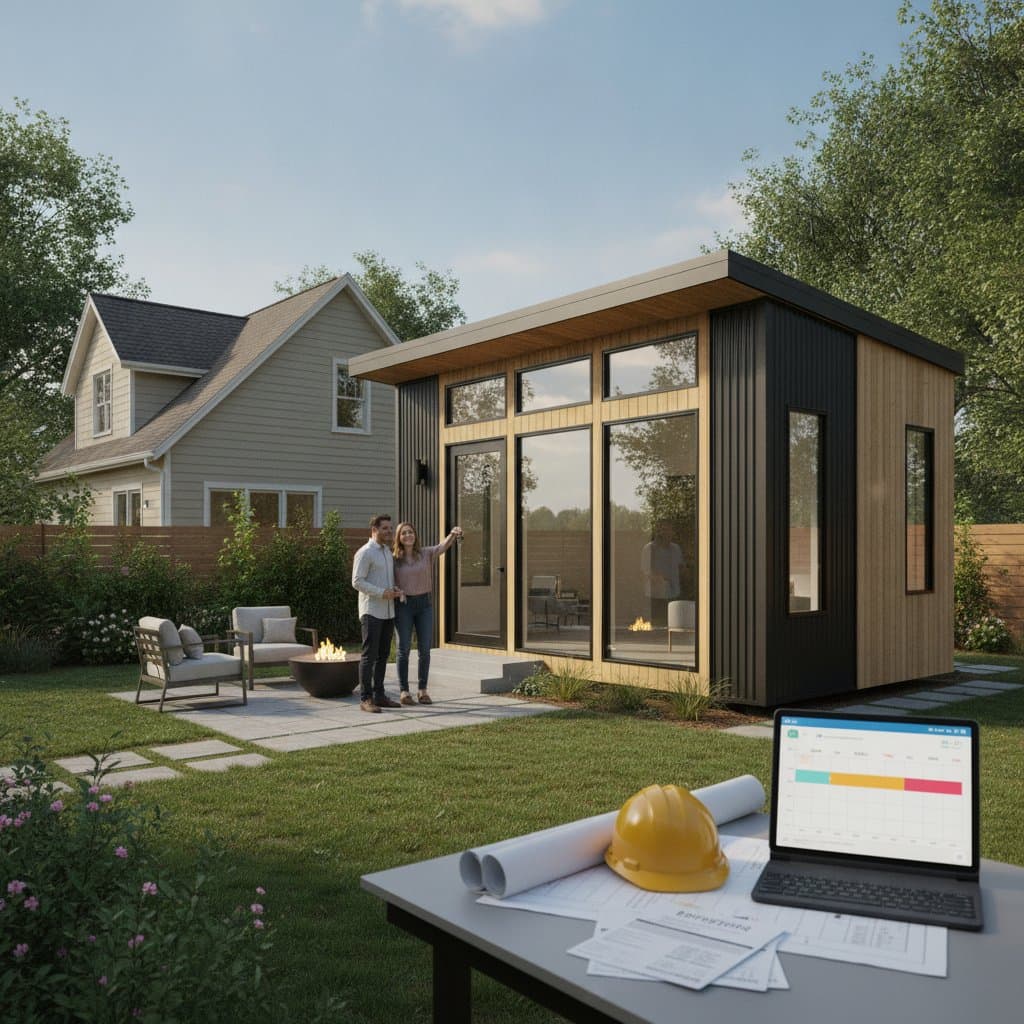
Ground-up construction enables precise alignment with the primary residence. Incorporate elements such as board-and-batten siding, wooden accents, or sloped roofs. Advanced features like bay windows, covered porches, or high ceilings become feasible.
Assess architectural harmony with the existing home. For seamless blending, prioritize ground-up methods; for efficient, contrasting styles, select prefab.
Maintenance and Longevity Factors
Factory production equips prefab ADUs with weather-resistant seals and protective coatings. These elements minimize routine tasks, and manufacturers provide warranties covering structural integrity and surfaces. Annual inspections prevent minor issues from escalating.
Ground-up ADUs rely on on-site craftsmanship and material selections. Quality builders ensure longevity comparable to main homes. Local contractors simplify repairs like roof replacements or painting without third-party dependencies. Budget for periodic professional evaluations to maintain performance.
Compare warranty terms and local service availability during planning. Both approaches demand consistent care to preserve investment.
Financing and Return on Investment
ADU funding draws from home equity loans, construction financing, or personal savings. Prefab providers occasionally offer integrated loan packages, streamlining approvals. Verify eligibility with lenders familiar with modular builds.
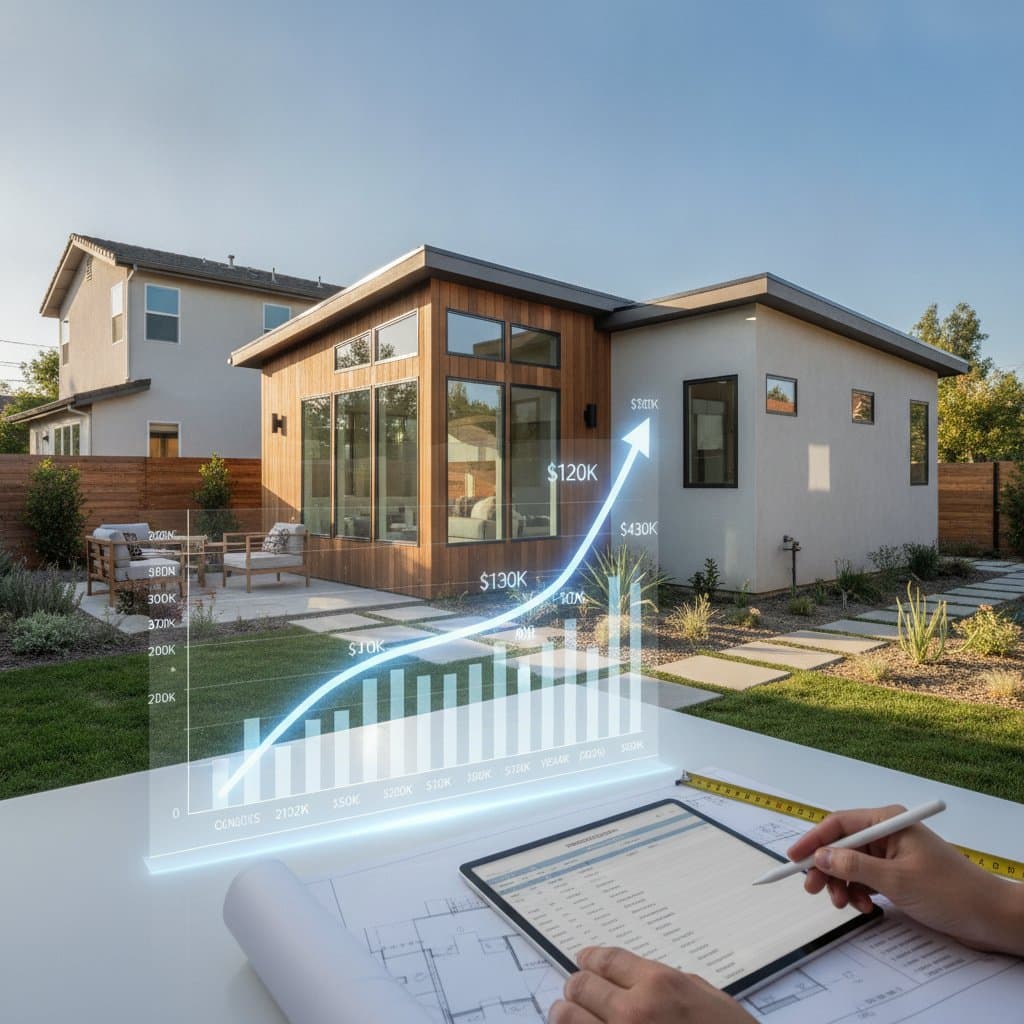
Both types support equivalent rental yields based on size and appeal. A thoughtfully designed ADU boosts overall property worth by 10 to 20 percent in suitable markets. Factor in occupancy rates and maintenance for accurate ROI projections.
For rental purposes, prefab durability suits high-traffic scenarios, while ground-up versatility accommodates premium tenants. Consult financial advisors to model income streams against upfront costs.
DIY Involvement and Professional Support
Prefab projects limit owner tasks to site preparation and utility connections. Manufacturers manage assembly, reducing oversight needs. Engage local experts for foundational work to ensure compliance.
Ground-up builds demand active participation in selecting architects, engineers, and crews. Homeowners guide material choices and timelines throughout. This involvement fosters personalized outcomes but extends project duration.
Weigh personal availability against desired control. Prefab minimizes disruption for busy schedules; ground-up rewards hands-on preferences.
Regional Considerations
Local climates and codes shape ADU suitability. Coastal zones require corrosion-proof materials and enhanced drainage. Arid or hot areas benefit from energy-efficient roofing and insulation.
Prefab designs address broad conditions, yet ground-up allows precise adaptations like advanced ventilation. Review zoning laws and permit requirements upfront. In seismic regions, reinforce foundations regardless of method.
Site visits with specialists reveal tailored solutions. These adjustments optimize comfort and reduce long-term energy expenses.
Steps to Select and Build Your ADU
Prioritize objectives such as timeline, budget, and design needs. Gather quotes from multiple prefab suppliers and ground-up contractors to compare specifics. Review portfolios to gauge quality alignment.
Secure permits and financing concurrently to avoid delays. For prefab, confirm delivery logistics; for ground-up, establish a detailed timeline with milestones.
Both paths yield valuable additions that enhance lifestyle and finances. Choose the method that balances immediate practicality with enduring satisfaction.