Stay Home Longer: Universal Design Costs for an Accessible Future
Quick Answer Box
A universal design remodel adapts the home environment to support safe and comfortable living as individuals age. Homeowners often handle basic accessibility updates independently, yet major modifications require the expertise of a licensed contractor. Costs typically range from several hundred dollars for simple fixture replacements to tens of thousands for comprehensive remodels. Project timelines vary from a few hours for minor tasks to several weeks for extensive renovations. Primary risks include electrical modifications, plumbing alterations, and structural adjustments, all of which demand professional oversight.
Step-by-Step Instructions
1. Assess Your Home
Conduct a thorough walkthrough of each room to identify potential barriers. Examine elements such as narrow doorways, elevated thresholds, slippery surfaces, or inadequate lighting. Document areas that present safety concerns or daily inconveniences, and focus initially on high-traffic zones like bathrooms, kitchens, and entryways.
- Create a detailed written list that includes measurements for each identified issue.
- Estimate preliminary costs based on basic research into materials and labor.
Check: The list provides a clear roadmap with specific dimensions and budget approximations for targeted improvements.
2. Plan for Clear Pathways
Measure all doorways and hallways to ensure adequate clearance. A standard wheelchair requires a minimum of 32 inches of unobstructed width for navigation.
- Consider removing non-essential doors or installing offset hinges to increase effective space.
- Relocate or eliminate clutter and oversized furniture that obstructs movement.
Check: Navigation through primary areas occurs smoothly without the need to turn sideways or encounter obstacles.
3. Add Safer Flooring
Select and install flooring materials that minimize slip risks, such as replacing loose rugs or polished tiles with options like rubber mats, textured vinyl, or low-pile carpet.
- Verify the subfloor's integrity and stability prior to any new installation.
- Incorporate transition strips to eliminate height differences between adjacent rooms.
Check: The surfaces remain firm and level throughout, free from any elements that could cause trips or falls.
4. Update Door and Cabinet Hardware
Opt for lever-style handles on doors and faucets, as these require only a push or pull rather than a twisting motion.
- Extend this approach to cabinetry by fitting pull handles that accommodate a full hand grip.
- Ensure all hardware aligns at consistent heights for ease of use.
Check: Every door and cabinet operates effortlessly with one hand and negligible force.
5. Improve Lighting and Visibility
Enhance illumination in critical areas including hallways, bathrooms, and kitchens with bright, uniform lighting sources.
- Select LED fixtures that deliver at least 800 lumens per bulb for optimal brightness.
- Position rocker-style switches, potentially illuminated, at accessible heights near doorways.
Check: All spaces maintain consistent visibility without dark spots or shadows under typical conditions.
6. Upgrade the Bathroom
Bathrooms represent a primary focus for universal design enhancements due to their frequent use and inherent risks.
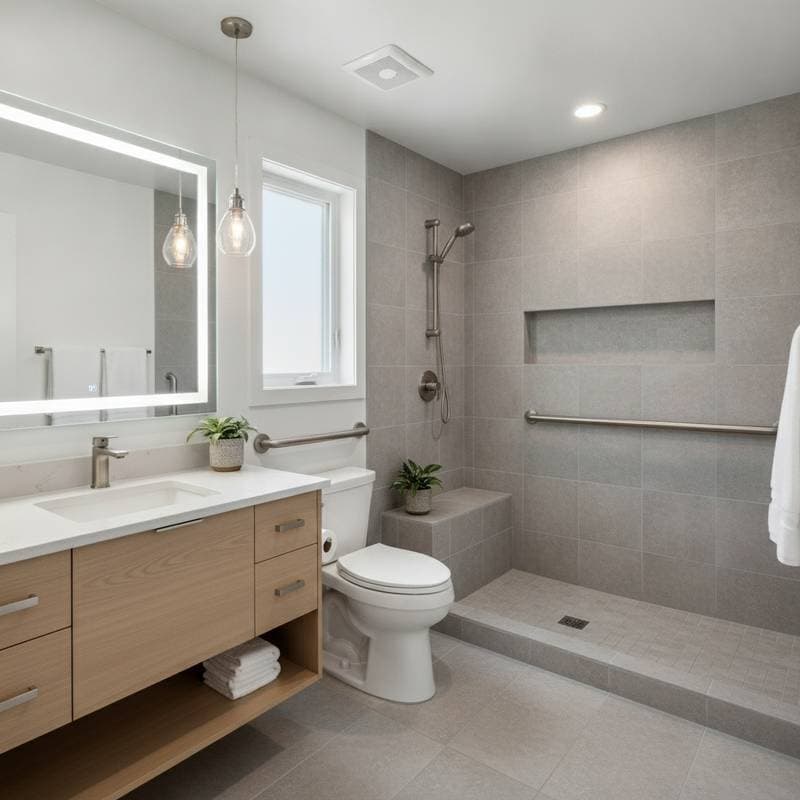
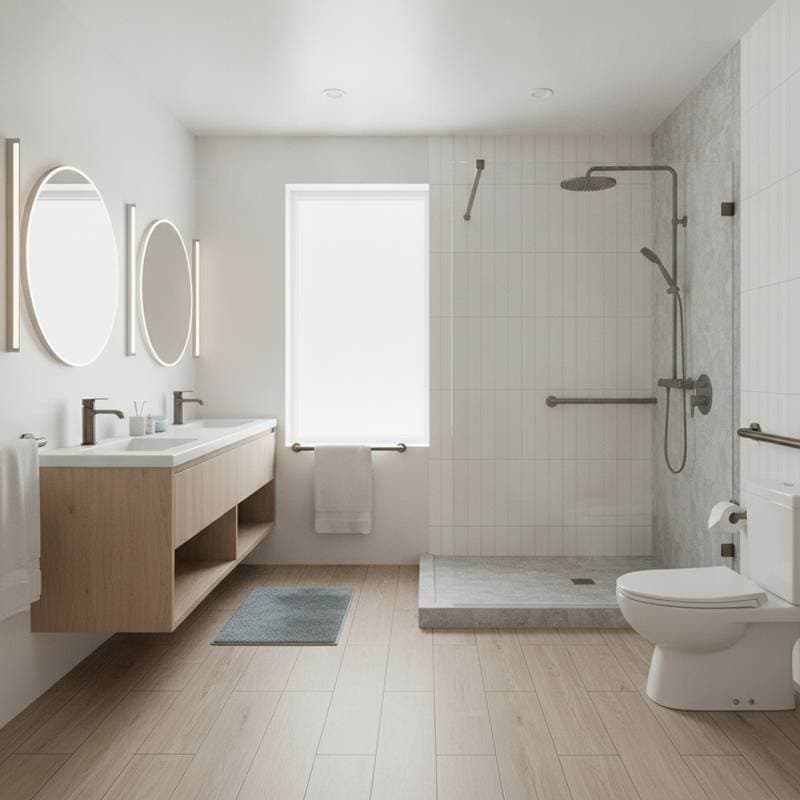
- Convert traditional tubs to curbless showers featuring wide, open entries for seamless access.
- Securely install grab bars both within and adjacent to the shower, ensuring anchors penetrate wall studs.
- Incorporate a handheld showerhead mounted on an adjustable slide bar to accommodate varying heights.
- Install a comfort-height toilet measuring 17 to 19 inches from floor to seat.
Warning: Significant plumbing modifications necessitate the involvement of a licensed plumber to comply with codes and prevent hazards.
Check: All bathroom fixtures allow safe access and operation without excessive bending, stretching, or instability.
7. Adjust Kitchen Layouts
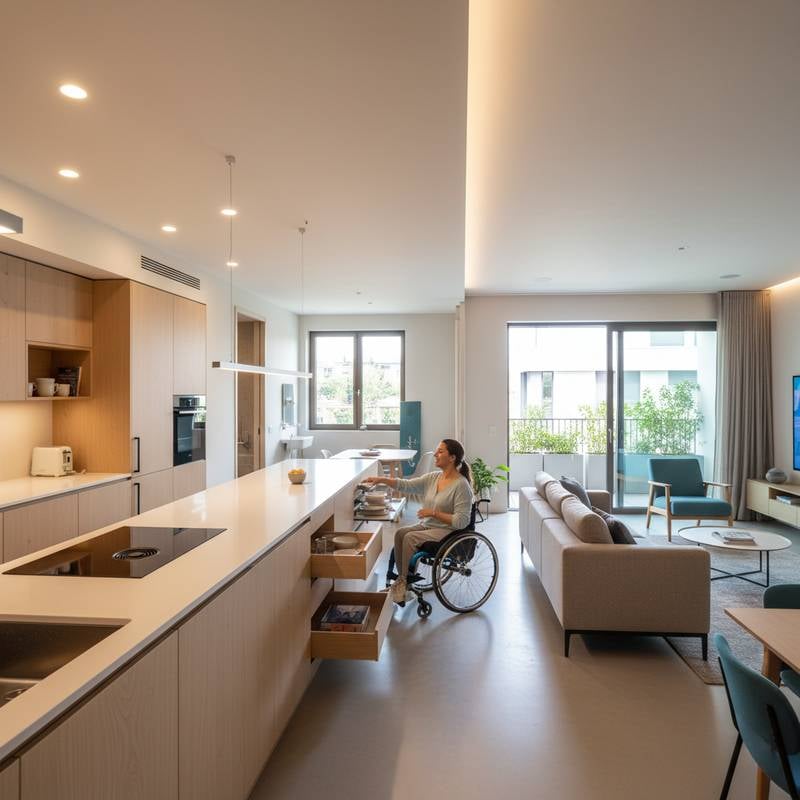
Modify countertops by lowering select sections to 34 inches to facilitate seated use.
- Reorganize storage to position everyday items on lower, reachable shelves.
- Swap round cabinet knobs for D-shaped pulls that enhance grip security.
- Integrate under-cabinet lighting to illuminate workspaces effectively.
Warning: Any cutting or relocation of countertops risks compromising structural integrity; engage a licensed contractor for these tasks.
Check: Kitchen zones support comfortable reach and utilization from standing or seated positions.
8. Modify Entrances and Ramps
Eliminate or minimize steps by constructing a ramp or installing a low-profile threshold.
- Design ramps with a gentle slope of one inch rise per 12 inches of horizontal run to ensure usability.
- Equip ramps with robust handrails on both sides for added support.
Warning: Professional consultation proves essential for ramp engineering, covering load-bearing capacity, weatherproofing, and proper drainage.
Check: Home entry and exit proceed without undue foot lifting or physical strain.
Quality Checks and Troubleshooting
Perform routine verifications to maintain upgrade integrity.
- Loose Grab Bars: Confirm screws fasten directly into wall studs rather than relying on drywall anchors alone.
- Uneven Floors: Employ a level tool to inspect seams and secure any protruding edges promptly.
- Dim Lighting: Upgrade to higher-lumen bulbs or inspect electrical connections for faults.
- Door Clearance Issues: Fine-tune hinges or trim door bottoms minimally to resolve sticking.
Immediate cessation of work and professional intervention follow any signs of water intrusion, electrical malfunctions, or developing structural fissures.
When to Call a Pro
Engage licensed contractors or specialists for projects encompassing:
- Relocation of plumbing lines or drainage systems.
- Modifications to existing wiring or installation of additional circuits.
- Expansion of doorways or demolition of load-bearing walls.
- Construction of enduring ramps or mechanical lifts.
Typical Cost Ranges
Costs fluctuate based on regional labor rates, material selections, and project scope. Obtain multiple written estimates and confirm contractor credentials, including licensing and insurance coverage.
- Minor Updates (hardware, grab bars, lighting): $300 to $2,000.
- Bathroom Conversions: $8,000 to $25,000.
- Kitchen Accessibility Remodels: $10,000 to $40,000.
- Full Home Universal Design Retrofit: $30,000 to $80,000.
Pro Tips for Success
Incorporate high-contrast colors between flooring and walls to boost visual cues for navigation. Select matte-finish materials to curb reflective glare that disorients users. Position electrical outlets at 18 inches above the floor level for straightforward access. Maintain a 5-foot diameter turning circle in essential rooms such as kitchens and bathrooms. Anticipate future needs by designing infrastructure for phased installations, thereby optimizing long-term labor efficiency.
FAQs
What is universal design?
Universal design constitutes a design philosophy that creates environments usable by individuals of all ages, abilities, and sizes, promoting inclusivity without specialized adaptations.
Sustaining Accessibility Over Time
Universal design investments enhance home safety, comfort, and market value while fostering prolonged independence. Conduct periodic inspections to identify wear, address minor repairs proactively, and maintain accessible features through gentle cleaning and appropriate usage. Thoughtful planning, adherence to safety protocols, and timely professional assistance ensure the home evolves with changing needs, delivering enduring functionality and peace of mind.