Universal Design Costs for Aging-in-Place Homes
Quick Overview
Universal design remodeling adapts homes to support independent living as mobility needs evolve. These modifications prioritize safety, accessibility, and ease of use for all ages and abilities. This guide outlines typical costs, influencing factors, and professional involvement to help you budget effectively for projects ranging from minor updates to full renovations.
Costs generally span $15,000 to $100,000 for professional installations, depending on scope, home size, and location. Factors such as material quality, labor rates, and necessary permits drive these figures. Early planning allows you to phase improvements, starting with high-impact changes in kitchens, bathrooms, and entryways.
DIY vs Professional Guidance
Certain universal design elements lend themselves to homeowner installation, provided you possess basic skills and follow safety protocols. These tasks focus on surface-level enhancements that do not alter structural integrity.
Safe DIY tasks:
- Swap traditional round knobs for lever-style door and cabinet handles to reduce gripping effort.
- Install pull-down shelving units or adjustable rods in closets for easier reach.
- Add motion-sensor lights in hallways and stairwells to improve navigation at night.
- Apply non-slip coatings or mats to existing floors in high-traffic areas.
For more involved changes, professional expertise ensures durability and adherence to regulations. Structural modifications require permits and specialized knowledge to avoid compromising the home's foundation or systems.
Hire a professional for:
- Widening doorways to 36 inches or hallways to 42 inches for wheelchair access.
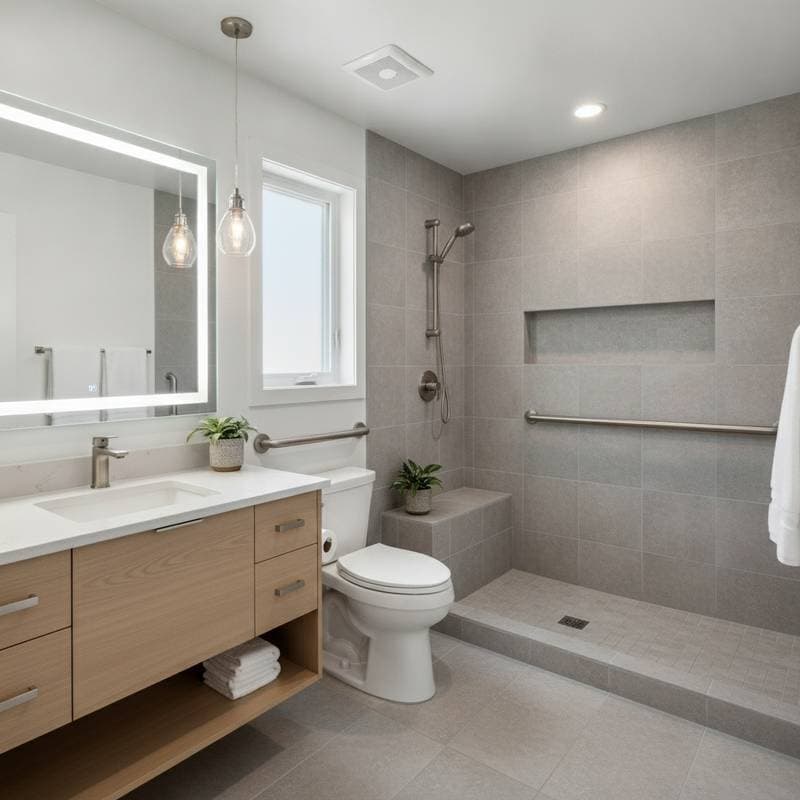
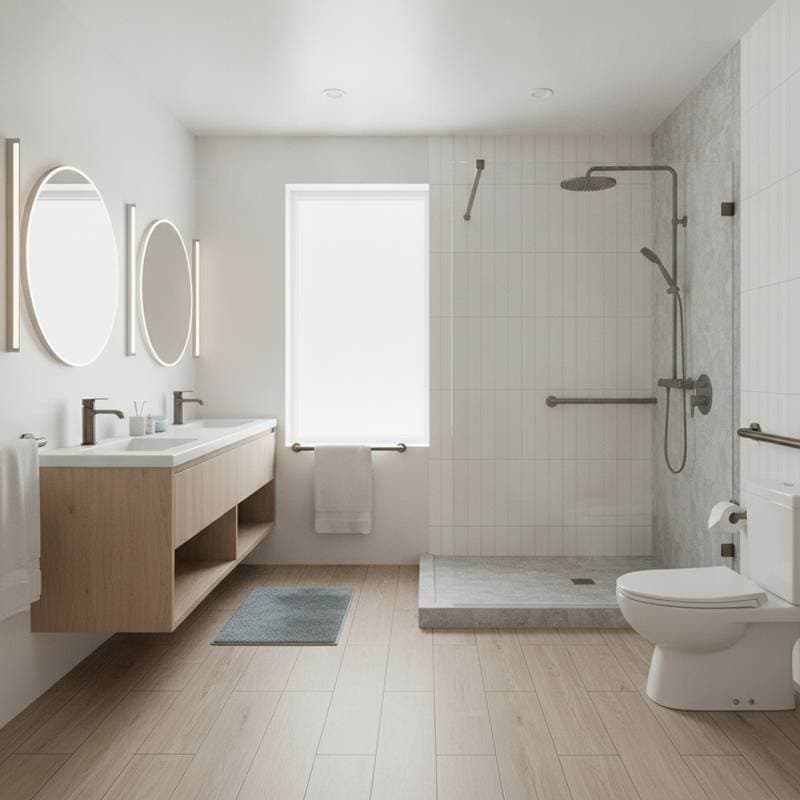
- Relocating plumbing lines or installing curbless showers with linear drains.
- Lowering countertop heights to 34 inches or adding pull-out shelves in kitchens.
- Constructing exterior ramps with a 1:12 slope ratio or platform lifts for multi-level homes.
- Upgrading electrical wiring to support voice-activated smart home devices.
Cost comparison:
- DIY upgrades: $200 to $1,500, covering materials like handles, lights, and coatings, plus basic tools.
- Professional remodel: $15,000 to $100,000, scaling with project scale; for example, a single bathroom update might cost $15,000 to $25,000, while a whole-home overhaul reaches $75,000 or more.
Engaging a licensed contractor guarantees compliance with local building codes and ADA guidelines. Without proper oversight, modifications can result in uneven surfaces, electrical faults, or structural weaknesses that pose risks.
Tools and Materials
Equipping yourself with the right tools simplifies DIY efforts and promotes precise work. Always prioritize safety gear to prevent injuries during installation.
Tools:
- Tape measure for accurate dimensions.
- Stud finder to locate secure mounting points behind walls.
- Level to ensure even installations.
- Power drill with bits suited for wood, metal, and tile.
- Tile saw or flooring cutter for custom fits.
- Safety glasses and gloves for protection.
Selecting high-quality materials extends the usability of your upgrades and meets accessibility standards. Opt for products certified for load-bearing and durability in residential settings.
Materials:
- Grab bars with 250-pound weight capacity and concealed flanges.
- Non-slip flooring options like luxury vinyl planks, rubber mats, or textured porcelain tiles.
- ADA-compliant fixtures, including 60-inch turning radii in bathrooms.
- Lever handles on doors and single-lever faucets for minimal effort operation.
- Waterproof wallboard and silicone sealants for moisture-prone areas.
- Motion-sensor lights with adjustable sensitivity and dusk-to-dawn settings.
Troubleshooting and Quality Checks
Even well-planned projects encounter issues that demand prompt resolution. Addressing them early maintains functionality and prevents escalation.
Problem: Water pooling near shower entry.
Fix: Regrade the floor to a minimum 1/8-inch slope per foot, directing water toward the drain; consider professional tiling if drainage persists.
Problem: Loose grab bar.
Fix: Secure with wooden blocking between studs or use toggle bolts and anchors designed for drywall; test by applying full body weight.
Problem: Door clearance too narrow.
Fix: Install a 36-inch-wide door or swing-clear hinges that allow the door to clear the frame fully, providing up to 42 inches of usable space.
Perform systematic quality checks post-installation to verify effectiveness.
Quality checks:
- Measure all thresholds to confirm they are level and under 1/2 inch high, with beveled edges if needed.
- Evaluate lighting from multiple positions, ensuring no dark spots in pathways.
- Assess reachability of controls and fixtures from a seated height of 18 to 20 inches.
Maintenance and Lifespan
Sustained performance of universal design features relies on consistent upkeep. Neglect can lead to deterioration, reducing safety over time.
Routine care:
- Examine grab bars and flooring biannually for signs of loosening, cracks, or fading grip.
- Wipe non-slip surfaces with mild cleaners to preserve texture without residue buildup.
- Update motion-sensor batteries or bulbs annually to avoid failures.
Well-maintained components offer reliable service for years.
Lifespan expectations:
- Grab bars and fixtures: 10 to 20 years, influenced by daily use and material finish.
- Flooring: 15 to 25 years, with resealing extending durability in wet areas.
- Plumbing fixtures: 10 to 15 years until seals degrade or finishes corrode.
Proactive inspections identify wear early, averting expensive overhauls.
Pro Tips for Success
Integrate these strategies to maximize the impact of your remodeling efforts. They balance practicality with aesthetic appeal.
- Plan early. Consult designers during routine home assessments to anticipate needs before they arise.
- Use contrast. Choose high-contrast colors between floors, walls, and counters to aid visual navigation for those with low vision.
- Focus on lighting. Combine overhead ambient lights with under-cabinet task illumination and wall sconces for comprehensive coverage.
- Add flexibility. Incorporate height-adjustable counters via mechanical lifts and modular cabinetry for future adaptations.
- Think about entry access. Design zero-step thresholds with covered porches to enhance usability for strollers, bikes, and mobility devices alike.
Such decisions enhance daily living while preserving your home's visual harmony.
Implementing Your Plan
Universal design transforms homes into supportive environments that foster independence without sacrificing style. Begin with a room-by-room evaluation to identify priorities, such as bathrooms for fall prevention or kitchens for ergonomic workflow.
Set a realistic budget aligned with your timeline; minor tweaks like lever installations yield quick wins, whereas extensive work demands phased funding. Collaborate with contractors specializing in accessibility to blend features seamlessly into your existing layout.
Through thoughtful preparation, strategic investments, and skilled execution, your residence evolves into a sanctuary of safety and convenience, supporting vibrant living for decades ahead.