Understanding the Costs of an Aging-in-Place Bathroom Remodel
Aging in place involves designing a home that promotes independence, comfort, and safety throughout life's stages. The bathroom ranks as a primary focus for modifications due to its high risk of falls and injuries. Such a remodel enhances daily routines, reduces accident risks, and upholds personal dignity. This guide details actual costs, price influencers, and strategic planning approaches.
The overall expense fluctuates based on bathroom dimensions, existing state, and required accessibility enhancements. Homeowners typically invest between $15,000 and $35,000 for a comprehensive aging-in-place bathroom remodel. Basic refreshes begin at about $9,000, whereas luxury accessible designs surpass $50,000.
Detailed Cost Components
- Labor: Accounts for 40 to 60 percent of the total, increasing with structural alterations, plumbing shifts, or electrical modifications.
- Materials: Represents 25 to 40 percent, covering tiles, flooring, and hardware.
- Fixtures and Specialized Items: Comprises 10 to 25 percent, including items like walk-in tubs or curbless showers that provide enduring advantages.
These elements justify upfront costs through improved safety and functionality over time.
Essential Accessibility Features and Their Costs
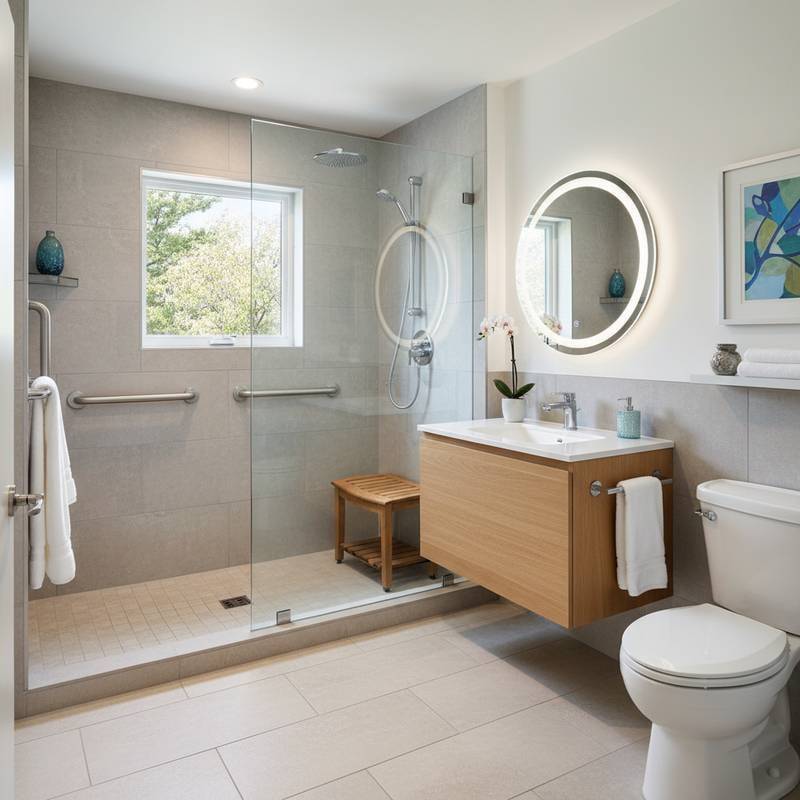
Incorporating targeted features ensures the bathroom adapts to changing needs. Below are key upgrades, each with installation costs, rationale, and considerations.
1. Grab Bars and Support Rails
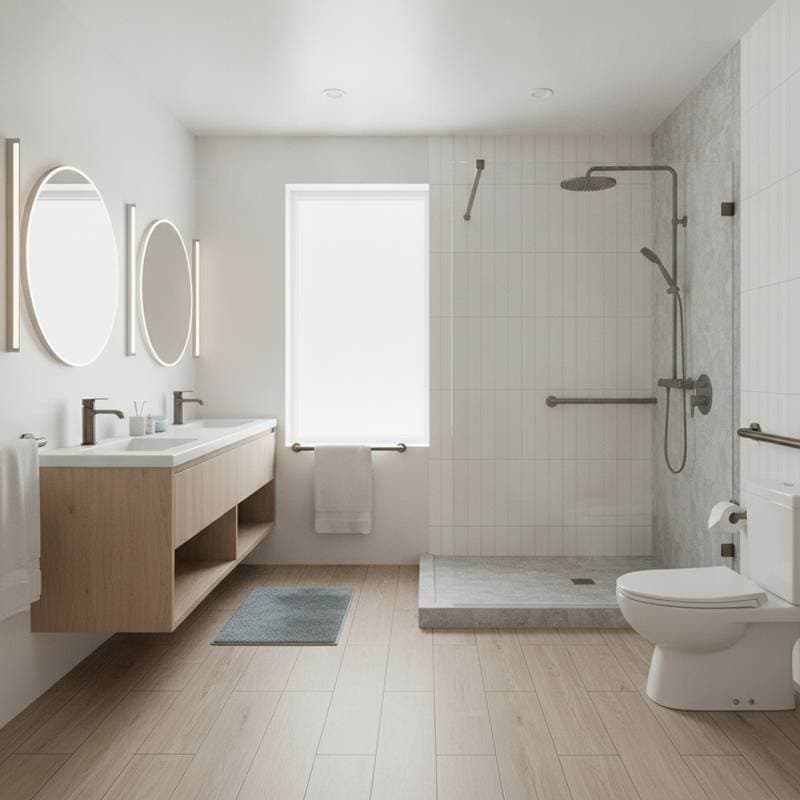
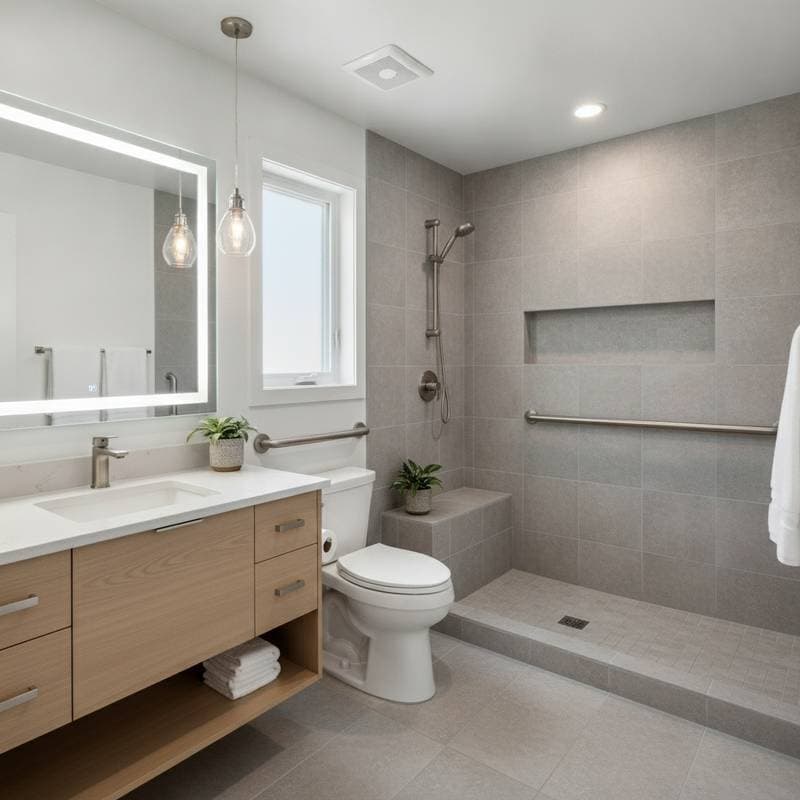
Sturdy grab bars positioned near the toilet, shower, and tub significantly lower fall risks during transfers.
Installation costs range from $200 to $800, varying by quantity and location.
A skilled homeowner might install bars into wall studs, though professional services ensure proper anchoring and height alignment for optimal support.
The National Institute on Aging indicates that most bathroom falls happen during tub entry or exit, positioning grab bars as a highly effective, budget-friendly safety measure.
2. Non-Slip Flooring
Wet surfaces contribute to numerous injuries; non-slip options maintain grip even in damp conditions.
Expect to spend $1,500 to $4,000 for a typical bathroom.
Suitable materials include textured porcelain or ceramic tiles, vinyl sheet flooring, or rubber-backed waterproof laminates.
Maintain traction by cleaning with mild detergents and steering clear of waxes that increase slipperiness.
3. Accessible Vanity and Sink
Wall-mounted or open-base vanities facilitate use from a seated position and accommodate wheelchair access.
Costs fall between $1,200 and $3,500, including necessary plumbing adjustments.
Opt for designs with rounded edges and shallow sinks to minimize reaching efforts.
Insulate exposed pipes to avoid burns from hot water contact.
4. Walk-In Tub
This fixture provides deep immersion with a low-step entry, benefiting individuals with reduced mobility.
Installed prices span $6,000 to $15,000, influenced by brand and added features.
Professional plumbers and electricians handle installation, as these tubs demand specific circuits and watertight seals.
For constrained spaces, a seated shower base paired with a handheld sprayer serves as a viable substitute.
Strategies to Reduce Costs While Ensuring Safety
Thoughtful decisions allow expense control without compromising core protections.
- Focus on functionality ahead of aesthetics by addressing structural and safety elements first.
- Retain existing plumbing layouts to avoid expensive drain or line relocations.
- Choose mid-tier ADA-compliant fixtures from reputable manufacturers.
- Combine multiple upgrades into one project to cut down on contractor mobilization charges.
- Inquire about available rebates through local initiatives or insurance providers for accessibility work.
Investment Value and Resale Impact
An accessible bathroom elevates safety and broadens market appeal. Industry professionals note that such modifications recoup 60 to 70 percent of costs upon selling, particularly in areas with aging demographics.
Beyond resale, these changes yield savings in healthcare and care facility expenses. A fall injury can exceed the remodel's price many times over, framing the project as both a practical and economic shield.
Guidelines for Professional Involvement
Certain tasks suit capable homeowners, but many necessitate expert input.
Situations Requiring Professionals
- Any structural modifications or wall removals.
- Relocations or enhancements to plumbing or electrical setups.
- Applications of waterproofing or tile work.
- Installations of walk-in tubs or curbless showers.
- Projects subject to permitting or inspection requirements.
Selecting Qualified Experts
Prioritize Certified Aging-in-Place Specialists or those trained in universal design, who blend construction expertise with ergonomic principles. Request client references, insurance verification, and portfolios of similar accessible completions. Reputable contractors will review your mobility requirements, illumination choices, and future objectives prior to proposing plans.
Frequently Asked Questions on Aging-in-Place Remodels
How much time does a typical remodel require? Moderate scopes last two to four weeks, factoring in material availability and project intricacy.
Are permits necessary? Affirmative for most efforts involving plumbing or electrical components, including mandatory inspections.
Is retrofitting the current tub feasible? Viable if structurally sound, via additions like grab bars and anti-slip treatments; however, walk-in tubs or curbless showers offer superior accessibility.
Which flooring provides the greatest safety? Textured porcelain tiles and high-traction vinyl excel in resistance and upkeep simplicity.
What financial aids exist? Regional housing agencies and veterans' services may provide grants or favorable loans for accessibility enhancements; consult local options.
Preserving Your Remodel's Effectiveness
Regular upkeep sustains the bathroom's utility and security.
- Inspect grab bars and rails biannually for secure fastenings.
- Renew caulk and grout promptly to avert moisture intrusion.
- Employ gentle cleaners on non-slip surfaces to retain adherence.
- Verify lighting functionality routinely, replacing bulbs to match prior output.
- Adapt elements as requirements evolve, such as incorporating handheld showers or additional aids.
This approach keeps the space responsive to your needs, fostering daily independence and reassurance.
Planning Your Remodel
Evaluate your bathroom for risks like slick floors, tight doorways, or inadequate illumination. Develop a prioritized list centered on mobility, safety, and ease. Obtain quotes from no fewer than three remodelers versed in universal design principles.
Ultimately, this remodel secures enduring comfort, autonomy, and tranquility.