Projected Costs for Aging-in-Place Remodels in 2026
Aging-in-place remodeling enables individuals to remain in their homes as mobility needs evolve. These projects focus on enhancing safety and accessibility without requiring relocation. Costs in 2026 are expected to vary widely based on project scope, home size, and regional factors.
Cost Overview
Full remodels typically range from $20,000 to $150,000. Basic safety additions, such as grab bars or improved lighting, start at a few hundred dollars. More extensive work, including bathroom overhauls or entryway ramps, escalates to tens of thousands. Homeowners often complete moderate renovations within two to six weeks, prioritizing compliance with safety codes to minimize risks.
Step-by-Step Guide to Planning Your Remodel
1. Evaluate Current Home Layout
Begin by inspecting every room for potential hazards. Focus on elements like steep stairs, narrow doorways, elevated thresholds, and inadequate illumination that impede movement. Document these issues in a detailed inventory to guide subsequent decisions.
Create a checklist of mobility challenges, noting measurements for door widths and step heights. This assessment forms the foundation for targeted improvements. Consult local building standards early to align with accessibility requirements.
2. Establish a Realistic Budget
Calculate expenses for each targeted area to avoid financial surprises. Minor adjustments, such as installing lever handles or grab bars, range from $200 to $1,000. Bathroom transformations cost $8,000 to $25,000, while comprehensive whole-home adaptations reach $50,000 to $150,000.
Identify funding options including home equity loans, personal savings, or specialized grants for accessibility projects. Factor in a 10 to 15 percent contingency for unexpected discoveries like hidden structural issues. Review estimates from multiple sources to ensure competitive pricing.
3. Select Core Accessibility Modifications
Prioritize features that address immediate and anticipated needs. Opt for lever-style door handles over traditional knobs for easier operation. Ensure at least one entry point features zero steps to facilitate wheelchair access.
Position light switches between 36 and 40 inches from the floor for comfortable reach. Install electrical outlets at 18 inches above the floor to support seated use. Verify that pathways maintain at least 36 inches of clear width for safe navigation with walkers or scooters.
4. Enhance Lighting and Electrical Infrastructure
Improved illumination significantly lowers the risk of falls in low-visibility areas. Upgrade to energy-efficient LED bulbs that provide bright, consistent light output. Incorporate motion-activated sensors in hallways, bathrooms, and stairwells for hands-free activation.
Professional intervention becomes necessary for any new wiring or circuit additions to meet electrical codes. Test all updated fixtures post-installation to confirm uniform coverage without dark spots. This step not only boosts safety but also reduces long-term energy expenses.
5. Redesign the Bathroom for Safety
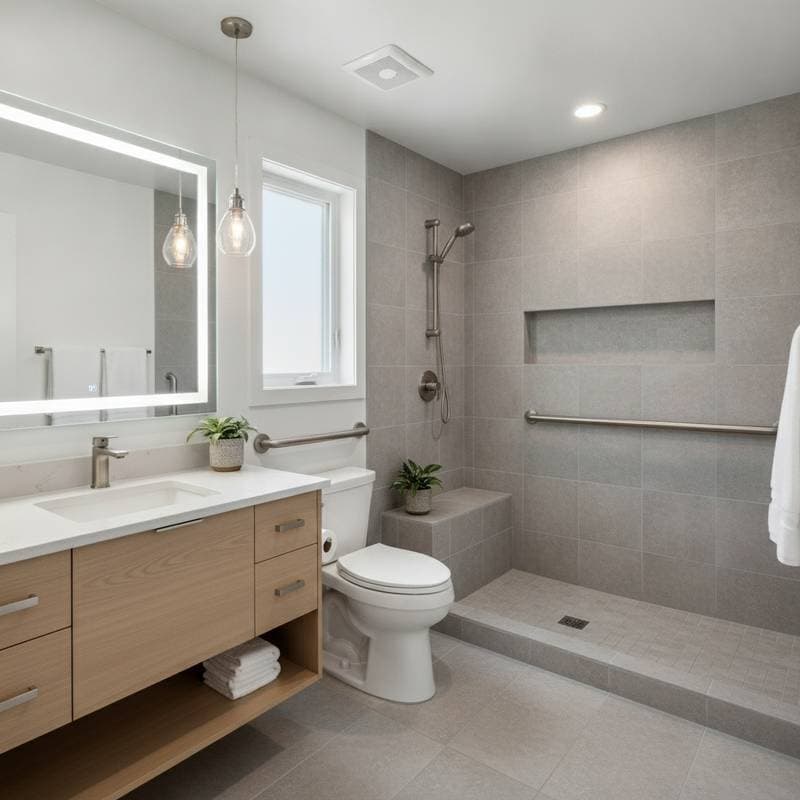
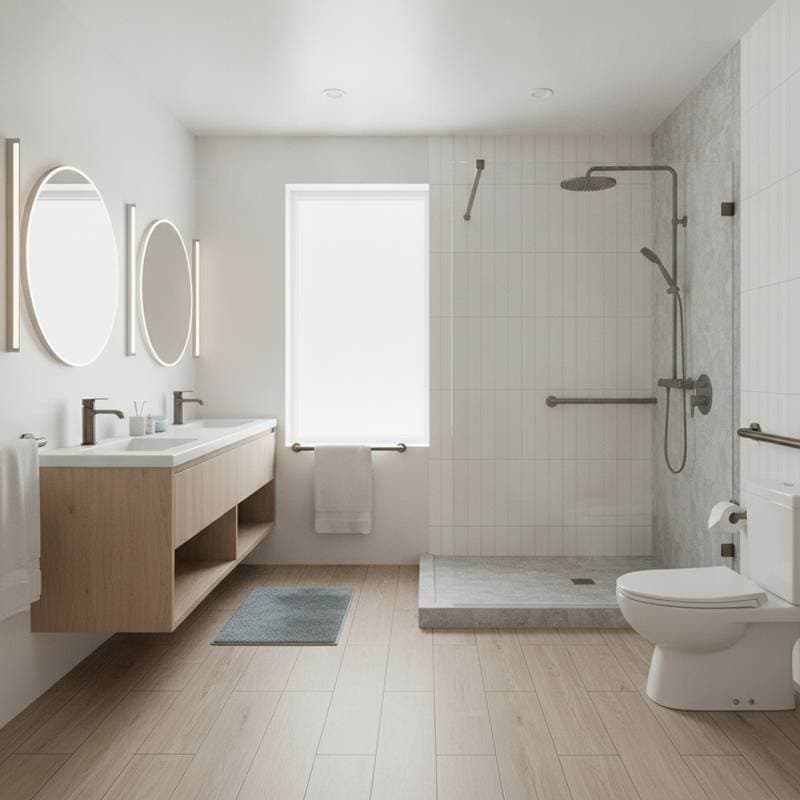
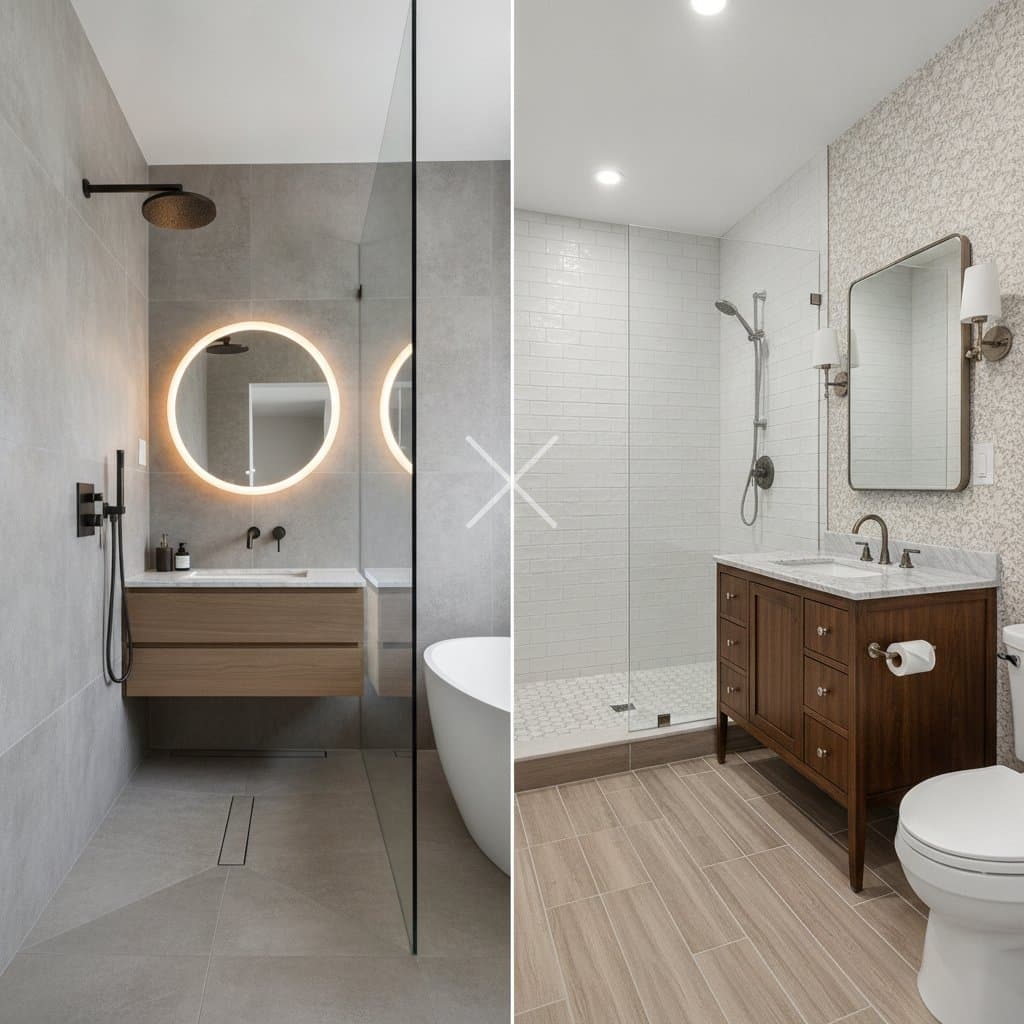
Bathrooms demand the highest attention due to inherent slip hazards and reach challenges. Convert standard tubs to low-threshold or curbless showers to eliminate climbing barriers. Select flooring materials with high slip-resistance ratings, suitable for wet conditions.
Secure grab bars adjacent to toilets, showers, and vanities, anchoring them directly into wall studs for stability. Ensure proper drainage prevents water accumulation on floors. After completion, simulate daily routines to confirm ease of use and dryness.
6. Optimize Kitchen Functionality
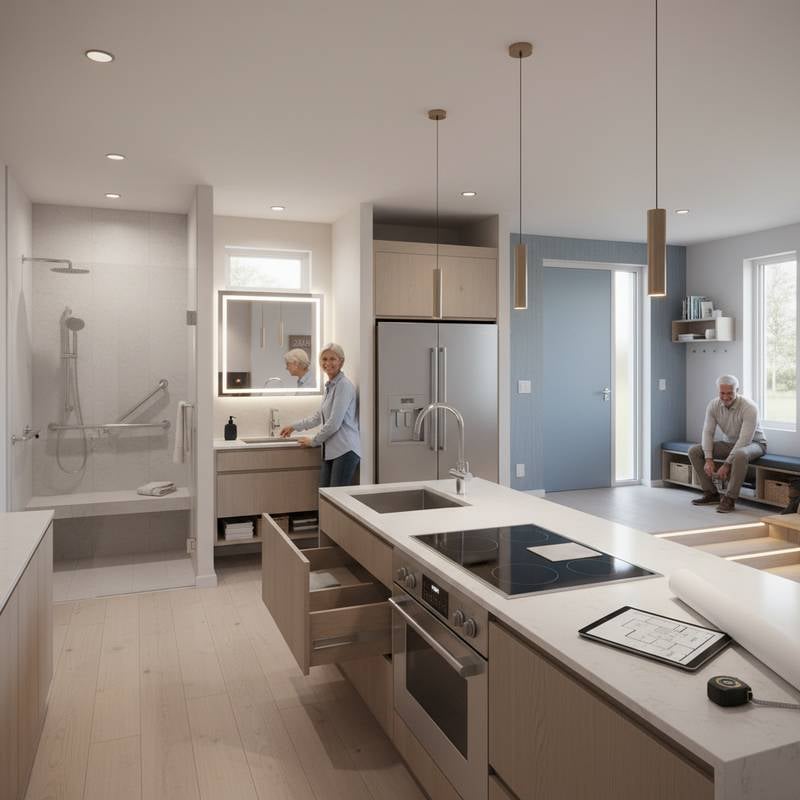
Adjust kitchen elements to support both standing and seated activities. Lower select countertops to 34 inches in height to accommodate wheelchair users. Integrate pull-out shelves and deep drawers for accessible storage without excessive bending.
Replace cabinet knobs with ergonomic D-shaped pulls that require minimal grip strength. Position appliances and utensils within a 15 to 48-inch reach range to minimize strain. Evaluate the layout by performing common tasks to identify any remaining inefficiencies.
7. Modify Entryways and Staircases
Entryways serve as the primary transition points, so prioritize smooth access. Construct ramps adhering to a 1:12 slope ratio, meaning one inch of rise per 12 inches of run, for gradual inclines. Install continuous handrails on both sides of staircases, extending beyond top and bottom steps.
Apply non-slip surfacing to stair treads and ramp surfaces to enhance traction. Before finalizing, assess the terrain's grade to avoid steep sections that could lead to instability. Conduct load tests on ramps and rails to verify durability under regular use.
8. Revamp Flooring Throughout the Home
Flooring choices directly influence mobility and fall prevention. Install low-pile carpeting or resilient vinyl planks that resist slipping. Eliminate or bevel thresholds exceeding half an inch to create seamless transitions between rooms.
Transition materials should maintain a consistent height to prevent tripping. Walk the entire space using mobility aids during testing to ensure fluid movement. Professional installation guarantees adherence to durability standards for high-traffic zones.
Troubleshooting Common Issues
Address problems promptly to maintain remodel integrity. For loose grab bars, reinforce anchors or upgrade to heavy-duty models supporting at least 250 pounds. If showers experience water pooling, recalibrate the floor pitch toward the drain or reposition the fixture.
Uneven ramps require regrading the base or applying a textured overlay for better footing. Dim areas in lighting setups may need bulb replacements or repositioned fixtures to eliminate shadows. Regular walkthroughs help detect these issues early, ensuring ongoing safety.
A well-executed remodel eliminates obstacles, allowing unrestricted navigation through the home.
Engaging Professional Expertise
Hire licensed professionals for complex alterations involving structural, plumbing, or electrical work. Structural changes, such as adding ramps with concrete foundations or installing platform lifts, demand certified expertise. Permit applications and code inspections also necessitate professional drawings and oversight.
Expect hourly rates of $75 to $150 for electricians and 10 to 20 percent of project costs for general contractors. Certified aging-in-place specialists charge $100 to $200 per consultation, providing tailored advice. Always confirm credentials, obtain multiple written bids, and review references from comparable accessibility projects.
Strategies for Long-Term Success
Focus initial efforts on high-use zones like bathrooms and entrances to yield quick benefits. Balance practical safety elements with visually appealing finishes to preserve home aesthetics. Allocate additional funds for potential surprises, setting aside 10 to 15 percent of the budget.
Maintain thorough records of permits, inspection reports, and warranties to support future sales or insurance claims. Schedule annual reviews to monitor wear and address minor repairs proactively.
Frequently Asked Questions
What factors most influence aging-in-place remodel costs in 2026?
Project scale, home size, material quality, and location play key roles. Labor rates vary by region, with urban areas commanding higher fees. Custom features like automated doors add to expenses, while standard upgrades remain more affordable.
How long does a typical aging-in-place project take?
Basic modifications finish in days, while full remodels span two to six weeks. Delays may arise from permitting or supply chain issues. Coordinate with contractors to set realistic timelines based on scope.
Are there financial aids for these remodels?
Grants and tax credits exist for accessibility improvements, especially for seniors or disabled individuals. Programs like those from HUD or local housing authorities offer support. Consult financial advisors to explore eligibility and application processes.
Do all changes require building permits?
Permits apply to structural, electrical, or plumbing alterations. Minor cosmetic updates often bypass this, but local codes dictate specifics. Professionals handle filings to ensure compliance and avoid fines.
How can I maintain remodel features over time?
Conduct quarterly inspections for loose fittings or wear. Clean non-slip surfaces regularly to preserve traction. Update lighting bulbs annually and test safety devices like grab bars for stability.
Sustaining Comfort and Independence
Investing in aging-in-place modifications safeguards daily living while curbing future expenses. These enhancements minimize injury potential through thoughtful design. With routine upkeep and expert input, your home remains a secure haven for extended independence.