Understanding 2025 Costs for Aging-in-Place Remodels
Homeowners increasingly opt to adapt their living spaces for lifelong residency. These modifications prioritize safety, ease of use, and autonomy while preserving or increasing property worth. However, the associated expenses frequently catch individuals off guard. This resource outlines the elements that shape pricing, provides realistic budgeting guidance, and identifies moments to engage experts for enduring outcomes.
Scope of This Guide
- Average expenses for prevalent accessibility enhancements
- Essential design elements that elevate safety and usability
- Strategies to lower costs alongside investment return analysis
- Guidance on engaging professionals versus managing minor alterations independently
- Responses to frequent inquiries from homeowners
Factors Driving Higher Costs in Aging-in-Place Projects
Multiple elements contribute to the elevated pricing environment for accessible living designs. Material costs persist at levels above historical norms, and qualified workmanship faces high demand. Furthermore, evolving construction regulations and accessibility guidelines necessitate intricate preparation and expert implementation.
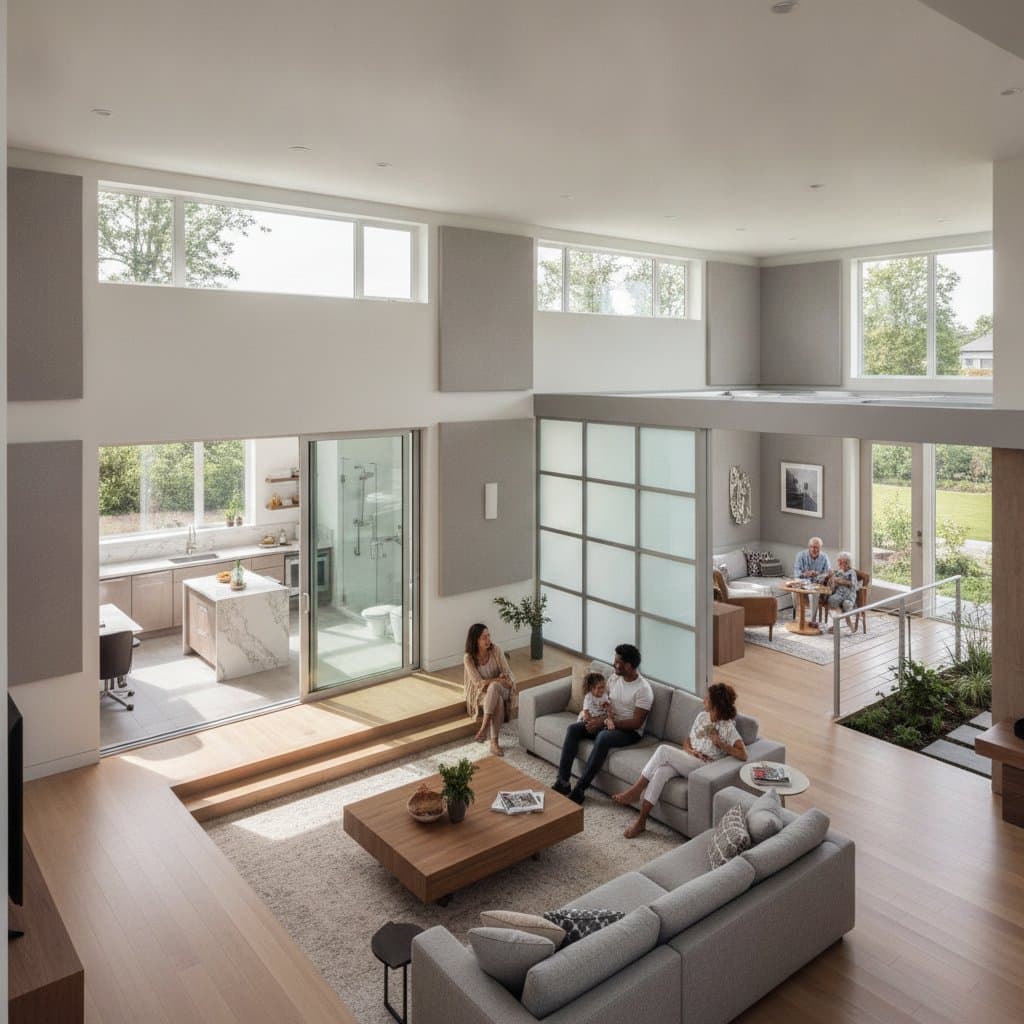
Elements of universal design, such as barrier-free showers, expanded door frames, and user-friendly kitchens, demand structural alterations. Although these additions elevate expenses, they significantly improve routine functionality for individuals experiencing mobility or perceptual shifts. The outcome yields a renovation that bolsters daily well-being and elevates market desirability.
Breakdown of Costs by Project Area
Grasping budget allocation facilitates effective planning. The estimates presented reflect nationwide mid-level figures for expert installation paired with standard materials.
Bathroom Accessibility Upgrades
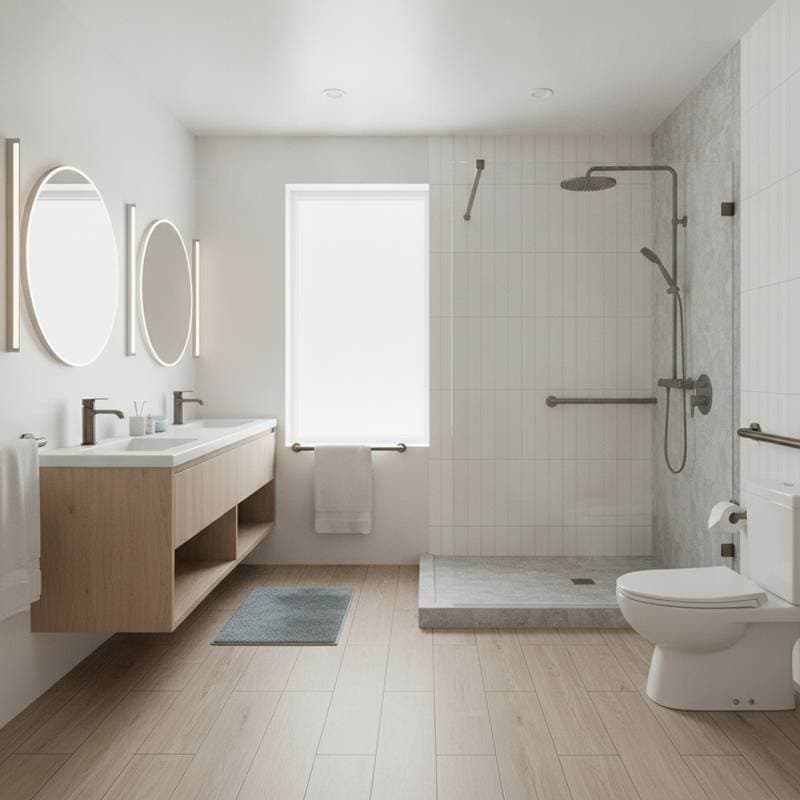
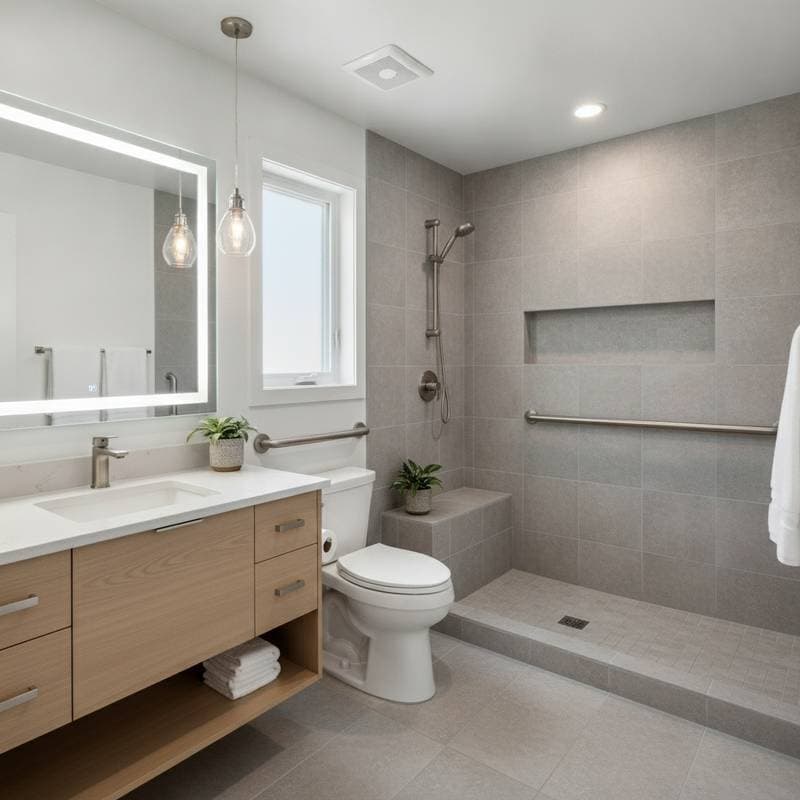
Bathrooms represent the primary focus and highest expenditure for accessibility adaptations. A comprehensive overhaul, incorporating a barrier-free shower, support rails, non-slip surfaces, lever-style handles, and elevated toilets, typically ranges from $18,000 to $40,000. Incorporating a soaking tub with entry access increases this by $4,000 to $8,000.
Such modifications prove vital because bathrooms contribute substantially to in-home accidents. Thoughtful configurations mitigate risks and streamline assistance needs.
For DIY versus professional work, securing support rails or installing adjustable shower attachments falls within homeowner capabilities. Altering drainage systems or reconfiguring bathing areas requires a certified tradesperson.
Kitchen Accessibility Enhancements
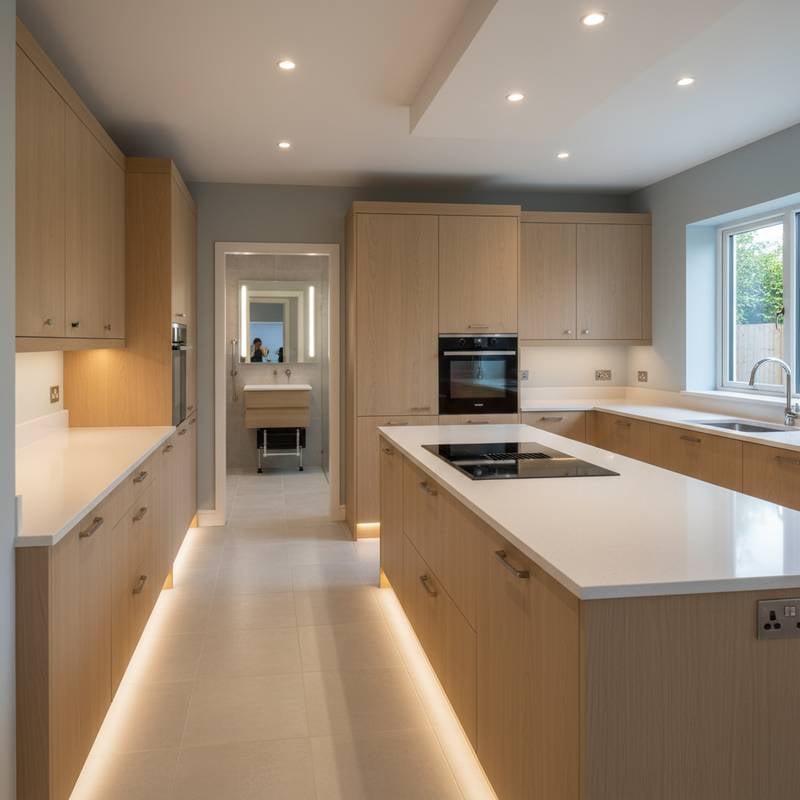
Transforming a kitchen for full accessibility spans $25,000 to $65,000, varying by dimensions and quality selections. Critical components encompass reduced-height work surfaces, extendable storage, sensor-activated taps, and front-operated appliances.
These features ensure the space serves both seated and upright users effectively. Strategic layouts minimize physical effort and foster self-reliance.
Homeowners may update drawer pulls or integrate sliding organizers without assistance. Adjusting surface elevations or integrating equipment demands specialized knowledge.
Entry and Doorway Modifications
Expanding internal passages to a minimum of 36 inches incurs $800 to $2,500 per doorway. Creating a level entrance via ramp or sloped path averages $3,000 to $8,000. Automated entry systems contribute an additional $1,000 to $2,500.
Unobstructed pathways prove indispensable for mobility aids, walking supports, and family transport devices. These changes also broaden appeal to prospective multigenerational purchasers.
Temporary portable inclines offer a self-managed interim option. Fixed installations or foundational adjustments necessitate contractor involvement to achieve appropriate gradients and regulatory adherence.
Lighting and Electrical Improvements
Enhanced illumination, automated sensors, and toggle-style switches promote security across living areas. A home-wide implementation costs $2,000 to $6,000.
As visual acuity diminishes over time, uniform lighting curtails mishaps and disorientation. Intelligent systems provide ease for those with restricted movement.
Exchanging lamps or incorporating freestanding luminaires requires minimal skill. Circuit modifications or fixture placements demand a qualified electrician.
Flooring and Surface Transitions
Updating to secure, low-traction options such as resilient vinyl, natural cork, or patterned ceramic costs $6 to $15 per square foot, labor inclusive. Eliminating level changes and creating seamless junctions adds $800 to $1,500.
Minor elevation variances pose significant hazards for stumbles or mobility device navigation. Secure flooring further averts slips from damp conditions.
Experienced individuals can install click-lock vinyl planks. Ceramic or lumber applications gain from expert precision in leveling and finishing.
Key Influences on Project Expenses
Various aspects determine the total outlay for accessibility renovations:
- Property age and configuration: Vintage structures frequently need preliminary electrical or water system enhancements.
- Material standards: Resilient synthetic surfaces, aesthetically enhanced supports, and premium hardware inflate budgets.
- Bespoke storage and trim: Personalized accessibility solutions extend installation time.
- Local workforce pricing: Metropolitan and waterfront locales command premiums for niche expertise.
- Regulatory approvals: Projects impacting frameworks, wiring, or utilities require adherence to municipal standards.
Strategies to Optimize Value and Returns
Strategic accessibility integrations extend habitation viability and broaden market attractiveness, yielding solid financial benefits. Market analyses indicate that properties featuring inclusive layouts transact more swiftly and draw diverse interest. To amplify returns:
- Emphasize enduring enhancements including broadened passages, fluid layouts, and seamless bathing enclosures.
- Select versatile aesthetics suitable for varied demographics and preferences.
- Integrate efficiency measures like energy-saving illumination or water-conserving devices to curb ongoing expenses.
- Consult contractors on adaptable frameworks, enabling straightforward future adaptations minus extensive disruption.
Indicators for Professional Engagement
Accessibility transformations commonly entail water lines, cabling, framework adjustments, and regulatory conformity. Engage licensed experts when:
- Initiatives require relocating partitions, conduits, or power lines.
- Documentation for ADA or regional standards becomes necessary.
- Alterations impact structural supports or access zones.
- Property sale preparations demand evidence of authorized enhancements.
When choosing specialists, prioritize designations like Certified Aging-in-Place Specialist or comparable qualifications. Request visual portfolios of prior endeavors, endorsements from previous clients, and liability coverage verification. Secure several comprehensive proposals and confirm that inclusive planning integrates from inception.
Practical Methods to Control Expenses
Strategic planning allows expense management without sacrificing durability:
- Sequence safety priorities. Initiate with supports, illumination, and surfaces prior to cosmetic overhauls.
- Repurpose existing elements. Restore storage units or retain current piping to bypass extensive relocations.
- Opt for balanced selections. Robust synthetics, composites, and engineered stone rival luxury performance.
- Coordinate timelines. Merging efforts such as bathing and corridor updates minimizes redundant labor.
- Pursue incentives. Community initiatives and wellness organizations may subsidize accessibility efforts.
Frequently Asked Questions on Accessibility Remodeling Expenses
What represents the most economical approach to enhancing home safety for extended residency?
Begin with support installations, flexible shower options, intensified lighting, and traction mats. These interventions generally stay below several hundred dollars and yield prompt improvements.
Are permits essential for accessibility modifications?
Approvals typically apply to alterations involving water systems, electricity, or frameworks. Verify requirements with municipal authorities prior to commencement.
Does inclusive design elevate property worth?
Affirmative. Accessible configurations attract expanded demographics, encompassing extended families and forward-thinking residents.
What duration characterizes a bathroom accessibility project?
Initiatives span two to six weeks, influenced by scale, selections, and specialist schedules. Advance scheduling averts premium delays.
Do entry-access tubs justify their investment?
These units offer relaxation and health advantages, though spatial constraints may limit suitability. Evaluate against barrier-free alternatives.
Sustaining Renovation Benefits
Post-completion, regular upkeep preserves enhancement efficacy. Maintain clean, moisture-free surfaces; examine support fixtures for stability at intervals; and update to efficient lighting as required. Arrange periodic assessments of water and power systems to preempt concealed concerns.
These adaptations transcend mere precaution. They represent commitments to sustained ease, assurance, and self-determination.