Best Materials and Methods for Flood-Proof Basements
A flood-resistant basement shields your home from water intrusion, structural weakening, and expensive fixes. This guide details the strongest materials, reliable construction techniques, and upkeep routines for new builds or remodels.
Project Planning Basics
Homeowners gain clear direction on design choices, material selection, and system installation. The following sections explain proven approaches that keep moisture out while supporting long-term durability.
Budget and Schedule Expectations
Materials typically range from 8 to 20 dollars per square foot based on the waterproofing system chosen. Labor adds 5 to 15 dollars per square foot when professionals complete the work. Overall project totals average 13 to 35 dollars per square foot.
Do-it-yourself efforts usually require two to four weeks for sealing, drainage placement, and finish installation. Professional crews finish most jobs in one to two weeks. The work demands advanced skills in concrete and waterproofing.
When to Hire Help
Simple tasks such as crack sealing, sump pump installation, and coating application suit experienced homeowners. Structural reinforcement, perimeter drainage, membrane systems, and code-mandated flood vents require licensed contractors.
DIY budgets fall between 1,000 and 5,000 dollars. Full professional flood-proofing with drainage and wall treatments costs 10,000 to 40,000 dollars.
Preparation Steps
- Examine walls and floors for cracks, active leaks, or moisture stains.
- Scrub surfaces with a wire brush and mild detergent.
- Allow every area to dry fully before any coating application.
All surfaces must appear clean and dry with no loose material remaining.
Crack and Joint Treatment
Fill visible openings with hydraulic cement. Inject epoxy into structural cracks deeper than one inch. Confirm after twenty-four hours that no gaps or seepage persist.
Coating Application
Roll or spray cementitious or elastomeric waterproofing across walls and floors. Two full coats ensure complete coverage without voids or air pockets.
Interior Drainage Installation
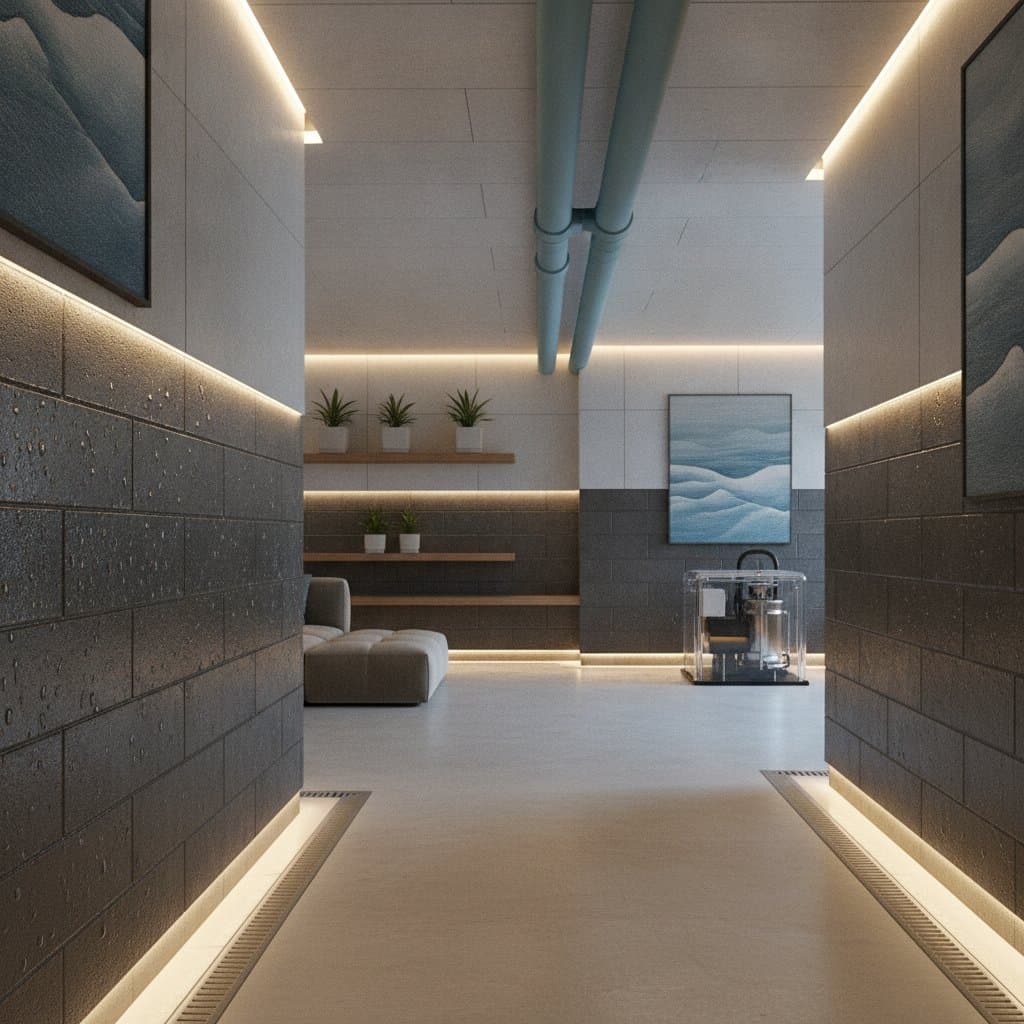
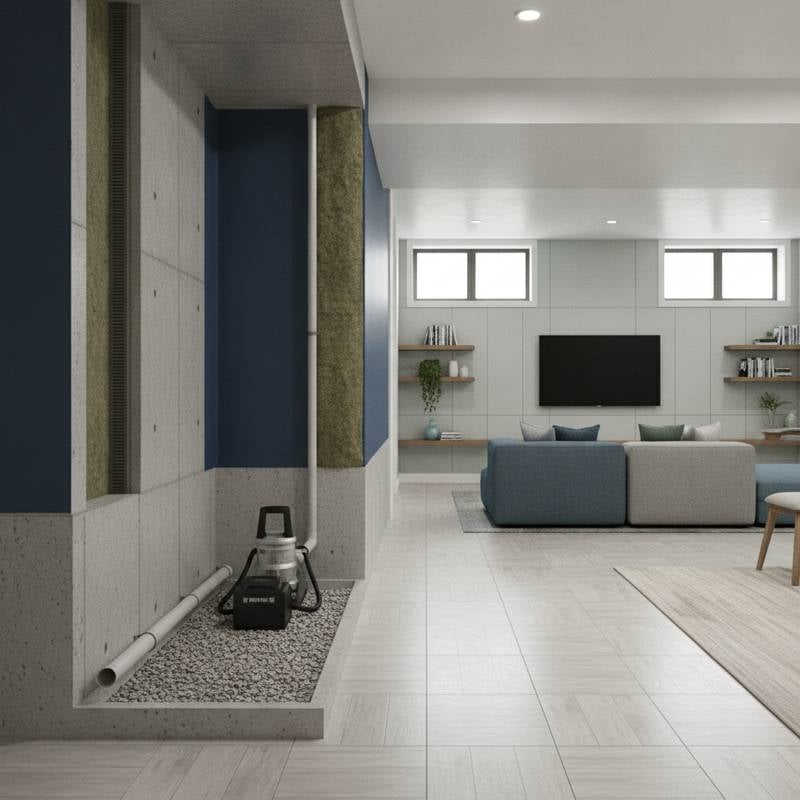
Excavate a shallow trench along the inside perimeter. Lay perforated pipe wrapped in filter fabric, then connect it to a sump basin. Backfill with clean gravel and top with concrete. Water should enter the basin freely without collecting along walls.
Sump Pump Setup
Place a submersible pump sized for the basement footprint. Add a battery or water-powered backup unit. The pump must start automatically once water reaches the activation level.
Wall and Floor Upgrades
Substitute standard drywall with cement board or closed-cell foam panels. Use epoxy-coated steel or composite studs in place of wood framing. Choose ceramic tile or vinyl plank for flooring. These materials resist swelling and mold growth when wet.
Exterior Waterproofing Measures
Apply a continuous membrane to the outer foundation walls. Add drainage board and gravel backfill. Extend downspouts and surface drains at least ten feet from the house. Rainwater must flow away without ponding near the foundation.
Safety Requirements
Disconnect power before any work near pumps or outlets. Protect all electrical connections with ground-fault circuit interrupter outlets. Avoid enlarging cracks or removing large concrete sections without engineering advice. Wear gloves, eye protection, and a respirator during coating and mixing tasks, and maintain good ventilation.
Common Issues and Corrections
Persistent dampness often traces to clogged pipes or improper exterior grading. A pump that runs nonstop may have a stuck float switch or an unusually high water table. Efflorescence on walls signals vapor movement and calls for an extra sealant coat.
After heavy rain, walls should stay dry. The sump pump should empty the basin within minutes. No musty smells or mold should develop.
Waste Handling
Place concrete dust, debris, and leftover materials in sealed bags. Follow local regulations for cement and chemical disposal. Never pour sealants or paints into drains. Recycle plastic pipe and metal parts at appropriate facilities.
Ongoing Care
Test sump pumps twice a year by adding water to the basin. Clean pipes and replace filters annually. Reapply interior coatings every five to ten years. Exterior membranes can last thirty years when installed correctly. Keep grading and downspout extensions in good condition to limit future moisture.
Situations Requiring Experts
Contact a licensed contractor for structural cracks wider than one inch, repeated flooding after drainage upgrades, mold behind finished walls, or signs of foundation movement. Foundation repairs range from 5,000 to 20,000 dollars. Exterior waterproofing costs 10,000 to 25,000 dollars. Complete basement remodeling falls between 20,000 and 50,000 dollars.
Verify that any contractor holds current licensing and insurance, possesses flood-resistant construction experience, supplies a written warranty, and provides recent client references.
Practical Recommendations
Maintain a backup generator for sump pumps during outages. Install water alarms near low areas. Store valuables on raised shelves. Keep dated records of inspections and maintenance.
Achieving Reliable Performance
Proper material choices, drainage layout, and routine care keep basements dry through heavy storms and high groundwater. These measures protect structural integrity and reduce future repair needs.