Universal Design Ideas for Aging-in-Place Bathrooms
Creating a bathroom that supports comfort, safety, and independence as you age requires careful planning. Universal design focuses on function and accessibility for everyone, regardless of mobility or ability. This guide explains how to remodel your bathroom to meet aging-in-place needs while maintaining style and value.
Cost and Time Estimates
Basic updates with grab bars and fixtures typically range from 2000 to 6000 dollars. A full remodel that includes an accessible shower, new flooring, and layout changes falls between 15000 and 35000 dollars. Luxury projects or those requiring structural changes often exceed 40000 dollars.
Costs depend on bathroom size, fixture quality, plumbing or electrical work, and local labor rates. DIY upgrades take two to seven days. Professional work usually requires two to four weeks. Minor updates suit experienced homeowners, yet major changes call for a licensed contractor.
DIY Tasks and Professional Work
Homeowners can safely install removable grab bars, replace faucets with lever handles, and add motion-sensor lights. Professionals should handle doorway widening, curbless showers, waterproof flooring, and any plumbing or electrical adjustments.
DIY projects stay under 1000 dollars in many cases. Full professional remodels average 20000 dollars or more. The added expense brings lasting safety improvements and better accessibility.
Step-by-Step Planning and Installation
Assess the Current Space
Measure door width, fixture spacing, and turning radius. Note lighting levels, floor texture, and fixture heights. Successful assessment reveals at least three areas that limit movement or raise fall risk.
Plan the Layout
Reserve at least five feet of clear floor space for mobility devices. Arrange the toilet, sink, and shower so each remains reachable without obstacles. A workable layout lets users move between fixtures without contact with walls or doors.
Choose Accessible Fixtures
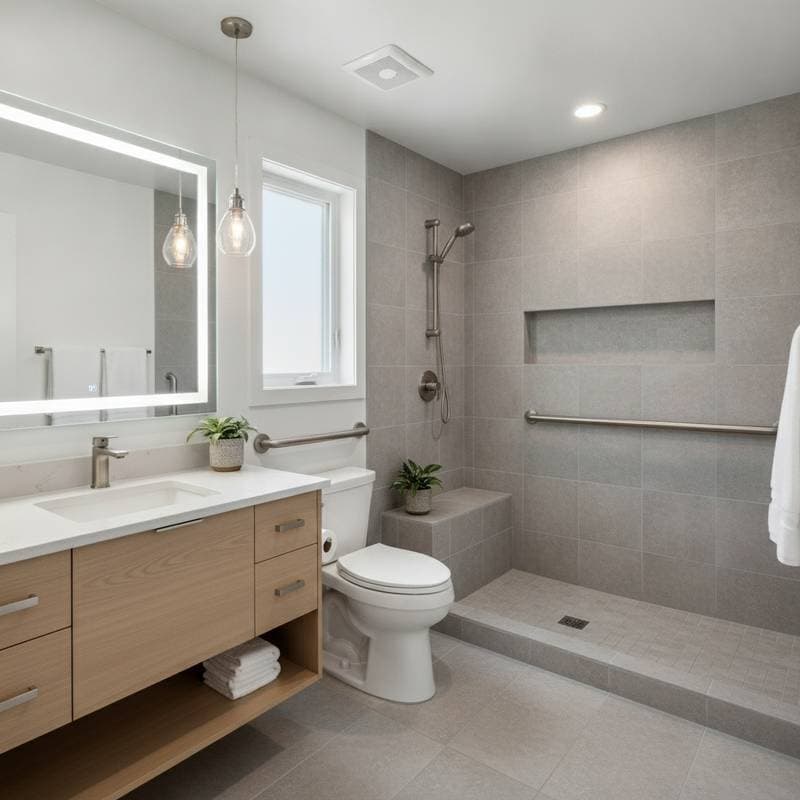
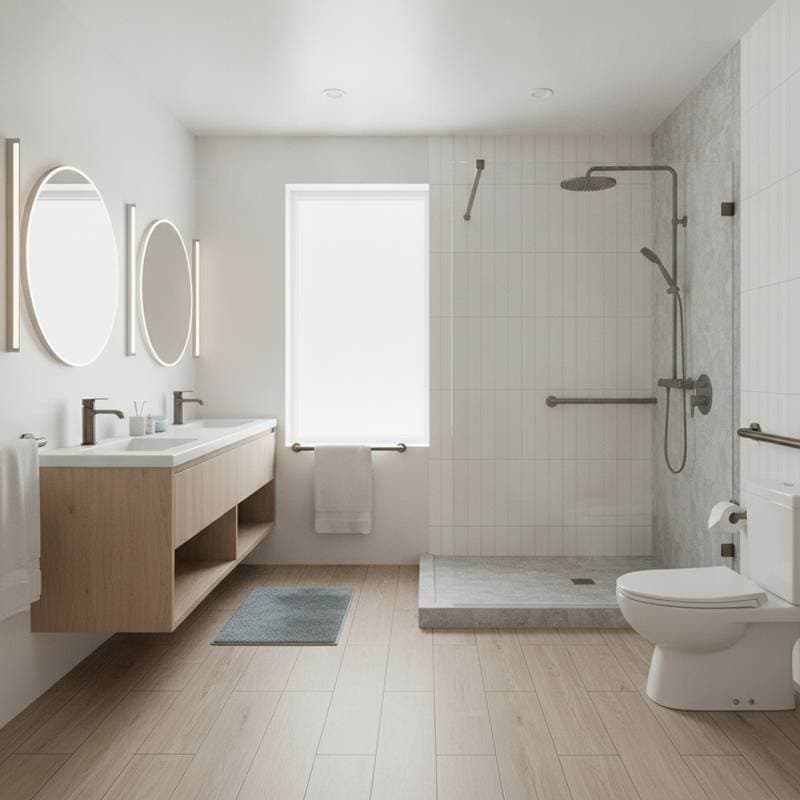
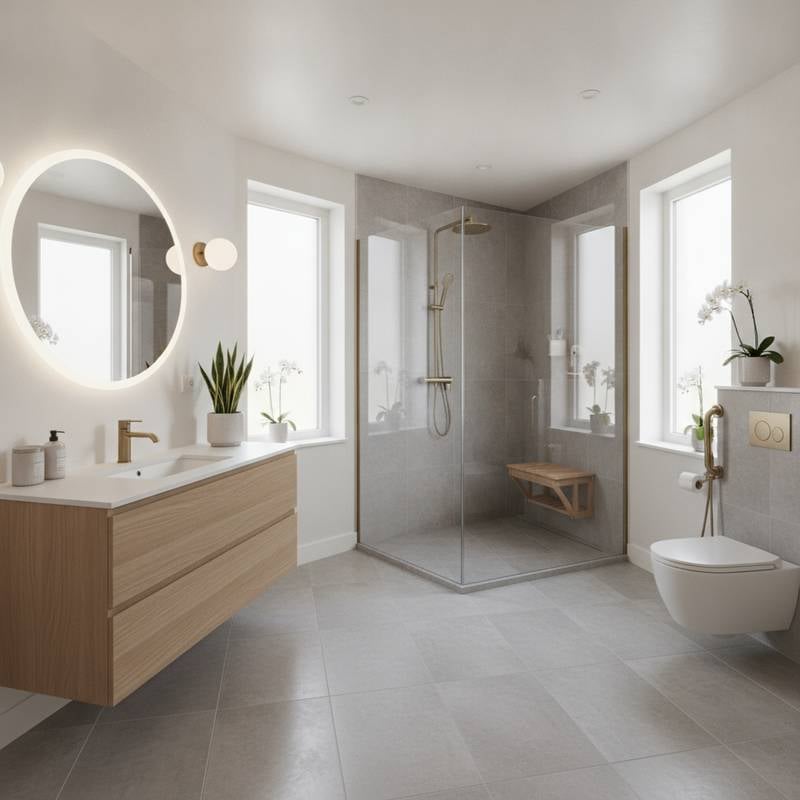
Select a comfort-height toilet with a seat 17 to 19 inches above the floor. Mount a sink that provides knee clearance beneath the basin. Install a curbless shower paired with a handheld showerhead. Each fixture should function from either a seated or standing position.
Improve Lighting and Visibility
Place bright, even light sources above the sink, shower, and toilet. Use contrasting colors on floors, walls, and counters to aid depth perception. Finished lighting eliminates shadows and glare in primary work zones.
Upgrade Flooring
Choose slip-resistant vinyl, rubber, or textured porcelain tile. Skip loose rugs that shift underfoot. The finished floor must remain safe when wet or when mobility aids are in use.
Install Grab Bars and Support Rails
Secure grab bars beside the toilet, at the shower entry, and inside the shower. Anchor every bar into wall studs. Properly installed bars stay rigid when pulled with full body weight.
Modify Doors and Hardware
Replace round knobs with lever handles. Consider pocket or sliding doors when space is limited. Completed doors open with one hand or reduced grip strength.
Add Smart and Safety Features
Install motion-sensor lights that activate automatically at night. Fit anti-scald valves on all hot-water lines. Water temperature stays steady and lighting responds without manual switches.
Safety Warnings and Tips
Turn off power before work on lighting or outlets. Use ground-fault circuit interrupter outlets in every wet zone. Install grab bars before first use of new showers. Keep floors dry and free of clutter during and after construction. Wear gloves, safety glasses, and non-slip footwear throughout the project.
Troubleshooting and Quality Checks
Water pooling near the shower entry usually means the floor slope needs adjustment toward the drain. Loose grab bars require re-anchoring into studs with correct hardware. Uneven lighting improves with diffused fixtures or repositioned sources. Final verification includes moving through the space with a walker or chair to confirm clearances.
Cleanup and Disposal
Take old fixtures and debris to local recycling or waste centers. Cover sharp edges during removal. Vacuum dust and wipe surfaces before resuming normal use.
Maintenance and Lifespan
Inspect grab bars, flooring, and caulking several times each year. Clean non-slip surfaces with mild detergent to retain texture. Swap bulbs for bright LED models as needed. Quality fixtures and flooring last 15 to 25 years under routine care.
When to Call a Professional
Contact a licensed contractor for structural changes, plumbing relocation, or electrical work near water. Curbless showers with custom drainage also require professional installation. Professional projects in the 15000 to 35000 dollar range benefit from verified licensing, written estimates, prior client references, and clear warranty terms.
Planning for Lasting Independence
Begin design work before mobility changes become urgent. Select finishes that combine function with lasting visual appeal. Test fixture placement with temporary mock-ups. Maintain wide, uncluttered pathways. Partner with contractors experienced in universal design to meet code requirements and ensure reliable performance over time.