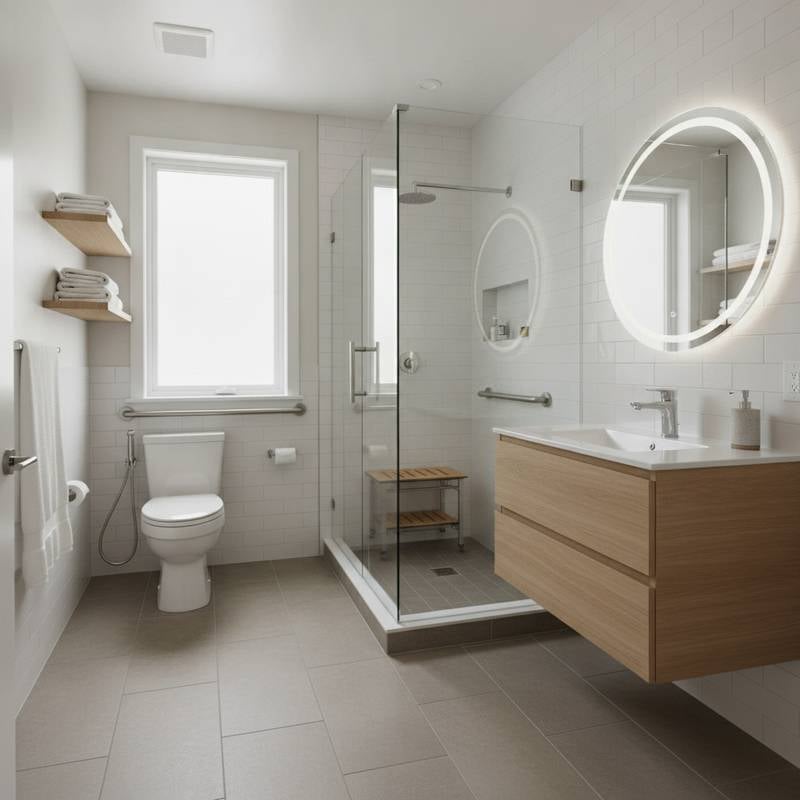
Designing Bathrooms for Aging in Place with Universal Design
A bathroom remodel designed for aging in place usually costs between $12,000 and $28,000. The average project lands around $19,000. Total expense depends on space size, material selections, fixture choices, and the number of accessibility upgrades. Labor typically represents 40 to 60 percent of the budget.
Cost Overview by Project Scope
Small half baths need fewer changes and usually fall between $6,000 and $12,000. Updates often include a raised toilet, better lighting, and slip resistant flooring. Full bathroom remodels that add roll in showers and new cabinetry range from $15,000 to $30,000. Large master suites with custom tile, multiple grab bars, and premium finishes can exceed $35,000.
Converting an existing layout costs less than expanding the footprint or relocating plumbing. New construction offers layout flexibility yet adds framing and electrical expenses.
Primary Cost Drivers
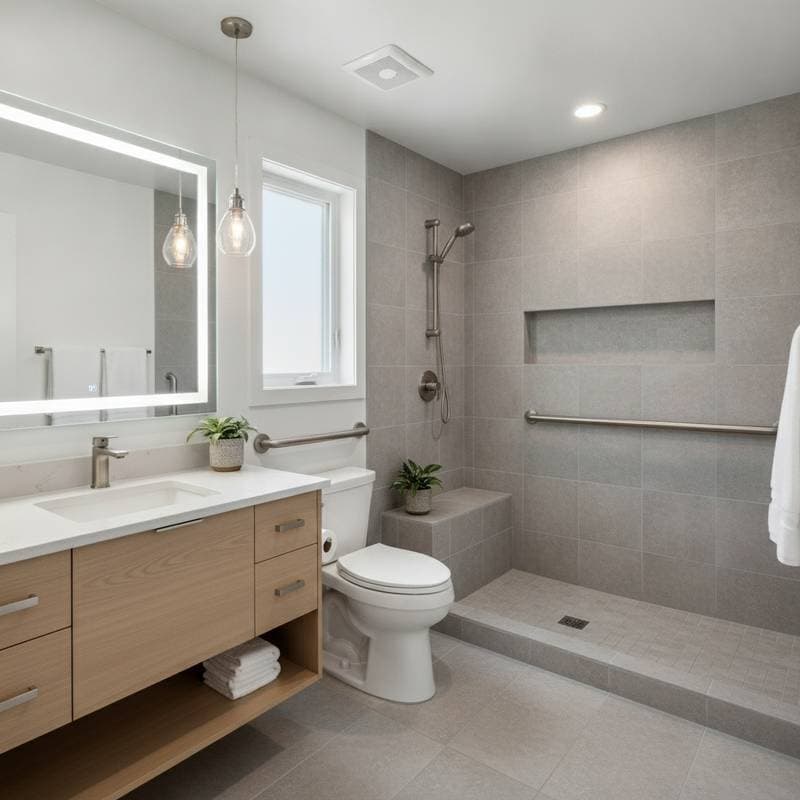
- Walk in showers without thresholds add $3,000 to $8,000.
- Non slip flooring runs $6 to $15 per square foot installed.
- Grab bars cost $150 to $400 each.
- Comfort height toilets average $400 to $900.
- Widened doorways and accessible layouts add $1,000 to $3,000.
Professional installation ensures waterproofing meets code and prevents future leaks.
Contractor Rates and Project Execution
Licensed contractors charge $75 to $150 per hour. Rates vary by region and project complexity. Plumbing, tile work, and electrical tasks require specialized skills. Errors in waterproofing or fixture placement lead to expensive corrections.
Homeowners with experience can handle minor updates such as grab bar installation or fixture swaps. These small projects cost $500 to $3,000. Major changes involving plumbing or structural work require permits and professional oversight. Proper execution avoids code violations and maintains safety standards.
Additional Planning Considerations
Barrier free layouts may require wall reconfiguration or plumbing relocation. These steps add $2,000 to $5,000. Durable materials such as porcelain tile and quartz countertops range from $5 to $25 per square foot. Layered lighting with motion sensors averages $800 to $2,000. Permit fees typically run $300 to $800.
Strategies to Control Expenses
- Keep plumbing lines in their current positions.
- Choose mid range materials that balance durability and cost.
- Incorporate accessibility features during initial design.
- Select prefabricated shower units instead of custom tile.
- Combine multiple upgrades in a single project.
Energy efficient fixtures further reduce ongoing utility costs.
Safety and Comfort Upgrades
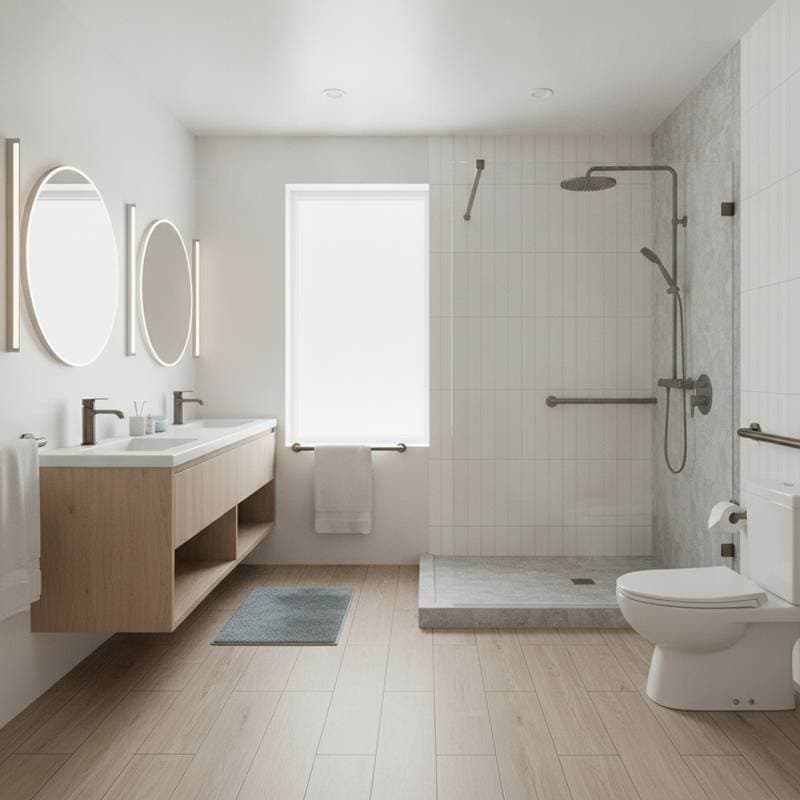
Universal design improves access without compromising appearance. Curbless showers provide wheelchair clearance. Grab bars positioned near toilets and showers serve dual purposes. Handheld showerheads with adjustable mounts reduce reaching. Lever faucets require minimal grip strength. Comfort height toilets ease sitting and standing. Flooring must achieve a wet surface coefficient of at least 0.42.
Return on Investment and Lasting Value
Homeowners recover 55 to 70 percent of costs upon resale. The greater benefit lies in sustained independence and reduced fall risk. Properties with these features attract a wider buyer pool seeking accessible living spaces.
Regular maintenance such as grout resealing and fixture inspections preserves safety and function over time.