Universal Design: Age Comfortably in Your Own Home
Quick Answer Box
Universal design makes your home safe and comfortable for all ages and abilities. It suits homeowners who plan to stay in their homes long term. A full-home remodel with universal design features can take one to three weeks for targeted areas and cost from a few hundred dollars for minor updates to several thousand for major changes. The main risks are falls and electrical hazards if you modify fixtures without proper safety steps. Difficulty ranges from easy for small updates to advanced for structural changes.
Before You Start
Check if your local building code requires a permit for changes to plumbing, electrical, or structural elements. Some accessibility modifications, such as widening doors or adding ramps, may require inspection.
Safety Warnings
- Fall Risk: Wear non-slip shoes and use sturdy ladders for overhead work.
- Electrical Hazard: Turn off power at the breaker before replacing outlets or switches.
- Structural Warning: Do not remove or alter load-bearing walls. Hire a licensed contractor for these tasks.
Skill Level and Time
- Skill: Moderate for most updates
- Time: Varies by project size, typically one day to two weeks
Step-by-Step Instructions
1. Assess Your Home Layout
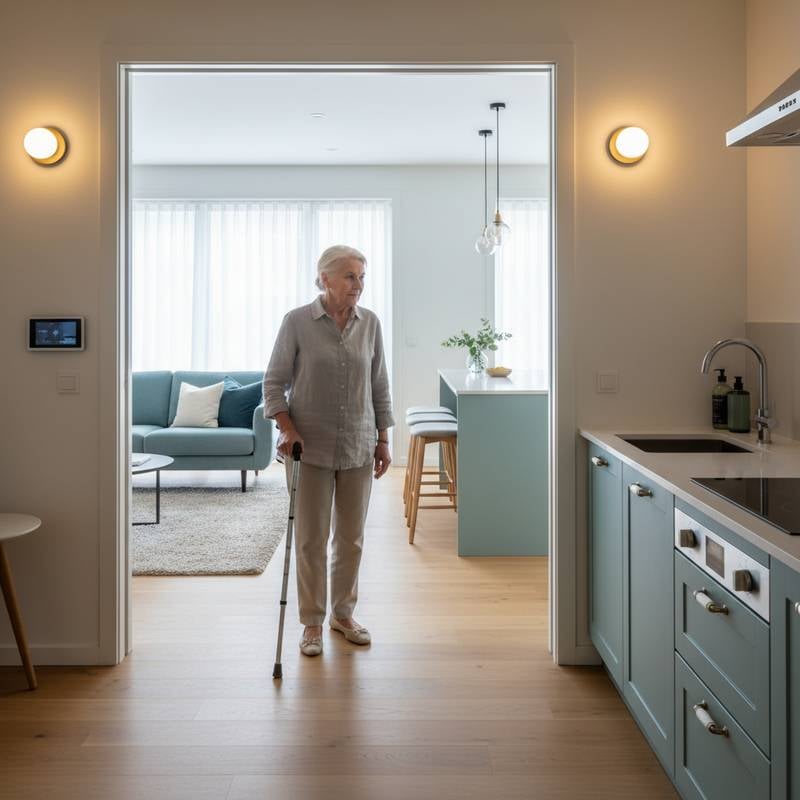
Walk through your home and note narrow doorways, high thresholds, and poor lighting. Measure door openings. Aim for at least 32 inches of clear width.
Check: You can move freely through main areas without turning sideways or bumping into obstacles.
2. Improve Lighting and Visibility
Add brighter, even lighting in hallways, stairs, and bathrooms. Use LED bulbs with warm light for comfort. Position fixtures to eliminate shadows on stairs and pathways.
Check: No dark spots remain in high-traffic areas.
3. Replace Round Door Knobs with Lever Handles
Lever handles are easier for weak hands or arthritis. Remove existing knobs with a screwdriver and install new handles following the package instructions. Select handles with a smooth, extended lever for effortless operation.
Check: You can open doors with one hand or elbow.
4. Install Grab Bars and Handrails
Warning: Use a stud finder to locate solid backing before drilling. Grab bars must be anchored into studs, not drywall.
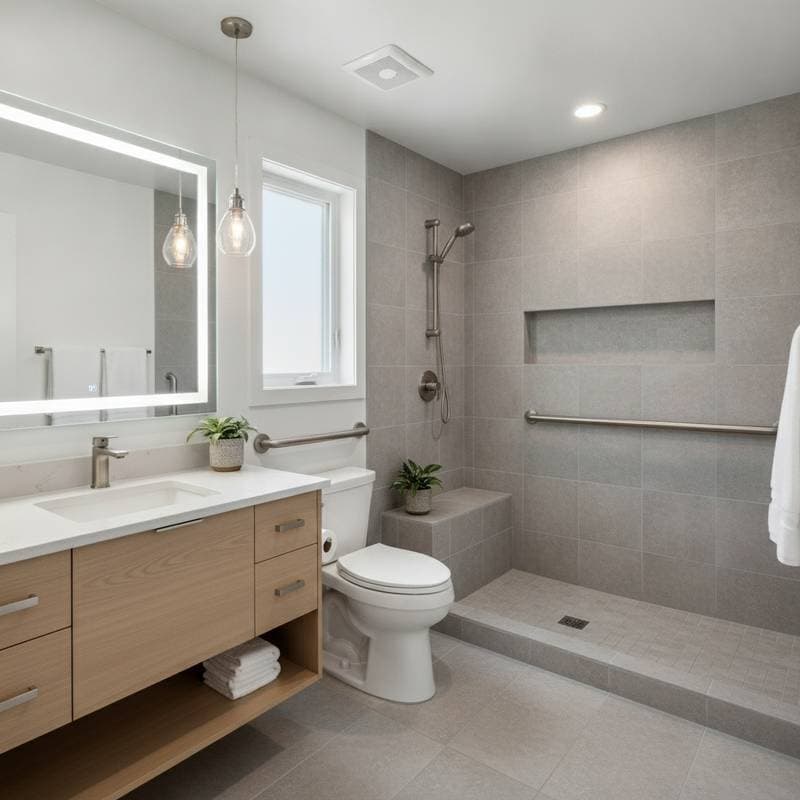
Mount bars near the toilet, shower, and tub. Use stainless steel screws rated for weight-bearing. Position bars at 33 to 36 inches above the floor for optimal support.
Check: Bars do not move when you pull firmly.
5. Adjust Bathroom Fixtures
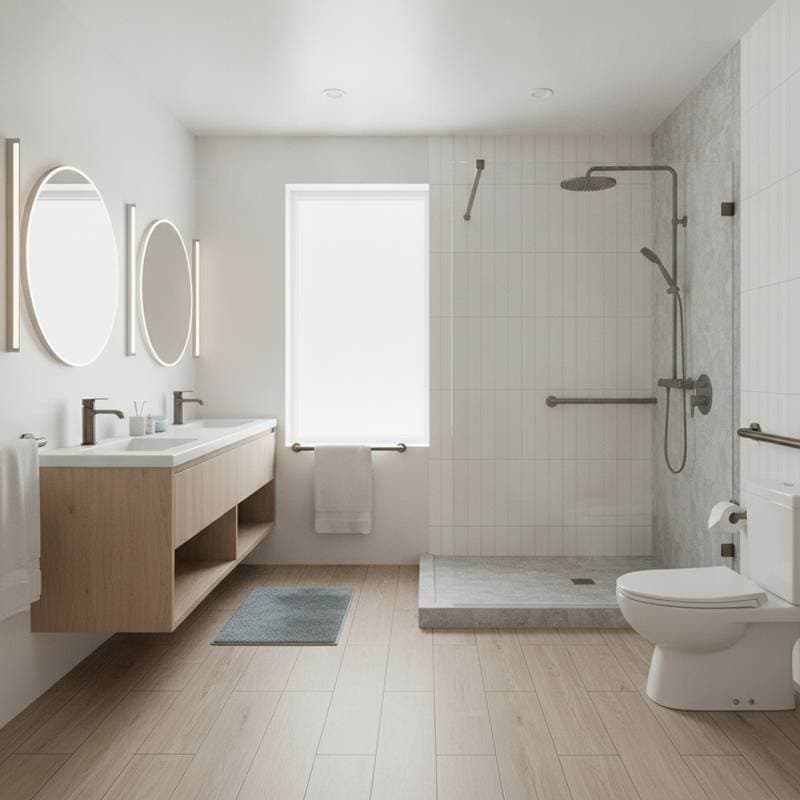
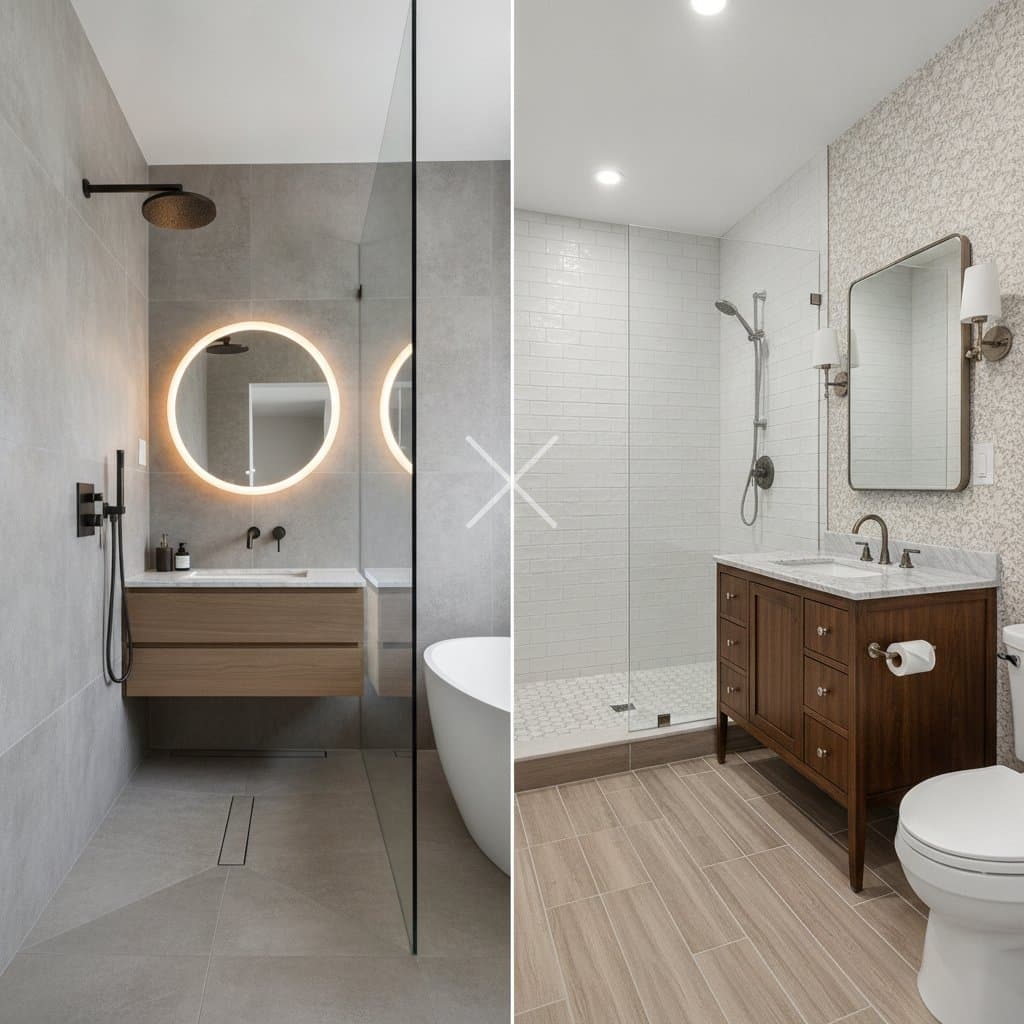
Set sink height between 30 and 34 inches for wheelchair access. Choose a curbless shower or add a ramped edge for entry. Install lever faucets and pedestal sinks to reduce bending requirements.
Check: You can enter and exit the shower without stepping over a tall edge.
6. Update Flooring
Replace slick tile with non-slip vinyl or textured laminate. Avoid thick rugs that can trip or catch walkers. Secure edges of any remaining rugs with double-sided tape to prevent curling.
Check: Surfaces feel firm and secure underfoot.
7. Lower Switches and Raise Outlets
Place light switches about 42 inches above the floor and outlets 18 inches above.
Electrical Hazard: Shut off power before removing faceplates. If unsure, hire a licensed electrician.
Test all relocated controls for functionality after installation.
Check: You can reach all controls from a seated or standing position.
8. Widen Doorways or Remove Barriers
Widen narrow openings with pocket or barn doors. For heavy framing work, hire a contractor to avoid structural issues. Ensure thresholds are flush with the floor to eliminate tripping hazards.
Check: Doors open smoothly with at least 32 inches of clearance.
Cleanup and Disposal
Gather removed hardware, flooring scraps, and packaging. Recycle metal parts when possible. Dispose of old flooring and fixtures at a local waste facility. Vacuum dust and wipe surfaces with mild cleaner.
Quality Checks and Troubleshooting
- Grab bars should hold firm with no flex.
- Lighting should prevent glare and shadows.
- Doors should close easily without sticking.
If outlets or switches fail after relocation, confirm power is restored at the breaker. Contact a licensed electrician if the issue persists.
Maintenance and Lifespan
Inspect grab bars, railings, and flooring every six months. Replace worn non-slip mats or lights that dim. Clean handles and switches with mild soap to prevent grime buildup. Universal design features typically last many years with basic care.
When to Call a Pro
Hire a licensed contractor for structural changes, electrical rewiring, or plumbing relocation. Expect costs from a few hundred dollars for minor electrical work to several thousand for full bathroom or kitchen remodeling. Always verify insurance and references before signing a contract.
Essential Strategies for Effective Implementation
- Start with the rooms you use most, such as the bathroom and kitchen.
- Choose finishes that match your current decor for a cohesive look.
- Plan for future needs, including wheelchair or walker use.
- Keep pathways at least 36 inches wide for easy navigation.