Mass Timber Versus Traditional Construction: A Comprehensive Cost Analysis
Mass timber has emerged as a viable sustainable option to steel and concrete in modern building practices. Builders and developers increasingly consider it for projects demanding efficiency and environmental responsibility. This examination contrasts mass timber with conventional methods across key factors such as expenses, durations, and overall value to inform strategic decisions.
Essential Comparison Points
Readers gain insights into material expenses, workforce requirements, and extended lifecycle economics. The analysis highlights scenarios where mass timber yields tangible efficiencies and instances where established approaches prove more suitable.
Expense and Schedule Projections
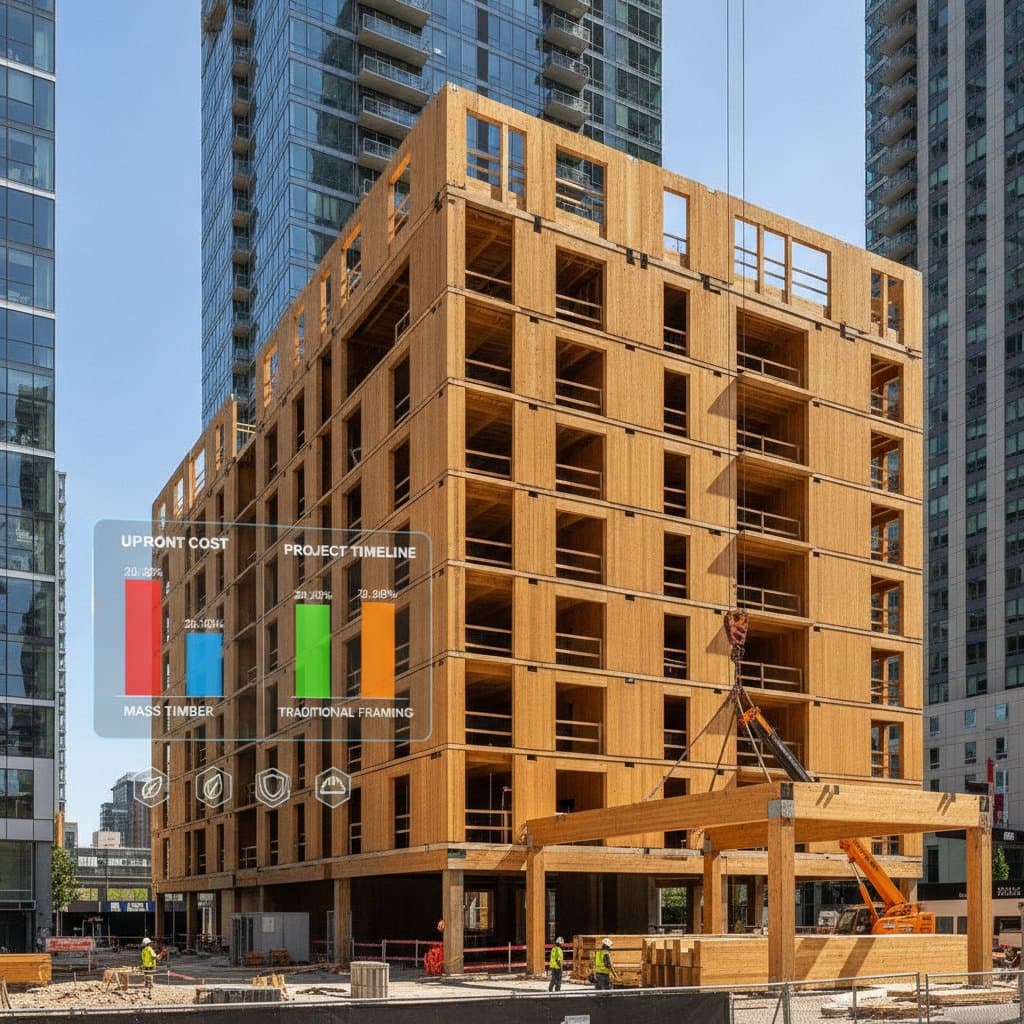
Typical Expenses per Square Foot
- Mass Timber: Ranges from $250 to $400, influenced by factors like regional availability and project scale.
- Conventional Concrete or Steel: Falls between $200 and $350, varying with site conditions and material sourcing.
Expenses fluctuate based on geographic location, architectural intricacy, and supply chain dynamics. In metropolitan areas with established fabrication facilities, mass timber benefits from streamlined delivery, potentially lowering premiums. Remote sites face elevated transportation fees that amplify initial outlays.
Construction Durations
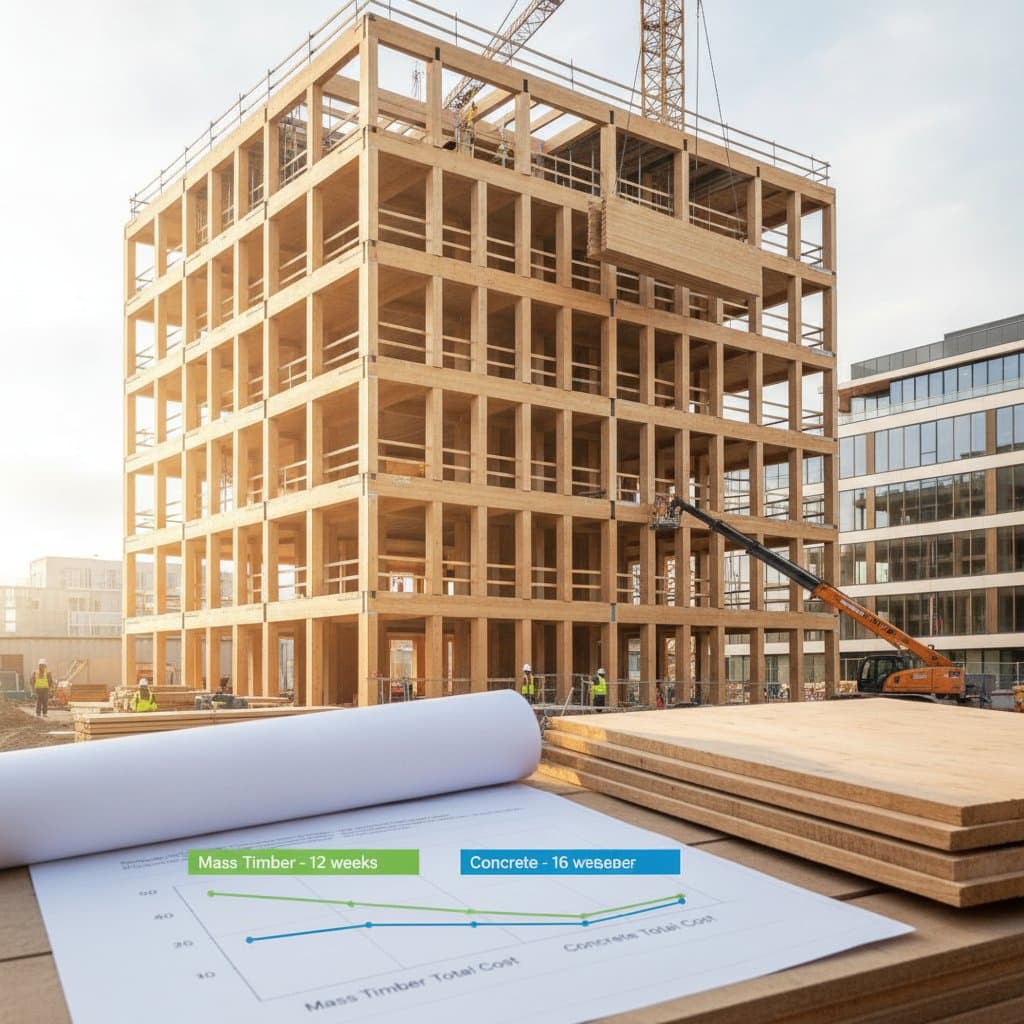
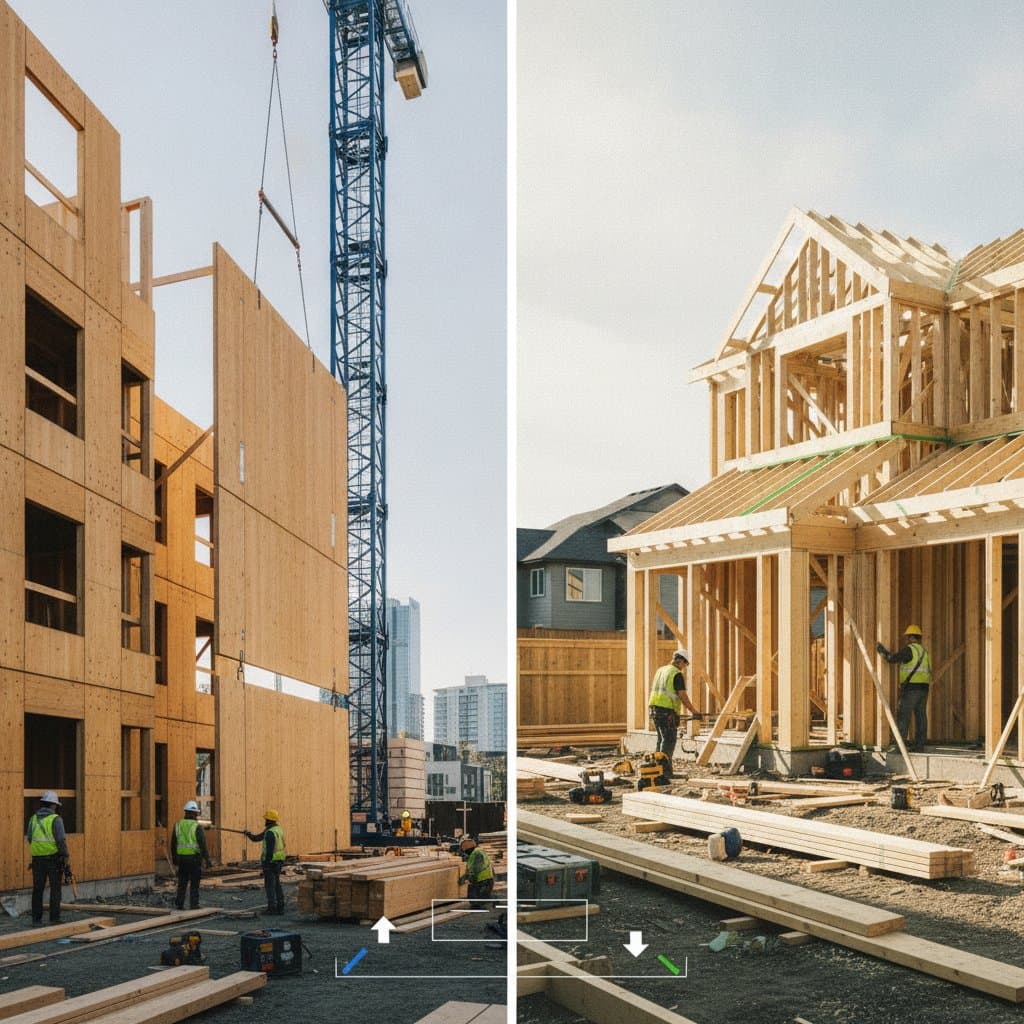
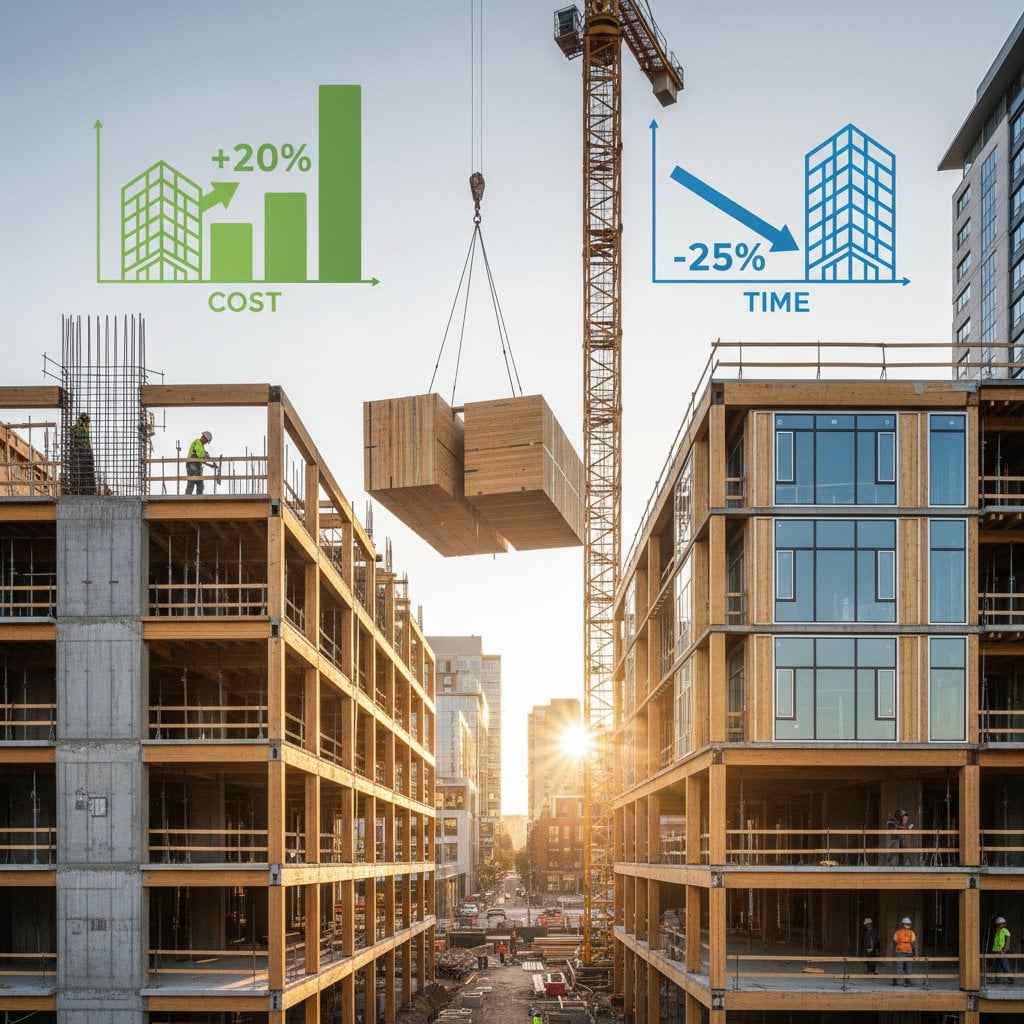
- Mass Timber Projects: Proceed 20 to 25 percent quicker than equivalents in steel or concrete, thanks to off-site prefabrication and minimal on-site processing.
- Conventional Projects: Extend longer due to necessities like formwork erection, material curing, and coordinated labor efforts.
Complexity Assessment
Mass timber demands moderate to advanced proficiency, emphasizing meticulous design integration and skilled assembly techniques.
Professional Involvement Over Self-Directed Efforts
Mass timber suits professional execution exclusively, given the prefabricated nature of its components, which carry substantial weight and adhere to stringent engineering standards. Attempts at self-directed modifications risk structural compromise and safety violations.
Indicators for Engaging Experts
- Structures surpassing a single level.
- Connections requiring computed engineering assessments.
- Compliance with fire resistance or seismic regulations.
- Absence of qualified mass timber specialists.
Labor Expense Contrasts
- Self-Directed Traditional Framing: Applies to modest residential extensions at $10 to $25 per square foot.
- Expert Mass Timber Assembly: Encompasses $50 to $80 per square foot, covering specialized labor and integration.
Conventional framing aligns with minor residential undertakings like additions or outbuildings. Mass timber excels in expansive commercial or multi-unit residential endeavors, where accelerated timelines and ecological advantages offset premiums.
Essential Materials and Equipment
Mass Timber Components
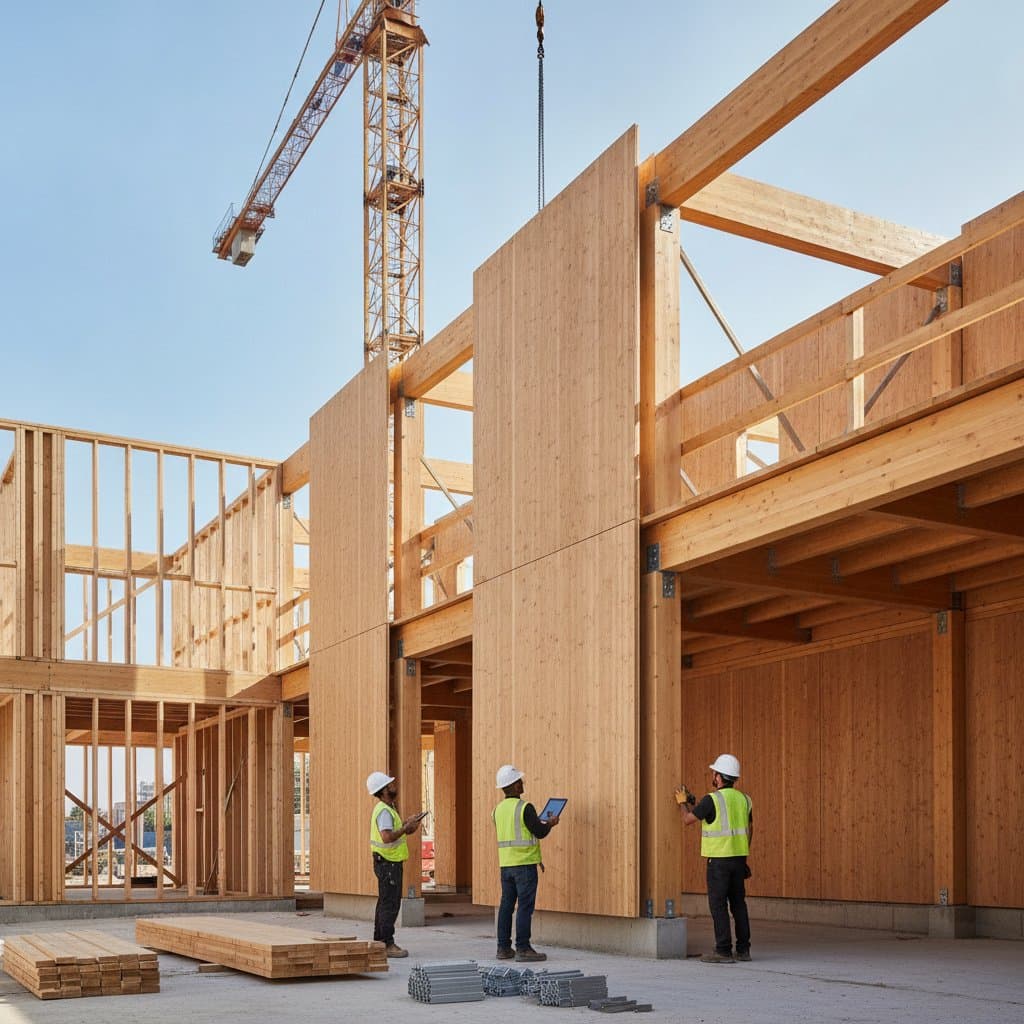
- Cross-laminated timber (CLT) panels for primary framing.
- Glued laminated (glulam) beams and columns for load-bearing elements.
- Engineered connectors, including steel plates, for secure joints.
- Protective barriers and sealants against moisture ingress.
Conventional Components
- Reinforced concrete or structural steel for core framework.
- Standard dimensional lumber for secondary supports.
- Temporary formwork for casting.
- Rebar, anchors, and mechanical fasteners for reinforcement.
Required Equipment
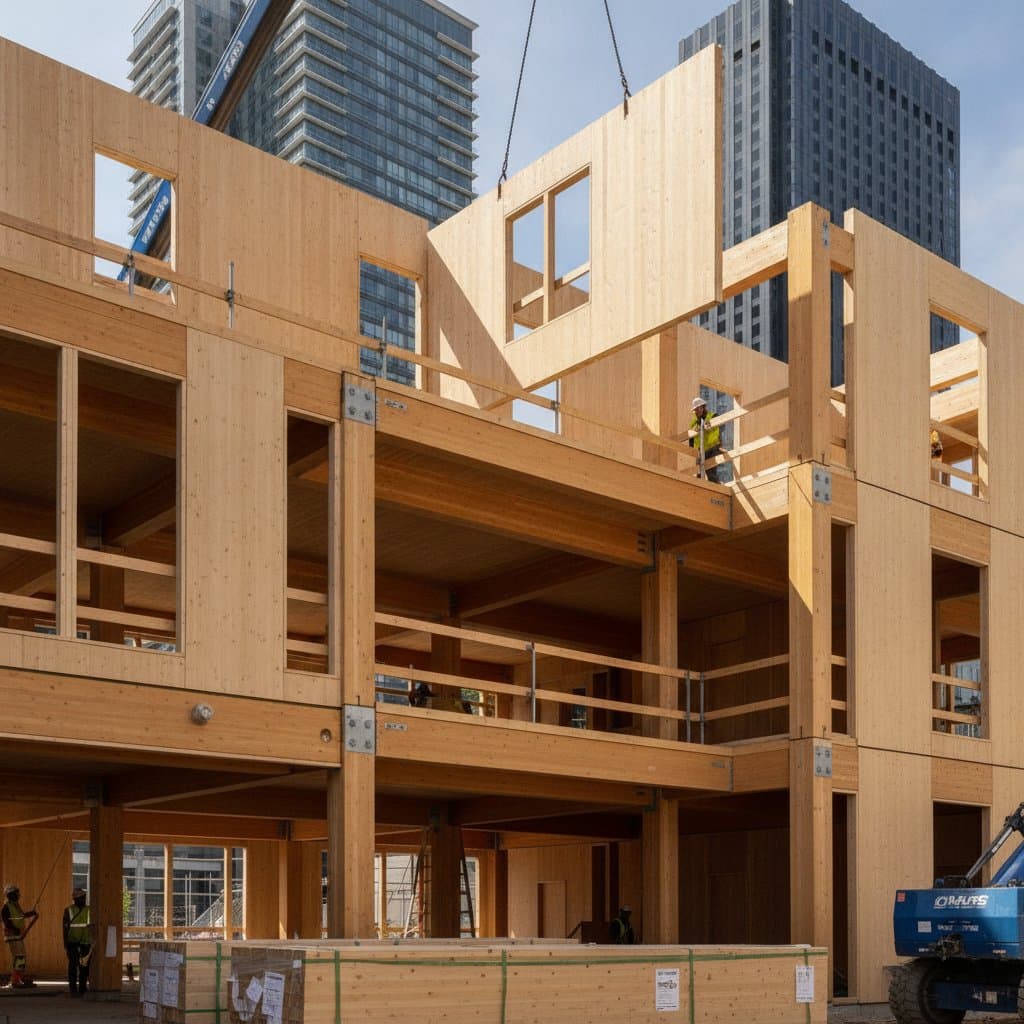
- Cranes or telehandlers to position large panels.
- Torque wrenches for precise fastener application.
- Laser levels and alignment tools for accuracy.
- Personal protective gear, including helmets, gloves, and harnesses.
Detailed Expense Evaluation Process
-
Design and Engineering Phase
Both methodologies incur design charges amounting to 5 to 10 percent of overall budgets. Mass timber necessitates advanced digital simulations to accommodate prefabrication precision. Verify that all load calculations and joint specifications conform to prevailing codes. -
Sourcing Materials
CLT fabrication occurs remotely, minimizing waste yet introducing scheduling delays. Concrete and steel procure locally but demand extensive handling of bulk resources. Ensure suppliers provide documentation for structural integrity and fire performance. -
Site-Based Workforce Activities
Mass timber installation involves compact teams swiftly erecting pre-made elements. Traditional methods deploy larger groups for forming, pouring, and monitoring cures. Confirm panel alignments achieve flush and level positioning prior to securing. -
Completion and Internal Fitting
Exposed mass timber surfaces frequently bypass drywall needs, curtailing finish expenditures. Conventional interiors mandate additional framing and surfacing. Examine seals and coatings for consistent application and protection.
Safety Protocols and Precautions
Elevated Fall Prevention
Large mass timber panels pose significant risks during hoisting. Secure perimeters rigorously and mandate fall arrest systems for overhead work.
Machinery Operation Alerts
Restrict crane usage to licensed personnel. Prohibit positioning beneath lifted loads to avert accidents.
Fire Protection Guidelines
Mass timber exhibits controlled charring that maintains core strength in flames. Adhere to jurisdiction-specific codes and utilize certified intumescent coatings for enhanced resilience.
Issue Resolution and Verification Procedures
Frequent Challenges and Remedies
- Joint Misalignments: Reassess levels and loosen bolts for adjustments before final torquing.
- Joint Moisture Accumulation: Seal promptly and integrate effective drainage solutions.
- Surface Fractures: Superficial marks occur naturally; substantial fissures warrant immediate engineering consultation.
Verification Protocols
- Torque all mechanical fasteners to prescribed values.
- Scan surfaces for dampness prior to enclosing.
- Obtain engineer approvals on all structural examinations.
Site Clearance and Waste Management
Direct wood scraps to recycling centers or biomass processors. Refrain from incinerating any treated residues. For concrete or steel operations, segregate ferrous materials for reclamation and observe municipal disposal protocols. Maintain tidy sites to mitigate slips and preserve materials.
Upkeep Requirements and Durability
Mass timber edifices endure 60 to 100 years under vigilant moisture and pest defenses. Renew sealants at five- to ten-year intervals and conduct yearly joint inspections. Concrete or steel frameworks achieve comparable longevity, though they demand rigorous interventions against rust and fissures.
Implement regular surface cleaning and climate regulation for preservation. Deploy dehumidification or airflow systems in moist environments to avert wood expansion or concrete degradation.
Criteria for Professional Consultation
Engagement Triggers
- Loads exceeding 10,000 pounds in structural demands.
- Incorporation of fire-resistant configurations.
- Necessity for certified engineering plans or approvals.
- Multi-level or commercial-scale constructions.
Standard Expert Fees
- Mass Timber Oversight: $150 to $250 per square foot for comprehensive delivery.
- Conventional Oversight: $130 to $220 per square foot.
Vendor Evaluation Criteria
- Active licensing and coverage.
- Proven experience with mass timber or CLT applications.
- Defined installation guarantees.
- Testimonials from comparable structural assignments.
Strategies for Optimal Outcomes
Initiate collaborations with architects and engineers versed in dual methodologies. Assess holistic expenses encompassing workforce, completions, and sustained care. Where regulations endorse mass timber and logistics support it, diminished construction periods balance material elevations.
Align selections with objectives in sustainability, efficiency, and deadlines. Proper planning ensures both mass timber and traditional paths yield robust, effective, and secure structures.