Mass Timber vs Traditional Construction: A Detailed Cost Comparison
Mass timber construction presents a compelling alternative to steel and concrete frameworks, particularly in terms of cost efficiency and sustainability. This analysis explores the financial implications of each method, drawing on industry data to highlight savings potential, influencing factors, and strategic considerations for project success.
Cost Overview
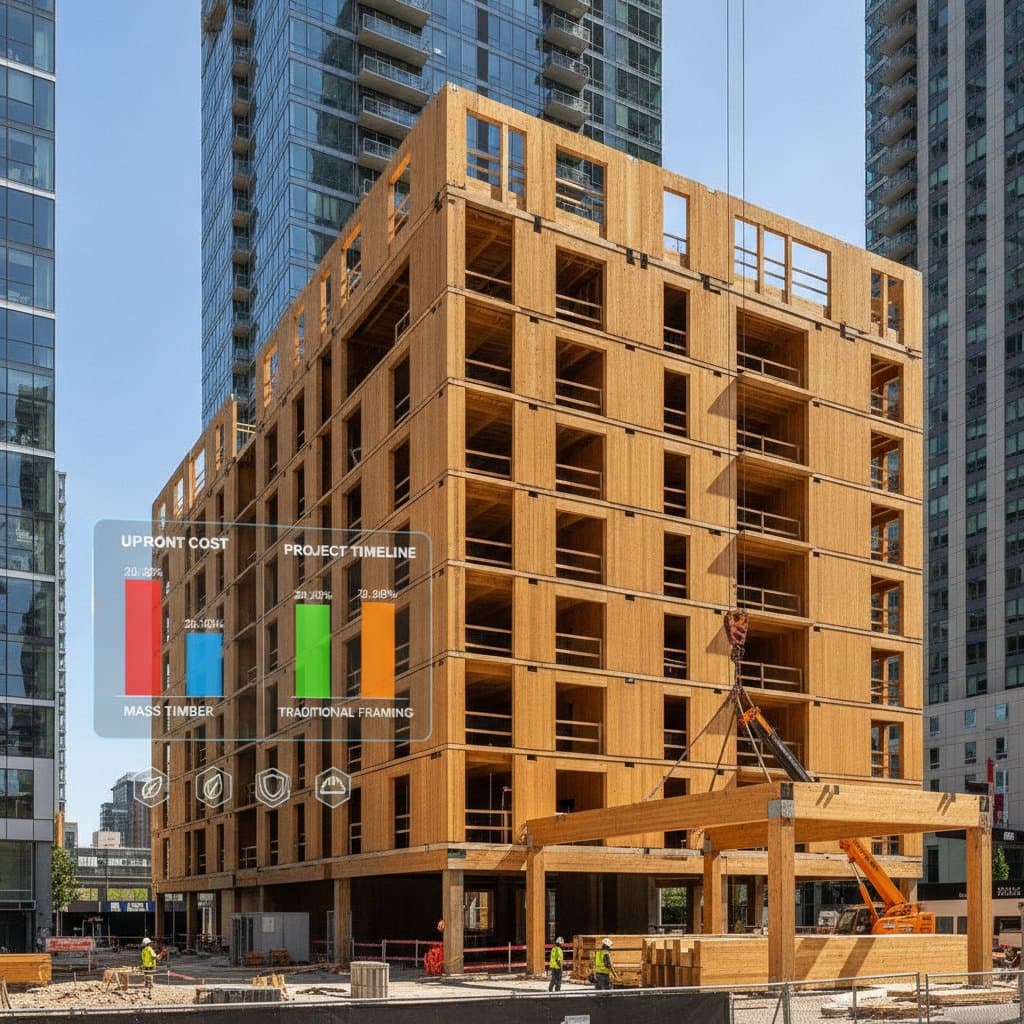
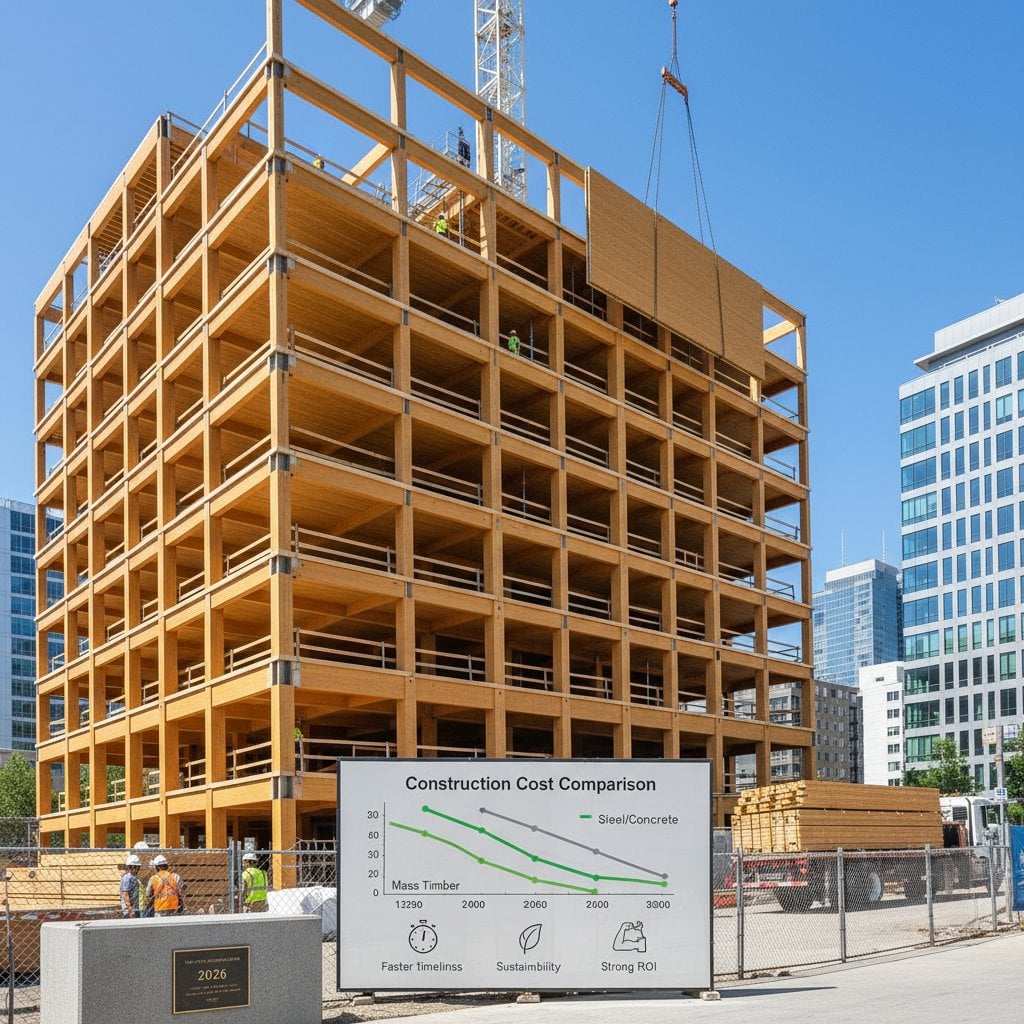
Mass timber projects generally range from $250 to $400 per square foot, whereas steel and concrete structures fall between $300 and $450 per square foot. These figures encompass materials, labor, and basic finishes, though variations arise from project scale, location, and design specifics.
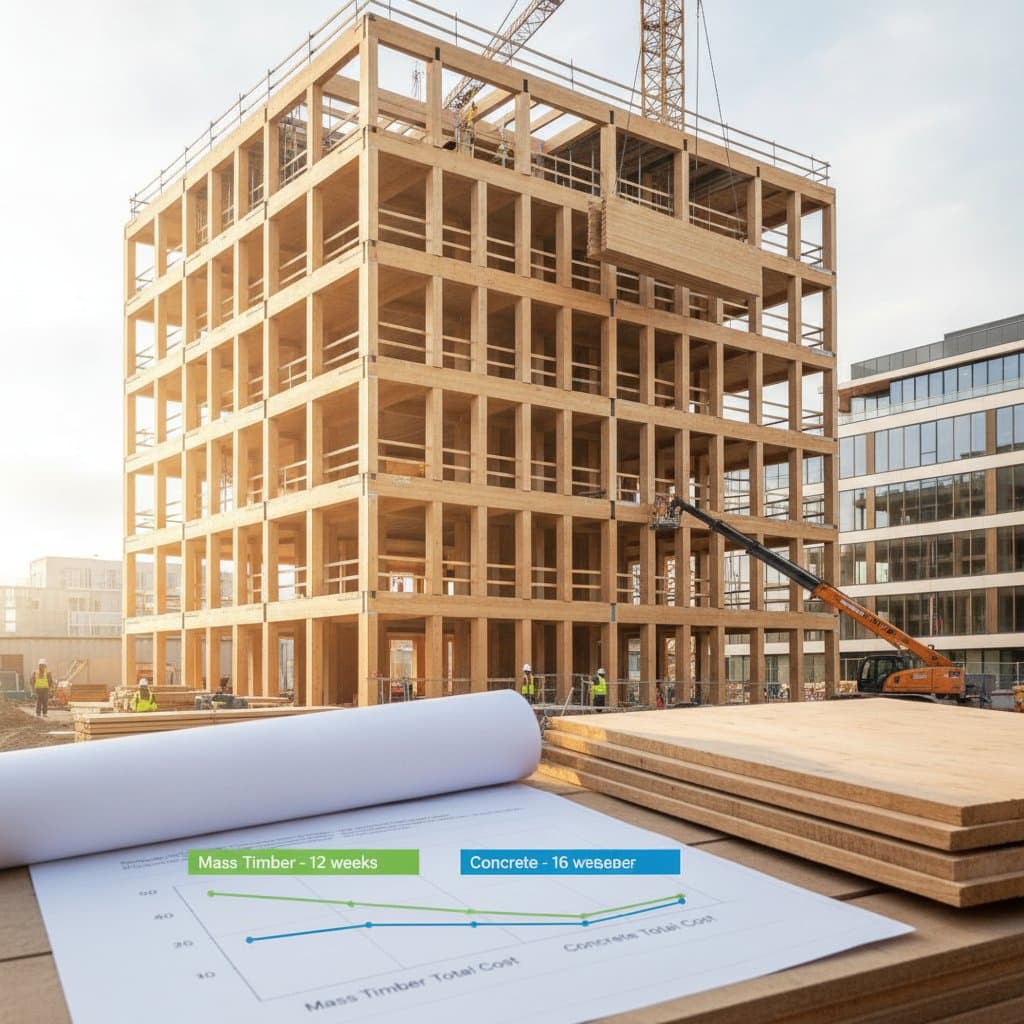
Mass timber excels in reducing overall timelines and foundation demands due to its lighter profile. Traditional approaches offer greater predictability in supply chains but often involve extended schedules and more robust support systems.
Key cost ranges per square foot:
- Mass timber: $250–$400
- Steel frame: $300–$450
- Concrete frame: $325–$475
Each option supports durable outcomes, yet the choice hinges on balancing immediate expenses with long-term benefits.
Essential Advantages and Considerations
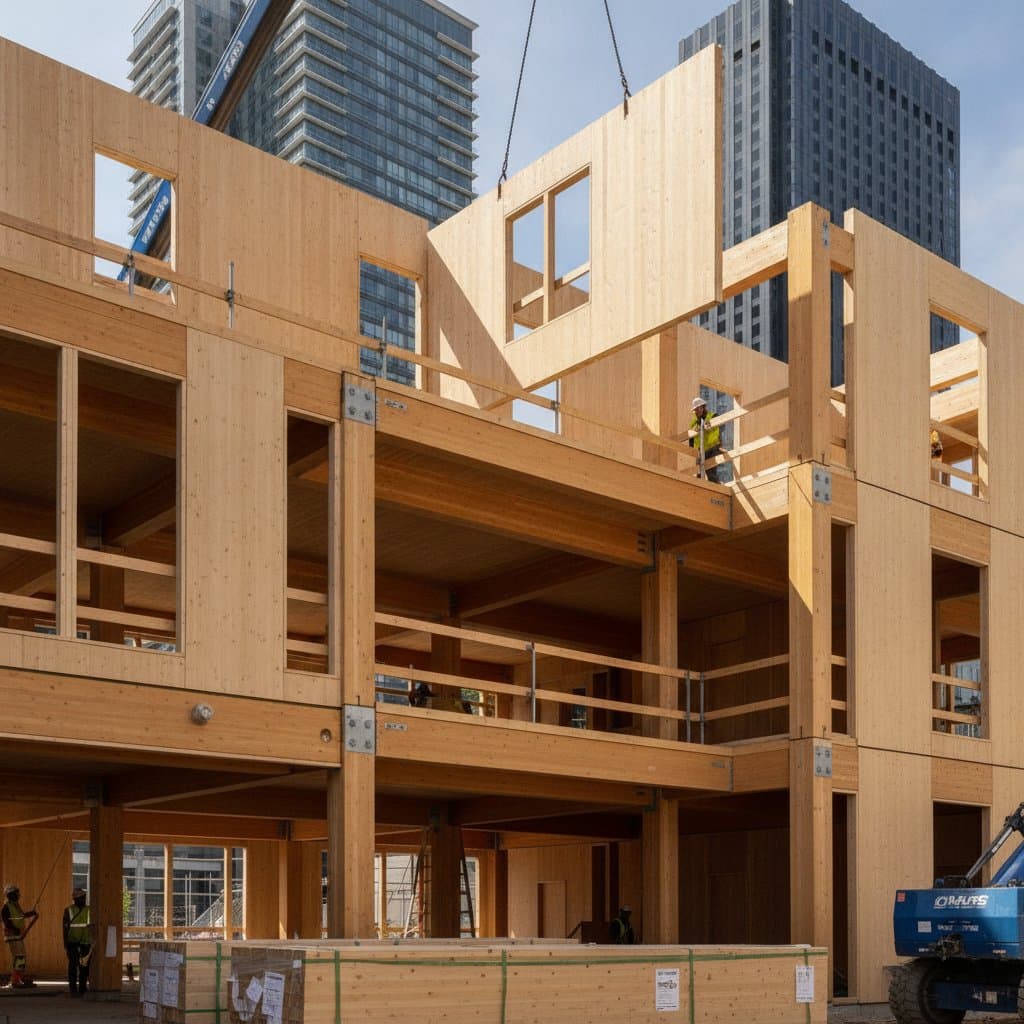
Mass timber accelerates construction by 10 to 25 percent through prefabrication, minimizing onsite disruptions. This approach demands upfront planning to align design with manufacturing processes.
Steel and concrete benefit from widespread availability, insulating projects from supply fluctuations. Lighter mass timber reduces foundation costs significantly, while regulatory hurdles like fire codes can adjust pricing.
Over time, mass timber enhances energy efficiency, potentially offsetting initial investments in specialized engineering.
Costs Across Project Scales
Low-Rise and Mid-Size Developments
For buildings under six stories, such as commercial offices or residential complexes, mass timber averages $250 to $350 per square foot. Comparable steel or concrete builds cost $300 to $400 per square foot.
Prefabricated elements enable rapid assembly with smaller teams, countering the premium on materials like cross-laminated timber. In projects below 50,000 square feet, savings peak from streamlined labor and simplified foundations.
High-Rise and Multifaceted Builds
Structures over six stories lean toward steel or concrete for superior fire resistance and span capabilities. Mass timber in these scenarios rises to $350 to $400 per square foot, with steel holding at $325 to $450 per square foot.
Hybrid models, integrating timber slabs with concrete or steel cores, average around $375 per square foot. These combinations optimize structural integrity while controlling expenses.
Labor and Contractor Expenses
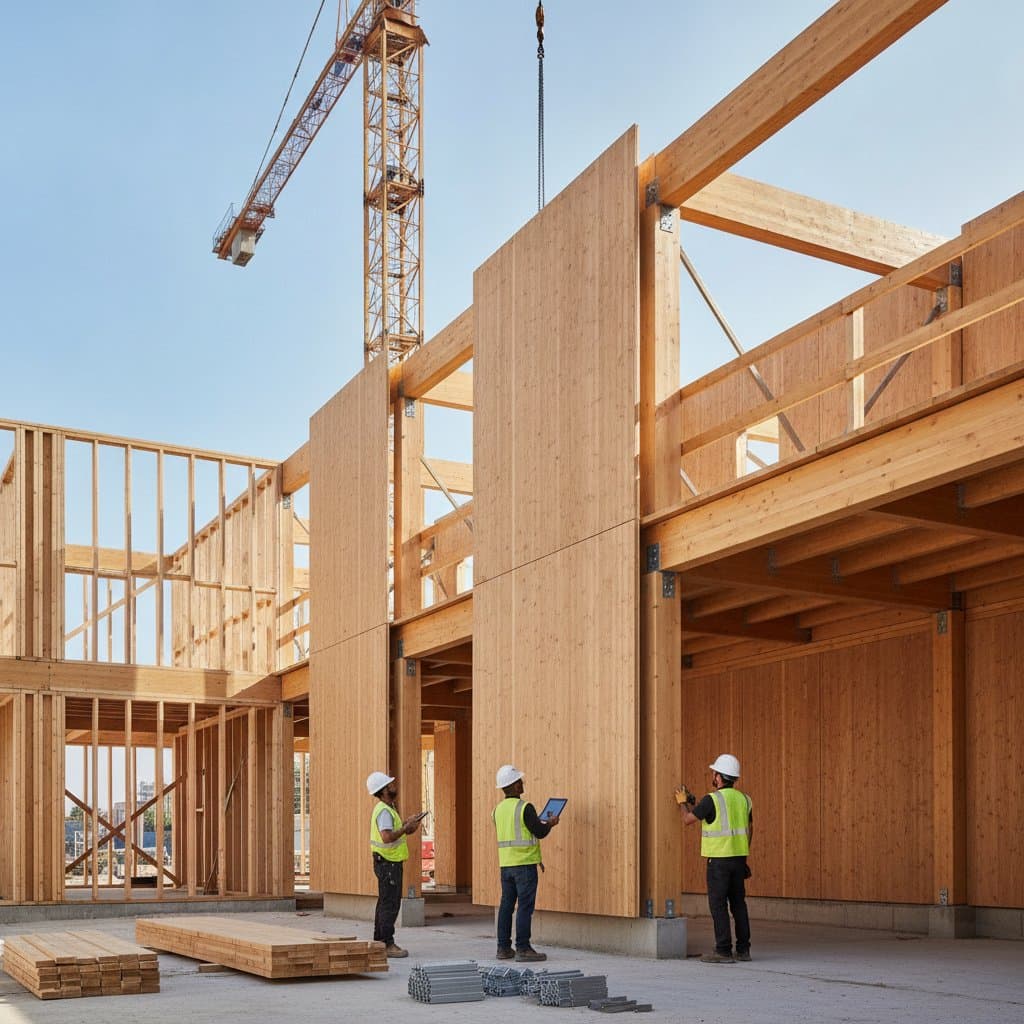
Labor represents a critical variable in project economics. Mass timber shifts much of the work to offsite fabrication, allowing fewer onsite personnel and halving framing durations relative to conventional methods.
Skilled timber installers command $50 to $75 per hour, higher than the $40 to $60 per hour for standard crews, due to specialized expertise. Logistics for transporting oversized panels require careful sequencing.
In comparison, steel and concrete distribute efforts across longer phases, stabilizing cash flow at the expense of prolonged overhead.
Influencing Cost Elements
Supply Chain Dynamics
Proximity to production facilities lowers mass timber expenses; distant sourcing adds $5 to $15 per square foot in freight. Steel and concrete enjoy consistent networks, though commodity price swings in steel or aggregates introduce variability.
Engineering and Design Demands
Mass timber necessitates integrated planning among architects, engineers, and manufacturers, elevating fees by 10 to 15 percent for simulations and regulatory adherence. Traditional designs incur lower upfront engineering but higher field oversight.
Regulatory and Safety Requirements
Fire compliance for mass timber may involve treatments or systems adding $10 to $25 per square foot. Steel fireproofing follows established protocols, facilitating accurate budgeting.
Strategies for Cost Reduction
- Involve multidisciplinary teams from project inception to minimize revisions and ensure seamless integration.
- Explore hybrid configurations to leverage timber's efficiencies alongside proven supports.
- Partner with local providers to cut logistics expenses on engineered wood.
- Opt for modular designs with uniform elements to streamline production.
- Optimize assembly sequences to limit equipment usage and personnel time.
- Pursue incentives for sustainable practices, such as tax credits for low-carbon materials.
Implementing these measures preserves project vision while yielding substantial budget relief.
Evaluating Long-Term Value
Mass timber generates returns through expedited leasing, reduced operational energy, and appeal in eco-conscious markets. Diminished construction periods ease financing burdens, and foundations save up to 20 percent.
The material's insulating qualities curb utility expenses, while aesthetic warmth boosts rental premiums in biophilic spaces. Steel and concrete provide enduring strength and favorable insurance terms, with viability tied to regional economics and upkeep.
Professional Guidance Versus Self-Management
Mass timber demands factory precision and licensed installers, rendering self-directed efforts impractical for scaled projects. Even modest applications require professional blueprints and oversight.
Conventional framing in smaller settings permits selective self-work on non-structural elements, trimming 10 to 15 percent from labor. Experts guarantee adherence to standards, warranties, and timelines, particularly vital for advanced assemblies.
Data Sources for These Estimates
Ranges stem from aggregated contractor bids, vendor pricing, and regional project records. They include core components like structures, bases, and surfaces, adjusted for typical site variables and market dynamics.
Assumptions cover moderate aesthetics and performance levels; luxury or custom work exceeds norms, while basic setups dip below.
Common Questions
What are the cost differences between mass timber and conventional builds?
Mass timber spans $250 to $400 per square foot, against $300 to $450 for steel or concrete.
Does mass timber undercut steel pricing?
Frequently, in mid-rise contexts where assembly speed offsets material premiums.
What concealed expenses arise in mass timber?
Planning oversights, safety upgrades, and delivery logistics can inflate totals without foresight.
How does mass timber's longevity compare to steel or concrete?
Equally robust with proper detailing and protection against environmental factors.
Do insurance rates vary by material?
Mass timber may face elevated premiums initially, pending broader industry acceptance.
Is mass timber viable for tall structures?
Viable with adaptations; hybrids often provide optimal economics.
What sustainability gains come from mass timber?
Carbon sequestration and lower production energy enhance environmental profiles.
Can existing structures incorporate mass timber?
Possible, subject to structural assessments and approvals, though costlier than ground-up builds.
Safeguarding Structural Value
Routine upkeep sustains performance across materials. Mass timber benefits from humidity regulation, sealants, and inspections to avert wear.
Steel and concrete require corrosion checks, sealing, and intrusion mitigation. Proactive measures across options minimize future outlays and uphold efficiency.
Advancing Your Project Planning
Assess objectives against financial, temporal, and performance metrics when selecting systems. Solicit comprehensive quotes from versatile contractors.
Break down estimates by category and verify local regulations upfront. Mass timber advances green innovation, complemented by the reliability of established alternatives. Align your decision with precise needs for enduring success.