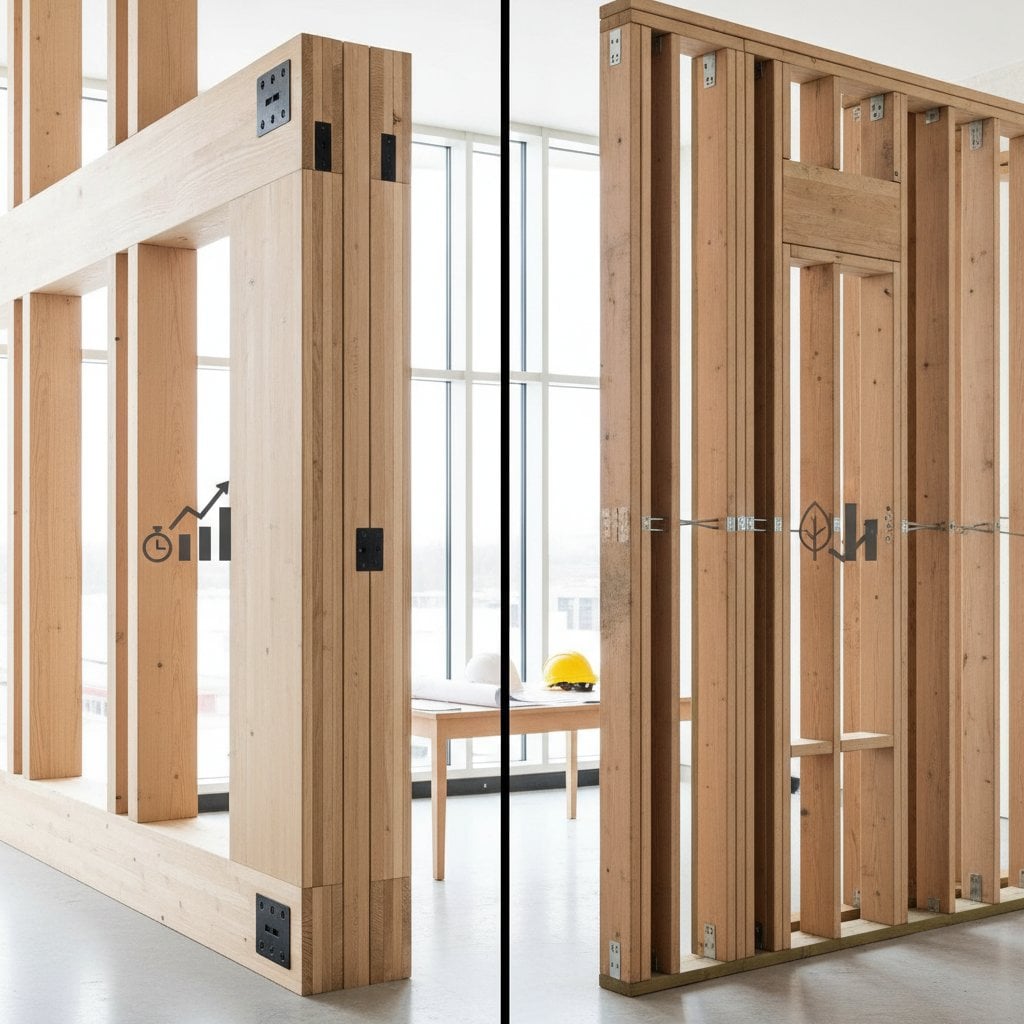
Mass Timber Versus Traditional Framing: Cost Comparison
Mass timber construction uses large engineered panels such as cross-laminated timber and glulam beams. Traditional wood framing relies on dimensional lumber assembled on site. This comparison examines material prices, labor requirements, schedules, and long-term performance so project teams can select the approach that matches their budget and goals.
Cost Ranges and Schedule Impacts
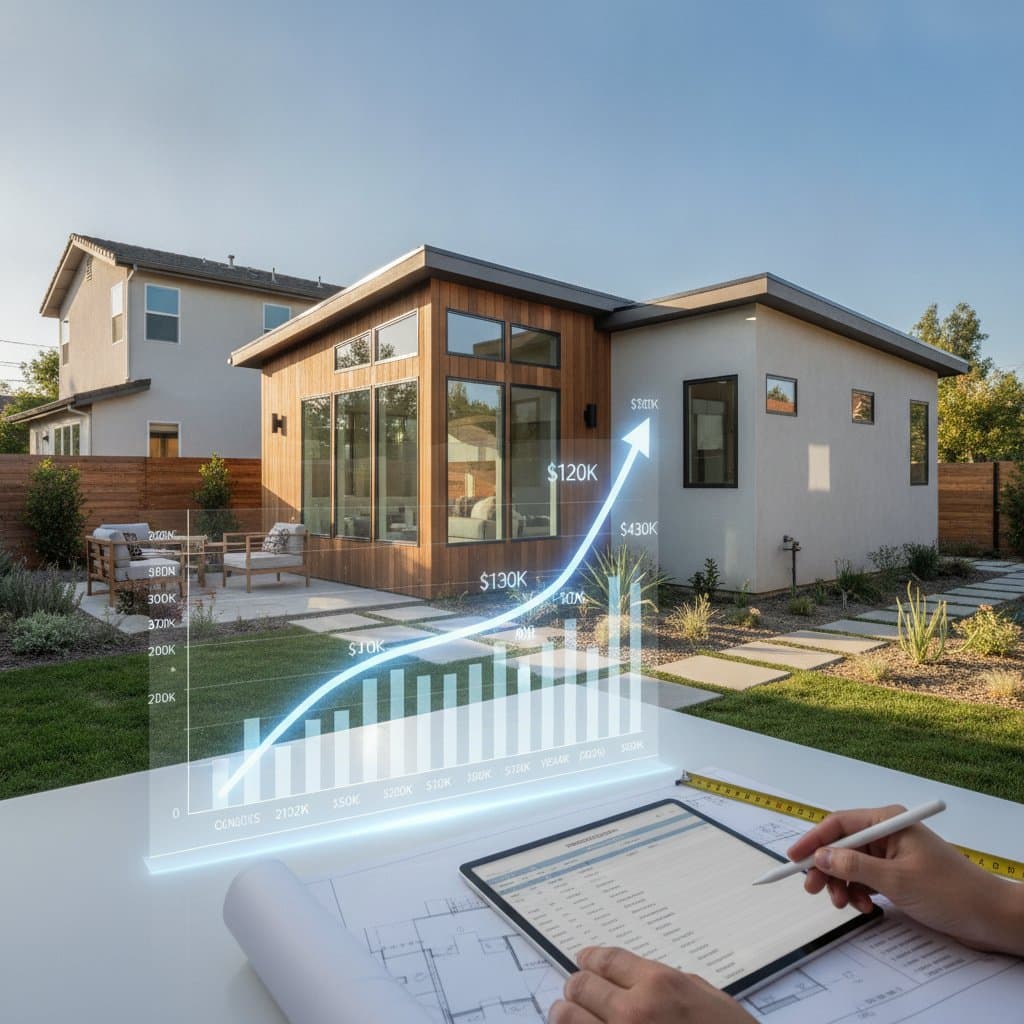
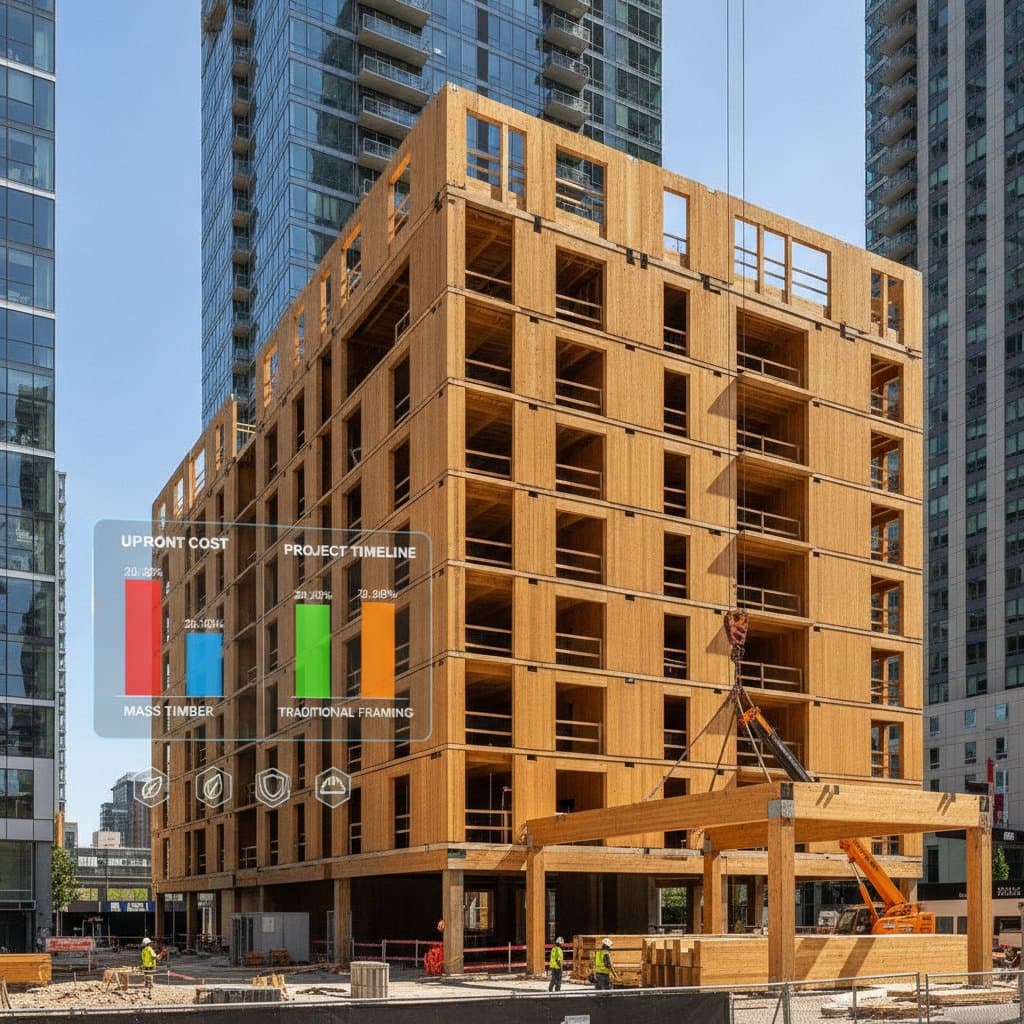
Mass timber projects typically total 200 to 300 dollars per square foot when structure, labor, and basic finishes are included. Traditional framing projects usually fall between 150 and 200 dollars per square foot under the same scope. Regional lumber prices, transportation distance, and design complexity account for most of the variation.
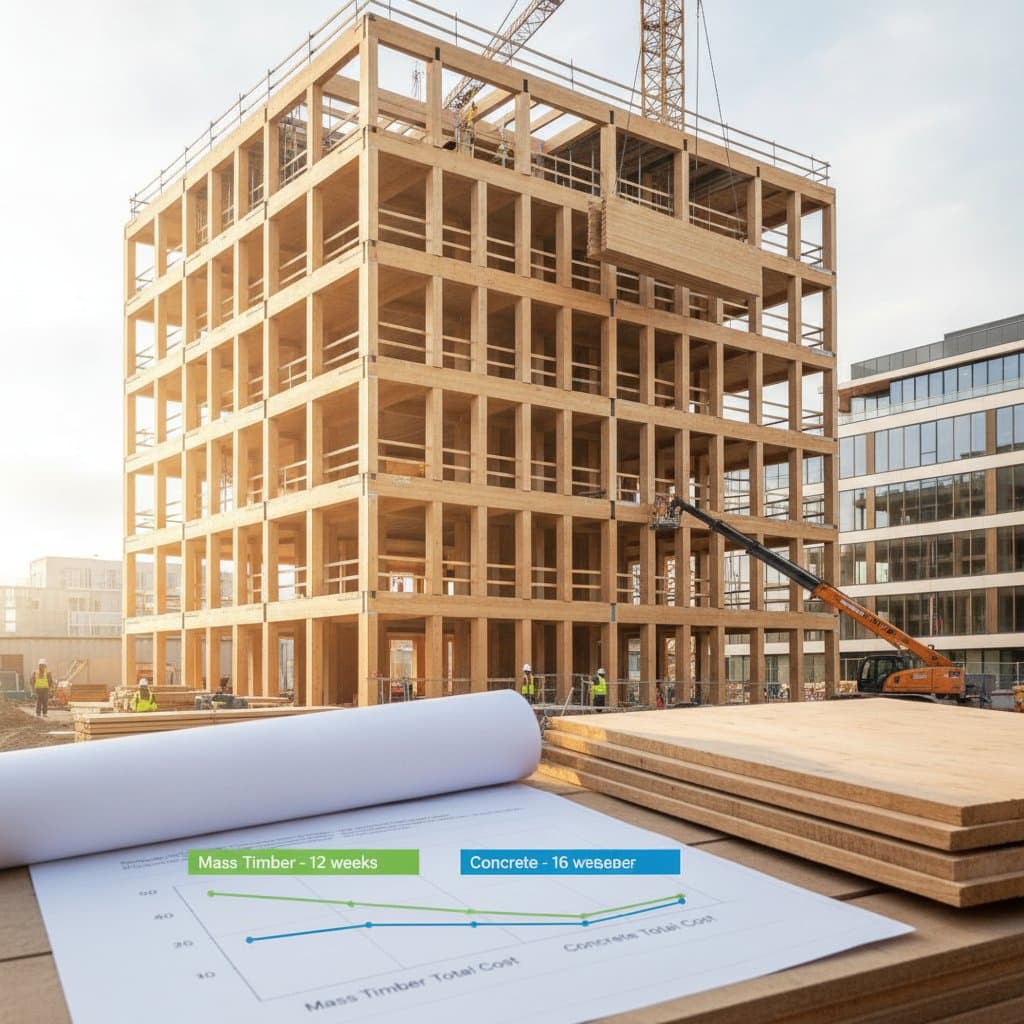
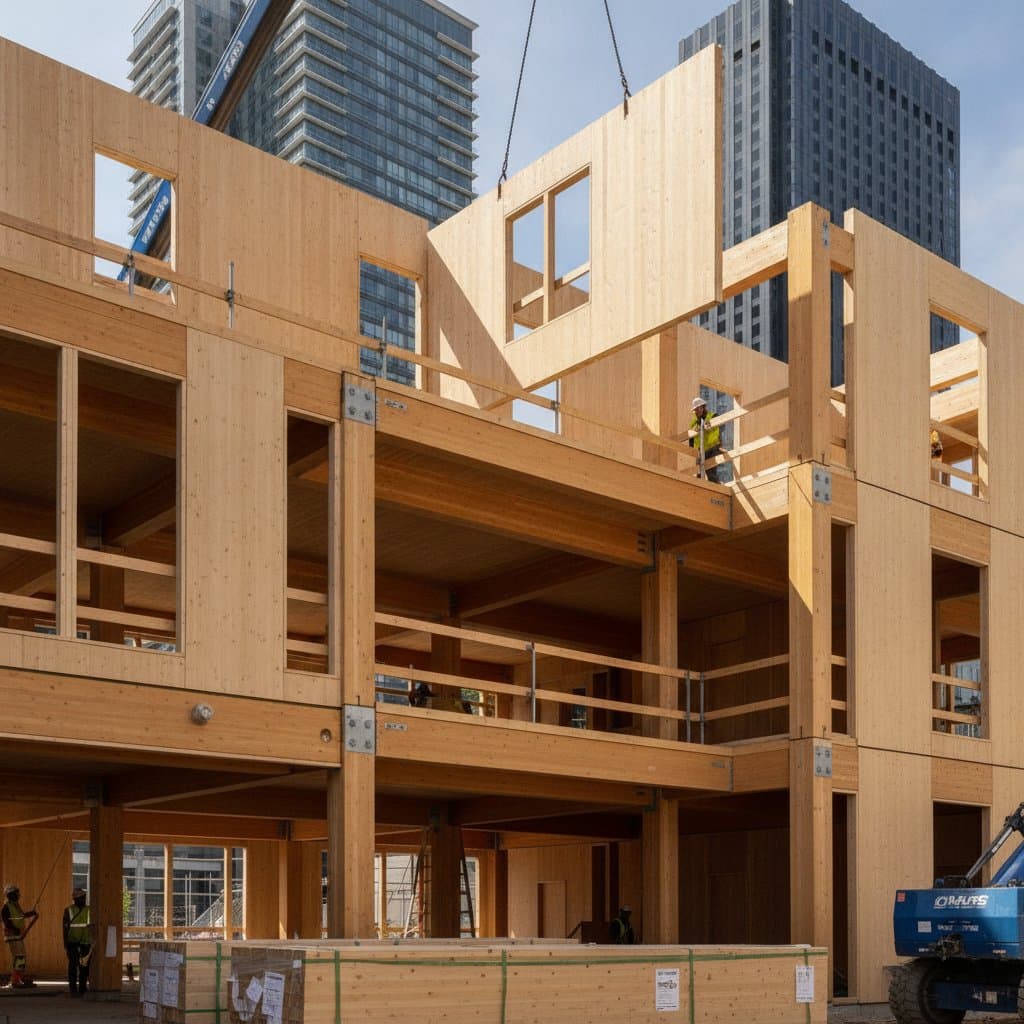
Prefabricated mass timber panels arrive ready for installation, allowing crews to enclose a mid-size building in roughly half the time required for stick framing. Conventional framing proceeds more slowly because each stud and joist is cut and fastened in place, and weather can interrupt work.
Skill Levels and Project Roles
Mass timber assembly demands cranes, certified riggers, and crews trained in precision connections. Only licensed contractors or structural engineers should manage design and erection. Traditional framing permits limited owner participation on small structures such as sheds, yet homes and larger buildings still require professional oversight for load paths and code compliance.
Professional labor for mass timber adds 15 to 25 percent to the total budget. Owners who frame small projects themselves may reduce labor costs by 20 to 40 percent, although material waste can rise when cuts are inaccurate.
Construction Sequence
Design Phase
Structural engineers model each mass timber panel for strength and connection points. Framing crews work from standard plans based on common lumber sizes. Both approaches require verification that load paths satisfy local codes.
Material Supply
Mass timber panels are ordered from certified fabricators, and lead times often run several weeks. Framing lumber can be purchased from local suppliers and should be graded and kiln-dried.
Site and Foundation Work
Foundations must be level and equipped with moisture barriers. Anchor bolts for mass timber panels require exact placement to match the engineered layout.
Structural Assembly
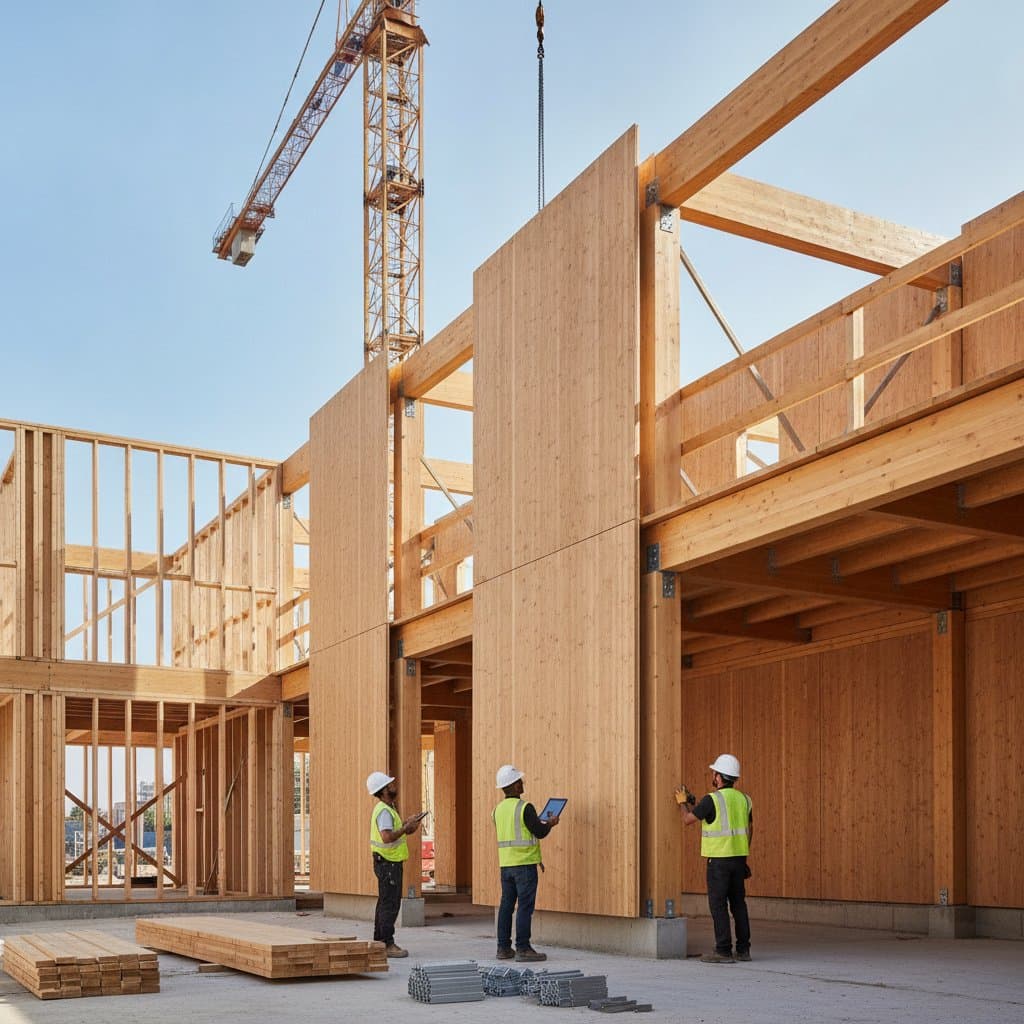
Cranes position mass timber panels, which are then joined with bolts or dowels. Framing crews raise walls one at a time, fasten studs, and install floor joists. Both systems need frequent checks for plumb and square alignment.
Enclosure and Finish
Mass timber surfaces can remain exposed as interior finishes. Framed walls require sheathing, insulation, and drywall. Airtight seals at every joint protect long-term performance in either system.
Safety and Quality Controls
Mass timber panels can weigh several tons. Only certified riggers and proper lifting equipment should handle placement. Fire-rated assemblies must be achieved through panel thickness or approved coatings; standard wood finishes are not sufficient.
Store panels under cover to prevent moisture uptake. Confirm foundation dimensions before lifting. Inspect every fastener for corrosion-resistant coatings. Use laser levels to verify flatness and employ respirators when cutting or drilling engineered panels.
Waste Handling and Ongoing Care
Mass timber generates little on-site waste because panels arrive pre-cut. Sawdust and offcuts can be recycled or used for energy recovery. Traditional framing produces more scrap lumber that must be separated by treatment type for proper disposal.
Inspect mass timber seals and finishes annually and recoat exposed surfaces every few years. Check framed structures regularly for rot, insect damage, and leaks, replacing affected members promptly.
Decision Factors
Project teams should engage a structural engineer or licensed contractor when buildings exceed two stories, include large spans, or require fire-rated or acoustic assemblies. Contractor rates for mass timber crews range from 80 to 120 dollars per hour, while framing crews typically charge 50 to 80 dollars per hour.
Early coordination of mechanical and electrical routes prevents field modifications that could weaken panels. Hybrid designs that pair mass timber floors with steel or concrete cores can balance cost and performance. Local code review remains essential because some jurisdictions mandate special inspections for engineered wood products.
Mass timber delivers speed, precision, and a warm aesthetic that suits many commercial and multifamily projects. Traditional framing continues to offer lower first cost for smaller residential work. The right choice follows directly from project scale, schedule priorities, and available budget.