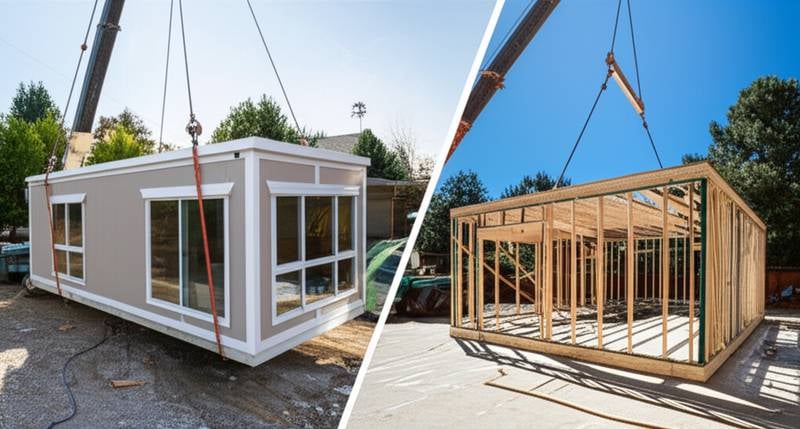
Understanding the True Costs of Prefab and Ground-Up ADUs
Homeowners often consider adding an accessory dwelling unit (ADU) to increase living space, generate rental income, or accommodate family members. The primary concern revolves around expenses, which vary significantly between prefab and ground-up options. Each approach presents unique financial implications, structural advantages, and practical considerations that influence the overall investment.
This analysis details the factors affecting ADU costs and evaluates the long-term value of prefab versus on-site construction. By examining key elements such as materials, labor, and site requirements, readers gain tools to make informed decisions aligned with their property and financial situation.
Defining Prefab and Ground-Up ADUs
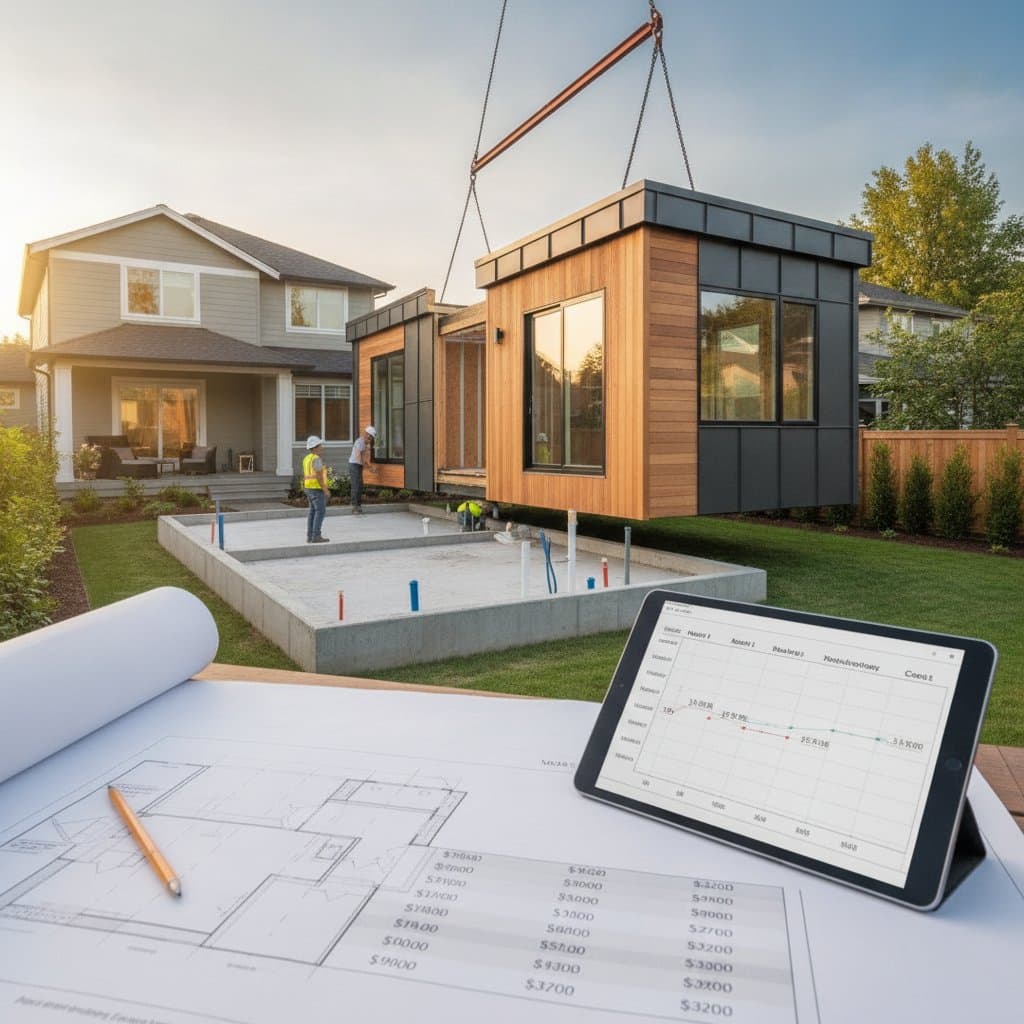
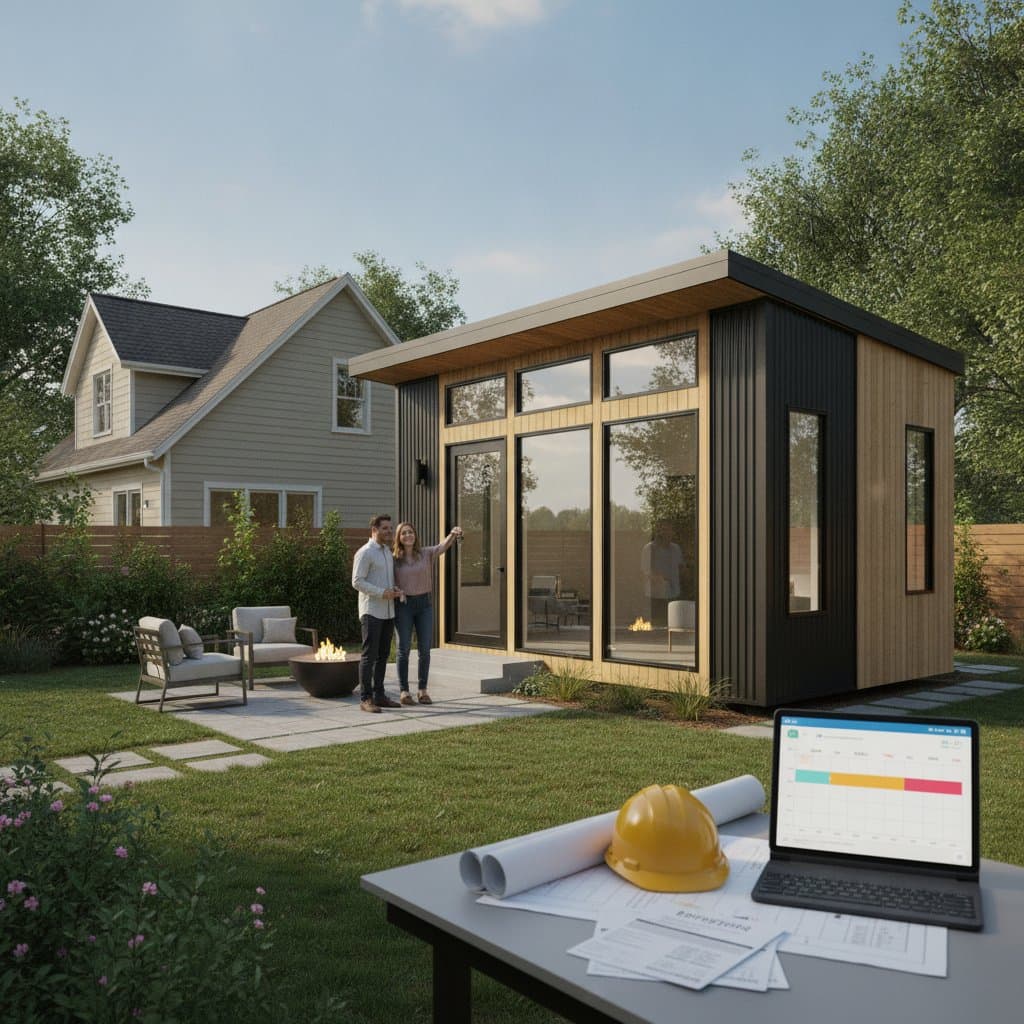
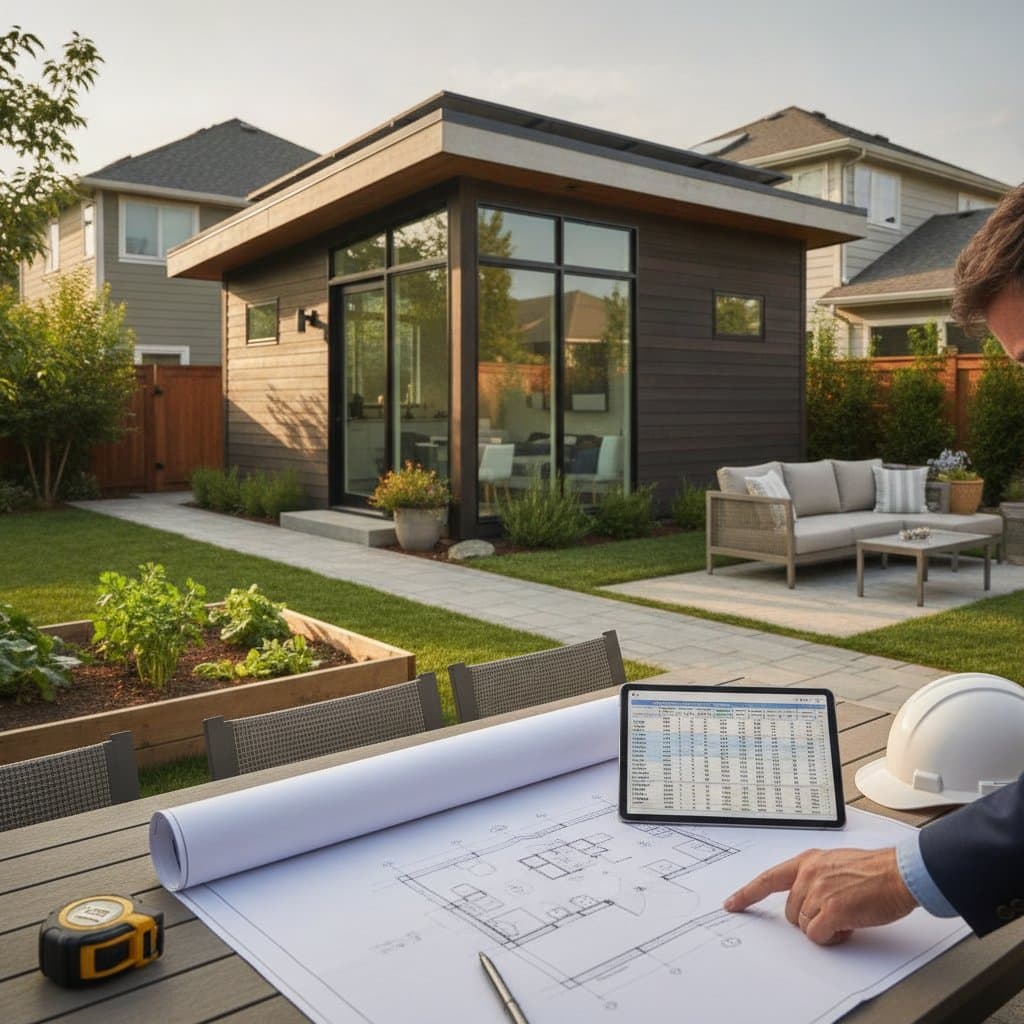
A prefab ADU consists of modules or sections manufactured in a factory setting, then delivered to the site for assembly. This method leverages controlled conditions to minimize errors and accelerate production. In contrast, a ground-up ADU involves building the entire structure directly on the property, starting with the foundation and progressing layer by layer.
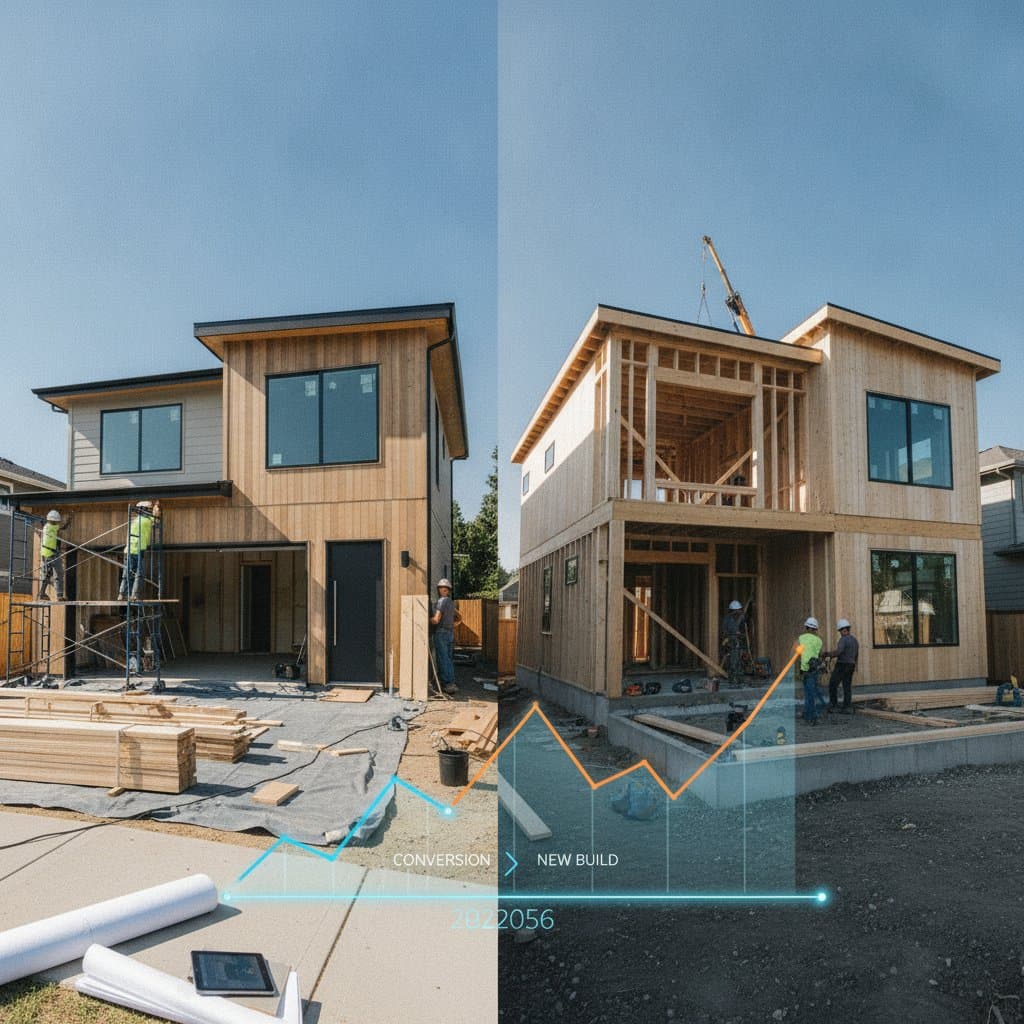
Prefab approaches emphasize efficiency through standardized processes, often resulting in shorter overall timelines. Ground-up methods prioritize adaptability, allowing adjustments based on site-specific challenges. The choice between these paths hinges on balancing convenience with the desire for personalized design.
Initial Construction Expenses
Prefab ADU Costs
Prefab units feature a base price that covers manufacturing, basic materials, and initial design elements. Expect this to range from $100,000 to $200,000 for a 400- to 800-square-foot unit, depending on size and features. Additional fees arise for transportation, which can add 5 to 10 percent based on distance from the factory, and on-site assembly, typically requiring one to two weeks of work.
The factory environment reduces material waste by up to 20 percent compared to traditional builds and avoids weather-related interruptions. Homeowners benefit from fixed pricing that shields against fluctuating labor rates. However, selecting higher-end finishes during the ordering phase increases the upfront investment.
Ground-Up Build Costs
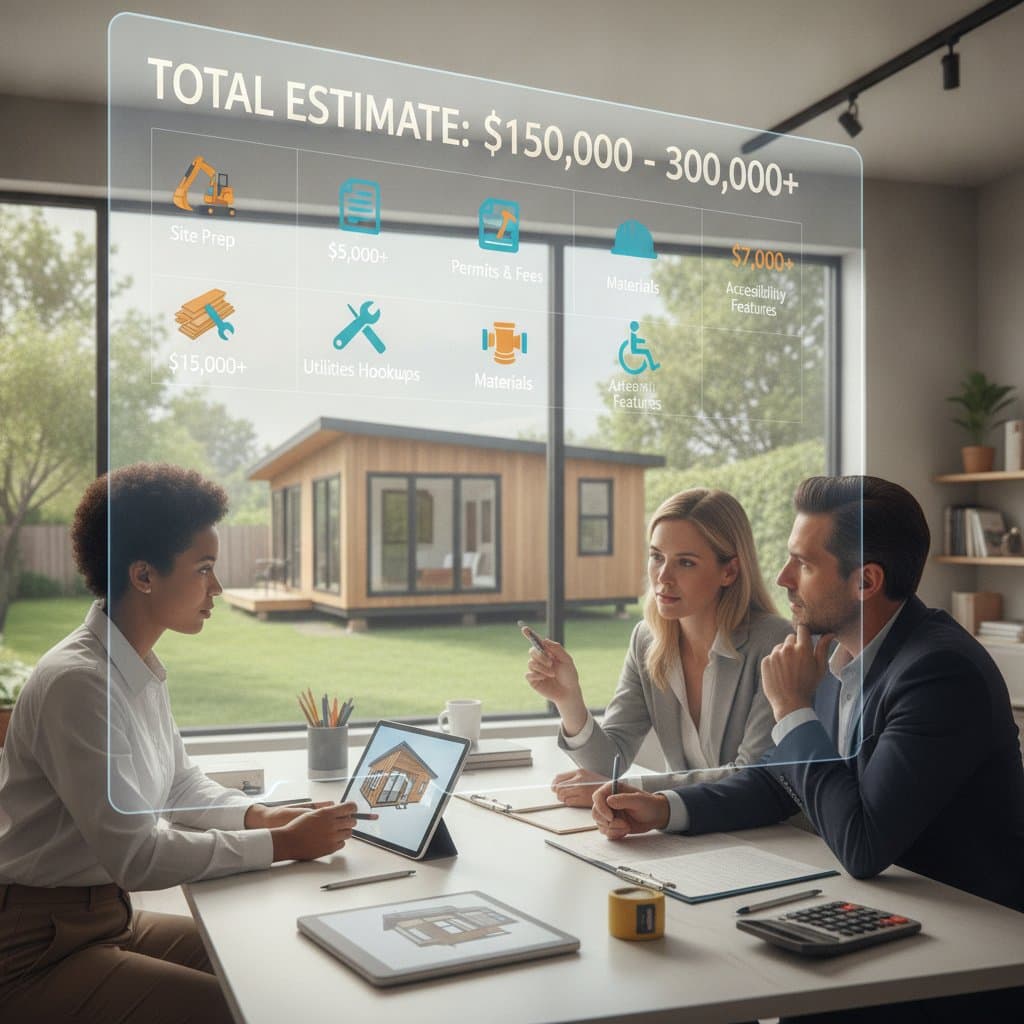
On-site construction costs generally fall between $150,000 and $300,000 for similar-sized ADUs, driven by custom selections in materials and layouts. Labor accounts for 40 to 50 percent of the total, with skilled tradespeople ensuring precise execution. Permitting and material sourcing contribute another 20 to 30 percent, varying by local regulations and supplier availability.
This method allows real-time modifications, such as adjusting window placements for optimal views or reinforcing foundations for uneven terrain. While initial outlays exceed those of prefab options, the result integrates more naturally with existing property features. Budgeting includes a 10 to 15 percent contingency for unforeseen adjustments during the build.
Site Preparation and Utility Integration
Site work forms a critical component of ADU expenses, often comprising 15 to 25 percent of the total budget. For prefab ADUs, preparation focuses on creating a stable, level pad, usually a concrete slab or piers, costing $10,000 to $30,000. Limited access, such as narrow driveways, may necessitate crane rental, adding $5,000 or more.
Utility connections for water, electricity, and sewage require trenching and professional installation, estimated at $15,000 to $25,000. Prefab designs simplify these steps through pre-planned hookups, but coordination with local utilities remains essential to avoid delays.
Ground-up builds demand more extensive earthwork, including excavation for foundations and grading for drainage, which can cost $20,000 to $50,000 on challenging lots. Contractors integrate utilities during the foundation phase, potentially reducing separate mobilization fees. This on-site flexibility proves advantageous for properties with existing infrastructure, streamlining the overall process and minimizing disruptions.
Design Flexibility and Customization Options
Prefab ADUs offer a selection of standard floor plans, typically 10 to 20 variations, with limited alterations to walls or roofing. Customization extends to interior elements like cabinetry styles or appliance packages, adding $10,000 to $20,000 for upgrades. This structure suits homeowners seeking modern, efficient spaces without extensive planning.
The process involves reviewing catalogs and selecting options early, which accelerates approvals. However, achieving perfect alignment with the main home's aesthetic may require post-installation modifications, such as custom siding.
Ground-up construction enables full architectural input, from open-concept layouts to multi-level designs tailored to the lot's topography. Architects or designers collaborate to ensure compliance with zoning and style guidelines, with fees ranging from $5,000 to $15,000. This level of detail fosters harmony with the primary residence, enhancing curb appeal and neighborhood fit.
Homeowners specify every aspect, including energy-efficient features like solar-ready roofing or smart home wiring, which boost functionality and future-proof the unit.
Long-Term Value and Maintenance Considerations
Prefab ADUs hold value similarly to modular homes, with appreciation tied to overall property trends rather than standalone merit. Quality units using durable materials, such as steel framing, maintain structural integrity for 50 years or more. Resale potential strengthens when the ADU complements the lot without overwhelming it.
Maintenance involves periodic inspections of joints and seals, with replacement parts available through the manufacturer. Energy efficiency often exceeds standard builds due to factory insulation standards, lowering utility bills by 15 to 20 percent annually.
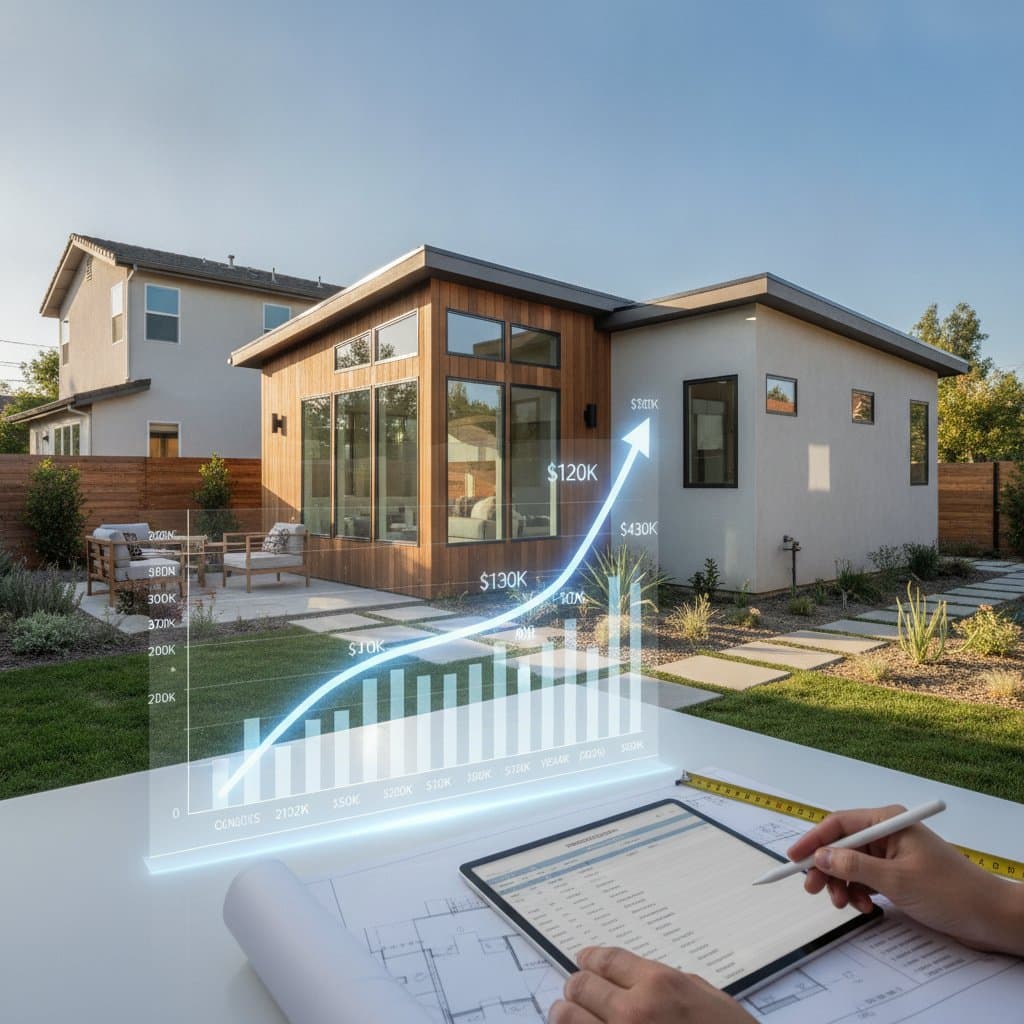
Ground-up ADUs appreciate in tandem with the main home, potentially increasing property value by 10 to 20 percent upon completion. Traditional materials like wood framing and brick exteriors facilitate easy repairs using local suppliers. This approach supports higher rental yields, averaging $1,500 to $3,000 monthly for a one-bedroom unit, depending on location.
Over time, custom features contribute to a premium in the housing market, particularly in areas valuing architectural uniqueness.
Permitting, Labor, and Timeline Factors
Both ADU types necessitate local permits, with fees of $5,000 to $15,000 covering plan reviews and inspections. Prefab submissions benefit from pre-approved designs, shortening approval times to 30 to 60 days. On-site labor for installation totals 100 to 200 hours, emphasizing skilled assembly teams.
Ground-up projects extend permitting to 60 to 120 days due to detailed blueprints and phased checks. Labor demands 500 to 1,000 hours, involving multiple trades from foundation to finishing. Timelines span 3 to 6 months, influenced by seasonal weather and supply chain reliability.
Local contractors provide advantages in ground-up builds by navigating regional codes and sourcing materials efficiently. For both options, early engagement with professionals ensures smoother execution and cost control.
Selecting the Optimal ADU Approach for Your Property
Evaluate your priorities to determine the best fit: opt for prefab if rapid completion within 2 to 4 months and budget constraints under $250,000 take precedence. This path delivers immediate usability with minimal site disruption.
Choose ground-up construction for scenarios demanding seamless aesthetic integration and scalability beyond 800 square feet. Consult with builders to model costs against your lot's specifics, incorporating financing options like home equity loans.
Ultimately, align the decision with your vision for the ADU's role, whether as a guest suite, income generator, or legacy addition. Professional assessments reveal hidden opportunities, ensuring the project enhances your home's functionality and worth.