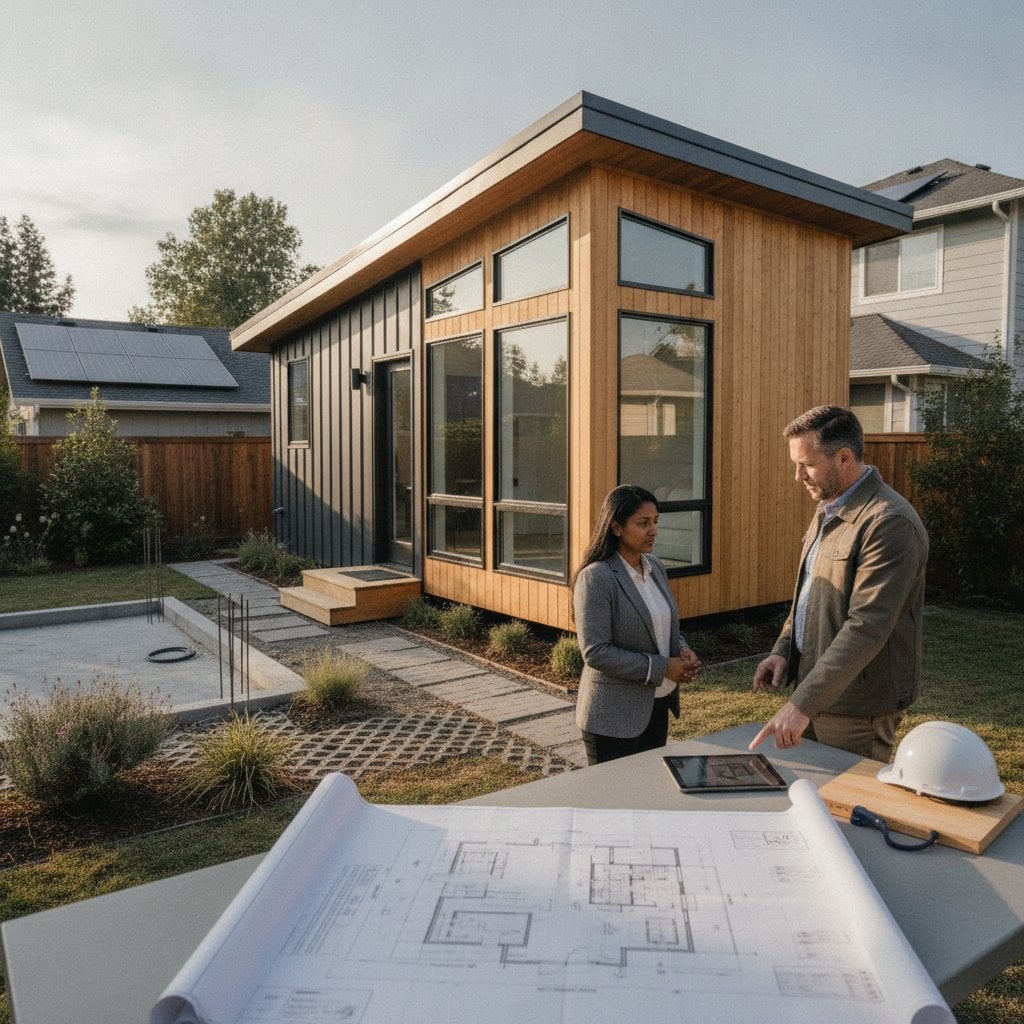
Real Costs of Prefab ADUs Including Permits
Prefab accessory dwelling units offer homeowners an efficient path to additional living space. This guide details the complete expenses for prefab ADUs, from permits through site preparation and professional installation. Readers will understand pricing factors, contractor decisions, and strategies that protect long-term property value.
Cost and Time Estimates
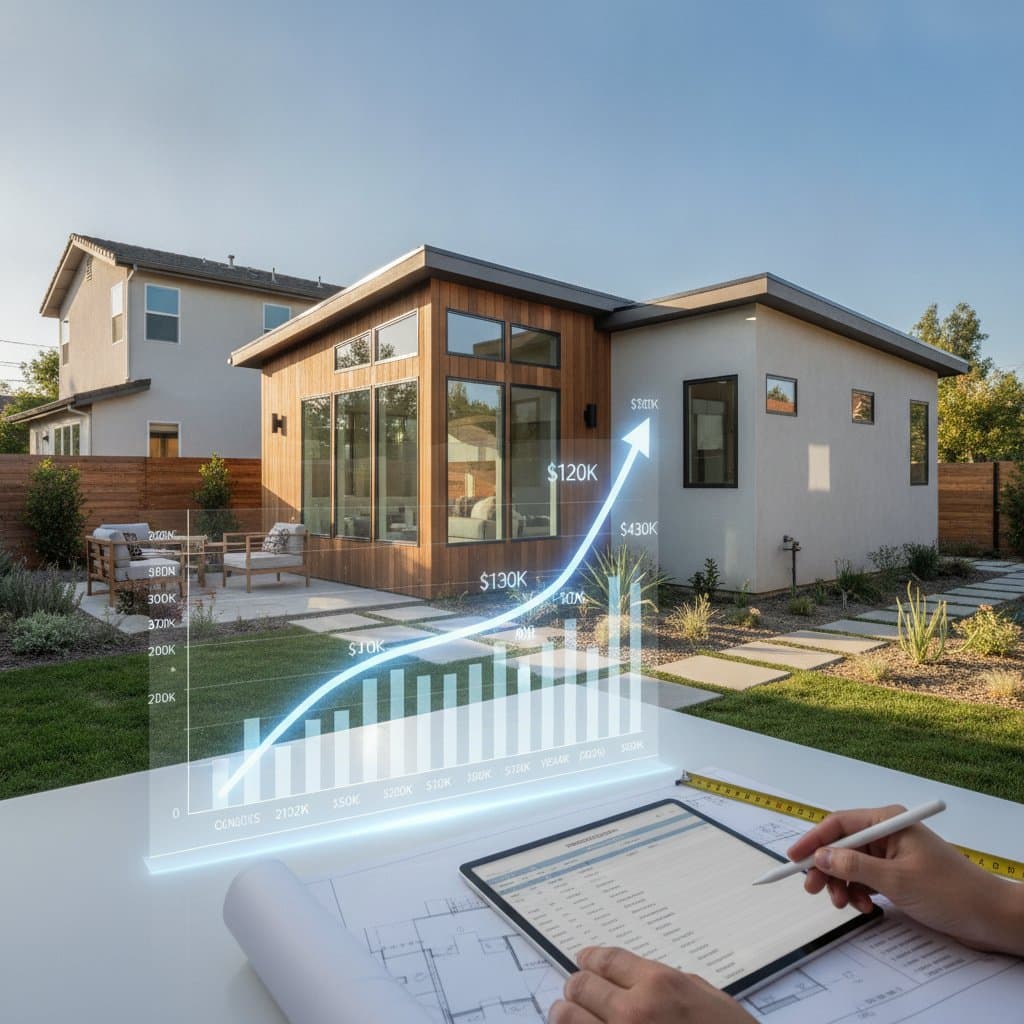
Completed prefab ADU projects that include permits and installation typically range from $160,000 to $300,000. Smaller studio or one-bedroom models land near the lower end, while two-bedroom units with premium finishes reach the higher end. Regional labor rates, soil conditions, and finish levels drive the final total.
Cost Breakdown
- Prefab module: $90,000 to $180,000
- Site preparation and foundation: $20,000 to $50,000
- Utility connections: $10,000 to $30,000
- Permits, design, and inspections: $8,000 to $20,000
- Delivery and crane set: $5,000 to $15,000
- Finishing, decks, and landscaping: $5,000 to $25,000
Timeframe
- Prefab manufacturing: 6 to 12 weeks
- Site work and foundation: 2 to 4 weeks
- Delivery and installation: 1 to 2 weeks
- Utility hookups and final inspection: 2 to 4 weeks
Total project duration usually spans three to six months. Most homeowners cannot complete assembly themselves because of heavy equipment needs, licensed electrical and plumbing requirements, and strict code compliance.
Difficulty rating: Advanced
DIY Tasks Versus Professional Work
Prefab units arrive largely finished yet still require structural anchoring, utility tie-ins, and code verification.
Homeowners may clear vegetation, level soil, or add a small deck after the unit is placed. Interior trim, painting, and final landscaping can also be completed once major work ends.
Licensed contractors must perform foundation work, electrical and plumbing connections, crane operations, and permit submissions. Professional rates range from $60 to $150 per hour. Early engagement of an experienced ADU builder reduces delays and inspection failures.
Installation Steps
- Evaluate lot and zoning rules. Confirm size limits, setbacks, and utility capacity. The site must satisfy every local requirement before design work begins.
- Select the prefab model. Match size and finishes to approved codes. Plans receive building department sign-off only when they meet all standards.
- Secure permits and approvals. Submit site plans, foundation details, and utility layouts. Stamped permits must be in hand before any ground is broken.
- Prepare the site and foundation. Excavate, pour the slab or piers, and install conduits. The finished foundation must remain level within one-eighth inch.
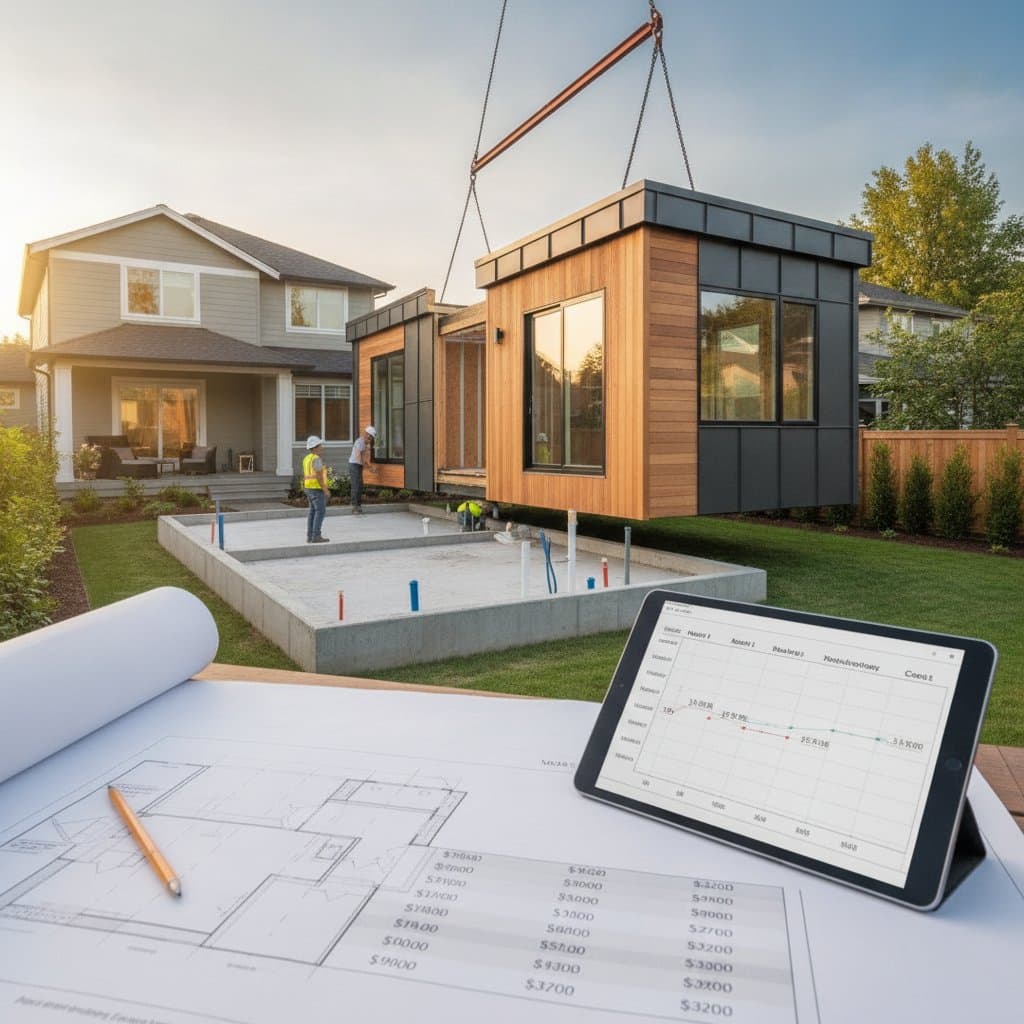
- Transport and set the unit. Coordinate crane delivery and inspect for transit damage. The module must align precisely on the foundation.
- Connect utilities. Certified trades complete plumbing, electrical, and HVAC work. All systems require successful pressure and voltage tests.
- Complete exterior and interior finish. Seal seams, install trim, and apply paint or decking. Weather-tight seals and uniform surfaces mark completion.
- Schedule final inspection. Officials verify structural, electrical, plumbing, and energy compliance. A certificate of occupancy is issued only after approval.
Safety Requirements
Shut off power before any panel work. Use stable ladders for roofline tasks. Keep all personnel outside crane swing zones and require hard hats. Gloves, safety glasses, and protective boots are mandatory during site activity.
Common Issues and Corrections
| Issue | Possible Cause | Fix |
|---|---|---|
| Unit not level | Uneven foundation | Recheck anchor bolts and add shims |
| Plumbing leak | Loose fittings | Tighten connections and retest |
| Door misalignment | Shift during set | Adjust hinges or re-square frame |
| Electrical trip | Overloaded circuit | Redistribute loads or upgrade rating |
After installation, verify level floors, smooth window operation, and watertight seals.
Site Cleanup
Remove all debris, packaging, and scrap materials. Recycle metal, cardboard, and concrete at local facilities. Take paint and adhesives to approved collection points. Restore soil and reseed grass around the foundation.
Ongoing Maintenance
Inspect roofs and gutters twice yearly. Repaint exterior surfaces every seven to ten years. Check caulking annually and replace HVAC filters every three months. With routine care, a prefab ADU lasts 40 to 60 years.
Situations Requiring Contractors
Foundation or grading work that needs engineering approval, connections to main service lines, or crane operations on restricted sites all require licensed professionals. General contractor oversight costs $20,000 to $50,000. Structural engineer fees range from $2,000 to $5,000, while architect services fall between $3,000 and $8,000.
Select contractors who hold current licenses and insurance, supply references from comparable projects, and include permit handling plus cleanup in written contracts.
Planning Recommendations
Route utilities before the foundation pour to avoid added expense. Measure overhead clearance for crane access. Reserve 10 to 15 percent of the budget for design, permits, and impact fees. Specify prefinished siding and metal roofing to limit future maintenance. Photograph every phase and retain receipts for insurance and resale records.
Accurate budgeting and timely professional support produce a durable backyard unit that adds lasting value to the property.