Key Cost Components for Aging-in-Place Bathroom Renovations
A bathroom designed for extended accessibility enables residents to remain secure and at ease within their homes. Such renovations emphasize ease of use, protection from hazards, and self-reliance. Grasping the expenses associated with individual elements aids in strategic budgeting and selection of essential features.
This overview delineates primary expenses for an aging-in-place bathroom renovation, spanning foundational modifications to surface treatments. Readers gain insight into factors affecting costs, high-impact modifications, and methods to harmonize utility with visual appeal.
Primary Expense Categories
Costs for aging-in-place modifications fluctuate based on bathroom dimensions, regional labor charges, and selected materials. The following outlines standard categories that determine overall expenditure.
1. Layout and Structural Modifications
Cost estimate: Moderate to substantial
Objective: Enhance access and accommodate mobility devices
In confined spaces, repositioning walls or adjusting door frames may prove necessary. Doors widened to a minimum of 32 inches facilitate wheelchair access. These alterations often entail rerouting electrical lines or pipes, thereby elevating labor demands.
Practical recommendations:
- Retain existing positions for plumbing fixtures to minimize expenses.
- Opt for sliding pocket doors or barn doors to conserve space.
- Allocate a minimum turning radius of five feet within the primary zone.
Enlarging a compact bathroom boosts usability yet escalates requirements for drywall installation, flooring, and finishing tasks.
2. Flooring Enhancements
Cost estimate: Moderate
Objective: Minimize slip risks and simplify upkeep
Optimal flooring merges tactile grip with imperviousness to water. Viable selections encompass:
- Textured porcelain tiles that replicate stone or wood grains while repelling liquids.
- Luxury vinyl planks, which offer cushioning and authentic appearances.
- Sheet vinyl, providing uninterrupted coverage and straightforward maintenance.
Steer clear of polished finishes prone to becoming hazardous in damp conditions. Labor for installation varies with subfloor integrity and tile layout intricacy.
Additional guidance: Select pale or neutral hues in a matte texture to illuminate the area and sustain grip.
3. Barrier-Free or Low-Profile Shower Installation
Cost estimate: Substantial
Objective: Permit seamless entry and fluid navigation
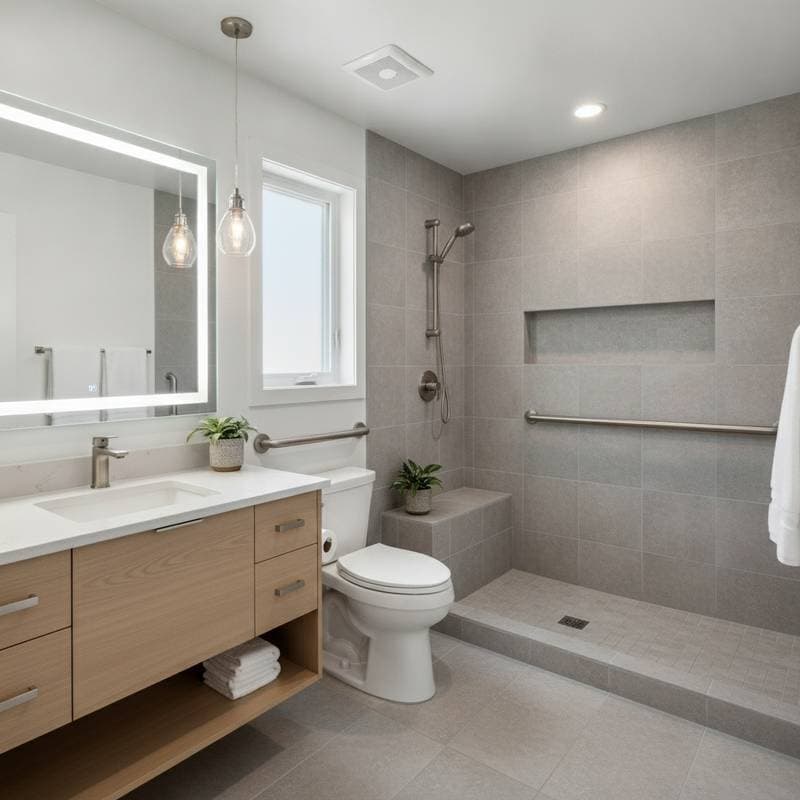
A barrier-free shower removes the conventional entry ledge, enabling direct step-in or wheeled access. The flooring requires a subtle gradient toward the drain, potentially necessitating subfloor adjustments. This element ranks among the pricier aspects of an aging-in-place project, yet delivers enduring protective advantages.
Installation specifics:
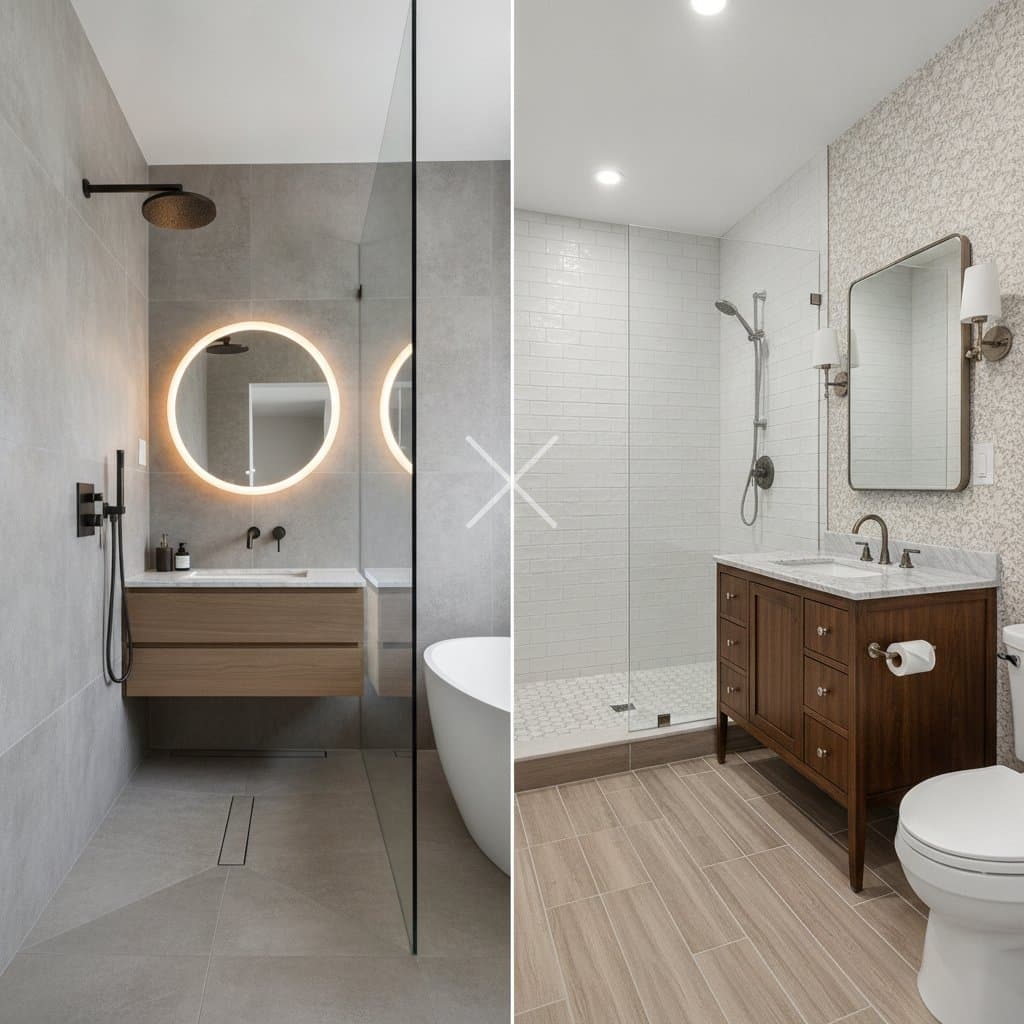
- Employ oversized tiles on the shower base to limit grout seams.
- Incorporate a linear drain to achieve a sleek, contemporary aesthetic.
- Integrate a fixed bench and a height-adjustable handheld showerhead for added convenience.
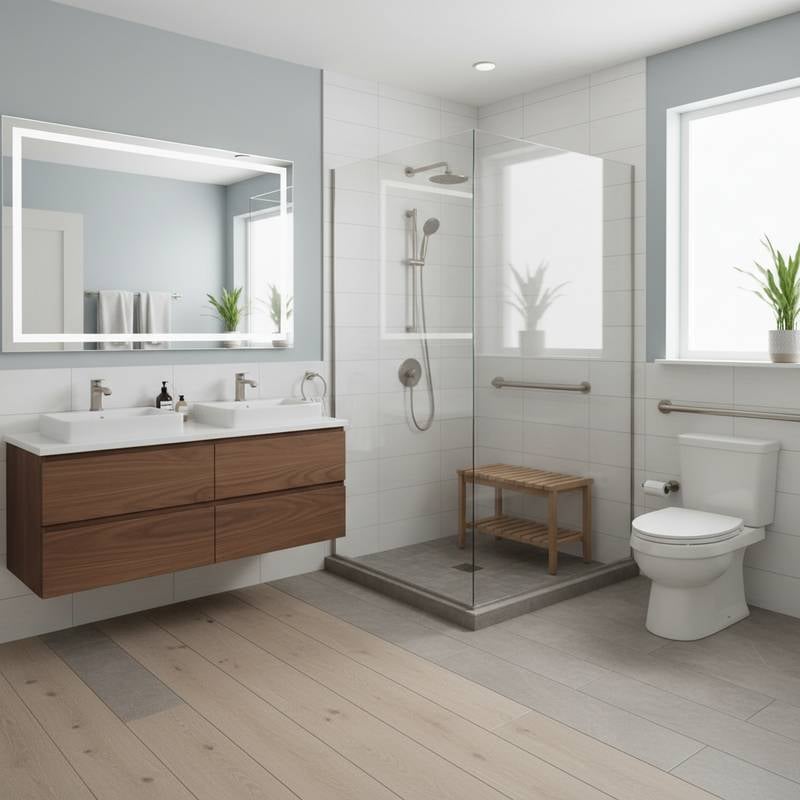
Complement this setup with tempered glass enclosures or a low divider to contain splashes while preserving spaciousness.
4. Grab Bars and Structural Supports
Cost estimate: Low to moderate
Objective: Furnish stability and avert falls
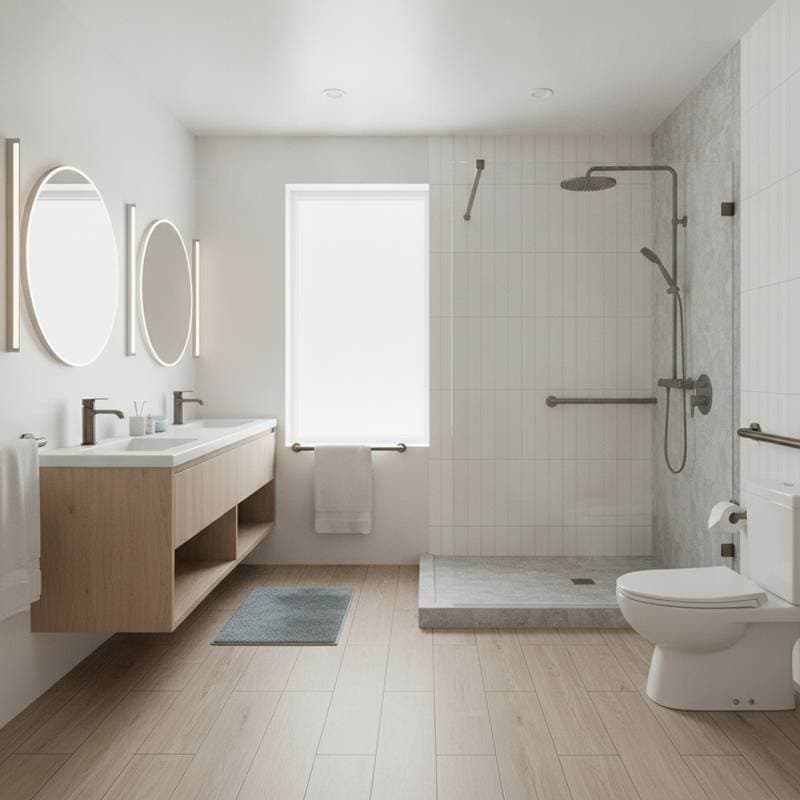
Grab bars deliver vital assistance adjacent to commodes, showers, and bathtubs. Premium models blend functionality with elegance, coordinating with surrounding hardware in finishes like stainless steel, brushed nickel, or matte black.
Strategic positioning:
- Install a horizontal bar at the shower threshold.
- Mount a vertical bar along the sink wall.
- Position an angled bar beside the toilet to assist transfers.
During initial builds or comprehensive overhauls, embed plywood blocking within walls prior to tiling or sheathing to guarantee firm anchorage. This precaution prevents subsequent remediation expenses.
5. Adapted Toilet and Vanity
Cost estimate: Moderate
Objective: Optimize access, ergonomics, and maneuverability
Comfort-height toilets elevate seating by several inches above conventional units, easing rising and lowering motions. Incorporate a lid with soft-closure mechanism and flanking grab bars for enhanced security.
Wall-hung or pedestal-free vanities afford legroom for wheelchair users. Lever-handled or sensor-operated faucets accommodate reduced hand strength.
Aesthetic suggestion: Combine crisp white porcelain with earthy tile shades or timber accents to foster a residential ambiance.
6. Illumination and Wiring Improvements
Cost estimate: Moderate
Objective: Boost sightlines and hazard mitigation
Adequate lighting curtails accident risks and facilitates routines. Employ multiple layers for even distribution:
- Recessed ceiling fixtures for ambient coverage.
- Sconces or task lighting at mirror height to eliminate shadows.
- Sensor-triggered low-level lights for nighttime passage.
Equip receptacles with ground-fault circuit interrupter safeguards, which deactivate upon moisture detection. Position controls at heights suitable for seated individuals.
7. Airflow and Humidity Management
Cost estimate: Low to moderate
Objective: Inhibit mold growth and prolong component longevity
Enhanced airflow regulates dampness and safeguards surfaces. Install a low-noise, efficient extractor fan equipped with a moisture detector for automatic activation. Ensure vents direct vapors outside rather than into overhead spaces.
In legacy structures, updating conduits or applying thermal barriers may increment outlays, though these measures enhance sustained efficacy.
8. Storage and Cabinet Modifications
Cost estimate: Low to moderate
Objective: Facilitate retrieval and organize essentials
Countertops at reduced elevations, extendable drawers, and recessed compartments streamline access to necessities. Hinges with gentle closure avert injury from slamming. Prioritize water-repellent laminates for resilience.
Styling advice: Merge exposed racks with enclosed units to merge accessibility with tidy presentation.
9. Surface Treatments and Decorative Elements
Cost estimate: Variable
Objective: Foster an inviting and unified appearance
Functional design need not compromise sophistication. Favor subdued color schemes that amplify light and expand perceived dimensions. Effective pairings feature:
- Subtle gray flooring paired with ivory accents and ebony accents.
- Neutral taupe surrounds complemented by polished gold hardware.
- Serene azure highlights with silver fittings evoking a wellness retreat.
Feature walls, expansive reflectors, and understated patterns infuse personality sans functional compromise.
Engaging Expert Assistance
Certain owners manage straightforward tasks such as affixing grab bars or refreshing paint. Complex endeavors demand specialist involvement to uphold safety and adhere to regulations. Engage certified specialists for:
- Sealing and ceramic applications.
- Framework alterations or partition relocations.
- Wiring and piping integrations.
- Bespoke storage or appliance fittings.
Experts advise on optimal layouts and material sourcing. Their proficiency ensures universal design principles align fluidly with your residence's architecture.
Sustaining Functionality Over Time
Post-renovation, routine upkeep preserves performance and allure. Apply gentle cleansers to safeguard coatings. Conduct yearly reviews of seals and joints for breaches that invite dampness. Swap bulbs for efficient variants and service ventilation components periodically.
Should requirements evolve, incremental adjustments like portable shower wands or pivoting reflectors permit adaptations minus extensive rework.
Implement Your Accessibility-Focused Renovation
An aging-in-place bathroom overhaul transcends mere updates; it represents a commitment to well-being, security, and autonomy. Insight into expenditure allocation empowers choices attuned to personal habits and architectural context.
Integrating universal design with judicious selections yields an environment that nurtures both practicality and refinement. Proceed incrementally or comprehensively; each enhancement advances toward a bathroom optimized for prolonged, effortless utility.