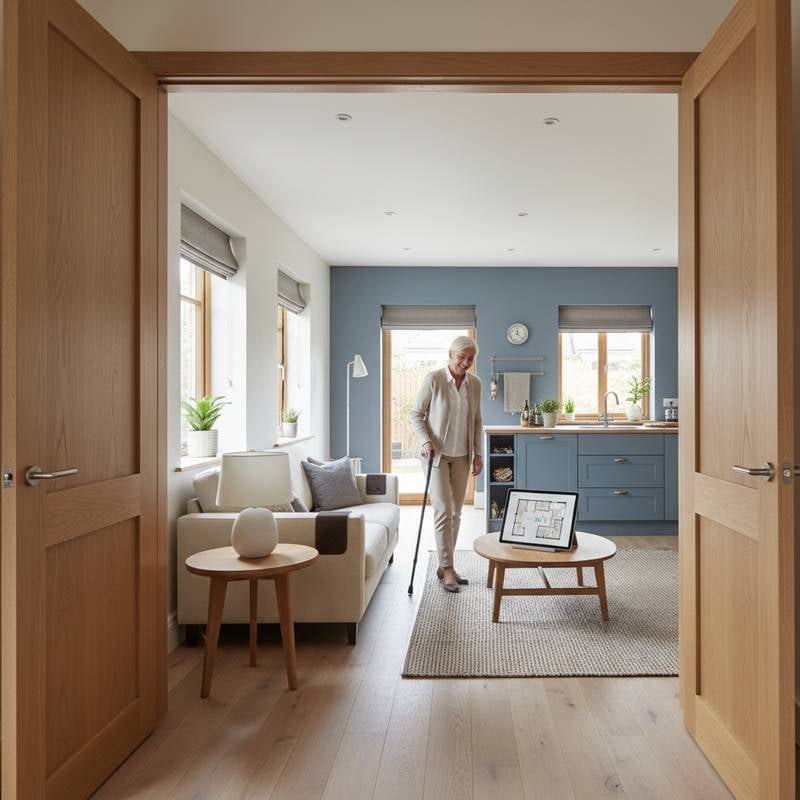
Universal Design: Enabling Safe Aging in Place Without Relocating
A home constructed or renovated according to universal design principles allows residents to remain comfortable and independent throughout their lives. This article details methods to develop a residence that facilitates aging in place while preserving aesthetics, security, and ease of use.
Overview of the Approach
Readers will discover strategies to evaluate and renovate their living spaces using universal design concepts. These techniques promote secure and autonomous living as individuals advance in years. The objective involves crafting an environment that accommodates requirements across all life stages.
Estimates for Expenses and Duration
Typical expense ranges:
- Basic modifications: $5,000 to $20,000
- Comprehensive renovation: $25,000 to $100,000 or higher, based on the property's dimensions and intricacy
Elements affecting expenses:
- Alterations to the building's framework, including expanding doorways or reorganizing bathrooms, increase expenditures.
- The selection of surface treatments and hardware depends on their caliber and manufacturer.
- Variations in local workforce charges, authorization costs, and regulatory standards impact the overall budget.
Duration projections:
- Self-directed initiatives: 1 to 4 weeks for modest alterations.
- Expert-led overhauls: 2 to 6 months for entire-property transformations.
Complexity levels:
- Basic adjustments: Moderate
- Complete-property overhaul: Advanced
Choosing Between Self-Directed and Expert Assistance
Scenarios for Self-Directed Efforts
Individuals may handle straightforward enhancements independently, including:
- Securing grab bars with adequate wall reinforcement.
- Substituting traditional doorknobs with lever-style handles.
- Enhancing illumination and incorporating intelligent light sources.
- Updating cabinet hardware to larger, user-friendly grips.
Situations Requiring Expert Involvement
Certified builders or renovation specialists handle:
- Framework modifications, such as broadening doorways or modifying partitions.
- Plumbing tasks, like transforming a bathtub into a shower enclosure.
- Electrical adjustments for illumination or receptacle positioning.
- Floor surface replacements that demand subfloor restoration or equalization.
Expense contrasts:
Self-directed enhancements might require only a few hundred dollars for equipment and supplies. Expert renovations span from thousands to tens of thousands of dollars, contingent on the project's extent.
Sequential Guide to Universal Design Renovation
1. Evaluate the Existing Environment
- Traverse each area to identify impediments or dangers.
- Examine doorway dimensions, surface shifts, and illumination intensity.
- Note confined angles, abrupt inclines, or slick areas.
Verification of achievement: A thorough inventory exists of zones that restrict movement or security.
2. Strategize for Accessibility
- Expand doorways to a minimum of 36 inches to permit unobstructed wheelchair passage.
- Substitute entry steps with gradually inclined ramps.
- Maintain hallway widths at no less than 42 inches.
Verification of achievement: Unhindered navigation occurs through all areas.
3. Customize the Bathroom
Alert: Risk of Slipping
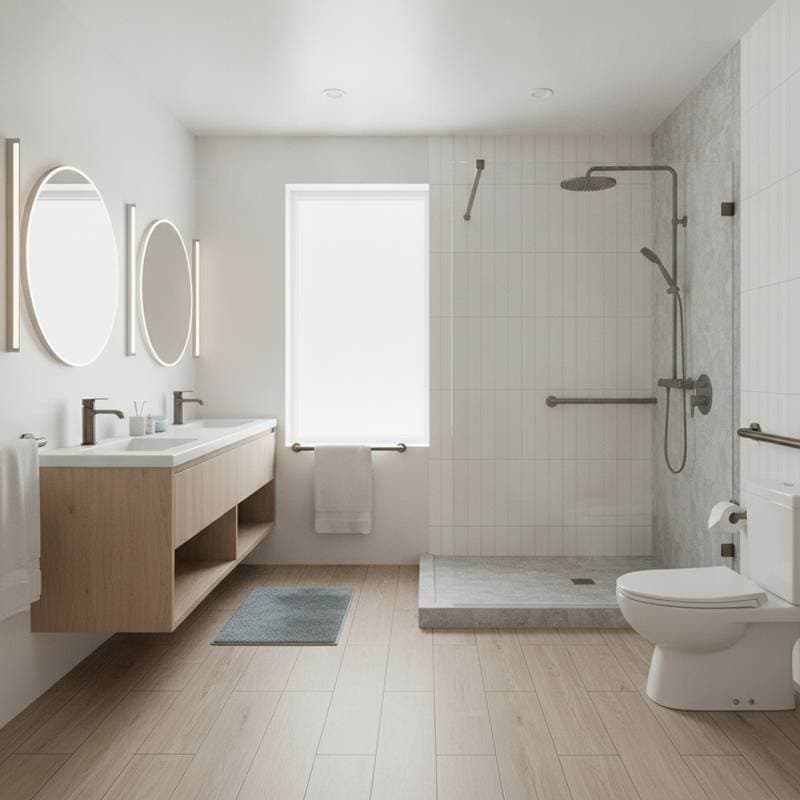
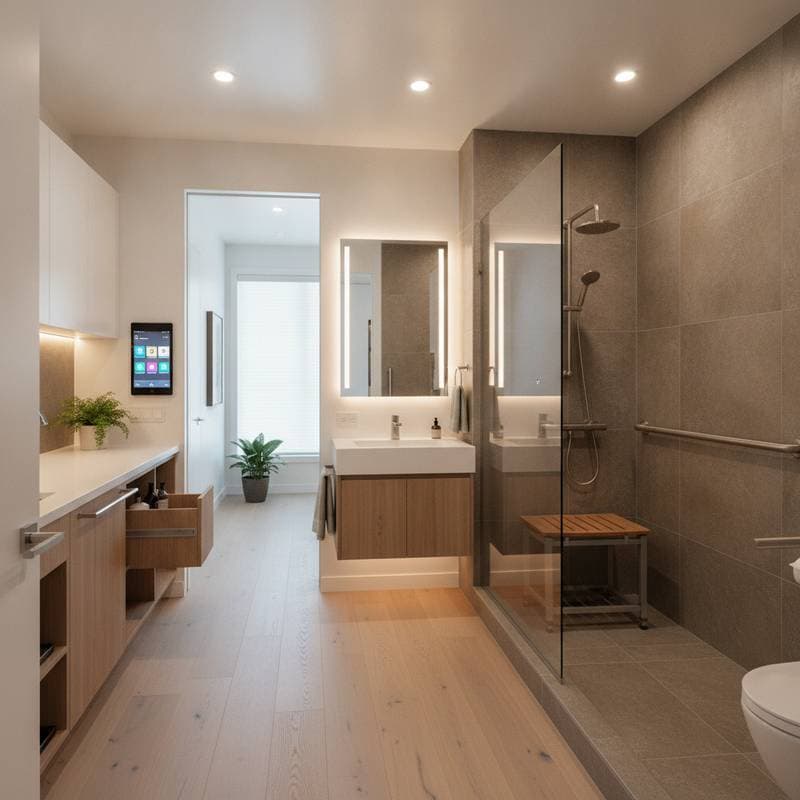
- Incorporate a barrier-free shower featuring textured tiling for grip.
- Position grab bars adjacent to the lavatory and shower.
- Affix a portable showerhead to a height-adjustable rail.
- Select a toilet at a comfortable elevation to simplify rising and lowering.
Verification of achievement: Safe ingress and egress from the shower occurs, along with effortless fixture operation without exertion.
4. Customize the Kitchen
- Reduce a portion of the work surface to 34 inches to support seated activities.
- Employ drawers in lieu of lower cabinets for simplified retrieval.
- Integrate descending shelves within overhead cabinets.
- Provide intense, non-reflective task lighting.
Verification of achievement: Comfortable access, preparation, and maintenance happen across all operational areas.
5. Enhance Illumination and Operating Mechanisms
- Implement multi-level lighting encompassing general, functional, and decorative elements.
- Position toggle switches and automated controls proximate to entrances and sleeping areas.
- Amplify daylight via expanded windows or tubular skylights.
Verification of achievement: Uniform, non-dazzling illumination prevails, with controls readily accessible.
6. Refine Floor Surfaces
Alert: Risk of Tripping
- Select traction-enhancing materials like short-nap carpeting, resilient vinyl planking, or patterned ceramic.
- Remove elevations exceeding 1/4 inch at junctions.
- Anchor loose mats with adhesive underlays or eliminate them entirely.
Verification of achievement: Surfaces remain even, balanced, and secure for traversal, regardless of assistive devices.
7. Refine Access Points
- Establish a level-threshold entrance complemented by a sheltered veranda or platform.
- Employ single-handed lever mechanisms for doors.
- Integrate automatic illumination sensors at outer portals.
Verification of achievement: Approach paths prove reachable, illuminated, and navigable under varying conditions.
8. Refine Sleeping and Gathering Spaces
- Reserve at least 5 feet of unobstructed area surrounding the bed.
- Locate receptacles and switches between 15 and 48 inches above the floor.
- Choose furnishings with curved contours and firm foundations.
Verification of achievement: Fluid movement and control access occur without excessive stooping or stretching.
Security Alerts and Recommendations
- Alert: Electrical Danger Deactivate electricity prior to manipulating receptacles or switches.
- Alert: Risk of Falling Employ sturdy stepladders instead of seating for overhead tasks.
- Don protective handwear and eyewear during material division.
- Maintain clear routes free of wiring and implements amid construction.
- Ensure compliance with regional construction regulations for all implementations.
Issue Resolution and Verification Protocols
Frequent Challenges and Remedies:
- Adhering Doors Post-Expansion: Inspect pivot alignments and modify spacers.
- Unstable Grab Bars: Confirm internal wall supports and secure fasteners.
- Irregular Surface Joins: Apply graduated edging strips for seamless transitions.
- Inadequate Illumination: Upgrade to elevated-output LED lamps or relocate luminaires.
Verification Procedures:
- Navigate the residence simulating impaired mobility or restricted extension.
- Evaluate all portals, storage units, and mechanisms for operational simplicity.
- Confirm that inclines, textures, and installations align with accessibility criteria.
Post-Project Cleanup and Waste Management
- Reuse outdated hardware, metallic components, and packaging materials.
- Handle remnants like ceramic, plasterboard, and coverings per municipal disposal or reclamation guidelines.
- Thoroughly clear dust and particles via sweeping and suction.
- Clean fresh installations and planes with gentle solutions prior to utilization.
Upkeep and Durability Expectations
Standard Preservation:
- Examine support bars, barriers, and surfaces every three months for deterioration or instability.
- Substitute failed illuminants immediately to sustain clarity.
- Clear shower outlets and inspect sealant gaps for fissures.
- Polish operable components with mild agents to avert degradation.
Expected Service Periods:
- Support bars and hardware: 10 to 20 years.
- Surface coverings: 15 to 25 years, varying by composition.
- Control systems and toggles: 10 to 15 years.
Periodic reviews guarantee ongoing protection and efficacy.
Indicators for Expert Consultation
Criteria for Professional Engagement
Engage a specialist when:
- The project entails plumbing or wiring repositioning.
- Load-bearing partitions require adjustment or fortification.
- Regulatory adherence or authorization paperwork proves necessary.
- Specialized validation for accessibility aids in property transfer or coverage matters.
Specialist Expense Ranges:
- Bathroom adaptations: $10,000 to $40,000.
- Kitchen accessibility enhancements: $20,000 to $60,000.
- Full-property renewal: $50,000 to $150,000 or greater, per project scale.
Specialist Selection Protocol
- Validate official credentials and coverage.
- Solicit detailed proposals and schedules in writing.
- Seek endorsements from prior patrons.
- Affirm guarantees for workmanship and supplies.
An adept practitioner versed in universal design upholds security and worth.
Strategies for Optimal Outcomes
- Initiate planning prior to pressing mobility demands.
- Opt for versatile tones and elements that harmonize with diverse styles.
- Apply tonal differences between ground and vertical planes for enhanced perception.
- Preserve broad, unobstructed passages.
- Incorporate additional power sources and automated residence technologies for future adaptability.
Universal design serves beyond mature residents; it aids visitors, young ones, and those with short-term impairments. Thoughtful renovations elevate routine experiences for all occupants.
Sustaining Long-Term Adaptability
A universally designed residence bolsters autonomy over extended periods. Consistent care and judicious refreshes permit secure, pleasant habitation without displacement. Reassess the property biennially to verify that features and zones fulfill bodily requirements. Renew fatigued elements preemptively, and retain records of alterations for subsequent use.
Residing in such an environment extends past utility. It instills assurance that the surroundings conform to personal evolution. Strategic updates implemented now secure a fortified, hospitable domain indefinitely.